In the previous article, “Bahá’í Contributions to the Development of Iran,” the interactions between the Bahá’í community and the modernist reformers in Iran in the late nineteenth and early twentieth centuries were examined over issues such as government, educational reform, and the social role of women. These were issues that had an immediate and evident impact on society. There are a number of Bahá’í teachings, however, that operate at a deeper level and are therefore much more radical, since they were implemented gradually, the changes and their implications were not always discerned by the Iranian population or even, in some cases, by the Bahá’ís themselves. Thus, in the course of the last part of the nineteenth and the whole of the twentieth century, the Bahá’í community in Iran underwent a profound change in its culture and functioning that has resulted in a community that operates in a radically different way from the rest of Iranian society. It presents Iranians with a different model of society.
In the early 1880s, Bahá’u’lláh surveyed the state of the world and wrote that He found it “lamentably defective.” He wrote that He looked for moderation and justice among the leaders of society and discerned instead injustice, strife, chaos, and confusion and that the situation was now irredeemable.1Gleanings from the Writings of Bah’u’lláh, CX, bahai.org/r/529444114. Shoghi Effendi wrote of the “progressive deterioration in human affairs,” in Messages to the Bahá’í World: 1950–1957 (US Bahá’í Publishing Trust, 1971 edition), 103. In other words, there were no suggestions that He could make to fix matters. The situation of the world would inevitably get worse until, “Such shall be its plight, that to disclose it now would not be meet and seemly.”2Bahá’u’lláh, Gleanings, LXI In a letter written a decade earlier to Queen Victoria, Bahá’u’lláh likened the statesmen and political theorists of His time to ignorant physicians who have been summoned to heal the body politic of its illness but only make matters worse.3Bahá’u’lláh, Gleanings, CXX. Whereas He, “the true Physician,” was “debarred from administering the remedy.”4 Bahá’u’lláh, Gleanings, XVI.
Given that the world’s system of governance, its economic order, its social structures, and its values were irredeemably defective, and the whole of the world order was in danger of collapse, the only remedy was to roll up the old “World Order” and “spread out a new Order in its stead.”5 Bahá’u’lláh, quoted in Shoghi Effendi, The World Order of Bahá’u’lláh, bahai.org/r/687286793. Thus, Bahá’u’lláh was calling for a complete and radical change. There have been many revolutions in human history that have sought to bring about change at the level of governance, economics, and society: the French Revolution, the American Revolution, the various communist revolutions, and the Constitutional Revolution and Islamic Revolution of Iran. But what Bahá’u’lláh proposed was a far more radical change than what any of these revolutions proposed. He called for a change at the very deepest levels of the vision, assumptions, and values of society and a transformation of the social order.
There is, of course, much that could be said about such far-reaching changes, but this article will be confined to the consideration of one thread. One of Bahá’u’lláh’s most radical proposals was the dismantling of the power relationships that keep a small group of the elite at the top of society. This elite then organizes the thinking and working of society—its law, governance, education, and the media—in such a way as to maintain the hegemony of wealth and power. In about 1868, Bahá’u’lláh declared that that power had been seized from both secular and religious leaders (umará va ‘ulamá): “From two ranks amongst men power hath been seized: kings and ecclesiastics.”6Bahá’u’lláh quoted in Shoghi Effendi, The Promised Day is Come, bahai.org/r/738996878. This radical statement was not, however, a precursor to what happened in the other revolutions mentioned above, taking power from one group in order to hand it to another. What Bahá’u’lláh was aiming for was a radical overhaul of the structure of society so as to no longer have a pyramid of power. As became clear over time, the Bahá’í administrative system aims to remove power from the grasp of individuals completely. Authority is to be vested in elected institutions acting as a body. As Shoghi Effendi wrote:
But praise be to God that the Pen of Glory has … dismissed the assertions of individuals as an authoritative criterion, even though they were recognized as the most accomplished and learned among men, and ordained that all matters be referred to authorized centers and specified assemblies.7Letter written on behalf of Shoghi Effendi in 1927, translated in Messages from the Universal House of Justice, 1963–1986, comp. Geoffry W. Marks (Bahá’í Publishing Trust, 1986), 216–7.
This was the vision that Bahá’u’lláh presented to the Bahá’í community and to the world. It required a major reorientation of values, assumptions, and practices. Such changes could not be achieved simply through sending instructions; they could not be forced on people; they required a process of counseling and education. The Bahá’í leaders carried this out both through their writings with the inculcation of new values and attitudes and in the specific instructions they sent about the structure and functioning of the community. The process necessarily proceeded slowly and in stages. Because of the continuing hostility and persecution from the general population in Iran, the process also proceeded unobtrusively behind closed doors. It is not surprising, therefore, that the radical nature of what was going on was, for the most part, missed.
One major change that was initiated in the early years of the twentieth century was the transfer of authority from individuals to leadership councils that eventually became elected institutions, which at the local level were called Local Spiritual Assemblies.8A handful of individuals such as ‘Abdul-Ḥusayn Ávárih (Áyatí), Ḥasan Níkú, and Ahmad Sohrab, who had held prominent positions in the Bahá’í community, resisted these changes and this eventually led them to leave the Bahá’í community and attack it. Moojan Momen, The Baha’i Communities of Iran 2 (George Ronald, 2021), 8, 242–3, 405–7. Of course, the mere fact of having elected councils is not sufficient to achieve the goal of removing power from individuals and eliminating hierarchy. It requires a radical change in the way that elected institutions operate. There are many elements to this, but it includes a prohibition on the formation of parties and factions, on nominations of candidates for election or office, and on all manner of election campaigning. The guidance coming from the Bahá’í leaders regarding the consultation process that leads to decisions within the Assemblies includes such elements as maintaining a calm, prayerful, and reflective atmosphere, being detached from one’s own opinions and open to considering all suggestions made, and the willingness to accept and work for the final decision even if one voted against it. The absence of factions and parties (and the divisiveness that goes with them) and the elimination of the chairman’s ability to cast the deciding vote or to set the agenda and other similar measures are all designed to reduce the aggrandizement of individuals and limit the ability of both individuals and vested interests to dominate and determine the decisions made in the consultation process. No individual has power or authority simply by virtue of being elected to these institutions. Only the institution acting as a body has authority.
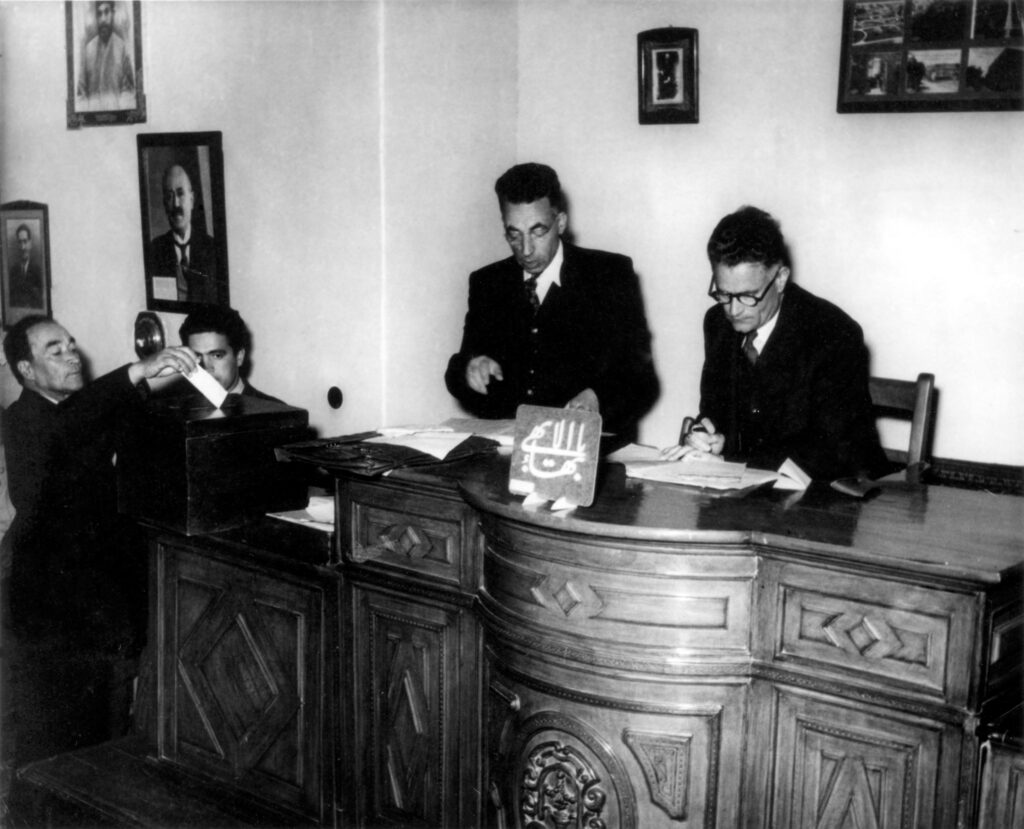
Thus, a novel form of representative democracy was introduced into the Bahá’í community. Since the beginning of this century, an element of participatory democracy has also been added, with most day-to-day decisions being made at the grassroots level through consultation and planning among those who engaged in social action, thus giving them agency. Part of the process is an educational element that encourages participants to think for themselves and gives them the confidence to verbalize their thoughts within a group setting, thus training them to consult effectively in a non-combative manner. It also gives them an ethos of collaborative service and the capacity to undertake simple but fundamental acts of service, such as running children’s classes and junior youth empowerment activities. Meetings are held at a local level, where participants identify the needs of their society and consult about what they can do to address those needs, given the capacities of the group; plans are made which are then carried out in a spirit of collaboration. A few months later, the group meets again to review the results of this effort and what has been learned from it. Moreover, these participants are not just the members of the Bahá’í community. All members of society are welcome to participate in these society-building activities and in the associated consultative and decision-making process. Thus, the Bahá’ís aim to create an ever-widening group of like-minded members of society united in working for the betterment of their community. This pattern of activity is not fixed but is envisioned as continuing to evolve, and there may be major changes to it in the future, depending on the experience gained.
This participation of members of the wider society in the Bahá’í grassroots activities has the potential to influence the general Iranian society. And so, although these changes are occurring within the structures of the Bahá’í community, they can act as a model for Iranians to see that a community can function in ways that are radically different—that replace the competition, conflict, and coercion inherent within the present hierarchical social order with an order that functions through consultation, collaboration, and cooperation and where institutions become instruments for the facilitation of grassroots action rather than for individuals to wield power.
It should be acknowledged, however, that the ongoing hostility towards and persecutions of the Bahá’í community of Iran has limited and continues to limit the range of social actions that it could undertake and has resulted in many who are not Bahá’ís but who appreciate the discourse and lines of action of the Bahá’í community being inhibited from participating in this process. However, the Bahá’ís have continued to be resilient to the pressures that are exerted against them and constructive in their efforts to bring like-minded individuals in Iranian society together to find ways of improving the social environment. Thus, for example, after the Bam earthquake in 2003, Bahá’í educators volunteered to teach young children in that area whose education had been disrupted, and for this they were arrested and imprisoned.9“Bahá’ís who offered education to earthquake-hit Iranian region arrested,” Bahá’í World News Service, 15 March 2011, news.bahai.org/story/812; Kian Sabeti, “Saman’s School: Iranian Authorities Jail Education Pioneer for Being a Bahá’í,” Iranwire, 5 September 2023, iranwire.com/en/bahais-of-iran/120153; Kian Sabeti, “Baha’i Jailed After Educational and Humanitarian Service Projects,” Iranwire, 27 September 2023, iranwire.com/en/bahais-of-iran/120949. Similarly, some 54 young Bahá’ís were working alongside like-minded fellow Iranians in a literacy project among the poor in Shiraz when they were arrested in 2006, and several of them imprisoned.10“Iran: Scores Arrested in Anti-Baha’i Campaign,” Human Rights Watch, 4 June 2006, hrw.org/news/2006/06/04/iran-scores-arrested-anti-bahai-campaign; “54 Bahá’ís arrested in Iran,” UPI, 24 May 2006, upi.com/Top_News/2006/05/24/Report-54-Bahais-arrested-in-Iran/54361148504612; “Iranian report confirms innocence of Shiraz Baha’is,” Bahá’í World News Service, 24 October 2008, news.bahai.org/story/661. More recently there have been a number of arrests in places such as Isfahan, Tehran, and Semnan of Bahá’ís after they had been educating Afghan children who are denied education by the state.11 See “Appeals Court Upholds 90-Year Combined Prison Sentence for 10 Baha’i Women in Isfahan,” Human Rights Activists News Agency, en-hrana.org/appeals-court-upholds-90-year-combined-prison-sentence-for-10-bahai-women-in-isfahan; “Samin Ehsani, Children’s Rights Activist and Baha’i, Summoned to Prison,” Iranwire, 17 June 2022, iranwire.com/en/bahais-of-iran/104924; “Anisa Fanaian, a Bahá’í Citizen in Semnan Province, Sentenced to 8 Years in Prison,” Iran Press Watch, 8 December 2024, iranpresswatch.org/post/25225.
The most important consequence of this change of ethos was to take social agency down to the level of the individual. Thus, this process is bringing together groups of individuals, who are often on the lowest rungs of the social hierarchy, and encouraging them not to wait for government or for charities to help them, but rather to take agency themselves, assess the realities of their communities, identify its needs, and consult about plans to improve their society that are within the capacities of the group, while at the same time expanding these capacities through an educational process.
Apart from the elimination of the power hierarchy, there was a second element in the development of the Bahá’í community of Iran that stood in contrast to the agenda of the modernist reformers. After the Constitution was signed in 1906, the new king, Muḥammad `Alí Sháh, tried to overturn it and the nation became divided. The Constitutionalist reformers, many of whom were familiar with the Bahá’í teachings and had close relations with the community, naturally expected the Bahá’ís to support the Constitutionalist side, given the commonality between the Bahá’í social teachings and the reforms advocated by the Constitutionalists. Although He had previously advised the Bahá’ís against seditious activity in direct opposition to the government, ‘Abdu’l-Bahá appears to have allowed the Bahá’ís to act in conjunction with the reformers in trying to persuade the government of Iran to carry out social reforms. There is evidence of this from various parts of Iran, such as Sari, Isfahan, Shiraz, and Tehran. Then in the period immediately after the signing of the Constitution in 1906, two factors changed. First, the previous national unity in calling for reforms shattered with the emergence of political parties, each with its own agenda and vision for the future of Iran, some supported the shah and others the Constitution. Second, as a consequence of the first, the peaceful nature of the reform movement that had succeeded in obtaining the Constitution disintegrated with the emergence of conflict and violence between the two sides, each trying to subvert and destroy the other. ‘Abdu’l-Bahá wrote of the need for unity and warned of the danger of foreign interference in Iran. He now strictly forbade the Bahá’ís from any engagement with the polarized and often violent politics of the era:
We have no connection with any party: we are neither partisans of the Victorious Government nor do we share the opinions of the Glorious People. We stand aside from all strifes, wish well to all, and offer our prayers and supplications at the Throne of God that He will reconcile these two honourable elements with one another.12Edward Granville Browne, The Persian Revolution, 1905–1911 (University Press, 1910), 425–9, quotation translated by Browne, 427. ‘Abdu’l-Bahá’s approach to the Constitutional Revolution was more complex and nuanced than can be detailed here. For more, see Mina Yazdani, “‘Abdu’l-Bahá and the Iranian Constitutional Revolution: Embracing Principles While Disapproving Methodologies,” Journal of Bahá’í Studies 24, no. 1–2, (June 2014): 47–82, doi:10.31581/jbs-24.1-2.4.
‘Abdu’l-Bahá also gave as His reasons for taking this stance the fact that the Bahá’ís weakened the Constitutionalist cause by supporting it, since it gave the reactionary clerics an opportunity to claim that the Constitution was the work of the Bahá’ís and anti-Islamic, and that the Bahá’ís were in danger because each side was accusing them of supporting the other.13 ‘Abdu’l-Bahá quoted in Browne, Persian Revolution, 426–9. There is evidence that news of this new stance by ‘Abdu’l-Bahá reached Iran in February–March 1907.14Marzieh Gail, Arches of the Years (George Ronald, 1991), 31; Mírzá Ḥábíbu’lláh Afnán, “Táríkh-i Amrí-yi Shíráz,” 556, afnanlibrary.org/tarikh-amri-shiraz/ seems to indicate a similar date.
Parallel to this was the situation in the 1970s when Mohammad Reza Shah was attempting to force everyone in Iran to join a single political party he had created. Bahá’ís refused, even though for many it meant the loss of their jobs and social position. More recently, the Bahá’ís have not backed groups that seek to overthrow the Islamic government of Iran, although they have, alongside many other groups, appealed peacefully for justice and for the rights of oppressed groups.
The position of the Bahá’í leadership regarding political activity has varied over the years, depending on local factors, usually related to whether certain actions would lead to Bahá’í social objectives, achieve greater degrees of unity and not occasion conflict and violence. There was, for example, a brief period of national unity after the restoration of the Constitution in 1909 when ‘Abdu’l-Bahá appears to have contemplated encouraging certain Bahá’ís to seek election to the national parliament,15 Yazdani, “‘Abdu’l-Bahá,” 66. but this soon ended with the re-emergence of political wrangling and conflict. During the ministry of Shoghi Effendi (from 1921 to 1957), the policy of avoiding political involvement was strengthened such that all such activity, including holding political positions in government, was prohibited and even penalized. However, even with this, certain lines of social action, such as seeking racial justice and integration in the United States, which within the context of that country is highly political, have been pursued by the United States Bahá’í community over many decades where these have not involved confrontation with the state or violence.16Richard Thomas, “The Bahá’í Response to Racial Injustice and Pursuit of Racial Unity (Part 1): 1912–1996,” The Bahá’í World, 16 January 2021, bahaiworld.bahai.org/library/the-bahai-response-to-racial-injustice-and-pursuit-of-racial-unity/. More recently certain limited moves have been permitted by the Universal House of Justice, such as when the British Bahá’í community joined with another organization in the “Action for Children” campaign and campaigned successfully for national legislation to allow sexual offences against minors committed by British residents outside the United Kingdom to be prosecuted in Britain.17 United Kingdom House of Commons, “Child Protection,” debated on 12 March 1997, Hansard, hansard.parliament.uk/commons/1997-03-12/debates/cf2d06e1-f08e-48e8-b387-f8b40ccac6cd/ChildProtection. The campaign resulted in the passing of the Sex Offenders Act 1997. Another example was when the worldwide Bahá’í community launched a campaign “Our Story is One,” in parallel to the “Woman, Freedom, Life” movement in Iran.18 “Our Story is One,” Bahá’í International Community, ourstoryisone.bic.org; “Launch of the Our Story Is One Campaign,” United Kingdom Parliament, 11 July 2023, edm.parliament.uk/early-day-motion/61199.
For the Bahá’í community, the present world political order, based as it is on competition and conflict, is part of the problem, and so it cannot be part of the solution. To participate would inevitably pull the Bahá’ís ever deeper into a system that is inherently competitive, conflictual, hierarchical, and corrupt—the very opposite of what the Bahá’ís are aiming for. For this reason, the Bahá’í leadership has, on most occasions, steered the Bahá’í community away from political involvement.
And so, the Bahá’í model for society does not set itself up as a competitor within the present political system. It is working to set up an alternative space outside the conventional political sphere: where a different style of social and political activity can take place, where the present social dynamics of competition is decentered, where the dominant motifs of power and wealth as the central values of society are changed, where the socialization that perpetuates the present dominant culture is disrupted through an educational process that creates a new ethos, and where the culture of monologue (where ordinary people are lectured and told what to think and do) is transformed into a culture in which the capacity of all to engage in dialogue is fostered and becomes the foundation of community life.19For more on this aspect of the Bahá’í teachings, see Michael Karlberg, Beyond the Culture of Contest (George Ronald, 2004). This alternative space is built on the basis described above of participatory democracy, elected institutions, consultative decision-making, and collaborative grassroots social action.
In addition, in Iran there was tension between the intense nationalism of most of the modernist reformers and Bahá’u’lláh’s aim of orienting His followers towards internationalism—here meaning peace and cooperation among nations as indicated by such statements as “The earth is but one country and mankind its citizens”;20Bahá’u’lláh, Gleanings, CXVII. E. G. Browne heard Bahá’u’lláh say: “Let not a man glory in this, that he loves his country; let him rather glory in this, that he loves his kind,” [‘Abdu’l-Bahá], Traveller’s Narrative, xl. and beyond that, towards globalism—here meaning an organic vision of humanity as one interconnected global whole, as implied by such statements as “Regard ye the world as a man’s body, which is afflicted with divers ailments, and the recovery of which dependeth upon the harmonizing of all of its component elements.”21Bahá’u’lláh, The Summons of the Lord of Hosts, bahai.org/r/516098430. And so, while the reformers were advocating for “what is good for Iran”, the Bahá’ís considered that “what is good for humanity as a whole” is actually what is good for Iran in the long run.
This globalism and the position taken by the Bahá’í community for over a century of not participating in partisan and polarizing politics has led to some misunderstandings and distortions of the Bahá’í position. Since most journalists, commentators, and scholars are focused on the political sphere, they have missed what is happening within the Bahá’í community, because it is not operating in that sphere. In addition, the Bahá’í stance frustrated and angered some Iranian reformers and progressive thinkers because it seemed to them that the Bahá’ís were indifferent to the problems of Iran, and therefore they questioned the patriotism of the Bahá’ís.22E. G. Browne voiced similar sentiments, Persian Revolution, 429. Shoghi Effendi refuted this contention by pointing out that the Bahá’í position was not a “repudiation” of “a sane and intelligent patriotism” but rather a realization that it must operate within a “wider loyalty” to the human race.23Promised Day, bahai.org/r/784142005. And indeed, through the global spread of the Bahá’í Faith, the Iranian festival of Naw-Rúz is celebrated, the land of Iran is revered, and there are even individuals learning the Persian language in order to read the Bahá’í scriptures in their original language in almost every country in the world.
Apart from these tensions with the modernist reformers, Bahá’u’lláh’s vision also challenged aspects of traditional Iranian culture. The Shi’íh culture of nineteenth-century Iran envisioned humanity as divided into believers and unbelievers (the concept of kufr), and this division was accentuated by the belief that the unbelievers were unclean (the concept of nijásat). This meant that all contact with unbelievers was to be avoided, and the traditionalists extended this to adopting the ideas and innovations of the unbelieving Europeans. The Bahá’í leaders expressly abolished both these concepts among their followers.24‘Abdu’l-Bahá, The Promulgation of Universal Peace, 454; Bahá’u’lláh, The Kitáb-i-Aqdas, bahai.org/r/301255873. See also Houchang E. Chehabi, “Anatomy of Prejudice: Reflections on Secular Anti-Baha’ism in Iran,” in The Bahá’ís of Iran: Socio-historical studies, ed. Dominic Parviz Brookshaw and Seena B. Fazel (Routledge, 2008), 192. This attitude goes back to the Báb and His openness to trade, ideas, and innovations from Europe that would benefit Iran, see The Báb, The Persian Bayán, vahid 4:16; 7:16, afnanlibrary.org/inba-volume-62/; Stephen Lambden, “QA XLVI [46] Sūrat al-Huwa,” hurqalya.ucmerced.edu/node/438/. ‘Abdu’l-Bahá expressly argues in His 1875 treatise against the close-mindedness that blocked everything from the rest of the world, The Secret of Divine Civilization, pp. 25–7. Western observers, such as Professor Edward G. Browne and the European missionaries in Iran, noted this change among the Bahá’ís as compared to other Iranians.25Edward Granville Browne, A Year among the Persians (Adam and Charles Black, 1893), 223–31; Moojan Momen, “Early Relations between Christian Missionaries and the Bábí and Bahá’í Communities,” In Studies in Bábí and Bahá’í History 1, ed. Moojan Momen (Kalimat Press, 1982), 49–82, esp. 64–6, 70–72. But perhaps the most compelling evidence for this change of ethos in the Bahá’í community was the reports by some members of Iran’s Jewish and Zoroastrian communities of how they were attracted to the Bahá’í Faith by observing that Bahá’ís of Muslim background (some of them formerly Muslim clerics) treated them with kindness and as equals, deliberately rejecting the concept of impurity by eating and drinking from the same vessels as them. The abandoning of such long-held traditions was, however, shocking to the conservative elements in the population.26Moojan Momen, The Baha’i Communities of Iran 1 (George Ronald, 2015), 337.
There was a third area in which the Bahá’í community and its leadership differed from what was going on in Iranian society and among the Iranian reformers. This arose because some of the reformers, seeing the strong hold that the senior religious leaders had on the people and impressed by the way that these clerics had been able to successfully mobilize the masses against a disadvantageous agreement that the Shah had signed with a European entrepreneur in 1890, sought over the next few years to co-opt the senior religious leaders into the reform movement. At exactly this time, ‘Abdu’l-Bahá wrote a treatise, the Treatise on Politics, warning against involving the clerics in politics. He pointed out that every time religious leaders had entered the political arena, the result had been disastrous, leading to defeat, death, and destruction, and He gave several examples of this from the recent history of Iran and the Ottoman Empire. Unfortunately, the reformers failed to heed this advice, and the result was that many of the reforms envisaged by those who instigated the Constitutional Revolution in the 1900s were annulled at the insistence of the clerics and much of the vision of the reformers failed to materialize. ‘Abdu’l-Bahá’s advice was again ignored by those who pressed for change in Iran in the 1970s, and the Islamic religious leadership was again allowed into the political process.
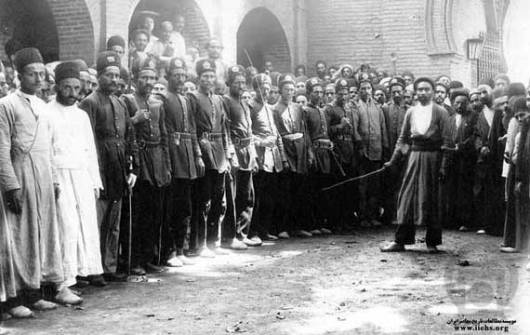
In the first part of this article, certain lines of social action such as the establishment of modern schools and the advancement of the social role of women were described. It should now be clear that, although what the Bahá’ís were advocating and doing appeared superficially to be similar to the program of the modernist reformers, the Bahá’í activity was cultivating a culture that was radically different from that of traditional Iranian society. The children in the Bahá’í schools, for example, were becoming patriotic Iranians but within a context of also envisioning themselves as world citizens.
It should also be appreciated that Bahá’u’lláh did not present a plan for human development that was to be implemented uniformly across the world. He and His successors as leaders of the Bahá’í community presented certain social principles (such as the equality of women and men) that humanity should aim for and certain means of social functioning (such as consultative decision-making) that would assist in achieving these aims. But the exact details of how all this would evolve has been left to the Bahá’ís to work out in a reciprocal relationship of dynamic interdependence between the individual, the institutions, and the community. And of course, it may be that these details will work out differently in each part of the world according to local culture.
THE WORLD OF RELIGION
One aspect of society in which Bahá’u’lláh made the greatest change was in the field of religion. The religious leadership in Iran in the late nineteenth century, as in many parts of the world, wielded great power and influence, and thereby accumulated great wealth. The people were expected to live their lives and pay certain religious taxes according to a Holy Law (the Sharí`ah) as interpreted by the religious leadership. Even the shah and the local governors had to be wary of offending religious leaders who could stir up the population against them.
The teachings of Bahá’u’lláh were a great challenge to the religious leaders. Bahá’u’lláh, and the Báb before Him, were respectful towards the Qur’án and the Prophet Muḥammad.27For the Báb, see B. Todd Lawson, Tafsir as Mystical Experience: Intimacy and Ecstasy in Quran Commentary (Brill, 2018), esp. 9–47. For Bahá’u’lláh, see The Kitáb-i-Íqán, bahai.org/r/540143739. ‘Abdu’l-Bahá, the successor of Bahá’u’lláh, defended Islam and the Prophet Muḥammad in churches and synagogues during His travels in Europe and North America.28See for example, ‘Abdu’l-Bahá, Promulgation, 200–1, 346–7, 409–10. ‘Abdu’l-Bahá’s successor, Shoghi Effendi, called on the Bahá’ís of the West to learn about Islam and defend its fundamentals against attacks in the West.29Shoghi Effendi in Hornby, Lights, 495–6.
However, Bahá’u’lláh and the Báb decried the learning that was taught in the Islamic religious colleges in much the same way that Jesus Christ decried the learning of the Pharisees.30The Báb, Bayán, 4:10; Bahá’u’lláh, Íqán, 186–7; cf Matthew 23:1–34. To emphasize His dismissal of abstruse clerical learning, Bahá’u’lláh declares that understanding holy scriptures depends “solely upon purity of heart, chastity of soul, and freedom of spirit,” Íqán, bahai.org/r/643779013. And since the prestige of the Iranian religious leaders was based on their learning, this was effectively undermining their position. The Bahá’í leaders also condemned the hypocrisy, fanaticism, and corruption of some Muslim religious leaders.31 ‘Abdu’l-Bahá, Secret, 37–8, 56–7. Shoghi Effendi, Bahá’í Administration (Bahá’í Publishing Trust, 1995), 132, 172; Shoghi Effendi, The Advent of Divine Justice, 4; Shoghi Effendi, The Unfolding Destiny of the British Bahá’í Community: The Messages of the Guardian of the Bahá’í Faith to the Bahá’ís of the British Isles (Bahá’í Publishing Trust, 1981), 68. But their criticism was not exclusively reserved for the Muslim clerics. They pointed out that each of the founders of the main religions of the world had experienced opposition and persecution from the religious leaders of their time.32Báhá’u’lláh, Íqán, 15–16; see also 29–31, 182–4. And it was no different this time with the hostility of the Iranian clerics towards the new religion. In view of these criticisms, it is not surprising that Bahá’u’lláh introduced an innovation that would have a profound effect on the ethos of the Bahá’í community: the prohibition of religious professionals.33See for example the Lawḥ-i-Ittiḥád in Ad‘iyyih-yi Ḥaḍrat-i Maḥbūb (Bahá’í-Verlag, 1980), 388–406, esp. 396–9. See also Shoghi Effendi’s authoritative interpretation of the Kitáb-i-Aqdas, God Passes By, p. 241.
The change that the Bahá’í leaders sought to bring about was, however, much more radical and wide-ranging than just the abolition of religious professionals. Bahá’u’lláh sought to bring about a profound change in the way that religion is imagined and thus in the religious ethos of the Iranian nation. True religion is not, according to the Bahá’í teachings, about believing in the correct doctrine, carrying out correct rituals, or the correct following of a Holy Law. Just the act of calling on a holy figure will not bring salvation, nor will special chants or entering states of ecstasy or trance, nor, in particular relation to the Iranian religious scene, will following the directives of a senior Shi’íh cleric (mujtahid) or Sufi shaykh, or participating in the ritual commemorations of the sufferings of the Imáms. These are the trappings that religious professionals have overlaid onto the true core of religion in order to enhance their role and insert themselves into the relationship between the believer and God. True religion has, according to the Bahá’í leadership, two fundamental purposes: the improvement of the character of the individual through developing moral and spiritual qualities (such as love, justice, trustworthiness, etc.); and the betterment of society (leading to more peaceful, united, and coherent communities). And so, religion functions as it ought to function when such transformed individuals come together and consult in order to create ways of improving society, the overall purpose being “to effect a transformation in the whole character of mankind, a transformation that shall manifest itself both outwardly and inwardly, that shall affect both its inner life and external conditions.”34Bahá’u’lláh, Íqán, bahai.org/r/501261243. Indeed, the Bahá’í leaders assert that this has always been the main purpose of the founders of all the world’s religions and, on this level, the religions are all one.
In place of the passivity of listening to the sermons of clerics, obeying their rulings and putting off working for improvements in society in anticipation that all would be put right with the promised return of the Hidden Twelfth Imám, who according to Shi’íh Islamic belief would return at the end of time to fill the world with justice, Bahá’u’lláh declared that the time had come, the Promised Imám had appeared (in the person of the Báb), and that the time for passive religiosity was ended. What was needed now was for all people to take an active role in working towards the implementation of the laws and teachings (as laid down in His Writings) that would bring about the promised world filled with justice.35Bahá’u’lláh, Gleanings, X.
Thus, for Bahá’ís, religious activity is being of service to others, not just the Bahá’í community but the whole of society. And examples of Iranian Bahá’ís doing this have been given above. Furthermore, the society-building activities of the Bahá’í community are open to all. People do not have to become Bahá’ís in order to participate in these; all like-minded people are welcome to join in both the meetings at which such activities are planned and the carrying out of them.
CONCLUSION
In summary then, the Bahá’í community in Iran over the last 150 years or so has been building up gradually, almost imperceptibly, a radically new type of community life: one in which women can contribute more effectively, one in which the education of children is a central focus, one based on moral values, consultation, and collaboration. Its advocacy and efforts for modern education, the advancement of the social role of women and the broad global vision that it cultivates are only the superficial signs of a deeper revolutionary change in the structure and functioning of the community. Over this period, Bahá’ís have been building up a community that is not run by individuals who hold power but rather which functions through consultative decision-making. It could be called a counterculture in the sense that it runs counter to many of the norms and values that have been holding Iran back over the last century or more. It seeks to break down the hierarchical, patriarchal, and polarized nature of society and create a more cohesive and collaborative functioning of society. And in creating such a community, it is in effect acting as a model, demonstrating to Iranians that it is possible to have a different sort of society based on different values, social structures, and ways of functioning. And all are welcome to join in this society-building project. It is not that Bahá’ís are holding up a final blueprint and saying: “This is the new society.” They are offering a vision of what could be and certain principles and ways of getting there, and they are saying to others: “Let us together explore this path and jointly build a new society.”
The process of change has, however, been slow because changing the way people see the world, changing the values of society, changing culture is difficult. The Bahá’í community has proceeded in the last quarter century through an educational process that seeks to start with fundamentals and build in such a way as to carry everyone with it. It focuses on developing consultation skills, reading social reality, changing values, and building capacity. And the process is far from over. As it develops, it engages with ever greater numbers in lines of social action of ever greater complexity identified through the consultation process, all evolving towards what Bahá’u’lláh envisaged when He declared the present order to be “lamentably defective” and set out the framework for a “new World Order”:
The world’s equilibrium hath been upset through the vibrating influence of this most great, this new World Order. Mankind’s ordered life hath been revolutionized through the agency of this unique, this wondrous System—the like of which mortal eyes have never witnessed.36Bahá’u’lláh, Gleanings, LXXIX.
Iran is the birthplace of both the Bahá’í Faith and its predecessor, the Bábí movement. Although the Bahá’í Faith has now spread worldwide, establishing itself in almost every country, the role it has played in the development of its homeland is insufficiently recognized by both the people of Iran and by scholars.
At no time during the history of the Bahá’í community in Iran have there been articles in newspapers, journals, books, or academic publications in Iran that have presented the Bahá’í viewpoint, nor have Bahá’ís been able to publish refutations in Iran in response to numerous attacks and false information. The result is that the general population in Iran is ignorant of even the most basic facts about the Bahá’í Faith, and what it thinks it knows is actually the misinformation that has been fed to it. A number of well-known scholars in Iran have participated in these attacks on the Bahá’í community, even to the extent of fabricating evidence.1For example, the prominent historian Fereydun Adamiyat fabricated a relationship between the Báb’s first disciple, Mullá Ḥusayn Bushrú’í, and the British military intelligence officer Arthur Connolly (a relationship that could not have occurred), giving as his reference Connolly’s book (in which there is no mention of the matter); see Fereydun Vahman, 175 Years of Persecution: A History of the Babis and Baha’is of Iran (Oneworld Publications, 2019), 82–5. Houchang Chehabi, a well-known Iranian scholar, has described the resulting situation in Iran:
It is only a slight exaggeration to say that until very recently any discussion of the Baha’is and their religion that did not use abusive, disparaging, or at least sarcastic language was suspected of being an apologia, and that any writer or speaker who talked about Baha’is in respectful or even in a merely matter-of-fact way was suspected of being a Baha’i.2Houchang E. Chehabi, “Anatomy of Prejudice: Reflections on Secular Anti-Baha’ism in Iran,” in The Baha’is of Iran: Socio-historical studies, ed. Dominic Parviz Brookshaw and Seena B. Fazel (Routledge, 2008), 185. The late Heshmat Moayyad and the late Shapour Rassekh reported to the present writer that in the academic, intellectual, and government circles which they frequented in the 1960s and 1970s, their close Iranian friends and colleagues would even refrain from uttering the word “Bahá’í.” They would refer obliquely to “your group” or “your friends.”
With little information available to them, scholars outside Iran have often ignored the Bahá’í Faith in their analyses or reproduced the misinformation about the religion that abounds within Iran. Commonly, the Bábí movement is regarded as a failed rebellion, while the Bahá’í community is treated as though it played no significant role in the country’s development. There has been an improvement in this situation in recent decades, but there is still an insufficient appreciation of the extent of the influence of the Bahá’í community.
In this first of a series of two articles, the specific contributions that the Bahá’í community has made to the development of Iran will be described. The second article will attempt to portray just how revolutionary the concepts and changes in social structure within the Bahá’í community have been, the potential implications of these for the wider Iranian society, and the way that the ideas of the religion address many of the problems and issues that face Iran (and indeed other countries).3This and the following article are based on the academic paper: Moojan Momen, “The Bābī-Bahā’ī Revolution in Iran,” Iranian Studies 58, no. 2 (2025), 235–58.
In the mid-nineteenth century, following a series of damaging and humiliating military defeats at the hands of European powers, Iran was just becoming aware of the extent to which it had fallen back from being one of the most advanced countries in the world two hundred years earlier. The initial response of the government was to attempt to copy European military training and tactics by bringing European army instructors to Iran.
In the second half of the nineteenth century, however, the thoughts of progressive Iranians moved beyond just the military. Reports from Iranians who traveled abroad, reforms that were instituted in the Ottoman Empire, and the works written by Iranians living outside Iran began to focus the attention of some Iranians towards bringing social, educational, and governmental reforms to Iran. Thus, a cohort of reformers gradually emerged in Iran (and among Iranians living outside Iran), who wrote works suggesting what changes would benefit Iran and help to bring it up to the level of progress and prosperity that Europe had achieved.
The Iranian modernist reformers were making proposals across various areas of social life, and, in particular, they were looking at law, the governance of society, modern education, and, to a lesser extent, the position of women in society. The Bahá’í leaders were making proposals about the same areas of social life, and so, there was a common area of discourse between these two groups. What this article sets out to demonstrate is that the ideas in the writings of the Bahá’í leaders were put forward earlier and were more progressive than what was being advanced by the modernist reformers, that these reformers were in close contact with the Bahá’í leaders and the community, and therefore, that it is not unreasonable to suggest that the reformers may have been influenced by the Bahá’ís in what they wrote and did, although of course, they would have carefully concealed any such borrowing of ideas from what was regarded in Iran as a heretical and misguided sect.
THE GOVERNANCE OF SOCIETY
A good example of the way that the Bahá’í leaders were earlier and more progressive in their proposals about reform is in the area of the governance of society. In the late 1860s and early 1870s, Iranian reformers, such as Mírzá Ḥusayn Khán Mushíru’d-Dawlih and Mírzá Malkam Khán, were advocating that the autocratic Shah should move away from being the sole decision-maker in the governance of Iran and that he should appoint a cabinet and give them responsibility.4Hamid Algar, Mīrzā Malkam Khān: A Biographical Study in Iranian Modernism (University of California Press, 1973), 30–31, 34–5, 105–6; Guity Nashat, The Origins of Modern Reform in Iran (University of Chicago Press, 1982), 79–82, 105–7. At this same time, Bahá’u’lláh went much further, commending democracy and constitutional monarchy in His writings, and His son who was later to succeed Him, ‘Abdu’l-Bahá, specifically wrote in an 1875 treatise about the need for Iran to adopt a representative democracy.5In about 1870, Bahá’u’lláh wrote to Queen Victoria commending the British system of democracy, see The Summons of the Lord of Hosts (Bahá’í World Centre, 2002), 90; He predicted in about 1873 that democracy would soon come to Iran, see The Kitáb-i-Aqdas, par. 91–3. ‘Abdu’l-Bahá recommended representative democracy in His 1875 treatise, see The Secret of Divine Civilization, trans. Marzieh Gail (Bahá’í Publishing Trust, 1990), 23–4. This is all the more remarkable given that the majority of European nations were ruled by autocratic regimes at the time, so such ideas were progressive even for Europe, let alone the Middle East.
And the Bahá’í community in Iran gradually, as circumstances allowed, put these teachings into effect. Thus, Bahá’u’lláh and ‘Abdu’l-Bahá directed the community to have leadership councils, which became called Spiritual Assemblies, and encouraged the Bahá’ís to turn to these councils and abide by the consultative decision-making process that was instituted in them. Eventually these Spiritual Assemblies became elected bodies that guided the community in the area under their jurisdiction. In this way, the ideas about representative democracy from the Bahá’í scriptures became realized in the Bahá’í community.
In addition, Bahá’u’lláh called for world peace at a time when almost no one was talking about this, neither in Iran nor in the West. And He made practical suggestions as to how this may be achieved. In about 1888, He called for a world congress at which all territorial and similar disputes would be settled (by arbitration if necessary) and a treaty signed whereby all the nations would agree to arise collectively against any nation that attacked another nation. This collective guarantee of security would allow all nations to reduce their expenditure on arms and spend the savings on measures that would benefit their citizens. Furthermore, the Bahá’í teachings foresee that a world government and a world security force would be needed to regulate this so that weaker nations would not be disadvantaged.6Tablets of Bahá’u’lláh revealed after the Kitáb-i-Aqdas (Bahá’í World Centre, 1978), 165; see also Gleanings from the Writings of Bahá’u’lláh, trans. Shoghi Effendi (Bahá’í Publishing Trust, 1983), 160–1; ‘Abdu’l-Bahá, Secret, 64–5; Selections from the Writings of ‘Abdu’l-Bahá (Bahá’í World Centre, 1978), 306–7; Shoghi Effendi, The World Order of Bahá’u’lláh (Bahá’í Publishing Trust, 1991), 203–4. Thus, the Bahá’í leaders were envisioning world peace, multilateral disarmament, collective security, a global peace treaty, and global institutions many decades before it was within the conceptual world of anyone in Iran or most of the rest of the world.
There was also an important difference between the Iranian modernist reformers and the Bahá’í leaders in the means by which these aims were to be achieved. The Iranian reformers of the nineteenth and early twentieth centuries looked to political reform as the best way to introduce modernization into Iran and were therefore focused on achieving political power. The Bahá’í leaders, however, specifically advocated against political involvement and confrontation (the reasons for this will be discussed in the next article), and so theirs was a nonviolent, grassroots movement, aiming to transform the social order and the value system upon which it was based, initially within the Bahá’í community but eventually across society as a whole. Since it did not operate at the political level and, apart from a turbulent Bábí period (1848–52), proceeded quietly and slowly, its revolutionary nature remained largely hidden from the populace, from observers and scholars, and perhaps even from many Bahá’ís.
Among the Iranian modernizers, there were some who advocated a wholesale adoption of Western ideas and practices. The Báb, Bahá’u’lláh, and ‘Abdu’l-Bahá rejected this attitude that set the West up as the reference point and standard for progress and modernization. They called for the adoption of those aspects of Western development that would be beneficial to Iran: democracy, modern education, some of the West’s technology, as well as advances in communication such as newspapers and a postal service, as long as the benefits of these were available to all. However, they rejected certain aspects of Western culture. Bahá’u’lláh was critical of the colonialism, militarism, and hypocrisy shown by some of the European powers. Thus, when the British professor Edward G. Browne visited Bahá’u’lláh in 1890, he heard Him criticize the expenditure on the arms race among the European powers. In some of His writings, Bahá’u’lláh expressed His disapproval of Britain’s colonialist campaign in Egypt leading to the bombardment that destroyed much of the city of Alexandria in 1882. He also criticized the hypocrisy of European governments that proclaimed liberal values but allowed pogroms against the Jews.7Edward G. Browne in [‘Abdu’l-Bahá], A Traveller’s Narrative, written to illustrate the Episode of the Báb 2 (Cambridge University Press, 1891), xl; Bahá’u’lláh, in Iranian National Bahá’í Archives 27, 317–8; 22, 323–5, afnanlibrary.org/inba/; Bahá’u’lláh, Tablets, 170. ‘Abdu’l-Bahá praised the scientific and technological advances He witnessed in Europe, while at the same time decrying the materialism of the West8‘Abdu’l-Bahá, The Promulgation of Universal Peace (Bahá’í Publishing Trust, 1982), 16, 261. and warning against the use of science and technology to build ever more destructive weapons: “the malignant fruits of material civilization” as He called them.9‘Abdu’l-Bahá, Selections, 303. He also criticized the Eurocentric arrogance that led to the lives of other people being regarded as without value and unworthy of ethical concern.10See His comments regarding a rail disaster in France, “Let There be Peace,” Star of the West 7, no. 11 (27 Sept 1916): 106–7. In His 1875 treatise, He presented His reasons for regarding the West as “morally uncivilized.”11‘Abdu’l-Bahá, Secret, 62.
The next Bahá’í leader, Shoghi Effendi, who succeeded ‘Abdu’l-Bahá in 1921, took much the same attitude as his predecessors. Shoghi Effendi has been criticized by some Western scholars for being “orientalist.”12One who pigeon-holes the East in a one-dimensional and patronizing manner that pictures it as exotic, backward, and inferior. In fact, Shoghi Effendi’s criticism of the East was mainly directed towards its religious and secular leaders whom he regarded as the main obstacles to progress there. But this is no different from his view of the leadership of most of the rest of the world. While praising certain aspects of the West and appreciative of such advances as the Western educational system, he criticized the hypocrisy, war-mongering, corruption, racism, and colonialism of the leadership of the West that led eventually to the Second World War.13Effendi, World Order, 182; Shoghi Effendi, The Promised Day is Come, rev. ed. (Bahá’í Publishing Trust, 1980), 113. In the opening years of that war, Shoghi Effendi wrote of the three “false gods” of “Nationalism, Racialism and Communism” that were corroding and destroying governments and peoples.14Effendi, Promised Day, 113. In his last general letter to the Bahá’ís of the United States of America in 1957, he wrote of the “all-pervasive materialism” and “the cancerous growth of militant racialism, political corruption, unbridled capitalism, wide-spread lawlessness, and gross immorality” affecting that country.15Shoghi Effendi, Citadel of Faith: Messages to America 1947–1957, 154, see also 124, 155; Effendi, Promised Day, 66–9, 113; Effendi, World Order, 182; Shoghi Effendi, The Unfolding Destiny of the British Bahá’í Community: The Messages of the Guardian of the Bahá’í Faith to the Bahá’ís of the British Isles (Bahá’í Publishing Trust, 1981), 460.
MODERN EDUCATION
One of the major factors that impeded the development and progress of Iran was the fact that the only education available to almost the whole population was in small schools run by a single religious leader, usually in his own home with a religiously-oriented curriculum that did not prepare children for any useful occupation and was of little relevance to the needs of the country—and this only for the small number of families who were able to pay the fees.16David Menashri, Education and the Making of Modern Iran (Cornell University Press, 1992), 39–43. The military defeats at the beginning of the nineteenth century had led to the inauguration in 1851 of a single educational establishment in Tehran, the Dar al-Funun, but this was primarily focused on the ancillary needs of the army. The modernist reformers did write about the need for modern education and opened some schools,17In particular, Mírzá Fatḥ-‘Alí Ákhúndzádih appears to have had an interest in modern education. but they generally considered that the most important objective was achieving political power and then such goals as modern education could be achieved, but these were of secondary importance; they could be implemented once political power was gained. There were some schools opened by European missionaries teaching modern subjects, but these catered almost exclusively to children from Christian families. Many of the Muslim clerics were, moreover, opposed to modern schools, considering them an importation of ideas from the infidel West.18Menashri, Education, 19–22, 38–9.
Bahá’u’lláh gave great importance to education, stating: “Regard man as a mine rich in gems of inestimable value. Education can, alone, cause it to reveal its treasures, and enable mankind to benefit therefrom.”19Bahá’u’lláh, Tablets, 161–2, see also 90, 128. In His 1875 treatise, ‘Abdu’l-Bahá called for universal education and the establishment of modern schools throughout Iran, calling this the “primary” and “most urgent requirement.”20‘Abdu’l-Bahá, Secret, 109, see also 14, 91, 97–8, 105–7, 109–12, 115. The Bahá’ís responded, as soon as it was possible to do so, given the intense persecution and pressure to which they were subjected, by establishing modern schools. One difference between the schools that the Bahá’ís were establishing and the schools that the Iranian reformers were establishing was that these latter were only in the major cities of Iran, while Bahá’í schools could also be found in small towns and even villages where there was a sufficient number of Bahá’ís. ‘Abdu’l-Bahá encouraged a number of American Bahá’ís who were experienced educators to go to Iran in order to assist with the running and curriculum of Bahá’í schools.21Soli Shahvar, The Forgotten Schools: The Baha’is and Modern Education in Iran (Tauris Academic Studies, 2009); Moojan Momen, “Baha’i Schools in Iran,” in The Baha’is of Iran, 94–121. For more on the American Bahá’ís who came to Iran, see R. Jackson Armstrong-Ingram, “American Bahá’í Women and the Education of Girls in Tehran, 1909–1934” in In Iran: Studies in Bábí and Bahá’í History 3, ed. Peter Smith (Kalimat Press, 1986), 181–210.
The following passage records what the district governor said to Shaháb Shahmírzádí, a Bahá’í educator, who was trying to set up a school in the village of Ivel in Mazandaran in 1922. It gives an indication of how difficult this task was and how revolutionary the idea of a village school was for the people of Iran:
How do you hope, here in the middle of the jungle, to convince these wild and ill-behaved people, who are a hundred centuries removed from education and civilisation and spend their days from dawn to dusk in the paddy-fields up to their waists in mud and water accompanied by cows, of the benefits of education and knowledge or that Moses or Jesus or Muhammad or Bahā’u’llāh has commanded this or forbidden that? They are not able to understand such matters . . . What an optimist you are! I have been to Īvil. There is no possibility of a school there. Governors have come to the Chahārdānga district and tried to set up a school here in Kiyāsar which is the centre of the district and has almost 500 families, most of them having wealth and land, and they have failed. Two years ago, A‘ẓam al-Vuzarā was the governor here. He really tried hard in this regard and spent fifty tūmāns of his own money for the furniture of the school. They constructed tables and benches. But he was not able to get the children to come to school for even a day. After he left, they used the furniture of the school for firewood . . . What do these people know of education and training?’22Momen, “Baha’i Schools in Iran,” 100–1; see also 104 for a similar story regarding the Bahá’í girls’ school in Abadeh.
The Bahá’í schools were also different from the other schools in Iran in the extent to which corporal punishment was used. While the beating of children was a routine daily occurrence in Iran (and largely continues to be so to the present day), ‘Abdu’l-Bahá strongly advised against this, and the practice died out in the Bahá’í schools.23 ‘Abdu’l-Bahá, Selections, 125; see for example Shaqáyiq Íqání, “Taríkhchih-yi madáris-i Bahá’í dar Mázandarán” (Graduation thesis, Institute for Advanced Bahá’í Studies, Iran, 2001), 83; Moojan Momen, The Baha’i Communities of Iran 2 (George Ronald, 2021), 301–2.
The Bahá’í schools were closed on government orders in 1934. The impact of the Bahá’í schools on Iran was probably quite considerable. Because Bahá’í schools were open to everyone, they must have had an impact in reducing the hostility towards modern education that had been instilled in the population by many of the Muslim clerics. People could begin to see the benefits of it for themselves. In many smaller localities, the Bahá’í school was the only modern school available; therefore, many children from Muslim or other backgrounds attended. Even in the larger towns and cities where other schools were available, many families who were not Bahá’í preferred to send their children to the Bahá’í schools because of their good reputation. In this way, many who became prominent ministers, politicians, scholars, and writers in the second half of the twentieth century had attended Bahá’í schools as children.24For a partial list, see Shahvar, Forgotten Schools, 179–182.
THE WORLD OF WOMEN
Women in Iran were confined and constrained by a heavy burden of religious and traditional laws and customs, leading to a lack of education and limited social options. While the reform movement and the Constitutional Revolution resulted in some discussion of women’s issues, this did not lead to much in the way of social change. It did not result, for example, in giving women the right to vote, and only a handful of girls’ schools were set up by private individuals in some large cities. The reign of Reza Shah Pahlavi (1925–41) appeared to bring some improvement for women, but the prohibition of the veil was forced on all women and, as one Iranian historian has commented, initiatives that appeared to favor women were actually a means for Reza Shah’s efforts to subdue the religious leadership and transfer their patriarchal authority to himself.25Hamideh Sedghi, Women and Politics in Iran: Veiling, Unveiling, and Reveiling (Cambridge University Press, 2009), 62–98, esp. 67. By the mid-1930s, all women’s organizations were closed down and replaced by a single state-sponsored institution.26Haideh Moghissi, Populism and Feminism in Iran: Women’s Struggle in a Male-Defined Revolutionary Movement (MacMillan, 1996), 40–1.
Women in the Bahá’í community in Iran took much of their inspiration from the Bábí heroine, Táhirih Qurrat al-ʿAyn. She disrupted all the norms that constrained the women of her society. She tore up the script that every woman in her society was given at birth, that of an obedient, submissive and silent daughter, wife, and mother, and wrote her own script. Although she came from a traditional clerical family, she challenged the religious orthodoxy of her family by adopting first the heterodox teachings of the Shaykhí school and later the revolutionary new teachings of the Báb. She upended gender norms by refusing to be submissive to her husband and going off to Karbala to pursue her religious quest, even facing the social opprobrium consequent to being divorced by her husband. She defied religious conventions by joyously celebrating the holy day of the Birth of the Báb during the time of year when Shi’íh Muslims traditionally were in mourning. She disrupted social norms by being appointed to the highest echelon among the followers of the Báb and teaching and leading a large cohort among His male disciples, by preceding the other leading Bábís in realizing the full import of the claims of the Báb, and most famously of all, by appearing unveiled and daring to raise her voice and be heard in a gathering of the leading disciples of the Báb, raising the call announcing the end of the Islamic Dispensation. She did all this knowing that it would lead to the loss of her family, children, social standing, liberty, and even of life itself. In thus claiming agency and making her own choices, Táhirih was not just instituting the women’s movement in Iran; she was the dawn of modernity for both women and men, breaking the shackles of traditional society.
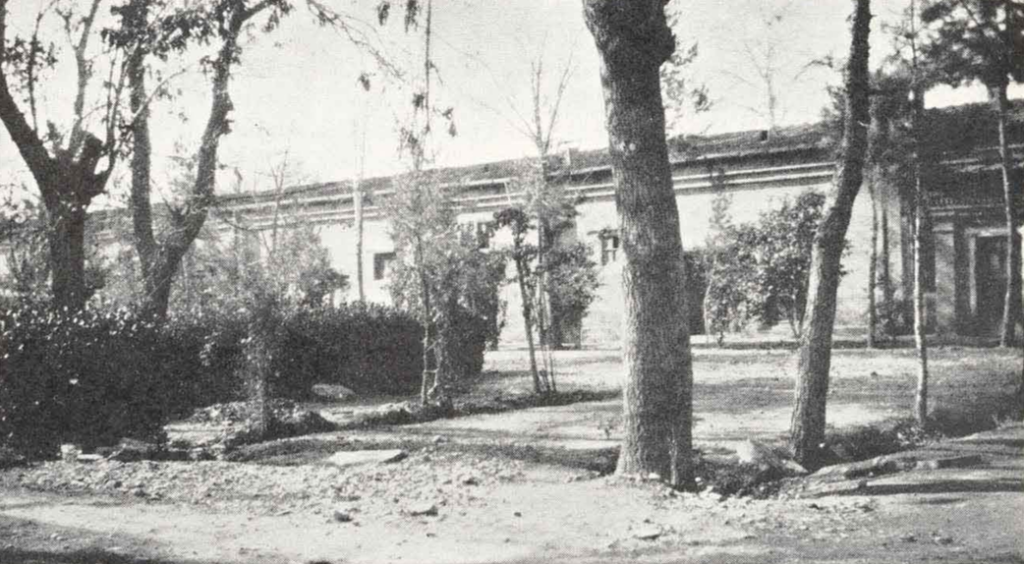
The Bahá’í community continued the work of Táhirih by giving agency to women and advancing their position in the community. Bahá’u’lláh encouraged this, writing that He had “lifted distinctions from between His servants and handmaidens, and… hath conferred upon all a station and rank of the same plane,” and had thus “broken the back of vain imaginings (in other words, disrupted the social constructs that maintain the patriarchy).”27From a Tablet of Bahá’u’lláh, in Compilation of Compilations 2 (Bahá’í Publications Australia, 1991), 357. See also Juan R. I. Cole, Modernity and the Millennium: The Genesis of the Baha’i Faith in the Nineteenth-century Middle East (Columbia University Press, 1998), 171–7.
Of course, the pronouncement of equality by the Founder of the religion did not immediately lead to full equality for women in the Bahá’í community. This was a lived, negotiated, and developing outcome, experienced within the cultural expectations and social constraints of a patriarchal society. But, as early as the 1870s, outside observers were noticing the improving position of women in the Bahá’í community. A Polish journalist visiting Baghdad and an Irish doctor born in Iran both wrote of this in the 1870s.28Jan Jasion, “‘A.J.’ and the Introduction of the Bahá’í Faith into Poland,” Bahá’í Studies 4 (1978), 31–7. Jablowonski calls the individuals he met “Babis” but that was the name by which the Bahá’ís were known throughout the nineteenth century. Edward Granville Browne, Materials for the Study of the Bábí Religion (Cambridge University Press, 1918), 262. The words that Professor Browne of Cambridge University heard in 1888 from a street peddler in Isfahan who was a Bahá’í demonstrated that this ethic of promoting women’s emancipation had penetrated all levels of the Bahá’í community: “We believe that women ought to be allowed to mix more freely with men, and should not be compelled to wear the veil.”29Edward Granville Browne, A Year among the Persians (Adam and Charles Black, 1893), 236. Individual Bahá’í women, such as Táyirih Khánum, contributed to the public discourse on women’s emancipation in the period before and after the Constitutional Revolution, writing articles for newspapers.30Dominic Parviz Brookshaw, “Women Poets,” in Literature of the Early Twentieth Century: From the Constitutional Period to Reza Shah, ed. Asghar Seyed-Gohrab (I.B. Tauris, 2015), 247–58. Afsaneh Najmabadi, “Ṭāyirih,” Nīmeh-ye Dīgar 2, no. 3 (Winter 1997), 146–95.
When the Bahá’ís began to establish a community administration at the beginning of the twentieth century, one of the first committees to be set up was a Committee for the Advancement of Women,31 Moojan Momen, “Role of Women in the Iranian Bahá’í Community during the Qajar Period,” in Religion and Society in Qajar Iran, ed. Robert M. Gleave (RoutledgeCurzon, 2005), 366, photograph, 360. and the advancement of women has remained a goal of the community up to the present. But perhaps the greatest contribution that the changes in the Bahá’í community made to the advancement of women is the progress that it made and continues to make towards the dismantling of the hierarchical social order that buttresses the patriarchy (see Part 2 of this article).
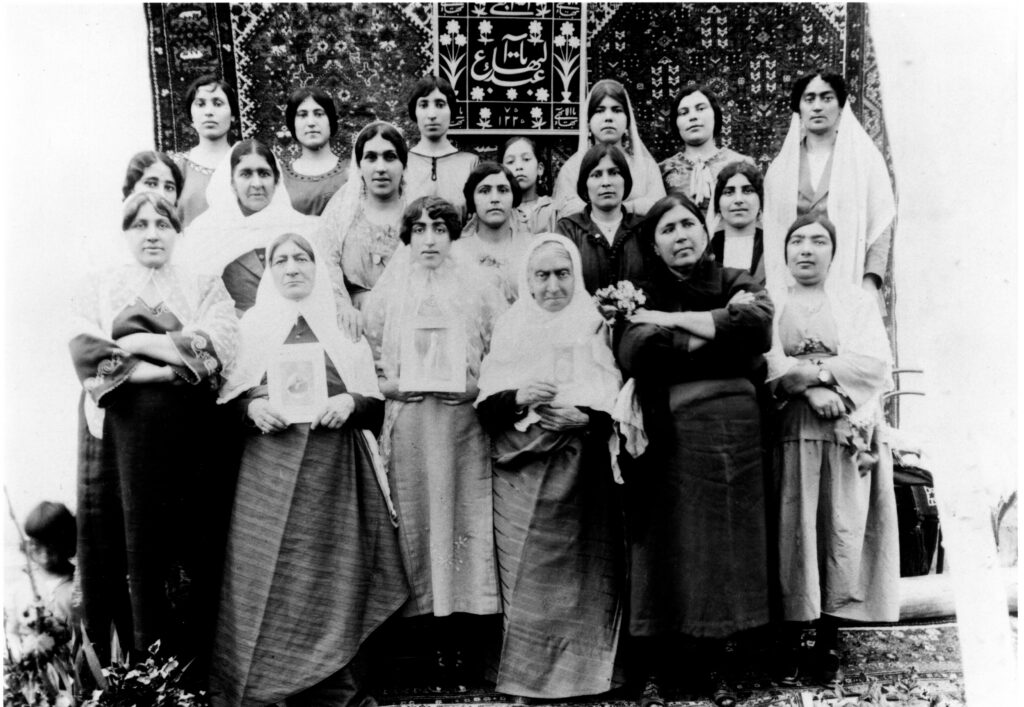
Bahá’u’lláh made it clear that His advocacy for modern education included girls as well as boys.32Bahá’u’lláh, Tablets, 128. Although urged by Western Bahá’í women to promote the unveiling of Eastern Bahá’í women (which was also a feature of the Iranian modernist discourse), ‘Abdu’l-Bahá judged that the more effective and sustainable way to promote the social advancement of women was through education. As the Bahá’í community began to build schools, ‘Abdu’l-Bahá made sure that they built girls’ schools alongside the boys’ schools, even saying that the education of girls took precedence over that of boys since they were the first educators of the next generation.33Compilation 1, 284; Compilation 2, 374. One result of this was that Iranian Bahá’í women were, in general, more educated than other women. By 1973, the Bahá’í community was able to announce a 100% literacy rate among women under 40 years of age at a time when nationally only 40% of Iranian women in this age range were literate.34Momen, “Role of Women,” 366.
It is noticeable that almost all of the Western Bahá’ís whom ‘Abdu’l-Bahá encouraged to settle in Iran to help to develop the Bahá’í community in the fields of education and health were women, who were then able to serve as role models for the Iranian Bahá’í women on how to claim agency and take on social roles.35Armstrong-Ingram, “American Bahá’í Women.”
There were other areas of life where the Bahá’ís were making innovative and radical changes ahead of what was happening in the rest of Iran, especially in agriculture and rural development, and in health and hygiene. But since the Iranian modernist reformers did not concern themselves much with these areas, there is little to compare these Bahá’í activities with and they will not be discussed here.36On agriculture, see Moojan Momen, “Social and Economic Development in an Iranian Village: The Bahá’í Community of Saysan,” Baha’i Studies Review 15 (2009): 67–81; on health and hygiene see, Seena B. Fazel and Minou Foadi, “Baha’i health initiatives in Iran: a preliminary survey,” in The Baha’is of Iran, 122–40.
CONTACTS BETWEEN THE REFORMERS AND BAHÁ’ÍS
As well as the evidence presented above that the Bahá’í leaders were ahead of the Iranian modernist reformers in the reforms they were advocating, there is also strong evidence that these reformers were in close contact with the Bahá’í leaders and the Bahá’í community. In the 1860s, two of the leading Iranian reformers were Mírzá Malkam Khán and Sayyid Jamálu’d-Dín Asadábádí (“Afghání”). The first of these was exiled to Baghdad in 1861 and is known to have met Bahá’u’lláh there. Later in 1866, he represented himself as being knowledgeable about the new religion to French scholar Ernest Renan, who encouraged him to write an article on the subject.37Hasan Balyuzi, Bahá’u’lláh: King of Glory (George Ronald, 1980), 151–3; Ernest Renan, Oeuvres Complètes 10, ed. Henriette Psichari (Calmann-Lévy, 1947–61), 453. See also Moojan Momen, The Bábí and Bahá’í Religions, 1844–1944: Some contemporary Western accounts (George Ronald, 1981), 23. Similarly, Asadábádí is said to have met Bahá’u’lláh in Baghdad, and he also represented himself as knowledgeable about the new religion such that Butrus al-Bustani asked him to contribute an article on the subject for his Arabic encyclopedia.38Nikki Keddie, Sayyid Jamāl ad-Dīn “al-Afghānī.”(University of California Press, 1972), 20–22. He tried to remain in close touch with the Bahá’í leadership, sending them copies of his newspaper al-Urwah al-Wuthqá from Paris in the 1880s.39Bahá’u’lláh, Tablets, 95.
The most consequential reformer from the next decade, the 1870s, was Mírzá Ḥusayn Khán Mushíru’d-Dawlih (Sipahsalár), who succeeded in becoming Prime Minister of Iran and began a reform agenda but was thwarted by the reactionary Iranian elite. He had at first been antagonistic to the Bahá’ís and, as Iranian ambassador to the Ottoman Government, was responsible for Bahá’u’lláh’s successive exiles from Baghdad to Istanbul, to Edirne, and to Acre. But after reading some of the letters addressed to Bahá’u’lláh by His followers after Bahá’u’lláh’s courier had been arrested in Aleppo in 1870, he realized that he had been wrong about Bahá’u’lláh. When he returned to Tehran and later became Prime Minister, he openly praised Bahá’u’lláh and protected the Bahá’ís on more than one occasion.40Ḥájí Mírzá Ḥaydar ‘Alí quoted in Balyuzi, Bahá’u’lláh, 441–4; See also Mina Yazdani, Awḍá‘-yi Ijtimá‘í-yi Írn dar ‘Ahd-i Qájár az khilál-i Áthár-i Baháʾí (Association for Bahā’ī Studies, 2003), 118–121. Information about the Bahá’í Faith probably came to him from his close friend Malkam Khán or one of his relatives who was a Bahá’í.41Moojan Momen, The Baha’i Communities of Iran 1 (George Ronald, 2015), 26, 498. Another close friend of Mushíru’d-Dawlih was Mírzá Yúsif Khán Mustasháru’d-Dawlih, who wrote the first reformist treatise to be published, Yik Kalamih. The Bahá’í scholar Mírzá Abu’l-Faḍl Gulpáygání records that he was passing through Tabriz where Mustasharu’d-Dawlih lived, and that the latter was present at a meeting where Gulpáygání debated with Reverend Robert Bruce, a British missionary, about the Bahá’í Faith.42Abu’l-Faḍá’i Gulpáygání, Rasá’il va Raqá’im (Mu’assih-yi-Milli-yi Maṭbú‘át-i Amrí 134 BE/1977), 210; Rúḥu’lláh Mihrábkhání, Zindigání-yi Mírzá Abu’l-Faḍl Gulpáygání (Bahá’í-Verlag, 1988), 125–31.
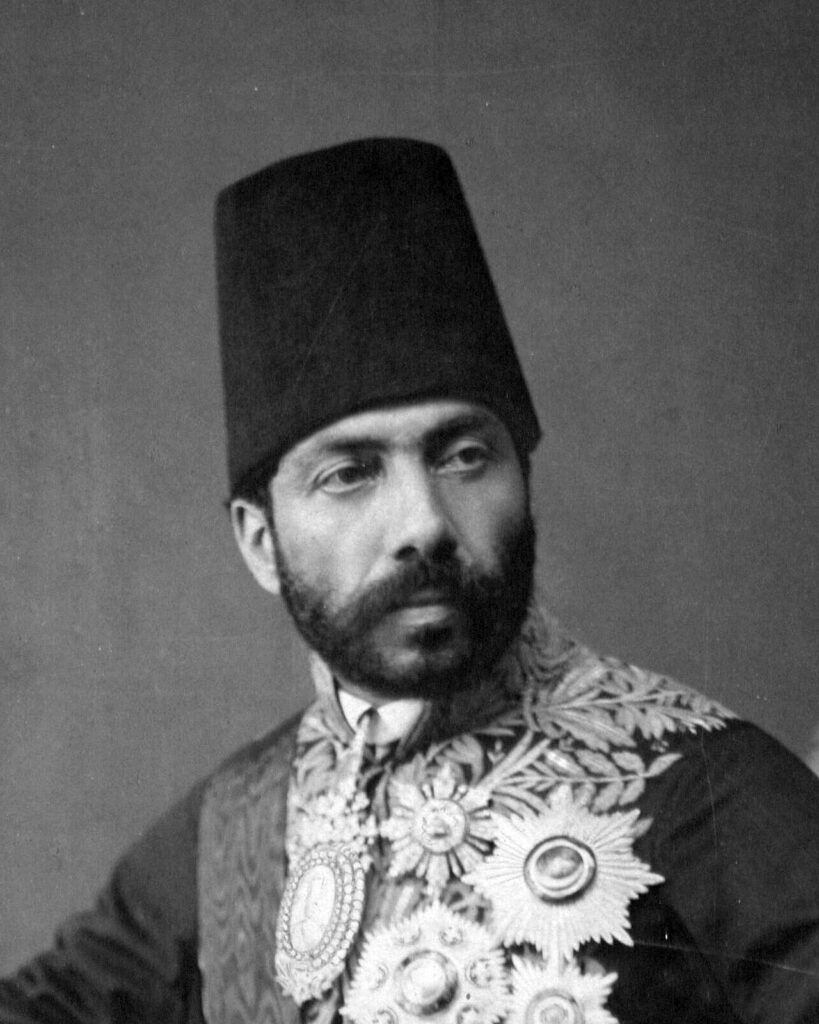
By the 1880s, there was an increasing debate about reform in Iran, fueled by newspapers and books printed outside Iran but circulated within the country. ‘Abdu’l-Bahá wrote an important treatise, the Risálih-yi Madaniyyih (The Secret of Divine Civilization), as a contribution to this debate. It was published in Bombay in 1882 and was probably only the second reform treatise (after Yik Kalamih) to be thus printed and circulated. It was published anonymously and with no overt reference to the Bahá’í Faith in it, so that prejudice against the new religion would not prevent it from being circulated and widely read. In this book, ‘Abdu’l-Bahá enters into the discourse that was going on among Iranian reformers about governmental reform and modern education, but, in contrast to these reformers, He emphasizes the need to develop a sound moral basis in society, upon which these other reforms could be established and develop.
One important focus of reform activity in the 1890s was the city of Isfahan. Here a group of modernist reformers gathered, calling themselves the Progress Society (Anjuman-i Taraqqí). It was one of the earliest such societies in Iran and did not just meet to discuss reform but carried out lines of social action, such as establishing a modern school. Almost all of the leading members of this group, which included such figures as Ḥájí Mírzá Naṣrulláh Maliku’l-Mutakallimín, Sayyid Jamál Vá`iz, Majdu’l-Islám Kirmání, Mírzá Asadu’lláh Vazír, and Mírzá Aḥmad Khán Fátiḥu’l-Mulk were at that time either Bahá’ís or closely associated with the Bahá’í community.43Momen, Baha’i Communities 2, 2:31–6. The first three named individuals moved to Tehran in 1902–3 and then became associated with the Azalí Bábís, but during the time they were in Isfahan there is no evidence that they were in contact with Azalís. Further details including evidence of these individuals being Bahá’ís or closely associated with the Bahá’í community in Isfahan can be found in Moojan Momen, “The Reform Movement in Isfahan, Iran: the role of Bábís and Bahá’ís,” Religions 17(6), (2026), 717; mdpi.com/2077-1444/17/6/717.
In the next decade, the 1900s, similar to the situation in Isfahan in the 1890s, almost all of the leading members of the reform movement in Sari in Mazandaran were either Bahá’ís or closely associated with the Bahá’í community. They set up the Anjuman-i Ḥaqíqat (The Truth Society) and undertook such activities as establishing a modern school.44Moojan Momen, “The Baha’is and the Constitutional Revolution: The Case of Sari, Mazandaran, 1906–1913,” Iranian Studies 41, no. 3 (2008), 343–363. Elsewhere in Iran, leading Constitutionalists such as Ḥájí Abu’l-Ḥasan Mírzá Shaykhu’r-Ra’ís were known to have been Bahá’ís,45Juan R. I. Cole, “Autobiography and Silence: The Early Career of Shaykh al-Ra’īs Qājār,” in Iran im 19. Jahrhundert und die Enstehung der Bahā’ī Religion, ed. Christoph Bürgel and Isabel Schayani (Georg Olms, 1998), 91–126; Juan R. I. Cole, “The Provincial Politics of Heresy and Reform in Qajar Iran: Shaykh al-Rais in Shiraz, 1895–1902,” Comparative Studies of South Asia, Africa and the Middle East 22, nos.1–2 (2002): 119–126; Momen, Baha’i Communities 1, 128–31. while Muḥammad Valí Khán Tunukábuní (Naṣru’s-Salṭanih, Sipahsalár-i A‘ẓam) and ‘Alí Qulí Khán Sardár As‘ad Bakhtiyárí, the two military leaders who led the Constitutionalist forces in their capture of Tehran in 1909, thus ending Muḥammad `Alí Sháh’s attempt to overthrow the Constitution, were both in close touch with the Bahá’í community, and both met ‘Abdu’l-Bahá in Paris.46Moojan Momen, “Who Was a Bahā’ī in the Upper Echelons of Qājār Iran?” Religions, 14, no. 4 (2023): 469, mdpi.com/2077-1444/14/4/469. Published in The Bahā’ī Faith: Doctrinal and Historical Explorations, ed. Moojan Momen and Zachery Heern (MDPI, 2024), 119–31.
Also of great interest and demonstrating the extent to which the modernist reformers looked to and may in some measure have modelled themselves on the Bahá’í community is the report by Náẓimu’l-Islám Kirmání, a historian who was closely involved with the reform movement, of the discussion at a meeting in March 1905 of the leading reformers at which he was present and where it was suggested that the reformers should look to the successful methods and tactics of the Bahá’ís for inspiration.47 Náẓimu’l-Islám Kirmání, Táríkh-i Bídárí-yi Írániyán (Amír Kabír, 1387/2008), 1:189. The text reads “Bábís,” but this is what the Bahá’ís were called at this time and it is unlikely that this refers to the Azalí Bábís, since they dissimulated their beliefs and were not known as an active group by this name.
There were also other factors that made it likely that the Bahá’ís may have been influencing Iranian society much more effectively than is often appreciated. In explaining their ideas, drawn as they were from European writings, the modernist reformers were introducing into their texts European terms and thus using words and concepts that were not immediately understandable to most Iranians and appeared as a rupture with Iranian culture. But the Bahá’í texts used words and ideas that were rooted in Iranian culture and therefore easily understood.48Ghazaleh Faridzadeh and Raed Faridzadeh, “Negotiating Freedom: Mostašār od-Doule’s Yek kalame and the Iranian Constitutional Experience,” Die Welt des Islams 61 (2021): 390–91; Algar, Malkam Khān, 27, 29; Nashat, Origins, 162–3. Indeed, the concept of the progressive revelation of religious truth, introduced by the Báb and developed by Bahá’u’lláh, created a pathway for a gradual organic modernization, in keeping with the culture of the nation and granting agency to all individuals in society.49Abbas Amanat, Iran: A Modern History (Yale University Press, 2017), 239–40.
Moreover, it should be borne in mind that the number of people engaged in the project of the Iranian reformers was very small, the readership for the writings they produced was very limited, and the ability of this small group to carry out any of their suggested changes was very constrained. Mahdí Malikzádih, who was himself part of the reform movement, suggests that the number in the reform circle in the last decades of the nineteenth century was only a few hundred,50Malikzádih, Tarikh, 1:69. and these reformers were operating within secret societies and only in a handful of large cities. By contrast, the Bahá’í community had a much greater membership (estimated to be 100,000 or more),51Peter Smith, “A Note on Babi and Baha’i Numbers in Iran,” Iranian Studies 17, no. 2/3 (Spring-Summer, 1984), 295–301. was distributed across the country, even in small towns and villages, and the Bahá’ís were trying to put these ideas into practice insofar as circumstances allowed.
The above evidence demonstrates that in decade after decade from the 1860s onward, the ideas put forward in the Bahá’í texts were presented earlier, more developed, and more easily understood than what appeared in the discourse and texts of the modernist reformers, and the Bahá’ís were implementing these changes in their communities scattered across the whole of Iran. Given this and the evidence presented above that many of the leading modernist reformers were in close touch with the Bahá’í leaders and the community, it is not unreasonable to suggest that Bahá’í ideas had some influence on the thinking of the reformers. The extent to which this may have occurred requires further research, as it would be hidden by these reformers to forestall opposition and persecution.
ATTACKS AND SETBACKS
Inevitably, the radical changes that the Bahá’í community was trying to make were either misunderstood or deliberately misrepresented to the people of Iran. And so, for example, the Bahá’í endeavor to advance the social role of women led to allegations of sexual immorality. The efforts of the Bahá’í community to introduce modern education led to claims that the Bahá’ís were trying to introduce foreign ideas into Iran. The ethos of modernity and progress cultivated within the Bahá’í community gave rise to accusations that the Bahá’ís were trying to undermine Iran’s culture and even, in later years, to conspiracy theories, which continue to the present day, that the Bahá’ís are agents of foreign powers. The global vision inculcated in the Bahá’í scriptures led to accusations that the Bahá’ís did not care about the welfare and progress of Iran. All of this led to persecution of the Bahá’í community by the religious leaders of Iran, who then recruited the intellectuals and politicians in their campaign against the Bahá’ís.
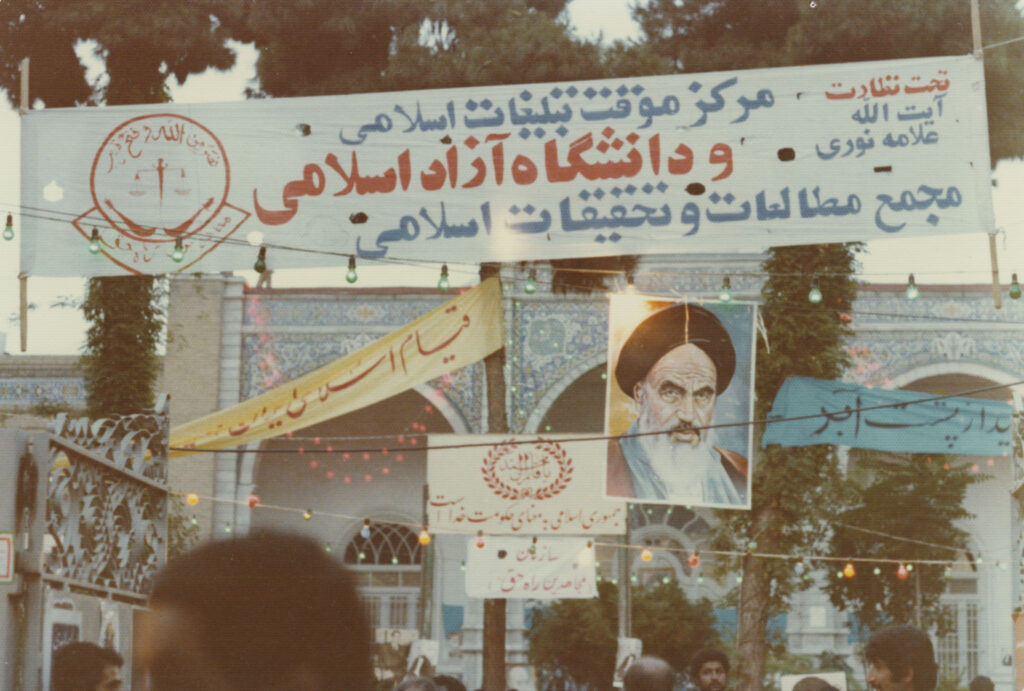
Although the Bahá’í community was striving to advance all of these areas of social progress, the constant persecution and the consequent social constraints that the community suffered did limit their efforts and cause setbacks. The hostile environment created by the opposition of the religious leadership in the country, and often the government, led to a situation in which the only public discourse about the community was hostile attacks. Even many of the secular nationalist reformers, whom one might have thought would have welcomed the Bahá’í social agenda, were contributing to these attacks by the time of Reza Shah’s reign.52 Mohammad Tavakoli-Targhi, “Anti-Baha’ism and Islamism in Iran,” in The Baha’is of Iran, 200–231; Chehabi, “Anatomy.”
The most public face of the Bahá’í community was its schools, and these were vehemently opposed by the Islamic religious leaders, many of whom were opposed both to all modern education and to any Bahá’í initiatives. In several instances, these schools were wrecked or closed down by the authorities, until finally the national government closed all of them permanently in 1934.53Shahvar, Forgotten Schools, 107–30. Another area where the efforts of the Bahá’í community were held back was in the social advancement of women. Thus, although women were able to vote for the Bahá’í leadership councils from 1923, it took until 1954 before conditions were right for them to be elected to these councils.54 Momen, “Role of Women,” 366. In all, there was a constant barrage of black propaganda against the community.
CONCLUSION
At no time since its founding in the latter part of the nineteenth century has the Bahá’í community been free to pursue its agenda for social reform or to enter into Iranian public discourse. The people of Iran have received only falsified facts and fanciful conspiracy theories about the Bahá’ís.55 See the examples provided by Chehabi in “Anatomy,” 186–94 of false allegations that Bahá’ís were enemies of the Iranian nation, tools of Russian and British imperialism, and prominent in the Shah’s regime; see also Reza Afshari, “The Discourse and Practice of Human Rights Violations of Iranian Bahaʾis in the Islamic Republic of Iran,” in The Baha’is of Iran (Routledge, 2008); Tavakoli-Targhi, “Anti-Baha’ism”; Vahman, 175 Years. As a result, Iranians have remained widely ignorant of the achievements of the Bahá’í community and the extent to which it has assisted the development of Iran.
In the mid-nineteenth century, Iran was in urgent need of reform and modernization. Two possible routes presented themselves: that of the modernist reformers and that of the Bahá’í community. In this article, we have traced the earliest suggestions made by the Iranian modernist reformers and pointed out that, in most instances, the Bahá’í leaders were making suggestions that were earlier and more progressive than those of the modernist reformers. It should not surprise us, however, that evidence for a direct influence of the Bahá’í teachings on the reformers is difficult to find, since it would have resulted in rejection and even danger for the reformers to admit to being influenced by a persecuted and reviled religious community. Given the evidence presented here that these modernist reformers were in many cases in close contact with the Bahá’í community and in some cases with the Bahá’í leadership, it would seem likely that at least some of the discourse of the modernist reformers was influenced by the Bahá’í teachings.
The body lies crushed into a well, with rocks over it, somewhere near the center of Ṭihrán. Buildings have gone up around it, and traffic passes along the road near where the garden was. Bushes push donkeys to one side, automobiles from across the world graze the camels’ packs, carriages rock by. Toward sunset men scoop up water from a stream and fling it into the road to lay the dust. And the body is there, crushed into the ground, and men come and go, and think it is hidden and forgotten.
Beauty in women is a relative thing. Take Laylí, for instance, whose lover Majnún had to go away into the desert when she left him, because he could no longer bear the faces of others; whereupon the animals came, and sat around him in a circle, and mourned with him, as any number of poets and painters will tell you—even Laylí was not beautiful. Sa’dí describes how one of the kings of Arabia reasoned with Majnún in vain, and how finally “It came into the king’s heart to look upon the beauty of Laylí, that he might see the face that had wrought such ruin. He bade them seek through the tribes of Arabia and they found her and brought her to stand in the courtyard before him. The king looked at her; he saw a woman dark of skin and slight of body, and he thought little of her, for the meanest servant in his harem was fairer than she. Majnún read the king’s mind, and he said, ‘O king, you must look upon Laylí through the eyes of Majnún, till the inner beauty of her may be manifest.'” Beauty depends on the eyes that see it. At all events we know that Ṭáhirih was beautiful according to the thought of her time.
Perhaps she opened her mirror-case one day—the eight-sided case with a lacquer nightingale singing on it to a lacquer rose—and looked inside, and thought how no record of her features had been made to send into the future. She probably knew that age would never scrawl over the face, to cancel the beauty of it, because she was one of those who die young. But perhaps, kneeling on the floor by the long window, her book laid aside, the mirror before her she thought how her face would vanish, just as Laylí’s had, and Shírín’s, and all the others. So that she slid open her pen-case, and took out the reed pen, and holding the paper in her palm, wrote the brief self-portrait that we have of her: “Small black mole at the edge of the lip—A black lock of hair by either cheek-” she wrote; and the wooden pen creaked as she drove it over the paper.
Ṭáhirih loved pretty clothes, and perfumes, and she loved to eat. She could eat sweets all day long. Once, years after Ṭáhirih had gone, an American woman traveled to ‘Akká and sat at ‘Abdu’l-Bahá’s table; the food was good, and she ate plentifully, and then asked the Master’s forgiveness for eating so much. He answered: Virtue and excellence consist in true faith in God, not in having a small or a large appetite for food. … Jinab-i-Ṭáhirih had a good appetite. When asked concerning it, she would answer, “It is recorded in the Holy Traditions that one of the attributes of the people of paradise is ‘partaking of food, continually.’ ”
When she was a child, instead of playing games, she would listen to the theological discussion of her father and uncle, who were great ecclesiastics in Qazvín. Soon she could teach Islam down to the last ḥadíth! Her brother said, “We, all of us, her brothers, her cousins, did not dare to speak in her presence, so much did her knowledge intimidate us.” This from a Persian brother, who comes first in everything, and whose sisters wait upon him. As she grew, she attended the courses given by her father and uncle; she sat in the same hall with two or three hundred men students, but hidden behind a curtain, and more than once refuted what the two old men were expounding. In time some of the haughtiest ‘ulamás consented to certain of her views.
Ṭáhirih married her cousin and gave birth to children. It must have been the usual Persian marriage, where the couple hardly met before the ceremony, and where indeed the suitor was allowed only a brief glimpse of the girl’s face unveiled. Love marriages were thought shameful, and this must have been pre-arranged in the proper way. No, if she ever cared for anyone with a human love, we like to think it was Quddús, whom she was to know in later years; Quddús, who was a descendant of the Imám Ḥasan, grandson of the Prophet Muḥammad. People loved him very easily, they could hardly turn their eyes away from him. He was one of the first to be persecuted for his Master’s Faith on Persian soil—in Shíráz, when they tortured him and led him through the streets by a halter. Later on, it was Quddús who commanded the besieged men at Shaykh Ṭabarsí, and when the Fort had fallen through the enemy’s treachery, and been demolished, he was given over to the mob, in his home city of Bárfurúsh. He was led through the marketplace in chains, while the crowds attacked him. They fouled his clothing and slashed him with knives, and in the end they hacked his body apart and burned what was left. Quddús had never married; for years his mother had lived in the hope of seeing his wedding day; as he walked to his death, he remembered her and cried out, “Would that my mother were with me, and could see with her own eyes the splendor of my nuptials!”
So Ṭáhirih lived in Qazvín, the honey colored city of sunbaked brick, with her slim, tinkling poplars, and the bands of blue water along the yellow dust of the roads. She lived in a honey colored house round a courtyard, cool like the inside of an earthen jar, and there were niches in the whitewashed walls of the rooms, where she set her lamp, and kept her books, wrapped up in hand-blocked cotton cloth. But where other women would have been content with what she had, she could not rest; her mind harried her; and at last she broke away and went over the mountains out of Persia, to the domed city of Karbilá, looking for the Truth.
Then one night she had a dream. She saw a young man standing in the sky; He had a book in His hands and He read verses out of it. Ṭáhirih wakened and wrote down the verses to remember them, and later, when she found the same lines again in a commentary written by the Báb, she believed in Him. At once she spoke out. She broadcast her conversion to the Faith of the Báb, and the result was open scandal. Her husband, her father, her brothers, begged her to give up the madness; in reply she proclaimed her belief. She denounced her generation, the ways of her people, polygamy, the veiling of women, the corruption in high places, the evil of the clergy. She was not one of those who temporize and walk softly. She spoke out; she cried out for a revolution in all men’s ways; when at last she died it was by the words of her own mouth, and she knew it.
Nicolas tells us that she had “an ardent temperament, a just, clear intelligence, remarkable poise, untameable courage.” Gobineau says, “The chief characteristic of her speech was an almost shocking plainness, and yet when she spoke … you were stirred to the bottom of your soul, and filled with admiration, and tears came from your eyes.” Nabíl says that “None could resist her charm; few could escape the contagion of her belief. All testified to the extraordinary traits of her character, marveled at her amazing personality, and were convinced of the sincerity of her conviction.”
Most significant is the memory of ‘Abdu’l-Bahá . When He was a child, Ṭáhirih held Him on her lap while she conversed with the great Siyyid Yaḥyá-i-Dárábí, who sat outside the door. He was a man of immense learning. For example, he knew thirty thousand Islamic traditions by heart; and he knew the depths of the Qur’án, and would quote from the Holy Text to prove the truth of the Báb. Ṭáhirih called out to him, “Oh Siyyid! If you are a man of action, do some great deed!” He listened, and for the first time he understood; he saw that it was not enough to prove the claim of the Báb, but that he must sacrifice himself to spread the Faith. He rose and went out, and traveled and taught, and in the end he laid down his life in the red streets of Nayríz. They cut off his head, and stuffed it with straw, and paraded it from city to city.
Ṭáhirih never saw the Báb. She sent Him a message, telling her love for Him:
The effulgence of Thy face flashed forth and the rays of Thy visage arose on high;
Then speak the word “Am I not your Lord” and “Thou art, Thou art,” we will all reply.
The trumpet-call “Am I not” to greet how loud the drums of affliction beat!
At the gates of my heart there tramp the feet and camp the hosts of calamity…
She set about translating into Persian the Báb’s Commentary on the Súrih of Joseph. And He made her one of the undying company, the Letters of the Living.
We see her there in Karbilá, in the plains where more than a thousand years before, Imám Ḥusayn, grandson of the Prophet, had fallen of thirst and wounds. We see her on the anniversary of his death, when all the town was wailing for him and all had put on black in his memory, decked out in holiday clothing to celebrate the birthday of the Báb. This was a new day, she told them; the old agonies were spent. Then she traveled in her howdah, a sort of curtained cage balanced on a horse, to Baghdád and continued her teaching. Here the leaders of the Shí’ih and Sunní, the Christian and Jewish communities sought her out to convince her of her folly; but she astounded them and routed them and in the end she was ordered out of Turkish territory, and she traveled toward Persia, gathering disciples for the Báb. Everywhere princes, ‘ulamás, government officials crowded to see her; she was praised from a number of pulpits; one said, “Our highest attainments are but a drop compared to the immensity of her knowledge.” This of a woman, in a country of silent, shadow-women, who lived their quiet cycle behind the veil: marriage and sickness and childbirth, stirring the rice and baking the flaps of bread, embroidering a leaf on a strip of velvet, dying without a name.
Karbilá, Baghdád, Kirmánsháh, Hamadán. Then her father summoned her home to Qazvín, and once she was back in his house, her husband, the mujtahid, sent for her to return and live with him. This was her answer: “Say to my presumptuous and arrogant kinsman … ‘If your desire had really been to be a faithful mate and companion to me, you would have hastened to meet me in Karbilá and would on foot have guided my howdah all the way to Qazvín. I would … have aroused you from your sleep of heedlessness and would have shown you the way of truth. But this was not to be. … Neither in this world nor in the next can I ever be associated with you. I have cast you out of my life forever.’ ” Then her uncle and her husband pronounced her a heretic, and set about working against her night and day.
One day a mullá was walking through Qazvín, when he saw a gang of ruffians dragging a man along the street; they had tied the man’s turban around his neck for a halter, and were torturing him. The bystanders said that this man had spoken in praise of two beings, heralds of the Báb; and for that, Ṭáhirih’s uncle was banishing him. The mullá was troubled in his mind. He was not a Bábí, but he loved the two heralds of the Báb. He went to the bazar of the swordmakers, and bought a dagger and a spearhead of the finest steel, and bided his time. One dawn in the mosque, an old woman hobbled in and spread down a rug. Then Ṭáhirih’s uncle entered alone, to pray on it. He was prostrating himself when the mullá ran up and plunged the spearhead into his neck; he cried out, the mullá flung him on his back, drove the dagger deep into his mouth and left him bleeding on the mosque floor.
Qazvín went wild over the murder. Although the mullá confessed, and was identified by his dying victim, many innocent people were accused and made prisoner. In Ṭihrán, Bahá’u’lláh suffered His first affliction—some days’ imprisonment—because He sent them food and money and interceded for them. The heirs now put to death an innocent man, Shaykh Ṣáliḥ, an Arab from Karbílá. This admirer of Ṭáhirih was the first to die on Persian soil for the Cause of God; they killed him in Ṭihrán; he greeted his executioner like a well-loved friend, and his last words were, “I discarded . … the hopes and beliefs of men from the moment I recognized Thee, Thou Who art my hope and my belief!”
The remaining prisoners were later massacred, and it is said that no fragments were left of their bodies to bury.
But still the heirs were not content. They accused Ṭáhirih. They had her shut up in her father’s house and made ready to take her life; however, her hour was not yet come. It was then that a beggar-woman stood at the door and whined for bread; but she was no beggar-woman—she brought word that one sent by Bahá’u’lláh, was waiting with three horses near the Qazvín gate. Ṭáhirih went away with the woman, and by daybreak she had ridden to Ṭihrán, to the house of Bahá’u’lláh. All night long, they searched Qazvín for her, but she had vanished.
The scene shifts to the gardens of Badasht. Mud walls enclosing the jade orchards, a stream spread over the desert, and beyond, the sharp mountains cutting into the sky. The Báb was in His prison at Chihríq — “The Grievous Mountain.” He had two short years to live.
And now Bahá’u’lláh came to Badasht, with eighty-one leading Babís as His companions. His destiny was still unguessed. He, the Promised One of the Báb—of Muḥammad, of Christ, of Zoroaster, and beyond Them of prophet after prophet down into the centuries—was still unknown. How could they tell, at Badasht, that His name would soon be loved around the world? How could they hear it called upon, in cities across the earth; strange, unheard of places: San Francisco, Buenos Aires, Adelaide? How could they see the unguessed men and women that would arise to serve that name? But Ṭáhirih saw. “Behold,” she wrote, “the souls of His lovers dancing like motes in the light that has flashed from His face!”
It was in this village of Badasht that the old laws were broken. Up to these days, the Babís had thought that their Master was come to enforce Islám; but here one by one they saw the old laws go. And their confusion mounted, and their trouble, and some held to the old ways and could not go forward into the new.
Then one day, as they sat with Bahá’u’lláh in the garden, an unbearable thing came to pass. Ṭáhirih suddenly appeared before them, and she stood in their presence with her face unveiled. Ṭáhirih so holy; Ṭáhirih, whose very shadow a man would turn his eyes from; Ṭáhirih, the most venerated woman of her time, had stripped the veil from her face, and stood before them like a dancing girl ready for their pleasure. They saw her flashing skin, and the eyebrows joined together, like two swords, over the blazing eyes. And they could not look. Some hid their faces in their hands, some threw their garments over their heads. One cut his throat and fled shrieking and covered with blood.
Then she spoke out in a loud voice to those who were left, and they say her speech came like the words of the Qur’án. “This day,” she said, “this day is the day on which the fetters of the past are burst asunder—I am the Word which the Qá’im is to utter, the Word which shall put to flight the chiefs and nobles of the earth!” And she told them of the old order, yielding to the new, and ended with a prophetic verse from the Holy Book: “Verily, amid gardens and rivers shall the pious dwell in the seat of truth, in the presence of the potent King.”
Ṭáhirih was born in the same year as Bahá’u’lláh, and she was thirty-six when they took her life. European scholars have known her for a long time, under one of her names, Qurratu’l-‘Ayn, which means “Solace of the Eyes.” The Persians sing her poems, which are still waiting for a translator. Women in many countries are hearing of her, getting courage from her. Many have paid tribute to her. Gobineau says, after dwelling on her beauty, “(but) the mind and the character of this young woman were much more remarkable.” And Sir Francis Younghusband: ” … she gave up wealth, child, name and position for her Master’s service. … And her verses were among the most stirring in the Persian language.” And T. K. Cheyne, ” … one is chiefly struck by her fiery enthusiasm and by her absolute unworldliness. This world was, in fact, to her, as it was … to Quddús, a mere handful of dust.”
We see her now at a wedding in the Mayor’s house in Ṭihrán. Her curls are short around her forehead, and she wears a flowered kerchief reaching cape-wise to her shoulders and pinned under her chin. The tight-waisted dress flows to the ground; it is handwoven, trimmed with brocade and figured with the tree-of-life design. Her little slippers curl up at the toes. A soft, perfumed crowd of women pushes and rustles around her. They have left their tables, with the pyramids of sweets in silver dishes. They have forgotten the dancers, hired to stamp and jerk and snap their fingers for the wedding feast. The guests are listening to Ṭáhirih, she who is a prisoner here in the Mayor’s house. She is telling them of the new Faith, of the new way of living it will bring, and they forget the dancers and the sweets.
This Mayor, Maḥmúd Khán, whose house was Ṭáhirih’s prison, came to a strange end. Gobineau tells us that he was kind to Ṭáhirih and tried to give her hope, during those days when she waited in his house for the sentence of death. He adds that she did not need hope. That whenever Maḥmúd Khán would speak of her imprisonment, she would interrupt, and tell him of her Faith; of the true and the false; of what was real, and what was illusion. Then one morning, Maḥmúd Khán brought her good news; a message from the Prime Minister; she had only to deny the Báb, and although they would not believe her, they would let her go.
“Do not hope,” she answered, “that I would deny my Faith … for so feeble a reason as to keep this inconstant, worthless form a few days longer. … You, Maḥmúd Khán, listen now to what I am saying. … The master you serve will not repay your zeal; on the contrary, you shall perish, cruelly, at his command. Try, before your death, to raise your soul up to knowledge of the Truth.”1Gobineau, Comte de, Les Religions et les Philosophies dans l’Asie Centrale, p. 242. He went from the room, not believing. But her words were fulfilled in 1861, during the famine, when the people of Ṭihrán rioted for bread.
Here is an eye-witness’ account of the bread riots of those days; and of death of Maḥmúd Khán: “The distress in Ṭihrán was now culminating, and, the roads being almost impassable, supplies of corn could not reach the city. … As soon as a European showed himself in the streets he was surrounded by famishing women, supplicating assistance … on the 1st of March … the chief Persian secretary came in, pale and trembling, and said there was an émeute, and that the Kalántar, or mayor of the city, had just been put to death, and that they were dragging his body stark naked through the bazars. Presently we heard a great tumult, and on going to the windows saw the streets filled with thousands of people, in a very excited state, surrounding the corpse, which was being dragged to the place of execution, where it was hung up by the heels, naked, for three days.
“On inquiry we learned that on the 28th of February, the Sháh, on coming in from hunting, was surrounded by a mob of several thousand women, yelling for bread, who gutted the bakers’ shops of their contents, under the very eyes of the king. … Next day, the 1st of March … the Shah had ascended the tower, from which Hajji Baba’s Zainab was thrown, and was watching the riots with a telescope. The Kalántar … splendidly dressed, with a long retinue of servants, went up to the tower and stood by the Sháh who reproached him for suffering such a tumult to have arisen. On this the Kalántar declared he would soon put down the riot, and going amongst the women with his servants, he himself struck several of them furiously with a large stick. … On the women vociferously calling for justice, and showing their wounds, the Shah summoned the Kalántar and said, ‘If thou art thus cruel to my subjects before my eyes, what must be thy secret misdeeds!’ Then turning to his attendants, the king said, — ‘Bastinado him, and cut off his beard.’ And again, while this sentence was being executed, the Shah uttered that terrible word, Tanáb! ‘Rope! Strangle him!’”
One night Ṭáhirih called the Kalántar’s wife into her room. She was wearing a dress of shining white silk; her hair gleamed, her cheeks were delicately whitened. She had put on perfume and the room was fragrant with it.
“I am preparing to meet my Beloved,” she said. “… the hour when I shall be arrested and condemned to suffer martyrdom is fast approaching.”
After that, she paced in her locked room, and chanted prayers. The Kalántar’s wife stood at the door, and listened to the voice rising and falling, and wept. “Lord, Lord,” she cried, “turn from her … the cup which her lips desire to drink.” We cannot force the locked door and enter. We can only guess what those last hours were. Not a time of distributing property, of saying good-bye to friends, but rather of communion with the Lord of all peoples, the One alone Beloved of all men. And His chosen ones, His saints and His Messengers, They all were there; They are present at such hours; she was already with Them, beyond the flesh.
She was waiting, veiled and ready, when they came to take her. “Remember me,” she said as she went, “and rejoice in my gladness.” She mounted a horse they had brought and rode away through the Persian night. The starlight was heavy on the trees, and nightingales rustled. Camel-bells tinkled from somewhere. The horses’ hooves thudded in the dust of the road.
And then bursts of laughter from the drunken officers in the garden. Candles shone on their heavy faces, on the disordered banquet-cloth, the wine spilling over. When Ṭáhirih stood near them, their chief hardly raised his head. “Leave us!” he shouted. “Strangle her!” And he went back to his wine.
She had brought a silk handkerchief with her; she had saved it for this from long ago. Now she gave it to them. They twisted it round her throat, and wrenched it till the blood spurted. They waited till her body was quiet, then they took it up and laid it in an unfinished well in the garden. They covered it over and went away, their eyes on the earth, afraid to look at each other.
Many seasons have passed over Ṭihrán since that hour. In winter the mountains to the north have blazed with their snows, shaken like a million mirrors in the sun. And springs came on, with pear blossoms crowding the gardens, and blue swallows flashing. Summertimes, the city lay under a dust-cloud, and people went up to the moist rocks, the green clefts in the hills. And autumns, when the boughs were stripped, the dizzy space of plains and sky circled the town again. Much time has passed, almost a hundred years since that night.
But today there are a thousand voices where there was one voice then. Words in many tongues, books in many scripts, and temples rising. The love she died for caught and spread, till there are a thousand hearts offered now, for one heart then. She is not silent, there in the earth. Her lips are dust, but they speak.
I am happy to speak to you this evening about one of the greatest young women in the world, one of the most spiritual, one of the greatest poets of Írán, and the first woman of her time in Central Asia to lay aside the veil and work for the equal education of the girl and the boy. She was the first suffrage martyr in Central Asia. The woman suffrage movement did not begin with Mrs. Pankhurst in the West, but with Ṭáhirih, also often called Qurratu’l-‘Ayn of Írán. She was born in Qazvín, Persia, in 1817.
Picture to your mind one of the most beautiful young women of Írán, a genius, a poet, the most learned scholar of the Qur’an and the traditions, for she was born in a Muhammadan country; think of her as the daughter of a jurist family of letters, daughter of the greatest high priest of her province and very rich, enjoying high rank, living in an artistic palace, and distinguished among her young friends for her boundless, immeasurable courage. Picture what it must mean for a young woman like this, still in her twenties, to arise for the equality of men and women, in a country where, at that time, the girl was not allowed to learn to read and write!
The Journal Asiatic of 1866 presents a most graphic view of Ṭáhirih, the English translation of which is this: “How a woman, a creature so weak in Írán, and above all in a city like Qazvín where the clergy possess such a powerful influence, where the ‘Ulamás, the priests, because of their number and importance and power hold the attention of the government officials and of the people, how can it be that in such a country and district and under such unfavourable conditions a woman could have organized such a powerful party of heretics? It is unparalleled in past history.”
As I said, in her day girls were not permitted to learn to read and write, but Ṭáhirih had such a brilliant mind, and as a child was so eager for knowledge that her father, one of the most learned mullás of Írán, taught her himself and later had a teacher for her. This was most unusual, for in her day girls had no educational opportunities. She outdistanced her brothers in her progress and passed high in all examinations. Because she was a woman they would not give her a degree. Her father often said what a pity she had not been born a son, for then she could have followed in his career as a great mullá of the Empire.
Ṭáhirih was married when she was thirteen years old to her cousin, the son of the Imám-Juma, a great mullá who leads the prayers at the mosque on Fridays. She had three children, two sons and one daughter. She became a very great poet and was deeply spiritual, she was always studying religion, always seeking for truth. She became profoundly interested in the teachings of Shaykh Aḥsá’í and Siyyid Káẓím Rashti, who were liberalists and said great spiritual reforms would come. Her father was very angry with her because she read their books and her father-in-law was too. But she continued to study their books and she heard about the Báb and Bahá’u’lláh, and their teachings for universal peace and the equal education of the girl and the boy. She believed in these principles whole-heartedly and declared herself a believer.
This great young woman of Qazvín laid aside the veil which Muhammadan women wear; she didn’t put it aside altogether, but she many times let it slip from her face when she lectured. But she declared that women should not wear the veil, should not be isolated, but should have equal rights and opportunities. She quoted her great teacher, Bahá’u’lláh, that man and woman are as the two wings of the bird of humanity, and this bird of humanity cannot attain its highest, most perfect flight until the two wings are equally poised, equally balanced. She was too far ahead of her time, and like other pioneers of great progressive movements, she was imprisoned. Instead of putting her into jail, they made her a prisoner in the home of the Kalantar, that means the Mayor of Ṭihrán. Here several poets and some of the greatest women of the capital came to call, and every one was charmed by her presence. The Sháh-in-Sháh of Persia sent for her to be brought to his palace, and when he saw her he said: “I like her looks, leave her and let her be.”
Náṣiri’d-Dín-Sháh, the ruler, sent her a letter asking her to give up her very advanced ideas and telling her if she did, he would make her his bride, the greatest lady in the land. On the back of his letter she wrote her reply in verse declining his magnificently royal offer. Her words were:
“Kingdom, wealth and ruling be for thee,
Wandering, becoming a poor dervish and calamity be for me.
If that station is good, let it be for thee.
And if this station is bad, I long for it, let it be for me!”
She was a prisoner in the Mayor’s home for more than three years and during all this time the women of Írán came to love her more and more, and all people were enchanted with her poetry, and many came to believe as she did, that this is the dawn of a great new universal epoch when we must work for the oneness of mankind, for the independent investigation of truth, for the unity of religions and for the education of the girl equally with that of the boy. The orthodox clergy were afraid of these new progressive ideals and as they were the power behind the government, it was decided to put Ṭáhirih to death. They had to do it secretly because they knew how many hundreds of the most important people in Ṭihrán loved her.
They decided upon September 15, 1852, for her death. With her prophetic soul she must have divined it for she wrote in one of her poems: “At the gates of my heart I behold the feet and the tents of hosts of calamity.” That morning she took an elaborate bath, used rosewater, dressed herself in her best white dress. She said good-bye to everyone in the house, telling them that in the evening she was leaving to go on a long journey. After that she said she would like to be alone, and she spent the day, as they said, talking softly to herself, but we know she was praying. They came for her at night and she said to them, “I am ready!” The Mayor had them throw his own cloak about her so that no one would recognize her, and they put her upon his own horse. In a roundabout way through smaller streets they took her to a garden and had her wait in a servant’s room on the ground floor. The official called a servant and ordered him to go and kill the woman downstairs. He went but when Ṭáhirih spoke to him he was so touched by her sweetness and holiness, that he refused to strangle her, and carried the handkerchief again upstairs. The official dismissed him, called a very evil servant, gave him liquor to drink, then handed him a bag of gold as a present, put the handkerchief into his hands and said, “Go down and kill that woman below and do not let her speak to you.” The servant rushed in, brutally strangled her with the handkerchief, kicked her and while she was still living threw her into a dry well and filled it up with stones.
But they could not bury her there! Her influence had gone around the whole world. Ṭáhirih, Qurratu’l-‘Ayn, has become immortal in the minds of millions of men and women, and her spirit of love and heroism will be transmitted to millions yet unborn.
I should like to explain to you what her names mean. One of her teachers, Káẓím Rashti gave her the name of Qurratu’l-‘Ayn, which means “Consolation of the Eyes,” because she was so young, so beautiful, so spiritual. Bahá’u’lláh gave her the name Ṭáhirih, which means “The Pure One.” While still in the twenties she began to preach the equal rights of men and women, she was martyred at the age of thirty-six years, and yet today, eighty-seven years after her cruel martyrdom, the women of Írán and of many other countries of the Islámic world no longer are allowed to wear the veil, and girls are receiving education. She did not die in vain. Ṭáhirih’s courageous deathless personality forever will stand out against the background of eternity, for she gave her life for her sister women. The sweet perfume of her heroic selflessness is diffused in the whole five continents. People of all religions and of none, all races, all classes, all humanity, cherish the memory of Ṭáhirih and weep tears of love and longing when her great poems are chanted.
When I was in Vienna, Austria, a few years ago, I had an interview with the mother of the President of Austria, Mrs. Marinna Hainisch, the woman who has done most for woman’s education in Austria, that nation of great culture. Mrs. Hainisch established the first high schools for girls in her land. She told me that the inspiration of all her lifework had been Ṭáhirih of Írán. Mrs. Hainisch said: “I was a young girl, only seventeen years old when I heard of the martyrdom of Ṭáhirih, and I said, ‘I shall try to do for the girls of Austria what Ṭáhirih tried to do and gave her life to do, for the girls of Írán.’” She told me: “I was married, and my husband too, was only seventeen; everybody was against education for girls, but my young husband said: ‘If you wish to work for the education of girls, you can.’” I mentioned this interview over in Aligrah, India, a short time ago when I spoke to the university students at the home of Professor Ḥabíb, and at the close of my talk another guest of honor arose, a woman professor of Calcutta University, and asked if she could speak a few words. She said, “I am Viennese, I was born in Vienna and I wish to say that Mrs. Marinna Hainisch established the first college for the higher education of girls in Austria and I was graduated from the college.” This is a proof of the influence of Ṭáhirih. Mrs. Hainisch had said to me, “It is so easy for you, Miss Root, to go all around the world and be given the opportunity to speak on the equal education of the girl and the boy. It was so hard for me to interest people in this new idea in my day, but I remembered Ṭáhirih and I tried. Poor Ṭáhirih had to die for these very ideals which today the world accepts!”
When I was in Cawnpore, India, and spoke in a girls’ college on Ṭáhirih’s life the founder and the donor of that great college arose and said: “It is my hope that every girl in this school will become a Ṭáhirih of India.”
Sir Rai Bahadur Sapru of Allahabad, one of India’s greatest lawyers, said to me: “I love Ṭáhirih’s poems so much that I have named my favorite little granddaughter Ṭáhirih. I have tried for years to get her poems, and now today you give them to me.” When I was in the Pemberton Club in London one evening, a well known publisher said to me: “I shall get Ṭáhirih’s poems collected and publish them at a great price.” But he could never get them. I should like to tell you, dear listeners on the air, that the day after the martyrdom of Ṭáhirih, the authorities burned her clothing, her books, her poems, her birth certificate; they tried to wipe out every trace of her life; but other people had some of her poems, and a friend of mine worked for years to gather them together, copied them in longhand and gave them to me as a present when I was in Írán in 1930. Another friend in India, Mr. Isfandiar K. B. Bakhtiari of Karachi, has twice published one thousand copies of these poems for people in India. In my book Ṭáhirih the Pure, Írán’s Greatest Woman, published July, 1938, I included her poems and published three thousand copies. Two of these poems are translated into English, but the original poems are all in the Persian language. They would be very beautiful sung in the Persian language over your radio.
Professor Edward G. Browne of Cambridge University, in his book A Traveller’s Narrative, wrote: “The appearance of such a woman as Ṭáhirih, Qurratu’l-‘Ayn, is in any country and in any age a rare phenomenon, but in such a country as Persia it is a prodigy, nay, almost a miracle. Alike in virtue of her marvelous beauty, her rare intellectual gifts, her fervid eloquence, her fearless devotion and her glorious martyrdom, she stands forth incomparable amidst her countrywomen. Had the Bábí religion no other claim to greatness, this were sufficient, that it produced a heroine like Qurratu’l-‘Ayn.”
And now dear listeners, that we have heard of Ṭáhirih, Qurratu’l-‘Ayn, this first woman suffrage martyr, this first woman in Central Asia to work for the education of girls, what will our own endeavors show forth in this twentieth century?
Today you have equal education for girls and boys in Australia, and you have suffrage for women; but you in Australia and we in the United States and in all other parts of the globe are born into this world to work for universal peace, disarmament, a world court and a strong international police force to ensure arbitration. We are born into this world to work for universal education, a universal auxiliary language, for unity in religion and for the oneness of mankind. Our lives, our world, need strong spiritual foundations, and one of the finest traits of Ṭáhirih, and one that helped the world most, was her fidelity in searching for truth! She began as a little girl and continued until the very day of her passing from this world.
O Ṭáhirih, you have not passed out, you have only passed on! Your spiritual, courageous life will forever inspire, ennoble and refine humanity; your songs of the spirit will be treasured in innumerable hearts. You are to this day our living, thrilling teacher!