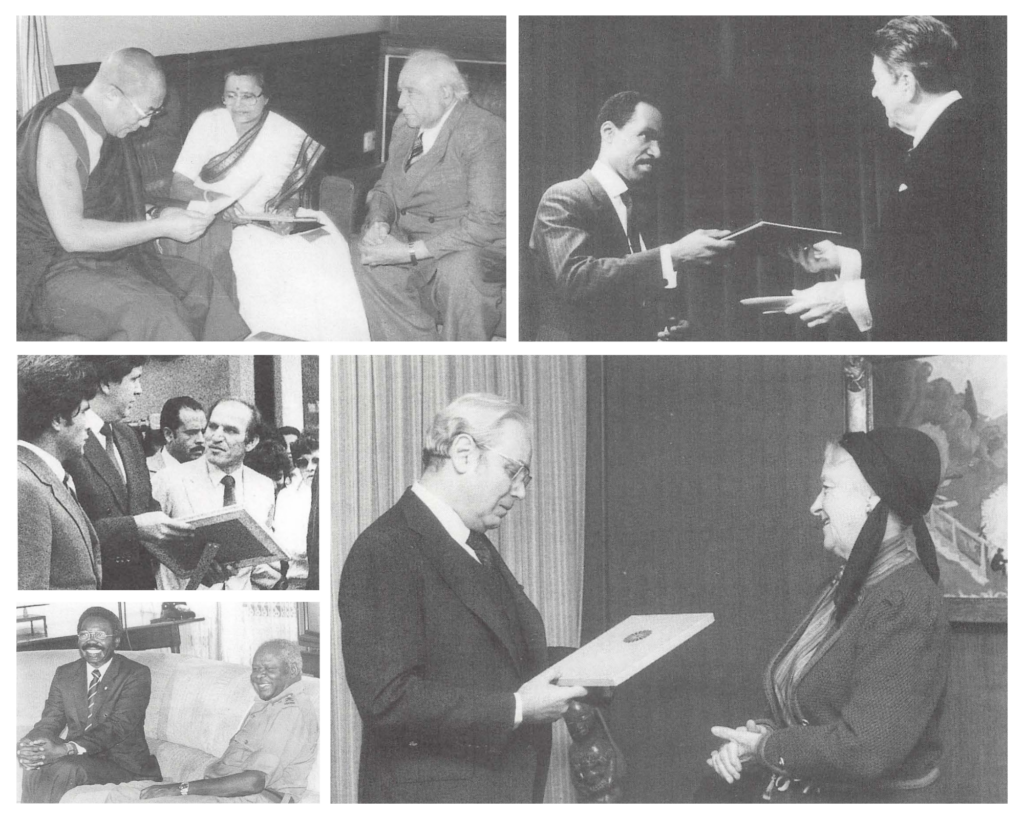
Forty years ago, the Universal House of Justice addressed the peoples of the world in a statement of notable moral clarity entitled The Promise of World Peace. Released in October 1985, it was transmitted to heads of state and governments across the globe and translated into dozens of languages. It was not a diplomatic communiqué or a policy brief, but rather a document that the Universal House of Justice itself described as a message directed to all of humanity at a moment when the question of peace had become a vital issue confronting humanity.1The Promise of World Peace, bahai.org/r/883867984.
The historical moment in which the message was produced was one of division, but also of a certain degree of hope. The Cold War continued to divide the world between two nuclear-armed superpowers, while proxy conflicts raged across Central America, Southern Africa, and Southeast Asia. In the span of just a few decades, the international community had witnessed both the founding of the United Nations and the repeated frustration of its promise to build a less violent global order. The prevailing mood was thus one of heightened danger combined with an emerging global consciousness in a growing sense that humanity could not continue along its present path without catastrophic consequences, and that it therefore needed to reflect on fundamental moral choices.
Four decades later, the world has changed in ways both expected and surprising. The Cold War ended, bringing with it a brief wave of euphoric hope for a new global order in the 1990s. That hope gradually receded with the rise of terrorism, transnational organized crime, and, more recently, the intense return of interstate conflicts affecting societies in Europe, the Middle East, and Central Asia. Running alongside these ills has been the steady growth of inequality in its most extreme forms, even as absolute poverty has declined in some populated regions like China and Brazil. What has followed is, in many respects, a recurrence of familiar pathologies in new forms: nationalism is again gaining momentum, multilateral institutions are under increasing stress, and the normalization of violence in public discourse—political, digital, and armed—has reached levels that would have alarmed even the most pessimistic observers of 1985.
This is precisely why returning to The Promise of World Peace is not an exercise in nostalgia or institutional self-celebration. Rather, it reflects an effort to engage seriously with a message that anticipated, with notable clarity, the structural conditions that continue to obstruct the progress of peace. More than that, it articulated a conceptual framework that remains relevant to challenges that secular social science has yet to fully address, grounded in the oneness of humanity, the transformation of character, and the moral prerequisites for collective security.
The main argument of this article is that the preconditions for peace identified in 1985 still have not been met. These conditions are based on the recognition of human oneness and a transformation of collective assumptions about human nature, and they are increasingly relevant in a world of rising nationalism, structural violence, and fragmented global governance. To develop this argument, this article starts by comparing the world of 1985 and now and follows examining the foundational principle of human oneness. Then, it discusses the challenges posed by the culture of violence and reflects on institutional limitations. The analysis concludes by considering the implications of the 2019 message of the Universal House of Justice,2Universal House of Justice to the Bahá’ís of the world, 18 January 2019, bahai.org/r/276724432. which expanded and deepened the 1985 framework presented in The Promise of World Peace.
A WORLD ON THE BRINK, THEN AND NOW
The Promise of World Peace was issued into a world living under the shadow of nuclear annihilation. The arms race between the United States and the Soviet Union had reached levels of destructive capacity that made mutual annihilation not merely possible but, under certain plausible scenarios, virtually automatic. Shoghi Effendi had earlier described the forces of the age as both disintegrative and integrative, pulling humanity simultaneously toward fragmentation and toward an emergent global consciousness.3The World Order of Bahá’u’lláh, bahai.org/r/536052373. The 1985 message addressed precisely that dual dynamic, insisting that the integrative forces were not incidental but constitutive of a genuine historical trajectory toward peace.
The structural parallels with our present moment are impossible to ignore. The twenty-first century has produced a reconfiguration of geopolitical risk that mirrors, in many respects, the multipolar instabilities of the pre-1945 order. The erosion of the liberal international order, expressed in the weakening of multilateral institutions, the rise of nationalist populism across both hemispheres, and the breakdown of shared epistemic frameworks that once made diplomacy possible, now recalls the fractured world the 1985 statement sought to address. The Universal House of Justice observed in 2019 that “many of the dominant currents in societies everywhere are pushing people apart, not drawing them together” and that “the forces of disintegration regroup and gain ground.”418 January 2019, bahai.org/r/963030050. The intervening decades have not resolved the tensions of 1985; they have, in many ways, intensified them.
Inequality, another structural precondition of violence that the document identified, remains persistent. The global economy has delivered unprecedented aggregate wealth while simultaneously concentrating it in ways clearly recognized as incompatible with peace. Political and economic systems have enabled the enrichment of small circles with conspicuously excessive wealth, a condition the 2019 message described as one that “fuels fundamental instability in world affairs.”518 January 2019, bahai.org/r/963030050. This is not merely a matter of economic injustice, critical as that is; it is also a generator of the structural violence that peace researchers have long identified as an obstacle to positive peace.6Johan Galtung, “Violence, Peace, and Peace Research,” Journal of Peace Research 6, no. 3 (1969): 167–191, jstor.org/stable/422690. In other words, it is under conditions of inequality that certain populations become more exposed to a form of violence that does not necessarily kill outright but nevertheless produces hunger, precarious living conditions, and a systematic denial of human dignity.
The ecological dimension of peace, the recognition that no lasting social order can be built on the destruction of the planetary commons, was not yet clearly visible in 1985. Subsequently, the Bahá’í International Community has helped to reflect on this very question, as illustrated by its contributions to the COP30 conference in Belém, Brazil. There, representatives emphasized that the climate crisis is not merely a technical or economic challenge but a profoundly ethical and spiritual one, calling for a sense of shared responsibility across generations.
Yet amid this constellation of challenges, the core insight of The Promise of World Peace remains as clarifying as ever. Peace is not primarily a set of policies or treaties. It is a social and moral process grounded in the recognition of shared humanity. The Universal House of Justice understood that the instruments of peace, including international institutions, arms agreements, and diplomatic frameworks, are necessary but not sufficient. They require a corresponding transformation in human consciousness and in the structures that shape it. This is the dimension that has remained most underdeveloped, and it is also where the document’s contribution has been most consistently underestimated.
PRECONDITIONS FOR PEACE: THE ONENESS OF HUMANITY AS FOUNDATION
The conceptual heart of The Promise of World Peace is a claim both simple and radical: that a just world order “can be founded only on an unshakable consciousness of the oneness of mankind.”7Promise of World Peace, bahai.org/r/674456093. This is not a rhetorical flourish, but rather a concept presented as the organizing principle from which all other prerequisites for peace derive. The recognition of human oneness is presented not as a sentiment but as an ontological reality, one whose acknowledgment or denial has material consequences for the structures of society.
The principle is demanding in its implications. The document does not present it as an invitation to vague cosmopolitan benevolence; rather, it is a call to reorganize political, economic, and social structures in accordance with the recognition that every human being belongs, in the deepest sense, to a single community. Ultimately, our primary identity resides in the recognition that we are human beings, fruit of a single tree, and that elements of identity such as race, class, and gender, are secondary.
This means confronting the social ills that affect the recognition of the other as part of a single whole. One example is the need to overcome racism, which can be seen not as a regrettable social attitude but as a structural ordering of privilege and deprivation incompatible with peace, given it impairs one’s ability to recognize the other as part of the same humanity. It equally means pursuing the full emancipation of women not as a concession to equity but as a precondition for the maturation of civilization. It means rethinking national sovereignty in ways that make genuine collective security possible, setting aside the self that belongs to a single country and making room for a self connected to the world. And it means transcending the causes of religious strife by recognizing the underlying unity of the world’s great religious traditions.
It is striking to note that since the 1950s, the academic field of peace studies has arrived, through a different route, at overlapping conclusions. The field recognizes that the overcoming of violence in all its forms is a central factor for peace, for it allows us to affirm that no human being should have their dignity violated, whether by direct or indirect violence. Johan Galtung’s foundational work on structural violence established that peace cannot be reduced to the absence of armed conflict, since inequality, discrimination, and the systematic denial of human potential are themselves forms of violence.8“Violence, Peace, and Peace Research,” jstor.org/stable/422690. The field developed a conceptually rich vocabulary: negative peace, understood as the absence of direct violence, and positive peace, understood as the presence of conditions that enable human flourishing. Since then, peace studies has increasingly recognized that positive peace requires structural transformation, not merely conflict management.9David P. Barash and Charles P. Webel, Peace and Conflict Studies (SAGE, 2002).
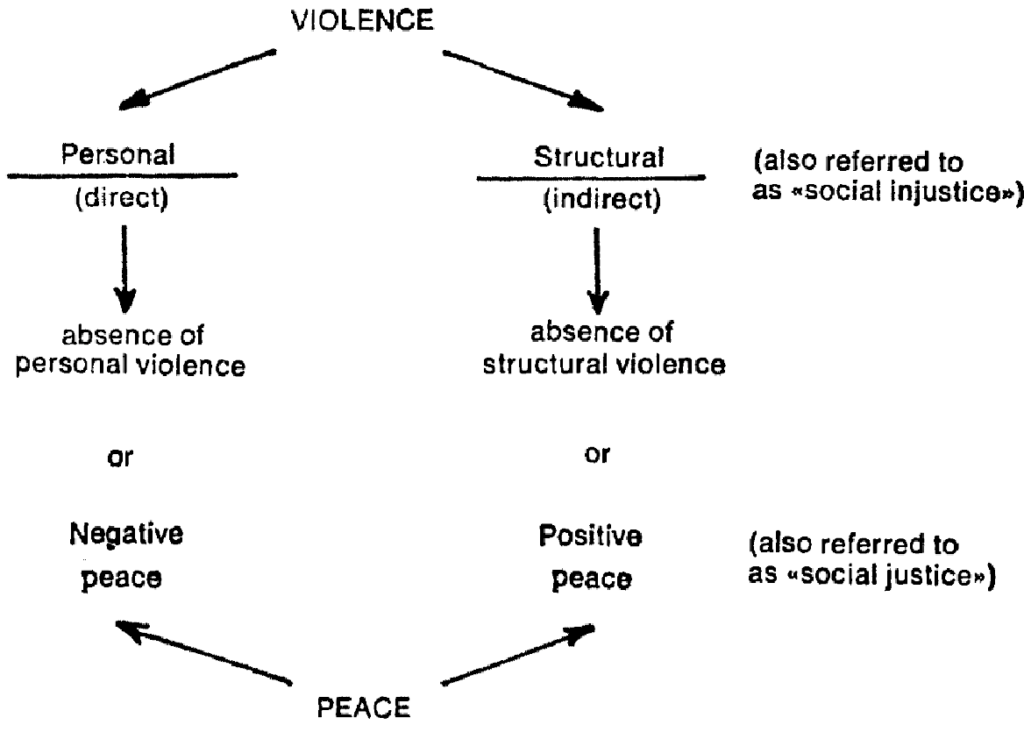
The Promise of World Peace arrives at a remarkably consonant position from a different epistemological starting point: one grounded in the spiritual reality of human oneness rather than in the empirical measurement of social inequality. What the 1985 message adds, which complements the development of peace studies, is a more explicit emphasis on the motivational foundations of structural transformation. Academic peace research is able to describe cultural and structural violence with precision, and it shares with the Bahá’í statement the same essential foundation: the recognition of the inherent dignity of every human being. Both frameworks ultimately call for the construction of lasting peace on the basis of unconditional respect for the humanity we share.10 Marcos Alana Ferreira, “Peace in Perspective: The Historical Development of Peace Studies and the Bahá’í Concept,” Journal of the Sociology and Theory of Religion 13 (2022): 297–321, doi.org/10.24197/jstr.1.2022.297-321.
Yet the statement devotes particular attention to a question that peace studies has explored more gradually: why would human beings choose to undertake the sacrifices that genuine structural transformation requires? Why would the recognition of shared humanity become not merely an intellectual position but a lived commitment? To answer these questions, one can reflect that this motivational problem cannot be resolved without engaging the spiritual dimension of human life. The reality that human beings have capacities for altruism, justice, and solidarity that are as authentically constitutive of human nature as the competitive and acquisitive instincts that dominant social theories have tended to emphasize.11Marcos Alan Ferreira and Michael Karlberg,“Bahá’í Faith,” in The SAGE Encyclopedia of War: Social Science Perspectives, ed. by Paul Joseph (SAGE, 2017), 131–133.
This argument resonates with a growing body of work in social psychology and behavioral economics that has challenged the assumption of universal self-interest as the basis of human motivation.12Kristen Renwick Monroe, The Heart of Altruism: Perceptions of a Common Humanity (Princeton University Press, 1996). But the document’s claim goes further when it places the development of altruistic capacities in an educational process grounded in spiritual values such as love, justice, generosity, and truthfulness, values that are not reducible to social incentives. In the statement’s own words, “the courage, the resolution, the pure motive, the selfless love of one people for another — all the spiritual and moral qualities required for effecting this momentous step towards peace are focused on the will to act.”13Promise of World Peace, bahai.org/r/347891062. In this respect, The Promise of World Peace anticipates a turn in peace studies scholarship that has recently begun to take seriously the role of moral and spiritual formation in the construction of peace.14 John Paul Lederach, The Moral Imagination: The Art and Soul of Building Peace (Oxford University Press, 2005).
Contemporary manifestations of the identity politics the document warned against have made this analysis more, not less, relevant. The 2019 letter described how countless permutations of “us” and “them” define group identities in ever-narrowing opposition. The fragmentation of public discourse along lines of ethnicity, nation, religion, class, and ideology reflects precisely the structural breakdown of shared identity that the 1985 statement diagnosed. The prescription remains the same. The document is explicit that diversity is a source of richness rather than a problem, so the goal is not the erasure of difference. What is required instead is the recognition of a shared humanity that is prior to and more fundamental than any of the partial identities that divide us.
DECONSTRUCTING A CULTURE OF VIOLENCE
As briefly presented above, one of the most intellectually distinctive contributions of The Promise of World Peace is its challenge to the conception of human nature that underlies most modern social institutions. The document explicitly rejects the view that human beings are “incorrigibly selfish and aggressive,” locating the persistence of violence not in an immutable human nature but in distorted social conditions and entrenched assumptions that have shaped institutional life.15Promise of World Peace, bahai.org/r/844922602. This claim converges with the Bahá’í conception of human nature as characterized by dual capacities for egoism and altruism, competition and cooperation—and the extent to which either develops is a function of education, cultural environment, and will.16Ferreira and Karlberg,“Bahá’í Faith.”
The significance of this claim extends beyond its contribution to peace theory. It has direct implications for how we understand and address what has come to be called the culture of violence—the normalization of violent behavior, violent discourse, and violent social arrangements as features of ordinary life rather than exceptional pathologies. A culture of violence is not sustained by individual moral failure alone, but it is reproduced through institutional structures, educational systems, media environments, and the implicit values encoded in economic and political life.17Johan Galtung, “Cultural Violence,” Journal of Peace Research 27, no. 3 (1990): 291–305. The 1985 document grasped this dynamic clearly, understanding courage, resolution, and selfless love as mighty forces in the establishment of peace that must be cultivated through sustained social processes, not assumed as natural givens.
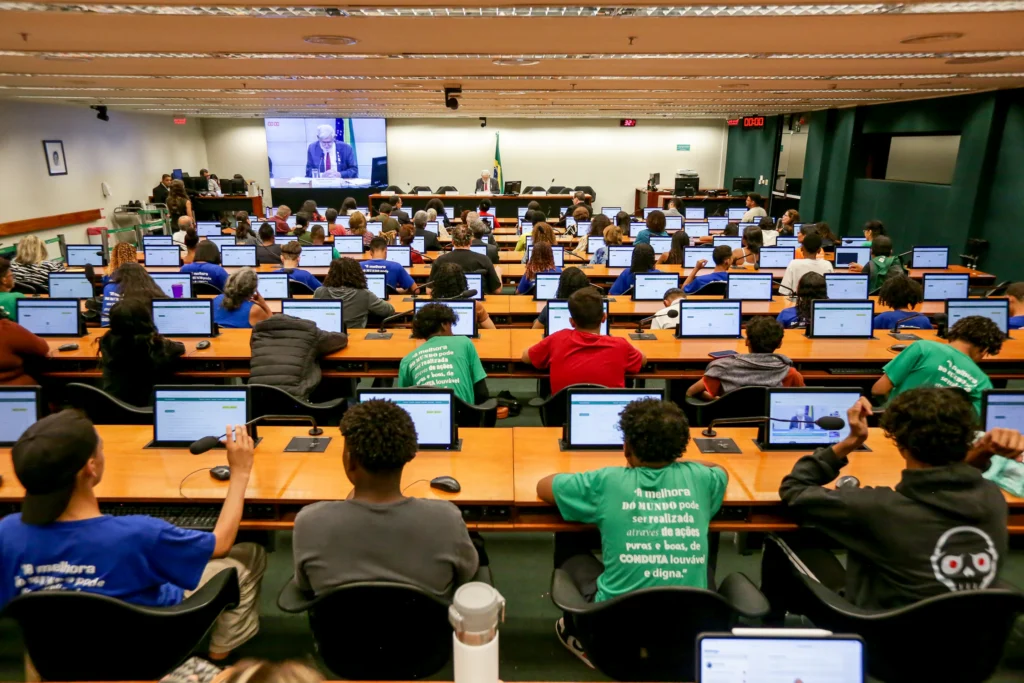
Brazilian social reality offers a pointed illustration of how deeply embedded the culture of violence can be. The colonial foundations of Brazilian society established a hierarchy of violence—especially against indigenous peoples, enslaved Africans, and women—that has been reconstituted in different institutional forms across the centuries. Current data on femicide, on police lethality directed disproportionately at black Brazilians, and on the political mobilization of authoritarian discourse reveal the continuing force of structural and cultural violence in a society that has also, paradoxically, produced some of the world’s most creative experiments in community peacebuilding.18 Fórum Brasileiro de Segurança Pública, Anuário Brasileiro de Segurança Pública 2024 (FBSP, 2024). This paradox is not unique to Brazil; it is a condition of the transitional age the document described and can be seen in other societies in different continents.
The connection between the framework delineated in the statement of the Universal House of Justice and contemporary scholarship on deconstructing cultures of violence is instructive. Galtung’s concept of cultural violence provides a useful vocabulary for what the document diagnoses. By cultural violence, Galtung means those aspects of the symbolic sphere of our existence, including religion, ideology, language, and art, that serve to justify or legitimize direct or structural violence.19Galtung, “Cultural Violence.” The Promise of World Peace identifies specific barriers that operate in this cultural sphere: racism, unbridled nationalism, religious strife, and the denial of women’s full equality. These are not merely regrettable attitudes but deep-seated cultural legitimizations of conflict. Yet the document’s response to this diagnosis is not primarily legislative or punitive. Instead, it is educational and spiritual. The transformation of consciousness, grounded in the recognition of the oneness of mankind and mediated through consultative action, constitutes the primary instrument of change. Thus, world order can be founded “only on an unshakable consciousness of the oneness of mankind,”20Promise of World Peace, bahai.org/r/674456093. a spiritual truth which all the human sciences confirm.
This is a point where the Bahá’í framework enriches rather than simply replicates the peace studies tradition. Peace research has developed sophisticated analyses of the causes of violence and proposed a range of institutional remedies. What it has engaged more tentatively is the question of how values change and how the moral imagination of communities can be transformed in ways that make alternative social arrangements not only theoretically conceivable but practically realizable.21Lederach, The Moral Imagination. The mode of operation of the Bahá’í community since the 1996 message—focused on the spiritual education of children and youth, on devotional and reflective community life, and on the constructive engagement of all institutions of society in the cultivation of peaceful values—suggests a program for moral and cultural transformation irreducible to policy reform alone, as is often suggested by institutionalist approaches to peace.22 Barash and Webel, Peace and Conflict Studies.
INSTITUTIONS, STRUCTURES, AND THE MORAL PRECONDITIONS OF PEACE
The Promise of World Peace is notable for the care with which it distinguishes between the practical instruments of peace—arms agreements, international institutions, legal frameworks—and the deeper structural and moral prerequisites without which those instruments cannot function. The document acknowledges the importance of a world authority adequate to ensure peace, and it endorses the principle of collective security that Bahá’u’lláh first articulated in the nineteenth century. But it insists with clarity that treaties and institutions are not self-executing. Actually, they depend for their effectiveness on the degree to which they are grounded in genuine, shared commitments and on the moral quality of the human beings and communities that sustain them.
This insight has been vindicated repeatedly by the history of international institutions since 1985. The United Nations, the most ambitious experiment in collective security yet attempted, has made real contributions to international stability. These contributions have been consistently supported and encouraged by the Bahá’í community, while also calling for the deep structural reforms that would allow the UN system to advance peace in a more just and functional manner.23Ferreira and Karlberg,“Bahá’í Faith.” But the UN’s limitations have been equally visible. It has been unable to prevent the resurgence of great power competition, the erosion of multilateral norms, or the instrumentalization of humanitarian language for purposes of national interest. The repeated paralysis of the Security Council has shown with painful clarity that institutional architecture alone is insufficient when it lacks corresponding political will. And that political will is itself a function of deeper moral and social conditions.
The document’s observation that statesmen of the world were faced with a crisis unprecedented in human history remains accurate in 2025, though the crisis has multiplied and intensified. The proliferation of non-state armed actors, the weaponization of information technology, the global ecological crisis, and democratic backsliding visible across multiple regions have added dimensions that the 1985 statement could not have fully anticipated. But the document’s core diagnosis retains its explanatory force. The international order is structurally inadequate because it has not been built on the recognition of the oneness of humanity as a prerequisite for a peaceful international order.
The Universal House of Justice’s 2019 message elaborated this institutional analysis in ways faithful to the 1985 framework while responsive to intervening developments. It observed that the forces of disintegration, including the resurgence of racism, nationalism, and partisanship, had undermined the willingness “to engage in international collective action” that had once “represented a powerful strain of thinking among world leaders.”24 18 January 2019, bahai.org/r/963030050. This regression, the message argued, was not permanent; but, it acknowledged with characteristic realism, the path to unity might be tortuous and the world might face further suffering before the necessity of a genuine new order became inescapable.
The implication for those committed to peace is not passivity but a clear-eyed understanding of where the leverage points for change actually lie. Institutions fail when they are not grounded in shared moral commitments. Therefore, the cultivation of those commitments through education, community life, public discourse, and constructive action is not a secondary activity that can await institutional reform. It is the precondition for institutional reform. In this sense, the promotion of peace is fundamentally a work of culture. It means changing what communities value, what they celebrate, what they teach their children, and what they regard as the non-negotiable commitments of shared life. This is a work that must take place at multiple levels, from the local to the international, and it must resonate with values that can overcome the different forms of violence that impact peace.
LESSONS FROM 2019 AND BEYOND: TOWARD A PRACTICE OF PEACE
The Universal House of Justice’s letter of January 2019, addressed to Bahá’ís around the world on the occasion of the centenary of the Paris Peace Conference, offered a sustained reflection on the state of the peace project and on the continuing responsibilities of those committed to it. It did not supersede The Promise of World Peace; it deepened it, taking into account the current affairs of the world. And in doing so, it shifted the emphasis in ways instructive for understanding what a practice of peace might look like in the present moment.
The 2019 message drew attention to the Bahá’í community’s four-decade project of patiently refining the social model implied by the 1985 statement, building and expanding a system of social organization based on Bahá’u’lláh’s teachings. Unlike the 1985 statement, which was primarily diagnostic and prescriptive, the 2019 letter showed that those conditions were not merely being advocated for but were being enacted through a learning process in communities that raise children without the contamination of racial or national prejudice, that pursue the full equality of women and men, that welcome the followers of every faith and of none to their devotional gatherings, and that develop the capacity to engage those around them, regardless of creed, culture, class, or ethnicity, in conversations about how to realize both the spiritual and material well-being of their communities.
This emphasis on community building as a contribution to peace is not merely a Bahá’í institutional claim; it reflects a growing recognition in peace scholarship that the construction of positive peace is a grassroots process that cannot be imposed from above or achieved through elite negotiation alone. John Paul Lederach’s work on peace practice has argued, with considerable empirical support, that sustainable peace requires the cultivation of moral imagination—the capacity of communities to envision and enact relationships that transcend the cycles of violence in which they are embedded.25Lederach, The Moral Imagination. Elise M. Boulding’s vision of a culture of peace similarly emphasized the primacy of everyday social relationships, family life, community bonds, and the practices of mutual care and respect in building the foundations of a peaceful world.26Cultures of Peace: The Hidden Side of History (Syracuse University Press, 2000). The Bahá’í understanding of peace as, in the first instance, an accomplishment of individuals and communities with institutions playing a supporting rather than a determining role, aligns with and enriches this tradition developed by scholars like Boulding and Lederach.
The 2019 message also underscored the importance of contributing to the discourses of society. This means Bahá’í individuals and communities engaging in the intellectual, cultural, and civic conversations that shape how societies understand themselves and their possibilities. Peace is not only built in communities. It is also advocated, narrated, and imagined. This engagement with narratives is itself a form of peace work. It determines what counts as normal, what counts as possible, and whose experiences are rendered visible. Organizations engaged in the deconstruction of violence in contexts like Brazil have recognized this dynamic. For example, they have learned that the battle for the narrative of public security is as important as any programmatic intervention. Hegemonic discourses of fear and force must be contested through the construction of alternative narratives grounded in hope, justice, and the dignity of local communities.27 Office of External Affairs of the Bahá’ís of Brazil, “Síntese da Coalizão Desconstrução da Violência” (2026); unpublished document circulated among civil society engaged in peace discourse.
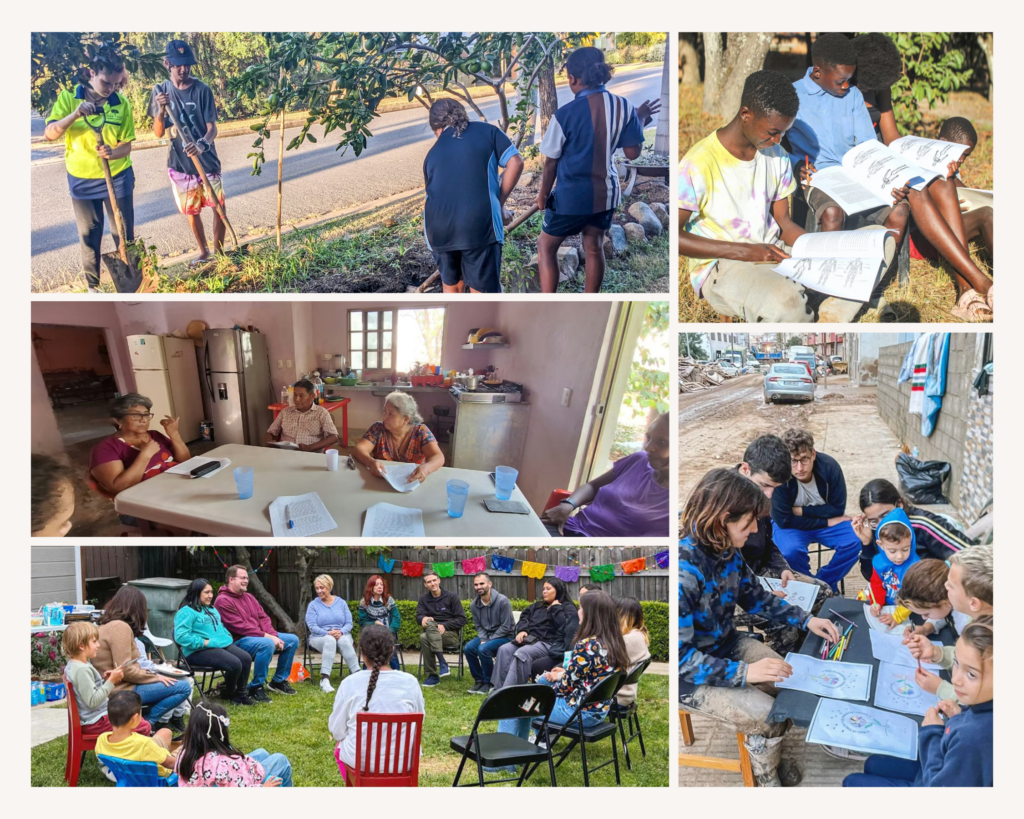
The 2019 letter’s emphasis on youth is similarly worth dwelling on. Young people distinguished by their commitment to a society built on peace and justice and their engagement in the work of building communities on that foundation are not merely a rhetorical constituency; they are the primary vehicle through which the transformation of culture across generations is achieved. The systematic cultivation of moral and spiritual capacities in children and adolescents is among the most consequential forms of peace work available to communities. This cultivation happens through educational processes that develop not only cognitive skills but also the virtues of truthfulness, empathy, justice, and solidarity.28 Ferreira, “Peace in Perspective,” doi.org/10.24197/jstr.1.2022.297-321.
THE PROMISE, STILL A PROJECT
The Promise of World Peace is now forty years old. Yet it continues to speak to concrete needs in today’s world. It speaks to the need to deconstruct violence and to build peace. The document understood that peace is a social and moral achievement, not merely a diplomatic arrangement. It understood that the structures of violence are reproduced through the values embedded in institutions, education systems, and cultural life. Transforming those structures requires attending to the moral and spiritual formation of persons and communities. And it understood that the recognition of the oneness of humanity is not a sentiment but an organizing principle with practical implications for every domain of social life.
What has changed in forty years is not the validity of these insights but the urgency with which they apply. The resurgence of nationalism, the intensification of structural inequality, the weaponization of digital information environments, the ecological crisis, and the persistent normalization of violence in politics and public life have made the document’s diagnosis more, not less, accurate. The questions posed in 1985 remain unanswered. Humanity must decide whether it will build a world order that reflects its deep interdependence and the spiritual reality of its oneness.
For peace researchers, the document offers resources that bring into focus an element still underexplored in much of the field: the importance of moral and spiritual values that cultivate peace, not merely institutional designs. It presents an account of human nature as genuinely dual, capable of both egoism and altruism—and the latter’s need to be developed for a peaceful society. It offers a conception of the motivational foundations of peace that takes seriously the spiritual dimension of human experience. And it provides a model of community life as a site of moral and cultural transformation rather than merely a setting for institutional interventions. For communities conmmitted to peace work, the document offers something more immediate: the conviction that every act of building genuine human solidarity in families, neighborhoods, schools, and civic associations is a contribution to a historical process whose trajectory is, for all its tortuousness, ultimately assured.
Four decades after it was written, The Promise of World Peace remains what it was in 1985: not a prediction of how peace will come, but a map of what it will require. The work of realizing that promise is the work of our generation.
Innovation, in common usage, has become nearly synonymous with technological progress. When we speak of innovative companies, we typically refer to those at the frontier of digital technology, artificial intelligence, or biotechnology. When governments develop innovation strategies, they focus on research and development pipelines, patent portfolios, and the transfer of knowledge and products to market. The term, in its prevailing sense, describes what happens in laboratories and startups, and its measure is economic return.
This conception is remarkably narrow. Throughout history, the most consequential innovations have often been social, institutional, and cultural. The emergence of democratic governance, the development of systems of universal education, the recognition of the equality of women and men—these were innovations of the first order, requiring new patterns of thought, new forms of social organization, and sustained effort across generations. They transformed the conditions of human life more profoundly than most technological breakthroughs. Yet we rarely call them innovations.
The reduction of innovation to its technological and economic dimensions gained momentum in the latter half of the twentieth century. The convergence of advances in physics, electronics, and computer science gave rise to the information revolution, which became the engine of a new era of economic growth. National innovation systems emerged, linking government, academia, and industry in pursuit of competitiveness and market advantage.1See, for example, Anahita Baregheh, Jennifer Rowley, and Sally Sambrook, “Towards a Multidisciplinary Definition of Innovation,” Management Decision 47, no. 8 (2009): 1323–39. In this context, the word “innovation” came to denote primarily the development and commercialization of new technologies, and an economic perspective focused on productivity, efficiency, and profitability became the dominant lens through which innovation was understood.2Joseph A. Schumpeter, Capitalism, Socialism and Democracy (Harper & Row, 1950).
The consequences of this narrowing have been significant. An innovation paradigm driven by competition and profitability has generated remarkable material advances, but it has also deepened inequalities, concentrated wealth, and created patterns of disruption that communities struggle to absorb. The relentless pace of technological change is reshaping social interaction in ways whose implications we have barely begun to understand, particularly in artificial intelligence, neurotechnology, and digital platforms.
A growing body of thought recognizes that the value of innovation lies not only in the technology itself but also in its social adoption and its effects on human well-being.3See Matt Weinberg, “Technology, Values, and the Shaping of Social Reality,” The Bahá’í World, 23 May 2019, bahaiworld.bahai.org/library/technology-values-and-the-shaping-of-social-reality-2/; E. F. Schumacher, Small Is Beautiful: Economics as if People Mattered (Harper Perennial, 1973); W. Brian Arthur, The Nature of Technology (Free Press, 2009). The field of social innovation has emerged in response, centering on community development, local entrepreneurship, and models of enterprise oriented toward social benefit rather than profit alone.4Liliya Satalkina and Gerald Steiner, “Social Innovation: A Retrospective Perspective,” Minerva 60, no. 4 (2022): 567–91. This is a meaningful step. Yet even social innovation, as it is commonly conceived, tends to treat the spiritual dimensions of human life as peripheral rather than central. Questions of purpose, moral development, and the cultivation of human capacities are left largely unexplored.
What would it mean to conceive of innovation more expansively? To recognize that the development of new patterns of community life, the creation of institutions founded on principles of justice and unity, or the cultivation of habits of collaborative inquiry are themselves innovative processes as genuinely creative and consequential as any technological advance?
Such a reconceptualization does not diminish the importance of scientific and technological progress. It situates that progress within a broader understanding of human development that encompasses the material, the social, and the spiritual. Innovation, viewed in this light, is a fundamentally human capacity for generating new forms of collective life, new ways of organizing relationships, and new expressions of our material, intellectual, and moral potential. It follows then that innovation is not merely a mechanism for producing goods and services. The printing press, the machinery of the industrial revolution, the Internet—each of these was significant both as a technological invention and because of the profound social transformations it set in motion.5Karl Polanyi, The Great Transformation: The Political and Economic Origins of Our Time (Beacon Press, 2001). An understanding of innovation that attends only to the device and not to the transformation it produces is, at best, incomplete.
The question, then, is not simply whether innovation should be guided by ethical principles, though clearly, as this essay argues, it should—it is whether innovation, properly understood, has a spiritual dimension that must be acknowledged if its fruits are to serve the common good. Innovation emerges from the collaboration and creativity of individuals, communities, and institutions. Its quality depends on the qualities of those who participate in it: their willingness to learn, their capacity for cooperation, their commitment to equity, their concern for the well-being of others. These are constitutive of the innovation process, not merely desirable addenda to it. An innovation culture shaped by humility, solidarity, and a genuine concern for the weakest members of society will produce fundamentally different outcomes than one driven by competition and the desire for dominance.
This insight finds powerful expression in the Bahá’í writings. ‘Abdu’l-Bahá describes two calls that summon humanity to progress. The first is “the call of civilization, of the progress of the material world,” encompassing the laws, sciences, and systems through which humanity develops. The second is “the soul-stirring call of God,” whose spiritual teachings safeguard “the eternal happiness and illumination of the world of humanity.” Neither call, He insists, is sufficient on its own: “Until material achievements, physical accomplishments and human virtues are reinforced by spiritual perfections, luminous qualities and characteristics of mercy, no fruit or result shall issue therefrom.” Material civilization, however impressive, remains conjoined with barbarism unless it is “confirmed by Divine Guidance” and “reinforced by spiritual conduct.”6‘Abdu’l-Bahá, Selections from the Writings of ‘Abdu’l-Bahá, no. 225, bahai.org/r/247504693.
This is not merely a moral caution about the dangers of technology but a claim about the nature of progress itself. Innovation that attends only to material and economic dimensions, however sophisticated, will remain incomplete and ultimately self-defeating. A civilization’s capacity for genuine advancement depends on the degree to which its material achievements are animated by spiritual insight.
What does innovation look like when it proceeds from this integrated understanding? The experience of Bahá’í communities worldwide offers one set of illustrations. In diverse settings across the globe, communities are developing new patterns of collective decision-making that draw on the capacities of all their members; new educational processes that cultivate intellectual, moral, and spiritual capacities in tandem; and new approaches to social and economic life rooted in principles of reciprocity and service.7Bahá’í International Community, For the Betterment of the World. These efforts do not proceed from a fixed blueprint but through an ongoing process of study, action, and reflection, a mode of learning that is itself an innovation in how communities generate and apply knowledge.8Farzam Arbab, “Promoting a Discourse on Science, Religion, and Development,” in The Lab, the Temple and the Market, ed. Sharon Harper (IDRC, 2000), 149–237. They are tested in settings that reflect the full diversity of the human family, and they are yielding insights about human capacity and social organization that deserve sustained attention.
The accelerating pace of technological change makes an expanded understanding of innovation not merely desirable, but urgent. Without it, societies will continue to adopt powerful technologies within frameworks that cannot ensure their benefits are widely shared or their risks adequately addressed. Governance and regulation are necessary, but not sufficient. What is needed, in addition, are people—individuals, communities, and institutions—whose moral and spiritual capacities equip them to direct the creative energies of this age toward the building of a civilization that contributes to the welfare of all. As ‘Abdu’l-Bahá wrote, “The honor and distinction of the individual consist in this, that he among all the world’s multitudes should become a source of social good.” Innovation, at its best, is an expression of precisely this aspiration.9 ‘Abdu’l-Bahá, The Secret of Divine Civilization, bahai.org/r/006593911.
In the previous article, “Bahá’í Contributions to the Development of Iran,” the interactions between the Bahá’í community and the modernist reformers in Iran in the late nineteenth and early twentieth centuries were examined over issues such as government, educational reform, and the social role of women. These were issues that had an immediate and evident impact on society. There are a number of Bahá’í teachings, however, that operate at a deeper level and are therefore much more radical, since they were implemented gradually, the changes and their implications were not always discerned by the Iranian population or even, in some cases, by the Bahá’ís themselves. Thus, in the course of the last part of the nineteenth and the whole of the twentieth century, the Bahá’í community in Iran underwent a profound change in its culture and functioning that has resulted in a community that operates in a radically different way from the rest of Iranian society. It presents Iranians with a different model of society.
In the early 1880s, Bahá’u’lláh surveyed the state of the world and wrote that He found it “lamentably defective.” He wrote that He looked for moderation and justice among the leaders of society and discerned instead injustice, strife, chaos, and confusion and that the situation was now irredeemable.1Gleanings from the Writings of Bah’u’lláh, CX, bahai.org/r/529444114. Shoghi Effendi wrote of the “progressive deterioration in human affairs,” in Messages to the Bahá’í World: 1950–1957 (US Bahá’í Publishing Trust, 1971 edition), 103. In other words, there were no suggestions that He could make to fix matters. The situation of the world would inevitably get worse until, “Such shall be its plight, that to disclose it now would not be meet and seemly.”2Bahá’u’lláh, Gleanings, LXI In a letter written a decade earlier to Queen Victoria, Bahá’u’lláh likened the statesmen and political theorists of His time to ignorant physicians who have been summoned to heal the body politic of its illness but only make matters worse.3Bahá’u’lláh, Gleanings, CXX. Whereas He, “the true Physician,” was “debarred from administering the remedy.”4 Bahá’u’lláh, Gleanings, XVI.
Given that the world’s system of governance, its economic order, its social structures, and its values were irredeemably defective, and the whole of the world order was in danger of collapse, the only remedy was to roll up the old “World Order” and “spread out a new Order in its stead.”5 Bahá’u’lláh, quoted in Shoghi Effendi, The World Order of Bahá’u’lláh, bahai.org/r/687286793. Thus, Bahá’u’lláh was calling for a complete and radical change. There have been many revolutions in human history that have sought to bring about change at the level of governance, economics, and society: the French Revolution, the American Revolution, the various communist revolutions, and the Constitutional Revolution and Islamic Revolution of Iran. But what Bahá’u’lláh proposed was a far more radical change than what any of these revolutions proposed. He called for a change at the very deepest levels of the vision, assumptions, and values of society and a transformation of the social order.
There is, of course, much that could be said about such far-reaching changes, but this article will be confined to the consideration of one thread. One of Bahá’u’lláh’s most radical proposals was the dismantling of the power relationships that keep a small group of the elite at the top of society. This elite then organizes the thinking and working of society—its law, governance, education, and the media—in such a way as to maintain the hegemony of wealth and power. In about 1868, Bahá’u’lláh declared that that power had been seized from both secular and religious leaders (umará va ‘ulamá): “From two ranks amongst men power hath been seized: kings and ecclesiastics.”6Bahá’u’lláh quoted in Shoghi Effendi, The Promised Day is Come, bahai.org/r/738996878. This radical statement was not, however, a precursor to what happened in the other revolutions mentioned above, taking power from one group in order to hand it to another. What Bahá’u’lláh was aiming for was a radical overhaul of the structure of society so as to no longer have a pyramid of power. As became clear over time, the Bahá’í administrative system aims to remove power from the grasp of individuals completely. Authority is to be vested in elected institutions acting as a body. As Shoghi Effendi wrote:
But praise be to God that the Pen of Glory has … dismissed the assertions of individuals as an authoritative criterion, even though they were recognized as the most accomplished and learned among men, and ordained that all matters be referred to authorized centers and specified assemblies.7Letter written on behalf of Shoghi Effendi in 1927, translated in Messages from the Universal House of Justice, 1963–1986, comp. Geoffry W. Marks (Bahá’í Publishing Trust, 1986), 216–7.
This was the vision that Bahá’u’lláh presented to the Bahá’í community and to the world. It required a major reorientation of values, assumptions, and practices. Such changes could not be achieved simply through sending instructions; they could not be forced on people; they required a process of counseling and education. The Bahá’í leaders carried this out both through their writings with the inculcation of new values and attitudes and in the specific instructions they sent about the structure and functioning of the community. The process necessarily proceeded slowly and in stages. Because of the continuing hostility and persecution from the general population in Iran, the process also proceeded unobtrusively behind closed doors. It is not surprising, therefore, that the radical nature of what was going on was, for the most part, missed.
One major change that was initiated in the early years of the twentieth century was the transfer of authority from individuals to leadership councils that eventually became elected institutions, which at the local level were called Local Spiritual Assemblies.8A handful of individuals such as ‘Abdul-Ḥusayn Ávárih (Áyatí), Ḥasan Níkú, and Ahmad Sohrab, who had held prominent positions in the Bahá’í community, resisted these changes and this eventually led them to leave the Bahá’í community and attack it. Moojan Momen, The Baha’i Communities of Iran 2 (George Ronald, 2021), 8, 242–3, 405–7. Of course, the mere fact of having elected councils is not sufficient to achieve the goal of removing power from individuals and eliminating hierarchy. It requires a radical change in the way that elected institutions operate. There are many elements to this, but it includes a prohibition on the formation of parties and factions, on nominations of candidates for election or office, and on all manner of election campaigning. The guidance coming from the Bahá’í leaders regarding the consultation process that leads to decisions within the Assemblies includes such elements as maintaining a calm, prayerful, and reflective atmosphere, being detached from one’s own opinions and open to considering all suggestions made, and the willingness to accept and work for the final decision even if one voted against it. The absence of factions and parties (and the divisiveness that goes with them) and the elimination of the chairman’s ability to cast the deciding vote or to set the agenda and other similar measures are all designed to reduce the aggrandizement of individuals and limit the ability of both individuals and vested interests to dominate and determine the decisions made in the consultation process. No individual has power or authority simply by virtue of being elected to these institutions. Only the institution acting as a body has authority.
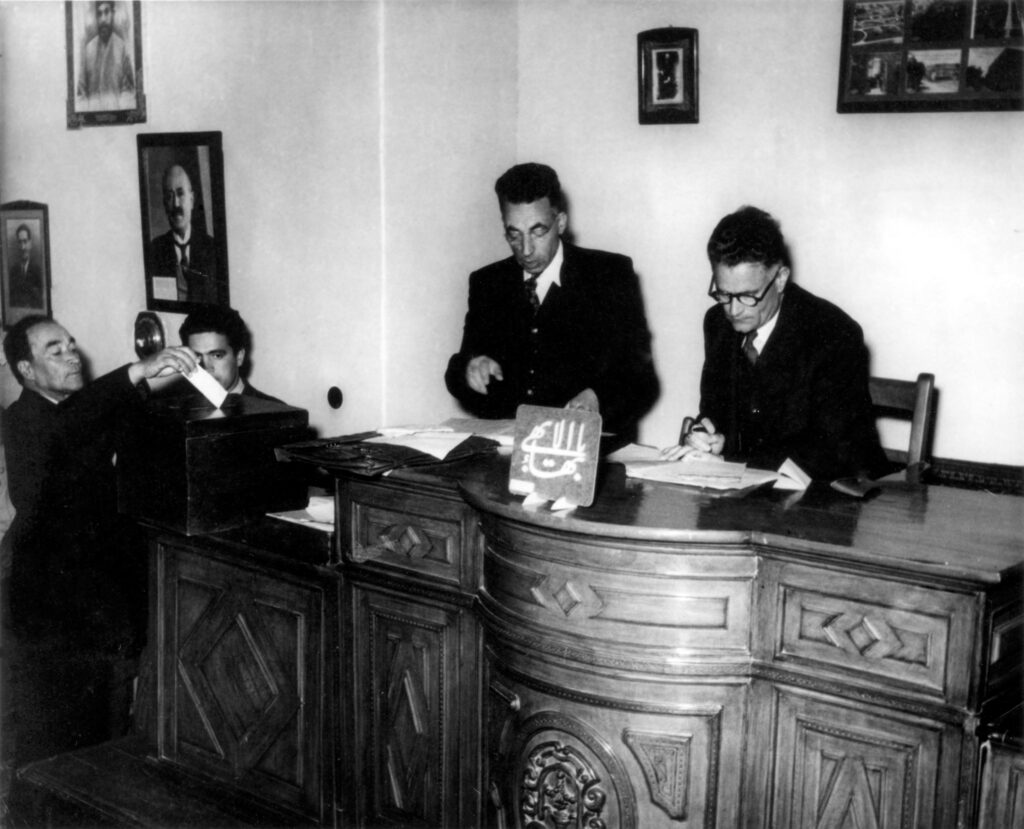
Thus, a novel form of representative democracy was introduced into the Bahá’í community. Since the beginning of this century, an element of participatory democracy has also been added, with most day-to-day decisions being made at the grassroots level through consultation and planning among those who engaged in social action, thus giving them agency. Part of the process is an educational element that encourages participants to think for themselves and gives them the confidence to verbalize their thoughts within a group setting, thus training them to consult effectively in a non-combative manner. It also gives them an ethos of collaborative service and the capacity to undertake simple but fundamental acts of service, such as running children’s classes and junior youth empowerment activities. Meetings are held at a local level, where participants identify the needs of their society and consult about what they can do to address those needs, given the capacities of the group; plans are made which are then carried out in a spirit of collaboration. A few months later, the group meets again to review the results of this effort and what has been learned from it. Moreover, these participants are not just the members of the Bahá’í community. All members of society are welcome to participate in these society-building activities and in the associated consultative and decision-making process. Thus, the Bahá’ís aim to create an ever-widening group of like-minded members of society united in working for the betterment of their community. This pattern of activity is not fixed but is envisioned as continuing to evolve, and there may be major changes to it in the future, depending on the experience gained.
This participation of members of the wider society in the Bahá’í grassroots activities has the potential to influence the general Iranian society. And so, although these changes are occurring within the structures of the Bahá’í community, they can act as a model for Iranians to see that a community can function in ways that are radically different—that replace the competition, conflict, and coercion inherent within the present hierarchical social order with an order that functions through consultation, collaboration, and cooperation and where institutions become instruments for the facilitation of grassroots action rather than for individuals to wield power.
It should be acknowledged, however, that the ongoing hostility towards and persecutions of the Bahá’í community of Iran has limited and continues to limit the range of social actions that it could undertake and has resulted in many who are not Bahá’ís but who appreciate the discourse and lines of action of the Bahá’í community being inhibited from participating in this process. However, the Bahá’ís have continued to be resilient to the pressures that are exerted against them and constructive in their efforts to bring like-minded individuals in Iranian society together to find ways of improving the social environment. Thus, for example, after the Bam earthquake in 2003, Bahá’í educators volunteered to teach young children in that area whose education had been disrupted, and for this they were arrested and imprisoned.9“Bahá’ís who offered education to earthquake-hit Iranian region arrested,” Bahá’í World News Service, 15 March 2011, news.bahai.org/story/812; Kian Sabeti, “Saman’s School: Iranian Authorities Jail Education Pioneer for Being a Bahá’í,” Iranwire, 5 September 2023, iranwire.com/en/bahais-of-iran/120153; Kian Sabeti, “Baha’i Jailed After Educational and Humanitarian Service Projects,” Iranwire, 27 September 2023, iranwire.com/en/bahais-of-iran/120949. Similarly, some 54 young Bahá’ís were working alongside like-minded fellow Iranians in a literacy project among the poor in Shiraz when they were arrested in 2006, and several of them imprisoned.10“Iran: Scores Arrested in Anti-Baha’i Campaign,” Human Rights Watch, 4 June 2006, hrw.org/news/2006/06/04/iran-scores-arrested-anti-bahai-campaign; “54 Bahá’ís arrested in Iran,” UPI, 24 May 2006, upi.com/Top_News/2006/05/24/Report-54-Bahais-arrested-in-Iran/54361148504612; “Iranian report confirms innocence of Shiraz Baha’is,” Bahá’í World News Service, 24 October 2008, news.bahai.org/story/661. More recently there have been a number of arrests in places such as Isfahan, Tehran, and Semnan of Bahá’ís after they had been educating Afghan children who are denied education by the state.11 See “Appeals Court Upholds 90-Year Combined Prison Sentence for 10 Baha’i Women in Isfahan,” Human Rights Activists News Agency, en-hrana.org/appeals-court-upholds-90-year-combined-prison-sentence-for-10-bahai-women-in-isfahan; “Samin Ehsani, Children’s Rights Activist and Baha’i, Summoned to Prison,” Iranwire, 17 June 2022, iranwire.com/en/bahais-of-iran/104924; “Anisa Fanaian, a Bahá’í Citizen in Semnan Province, Sentenced to 8 Years in Prison,” Iran Press Watch, 8 December 2024, iranpresswatch.org/post/25225.
The most important consequence of this change of ethos was to take social agency down to the level of the individual. Thus, this process is bringing together groups of individuals, who are often on the lowest rungs of the social hierarchy, and encouraging them not to wait for government or for charities to help them, but rather to take agency themselves, assess the realities of their communities, identify its needs, and consult about plans to improve their society that are within the capacities of the group, while at the same time expanding these capacities through an educational process.
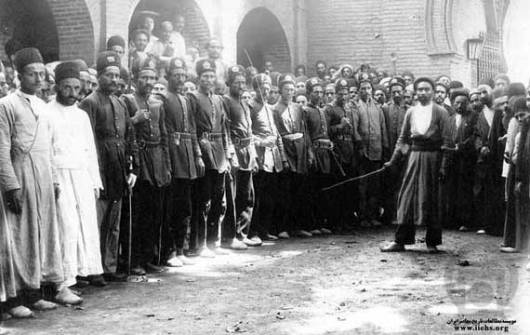
Apart from the elimination of the power hierarchy, there was a second element in the development of the Bahá’í community of Iran that stood in contrast to the agenda of the modernist reformers. After the Constitution was signed in 1906, the new king, Muḥammad `Alí Sháh, tried to overturn it and the nation became divided. The Constitutionalist reformers, many of whom were familiar with the Bahá’í teachings and had close relations with the community, naturally expected the Bahá’ís to support the Constitutionalist side, given the commonality between the Bahá’í social teachings and the reforms advocated by the Constitutionalists. Although He had previously advised the Bahá’ís against seditious activity in direct opposition to the government, ‘Abdu’l-Bahá appears to have allowed the Bahá’ís to act in conjunction with the reformers in trying to persuade the government of Iran to carry out social reforms. There is evidence of this from various parts of Iran, such as Sari, Isfahan, Shiraz, and Tehran. Then in the period immediately after the signing of the Constitution in 1906, two factors changed. First, the previous national unity in calling for reforms shattered with the emergence of political parties, each with its own agenda and vision for the future of Iran, some supported the shah and others the Constitution. Second, as a consequence of the first, the peaceful nature of the reform movement that had succeeded in obtaining the Constitution disintegrated with the emergence of conflict and violence between the two sides, each trying to subvert and destroy the other. ‘Abdu’l-Bahá wrote of the need for unity and warned of the danger of foreign interference in Iran. He now strictly forbade the Bahá’ís from any engagement with the polarized and often violent politics of the era:
We have no connection with any party: we are neither partisans of the Victorious Government nor do we share the opinions of the Glorious People. We stand aside from all strifes, wish well to all, and offer our prayers and supplications at the Throne of God that He will reconcile these two honourable elements with one another.12Edward Granville Browne, The Persian Revolution, 1905–1911 (University Press, 1910), 425–9, quotation translated by Browne, 427. ‘Abdu’l-Bahá’s approach to the Constitutional Revolution was more complex and nuanced than can be detailed here. For more, see Mina Yazdani, “‘Abdu’l-Bahá and the Iranian Constitutional Revolution: Embracing Principles While Disapproving Methodologies,” Journal of Bahá’í Studies 24, no. 1–2, (June 2014): 47–82, doi:10.31581/jbs-24.1-2.4.
‘Abdu’l-Bahá also gave as His reasons for taking this stance the fact that the Bahá’ís weakened the Constitutionalist cause by supporting it, since it gave the reactionary clerics an opportunity to claim that the Constitution was the work of the Bahá’ís and anti-Islamic, and that the Bahá’ís were in danger because each side was accusing them of supporting the other.13 ‘Abdu’l-Bahá quoted in Browne, Persian Revolution, 426–9. There is evidence that news of this new stance by ‘Abdu’l-Bahá reached Iran in February–March 1907.14Marzieh Gail, Arches of the Years (George Ronald, 1991), 31; Mírzá Ḥábíbu’lláh Afnán, “Táríkh-i Amrí-yi Shíráz,” 556, afnanlibrary.org/tarikh-amri-shiraz/ seems to indicate a similar date.
Parallel to this was the situation in the 1970s when Mohammad Reza Shah was attempting to force everyone in Iran to join a single political party he had created. Bahá’ís refused, even though for many it meant the loss of their jobs and social position. More recently, the Bahá’ís have not backed groups that seek to overthrow the Islamic government of Iran, although they have, alongside many other groups, appealed peacefully for justice and for the rights of oppressed groups.
The position of the Bahá’í leadership regarding political activity has varied over the years, depending on local factors, usually related to whether certain actions would lead to Bahá’í social objectives, achieve greater degrees of unity and not occasion conflict and violence. There was, for example, a brief period of national unity after the restoration of the Constitution in 1909 when ‘Abdu’l-Bahá appears to have contemplated encouraging certain Bahá’ís to seek election to the national parliament,15 Yazdani, “‘Abdu’l-Bahá,” 66. but this soon ended with the re-emergence of political wrangling and conflict. During the ministry of Shoghi Effendi (from 1921 to 1957), the policy of avoiding political involvement was strengthened such that all such activity, including holding political positions in government, was prohibited and even penalized. However, even with this, certain lines of social action, such as seeking racial justice and integration in the United States, which within the context of that country is highly political, have been pursued by the United States Bahá’í community over many decades where these have not involved confrontation with the state or violence.16Richard Thomas, “The Bahá’í Response to Racial Injustice and Pursuit of Racial Unity (Part 1): 1912–1996,” The Bahá’í World, 16 January 2021, bahaiworld.bahai.org/library/the-bahai-response-to-racial-injustice-and-pursuit-of-racial-unity/. More recently certain limited moves have been permitted by the Universal House of Justice, such as when the British Bahá’í community joined with another organization in the “Action for Children” campaign and campaigned successfully for national legislation to allow sexual offences against minors committed by British residents outside the United Kingdom to be prosecuted in Britain.17 United Kingdom House of Commons, “Child Protection,” debated on 12 March 1997, Hansard, hansard.parliament.uk/commons/1997-03-12/debates/cf2d06e1-f08e-48e8-b387-f8b40ccac6cd/ChildProtection. The campaign resulted in the passing of the Sex Offenders Act 1997. Another example was when the worldwide Bahá’í community launched a campaign “Our Story is One,” in parallel to the “Woman, Freedom, Life” movement in Iran.18 “Our Story is One,” Bahá’í International Community, ourstoryisone.bic.org; “Launch of the Our Story Is One Campaign,” United Kingdom Parliament, 11 July 2023, edm.parliament.uk/early-day-motion/61199.
For the Bahá’í community, the present world political order, based as it is on competition and conflict, is part of the problem, and so it cannot be part of the solution. To participate would inevitably pull the Bahá’ís ever deeper into a system that is inherently competitive, conflictual, hierarchical, and corrupt—the very opposite of what the Bahá’ís are aiming for. For this reason, the Bahá’í leadership has, on most occasions, steered the Bahá’í community away from political involvement.
And so, the Bahá’í model for society does not set itself up as a competitor within the present political system. It is working to set up an alternative space outside the conventional political sphere: where a different style of social and political activity can take place, where the present social dynamics of competition is decentered, where the dominant motifs of power and wealth as the central values of society are changed, where the socialization that perpetuates the present dominant culture is disrupted through an educational process that creates a new ethos, and where the culture of monologue (where ordinary people are lectured and told what to think and do) is transformed into a culture in which the capacity of all to engage in dialogue is fostered and becomes the foundation of community life.19For more on this aspect of the Bahá’í teachings, see Michael Karlberg, Beyond the Culture of Contest (George Ronald, 2004). This alternative space is built on the basis described above of participatory democracy, elected institutions, consultative decision-making, and collaborative grassroots social action.
In addition, in Iran there was tension between the intense nationalism of most of the modernist reformers and Bahá’u’lláh’s aim of orienting His followers towards internationalism—here meaning peace and cooperation among nations as indicated by such statements as “The earth is but one country and mankind its citizens”;20Bahá’u’lláh, Gleanings, CXVII. E. G. Browne heard Bahá’u’lláh say: “Let not a man glory in this, that he loves his country; let him rather glory in this, that he loves his kind,” [‘Abdu’l-Bahá], Traveller’s Narrative, xl. and beyond that, towards globalism—here meaning an organic vision of humanity as one interconnected global whole, as implied by such statements as “Regard ye the world as a man’s body, which is afflicted with divers ailments, and the recovery of which dependeth upon the harmonizing of all of its component elements.”21Bahá’u’lláh, The Summons of the Lord of Hosts, bahai.org/r/516098430. And so, while the reformers were advocating for “what is good for Iran”, the Bahá’ís considered that “what is good for humanity as a whole” is actually what is good for Iran in the long run.
This globalism and the position taken by the Bahá’í community for over a century of not participating in partisan and polarizing politics has led to some misunderstandings and distortions of the Bahá’í position. Since most journalists, commentators, and scholars are focused on the political sphere, they have missed what is happening within the Bahá’í community, because it is not operating in that sphere. In addition, the Bahá’í stance frustrated and angered some Iranian reformers and progressive thinkers because it seemed to them that the Bahá’ís were indifferent to the problems of Iran, and therefore they questioned the patriotism of the Bahá’ís.22E. G. Browne voiced similar sentiments, Persian Revolution, 429. Shoghi Effendi refuted this contention by pointing out that the Bahá’í position was not a “repudiation” of “a sane and intelligent patriotism” but rather a realization that it must operate within a “wider loyalty” to the human race.23Promised Day, bahai.org/r/784142005. And indeed, through the global spread of the Bahá’í Faith, the Iranian festival of Naw-Rúz is celebrated, the land of Iran is revered, and there are even individuals learning the Persian language in order to read the Bahá’í scriptures in their original language in almost every country in the world.
Apart from these tensions with the modernist reformers, Bahá’u’lláh’s vision also challenged aspects of traditional Iranian culture. The Shi’íh culture of nineteenth-century Iran envisioned humanity as divided into believers and unbelievers (the concept of kufr), and this division was accentuated by the belief that the unbelievers were unclean (the concept of nijásat). This meant that all contact with unbelievers was to be avoided, and the traditionalists extended this to adopting the ideas and innovations of the unbelieving Europeans. The Bahá’í leaders expressly abolished both these concepts among their followers.24‘Abdu’l-Bahá, The Promulgation of Universal Peace, 454; Bahá’u’lláh, The Kitáb-i-Aqdas, bahai.org/r/301255873. See also Houchang E. Chehabi, “Anatomy of Prejudice: Reflections on Secular Anti-Baha’ism in Iran,” in The Bahá’ís of Iran: Socio-historical studies, ed. Dominic Parviz Brookshaw and Seena B. Fazel (Routledge, 2008), 192. This attitude goes back to the Báb and His openness to trade, ideas, and innovations from Europe that would benefit Iran, see The Báb, The Persian Bayán, vahid 4:16; 7:16, afnanlibrary.org/inba-volume-62/; Stephen Lambden, “QA XLVI [46] Sūrat al-Huwa,” hurqalya.ucmerced.edu/node/438/. ‘Abdu’l-Bahá expressly argues in His 1875 treatise against the close-mindedness that blocked everything from the rest of the world, The Secret of Divine Civilization, pp. 25–7. Western observers, such as Professor Edward G. Browne and the European missionaries in Iran, noted this change among the Bahá’ís as compared to other Iranians.25Edward Granville Browne, A Year among the Persians (Adam and Charles Black, 1893), 223–31; Moojan Momen, “Early Relations between Christian Missionaries and the Bábí and Bahá’í Communities,” In Studies in Bábí and Bahá’í History 1, ed. Moojan Momen (Kalimat Press, 1982), 49–82, esp. 64–6, 70–72. But perhaps the most compelling evidence for this change of ethos in the Bahá’í community was the reports by some members of Iran’s Jewish and Zoroastrian communities of how they were attracted to the Bahá’í Faith by observing that Bahá’ís of Muslim background (some of them formerly Muslim clerics) treated them with kindness and as equals, deliberately rejecting the concept of impurity by eating and drinking from the same vessels as them. The abandoning of such long-held traditions was, however, shocking to the conservative elements in the population.26Moojan Momen, The Baha’i Communities of Iran 1 (George Ronald, 2015), 337.
There was a third area in which the Bahá’í community and its leadership differed from what was going on in Iranian society and among the Iranian reformers. This arose because some of the reformers, seeing the strong hold that the senior religious leaders had on the people and impressed by the way that these clerics had been able to successfully mobilize the masses against a disadvantageous agreement that the Shah had signed with a European entrepreneur in 1890, sought over the next few years to co-opt the senior religious leaders into the reform movement. At exactly this time, ‘Abdu’l-Bahá wrote a treatise, the Treatise on Politics, warning against involving the clerics in politics. He pointed out that every time religious leaders had entered the political arena, the result had been disastrous, leading to defeat, death, and destruction, and He gave several examples of this from the recent history of Iran and the Ottoman Empire. Unfortunately, the reformers failed to heed this advice, and the result was that many of the reforms envisaged by those who instigated the Constitutional Revolution in the 1900s were annulled at the insistence of the clerics and much of the vision of the reformers failed to materialize. ‘Abdu’l-Bahá’s advice was again ignored by those who pressed for change in Iran in the 1970s, and the Islamic religious leadership was again allowed into the political process.
In the first part of this article, certain lines of social action such as the establishment of modern schools and the advancement of the social role of women were described. It should now be clear that, although what the Bahá’ís were advocating and doing appeared superficially to be similar to the program of the modernist reformers, the Bahá’í activity was cultivating a culture that was radically different from that of traditional Iranian society. The children in the Bahá’í schools, for example, were becoming patriotic Iranians but within a context of also envisioning themselves as world citizens.
It should also be appreciated that Bahá’u’lláh did not present a plan for human development that was to be implemented uniformly across the world. He and His successors as leaders of the Bahá’í community presented certain social principles (such as the equality of women and men) that humanity should aim for and certain means of social functioning (such as consultative decision-making) that would assist in achieving these aims. But the exact details of how all this would evolve has been left to the Bahá’ís to work out in a reciprocal relationship of dynamic interdependence between the individual, the institutions, and the community. And of course, it may be that these details will work out differently in each part of the world according to local culture.
THE WORLD OF RELIGION
One aspect of society in which Bahá’u’lláh made the greatest change was in the field of religion. The religious leadership in Iran in the late nineteenth century, as in many parts of the world, wielded great power and influence, and thereby accumulated great wealth. The people were expected to live their lives and pay certain religious taxes according to a Holy Law (the Sharí`ah) as interpreted by the religious leadership. Even the shah and the local governors had to be wary of offending religious leaders who could stir up the population against them.
The teachings of Bahá’u’lláh were a great challenge to the religious leaders. Bahá’u’lláh, and the Báb before Him, were respectful towards the Qur’án and the Prophet Muḥammad.27For the Báb, see B. Todd Lawson, Tafsir as Mystical Experience: Intimacy and Ecstasy in Quran Commentary (Brill, 2018), esp. 9–47. For Bahá’u’lláh, see The Kitáb-i-Íqán, bahai.org/r/540143739. ‘Abdu’l-Bahá, the successor of Bahá’u’lláh, defended Islam and the Prophet Muḥammad in churches and synagogues during His travels in Europe and North America.28See for example, ‘Abdu’l-Bahá, Promulgation, 200–1, 346–7, 409–10. ‘Abdu’l-Bahá’s successor, Shoghi Effendi, called on the Bahá’ís of the West to learn about Islam and defend its fundamentals against attacks in the West.29Shoghi Effendi in Hornby, Lights, 495–6.
However, Bahá’u’lláh and the Báb decried the learning that was taught in the Islamic religious colleges in much the same way that Jesus Christ decried the learning of the Pharisees.30The Báb, Bayán, 4:10; Bahá’u’lláh, Íqán, 186–7; cf Matthew 23:1–34. To emphasize His dismissal of abstruse clerical learning, Bahá’u’lláh declares that understanding holy scriptures depends “solely upon purity of heart, chastity of soul, and freedom of spirit,” Íqán, bahai.org/r/643779013. And since the prestige of the Iranian religious leaders was based on their learning, this was effectively undermining their position. The Bahá’í leaders also condemned the hypocrisy, fanaticism, and corruption of some Muslim religious leaders.31 ‘Abdu’l-Bahá, Secret, 37–8, 56–7. Shoghi Effendi, Bahá’í Administration (Bahá’í Publishing Trust, 1995), 132, 172; Shoghi Effendi, The Advent of Divine Justice, 4; Shoghi Effendi, The Unfolding Destiny of the British Bahá’í Community: The Messages of the Guardian of the Bahá’í Faith to the Bahá’ís of the British Isles (Bahá’í Publishing Trust, 1981), 68. But their criticism was not exclusively reserved for the Muslim clerics. They pointed out that each of the founders of the main religions of the world had experienced opposition and persecution from the religious leaders of their time.32Báhá’u’lláh, Íqán, 15–16; see also 29–31, 182–4. And it was no different this time with the hostility of the Iranian clerics towards the new religion. In view of these criticisms, it is not surprising that Bahá’u’lláh introduced an innovation that would have a profound effect on the ethos of the Bahá’í community: the prohibition of religious professionals.33See for example the Lawḥ-i-Ittiḥád in Ad‘iyyih-yi Ḥaḍrat-i Maḥbūb (Bahá’í-Verlag, 1980), 388–406, esp. 396–9. See also Shoghi Effendi’s authoritative interpretation of the Kitáb-i-Aqdas, God Passes By, p. 241.
The change that the Bahá’í leaders sought to bring about was, however, much more radical and wide-ranging than just the abolition of religious professionals. Bahá’u’lláh sought to bring about a profound change in the way that religion is imagined and thus in the religious ethos of the Iranian nation. True religion is not, according to the Bahá’í teachings, about believing in the correct doctrine, carrying out correct rituals, or the correct following of a Holy Law. Just the act of calling on a holy figure will not bring salvation, nor will special chants or entering states of ecstasy or trance, nor, in particular relation to the Iranian religious scene, will following the directives of a senior Shi’íh cleric (mujtahid) or Sufi shaykh, or participating in the ritual commemorations of the sufferings of the Imáms. These are the trappings that religious professionals have overlaid onto the true core of religion in order to enhance their role and insert themselves into the relationship between the believer and God. True religion has, according to the Bahá’í leadership, two fundamental purposes: the improvement of the character of the individual through developing moral and spiritual qualities (such as love, justice, trustworthiness, etc.); and the betterment of society (leading to more peaceful, united, and coherent communities). And so, religion functions as it ought to function when such transformed individuals come together and consult in order to create ways of improving society, the overall purpose being “to effect a transformation in the whole character of mankind, a transformation that shall manifest itself both outwardly and inwardly, that shall affect both its inner life and external conditions.”34Bahá’u’lláh, Íqán, bahai.org/r/501261243. Indeed, the Bahá’í leaders assert that this has always been the main purpose of the founders of all the world’s religions and, on this level, the religions are all one.
In place of the passivity of listening to the sermons of clerics, obeying their rulings and putting off working for improvements in society in anticipation that all would be put right with the promised return of the Hidden Twelfth Imám, who according to Shi’íh Islamic belief would return at the end of time to fill the world with justice, Bahá’u’lláh declared that the time had come, the Promised Imám had appeared (in the person of the Báb), and that the time for passive religiosity was ended. What was needed now was for all people to take an active role in working towards the implementation of the laws and teachings (as laid down in His Writings) that would bring about the promised world filled with justice.35Bahá’u’lláh, Gleanings, X.
Thus, for Bahá’ís, religious activity is being of service to others, not just the Bahá’í community but the whole of society. And examples of Iranian Bahá’ís doing this have been given above. Furthermore, the society-building activities of the Bahá’í community are open to all. People do not have to become Bahá’ís in order to participate in these; all like-minded people are welcome to join in both the meetings at which such activities are planned and the carrying out of them.
CONCLUSION
In summary then, the Bahá’í community in Iran over the last 150 years or so has been building up gradually, almost imperceptibly, a radically new type of community life: one in which women can contribute more effectively, one in which the education of children is a central focus, one based on moral values, consultation, and collaboration. Its advocacy and efforts for modern education, the advancement of the social role of women and the broad global vision that it cultivates are only the superficial signs of a deeper revolutionary change in the structure and functioning of the community. Over this period, Bahá’ís have been building up a community that is not run by individuals who hold power but rather which functions through consultative decision-making. It could be called a counterculture in the sense that it runs counter to many of the norms and values that have been holding Iran back over the last century or more. It seeks to break down the hierarchical, patriarchal, and polarized nature of society and create a more cohesive and collaborative functioning of society. And in creating such a community, it is in effect acting as a model, demonstrating to Iranians that it is possible to have a different sort of society based on different values, social structures, and ways of functioning. And all are welcome to join in this society-building project. It is not that Bahá’ís are holding up a final blueprint and saying: “This is the new society.” They are offering a vision of what could be and certain principles and ways of getting there, and they are saying to others: “Let us together explore this path and jointly build a new society.”
The process of change has, however, been slow because changing the way people see the world, changing the values of society, changing culture is difficult. The Bahá’í community has proceeded in the last quarter century through an educational process that seeks to start with fundamentals and build in such a way as to carry everyone with it. It focuses on developing consultation skills, reading social reality, changing values, and building capacity. And the process is far from over. As it develops, it engages with ever greater numbers in lines of social action of ever greater complexity identified through the consultation process, all evolving towards what Bahá’u’lláh envisaged when He declared the present order to be “lamentably defective” and set out the framework for a “new World Order”:
The world’s equilibrium hath been upset through the vibrating influence of this most great, this new World Order. Mankind’s ordered life hath been revolutionized through the agency of this unique, this wondrous System—the like of which mortal eyes have never witnessed.36Bahá’u’lláh, Gleanings, LXXIX.
Iran is the birthplace of both the Bahá’í Faith and its predecessor, the Bábí movement. Although the Bahá’í Faith has now spread worldwide, establishing itself in almost every country, the role it has played in the development of its homeland is insufficiently recognized by both the people of Iran and by scholars.
At no time during the history of the Bahá’í community in Iran have there been articles in newspapers, journals, books, or academic publications in Iran that have presented the Bahá’í viewpoint, nor have Bahá’ís been able to publish refutations in Iran in response to numerous attacks and false information. The result is that the general population in Iran is ignorant of even the most basic facts about the Bahá’í Faith, and what it thinks it knows is actually the misinformation that has been fed to it. A number of well-known scholars in Iran have participated in these attacks on the Bahá’í community, even to the extent of fabricating evidence.1For example, the prominent historian Fereydun Adamiyat fabricated a relationship between the Báb’s first disciple, Mullá Ḥusayn Bushrú’í, and the British military intelligence officer Arthur Connolly (a relationship that could not have occurred), giving as his reference Connolly’s book (in which there is no mention of the matter); see Fereydun Vahman, 175 Years of Persecution: A History of the Babis and Baha’is of Iran (Oneworld Publications, 2019), 82–5. Houchang Chehabi, a well-known Iranian scholar, has described the resulting situation in Iran:
It is only a slight exaggeration to say that until very recently any discussion of the Baha’is and their religion that did not use abusive, disparaging, or at least sarcastic language was suspected of being an apologia, and that any writer or speaker who talked about Baha’is in respectful or even in a merely matter-of-fact way was suspected of being a Baha’i.2Houchang E. Chehabi, “Anatomy of Prejudice: Reflections on Secular Anti-Baha’ism in Iran,” in The Baha’is of Iran: Socio-historical studies, ed. Dominic Parviz Brookshaw and Seena B. Fazel (Routledge, 2008), 185. The late Heshmat Moayyad and the late Shapour Rassekh reported to the present writer that in the academic, intellectual, and government circles which they frequented in the 1960s and 1970s, their close Iranian friends and colleagues would even refrain from uttering the word “Bahá’í.” They would refer obliquely to “your group” or “your friends.”
With little information available to them, scholars outside Iran have often ignored the Bahá’í Faith in their analyses or reproduced the misinformation about the religion that abounds within Iran. Commonly, the Bábí movement is regarded as a failed rebellion, while the Bahá’í community is treated as though it played no significant role in the country’s development. There has been an improvement in this situation in recent decades, but there is still an insufficient appreciation of the extent of the influence of the Bahá’í community.
In this first of a series of two articles, the specific contributions that the Bahá’í community has made to the development of Iran will be described. The second article will attempt to portray just how revolutionary the concepts and changes in social structure within the Bahá’í community have been, the potential implications of these for the wider Iranian society, and the way that the ideas of the religion address many of the problems and issues that face Iran (and indeed other countries).3This and the following article are based on the academic paper: Moojan Momen, “The Bābī-Bahā’ī Revolution in Iran,” Iranian Studies 58, no. 2 (2025), 235–58.
In the mid-nineteenth century, following a series of damaging and humiliating military defeats at the hands of European powers, Iran was just becoming aware of the extent to which it had fallen back from being one of the most advanced countries in the world two hundred years earlier. The initial response of the government was to attempt to copy European military training and tactics by bringing European army instructors to Iran.
In the second half of the nineteenth century, however, the thoughts of progressive Iranians moved beyond just the military. Reports from Iranians who traveled abroad, reforms that were instituted in the Ottoman Empire, and the works written by Iranians living outside Iran began to focus the attention of some Iranians towards bringing social, educational, and governmental reforms to Iran. Thus, a cohort of reformers gradually emerged in Iran (and among Iranians living outside Iran), who wrote works suggesting what changes would benefit Iran and help to bring it up to the level of progress and prosperity that Europe had achieved.
The Iranian modernist reformers were making proposals across various areas of social life, and, in particular, they were looking at law, the governance of society, modern education, and, to a lesser extent, the position of women in society. The Bahá’í leaders were making proposals about the same areas of social life, and so, there was a common area of discourse between these two groups. What this article sets out to demonstrate is that the ideas in the writings of the Bahá’í leaders were put forward earlier and were more progressive than what was being advanced by the modernist reformers, that these reformers were in close contact with the Bahá’í leaders and the community, and therefore, that it is not unreasonable to suggest that the reformers may have been influenced by the Bahá’ís in what they wrote and did, although of course, they would have carefully concealed any such borrowing of ideas from what was regarded in Iran as a heretical and misguided sect.
THE GOVERNANCE OF SOCIETY
A good example of the way that the Bahá’í leaders were earlier and more progressive in their proposals about reform is in the area of the governance of society. In the late 1860s and early 1870s, Iranian reformers, such as Mírzá Ḥusayn Khán Mushíru’d-Dawlih and Mírzá Malkam Khán, were advocating that the autocratic Shah should move away from being the sole decision-maker in the governance of Iran and that he should appoint a cabinet and give them responsibility.4Hamid Algar, Mīrzā Malkam Khān: A Biographical Study in Iranian Modernism (University of California Press, 1973), 30–31, 34–5, 105–6; Guity Nashat, The Origins of Modern Reform in Iran (University of Chicago Press, 1982), 79–82, 105–7. At this same time, Bahá’u’lláh went much further, commending democracy and constitutional monarchy in His writings, and His son who was later to succeed Him, ‘Abdu’l-Bahá, specifically wrote in an 1875 treatise about the need for Iran to adopt a representative democracy.5In about 1870, Bahá’u’lláh wrote to Queen Victoria commending the British system of democracy, see The Summons of the Lord of Hosts (Bahá’í World Centre, 2002), 90; He predicted in about 1873 that democracy would soon come to Iran, see The Kitáb-i-Aqdas, par. 91–3. ‘Abdu’l-Bahá recommended representative democracy in His 1875 treatise, see The Secret of Divine Civilization, trans. Marzieh Gail (Bahá’í Publishing Trust, 1990), 23–4. This is all the more remarkable given that the majority of European nations were ruled by autocratic regimes at the time, so such ideas were progressive even for Europe, let alone the Middle East.
And the Bahá’í community in Iran gradually, as circumstances allowed, put these teachings into effect. Thus, Bahá’u’lláh and ‘Abdu’l-Bahá directed the community to have leadership councils, which became called Spiritual Assemblies, and encouraged the Bahá’ís to turn to these councils and abide by the consultative decision-making process that was instituted in them. Eventually these Spiritual Assemblies became elected bodies that guided the community in the area under their jurisdiction. In this way, the ideas about representative democracy from the Bahá’í scriptures became realized in the Bahá’í community.
In addition, Bahá’u’lláh called for world peace at a time when almost no one was talking about this, neither in Iran nor in the West. And He made practical suggestions as to how this may be achieved. In about 1888, He called for a world congress at which all territorial and similar disputes would be settled (by arbitration if necessary) and a treaty signed whereby all the nations would agree to arise collectively against any nation that attacked another nation. This collective guarantee of security would allow all nations to reduce their expenditure on arms and spend the savings on measures that would benefit their citizens. Furthermore, the Bahá’í teachings foresee that a world government and a world security force would be needed to regulate this so that weaker nations would not be disadvantaged.6Tablets of Bahá’u’lláh revealed after the Kitáb-i-Aqdas (Bahá’í World Centre, 1978), 165; see also Gleanings from the Writings of Bahá’u’lláh, trans. Shoghi Effendi (Bahá’í Publishing Trust, 1983), 160–1; ‘Abdu’l-Bahá, Secret, 64–5; Selections from the Writings of ‘Abdu’l-Bahá (Bahá’í World Centre, 1978), 306–7; Shoghi Effendi, The World Order of Bahá’u’lláh (Bahá’í Publishing Trust, 1991), 203–4. Thus, the Bahá’í leaders were envisioning world peace, multilateral disarmament, collective security, a global peace treaty, and global institutions many decades before it was within the conceptual world of anyone in Iran or most of the rest of the world.
There was also an important difference between the Iranian modernist reformers and the Bahá’í leaders in the means by which these aims were to be achieved. The Iranian reformers of the nineteenth and early twentieth centuries looked to political reform as the best way to introduce modernization into Iran and were therefore focused on achieving political power. The Bahá’í leaders, however, specifically advocated against political involvement and confrontation (the reasons for this will be discussed in the next article), and so theirs was a nonviolent, grassroots movement, aiming to transform the social order and the value system upon which it was based, initially within the Bahá’í community but eventually across society as a whole. Since it did not operate at the political level and, apart from a turbulent Bábí period (1848–52), proceeded quietly and slowly, its revolutionary nature remained largely hidden from the populace, from observers and scholars, and perhaps even from many Bahá’ís.
Among the Iranian modernizers, there were some who advocated a wholesale adoption of Western ideas and practices. The Báb, Bahá’u’lláh, and ‘Abdu’l-Bahá rejected this attitude that set the West up as the reference point and standard for progress and modernization. They called for the adoption of those aspects of Western development that would be beneficial to Iran: democracy, modern education, some of the West’s technology, as well as advances in communication such as newspapers and a postal service, as long as the benefits of these were available to all. However, they rejected certain aspects of Western culture. Bahá’u’lláh was critical of the colonialism, militarism, and hypocrisy shown by some of the European powers. Thus, when the British professor Edward G. Browne visited Bahá’u’lláh in 1890, he heard Him criticize the expenditure on the arms race among the European powers. In some of His writings, Bahá’u’lláh expressed His disapproval of Britain’s colonialist campaign in Egypt leading to the bombardment that destroyed much of the city of Alexandria in 1882. He also criticized the hypocrisy of European governments that proclaimed liberal values but allowed pogroms against the Jews.7Edward G. Browne in [‘Abdu’l-Bahá], A Traveller’s Narrative, written to illustrate the Episode of the Báb 2 (Cambridge University Press, 1891), xl; Bahá’u’lláh, in Iranian National Bahá’í Archives 27, 317–8; 22, 323–5, afnanlibrary.org/inba/; Bahá’u’lláh, Tablets, 170. ‘Abdu’l-Bahá praised the scientific and technological advances He witnessed in Europe, while at the same time decrying the materialism of the West8‘Abdu’l-Bahá, The Promulgation of Universal Peace (Bahá’í Publishing Trust, 1982), 16, 261. and warning against the use of science and technology to build ever more destructive weapons: “the malignant fruits of material civilization” as He called them.9‘Abdu’l-Bahá, Selections, 303. He also criticized the Eurocentric arrogance that led to the lives of other people being regarded as without value and unworthy of ethical concern.10See His comments regarding a rail disaster in France, “Let There be Peace,” Star of the West 7, no. 11 (27 Sept 1916): 106–7. In His 1875 treatise, He presented His reasons for regarding the West as “morally uncivilized.”11‘Abdu’l-Bahá, Secret, 62.
The next Bahá’í leader, Shoghi Effendi, who succeeded ‘Abdu’l-Bahá in 1921, took much the same attitude as his predecessors. Shoghi Effendi has been criticized by some Western scholars for being “orientalist.”12One who pigeon-holes the East in a one-dimensional and patronizing manner that pictures it as exotic, backward, and inferior. In fact, Shoghi Effendi’s criticism of the East was mainly directed towards its religious and secular leaders whom he regarded as the main obstacles to progress there. But this is no different from his view of the leadership of most of the rest of the world. While praising certain aspects of the West and appreciative of such advances as the Western educational system, he criticized the hypocrisy, war-mongering, corruption, racism, and colonialism of the leadership of the West that led eventually to the Second World War.13Effendi, World Order, 182; Shoghi Effendi, The Promised Day is Come, rev. ed. (Bahá’í Publishing Trust, 1980), 113. In the opening years of that war, Shoghi Effendi wrote of the three “false gods” of “Nationalism, Racialism and Communism” that were corroding and destroying governments and peoples.14Effendi, Promised Day, 113. In his last general letter to the Bahá’ís of the United States of America in 1957, he wrote of the “all-pervasive materialism” and “the cancerous growth of militant racialism, political corruption, unbridled capitalism, wide-spread lawlessness, and gross immorality” affecting that country.15Shoghi Effendi, Citadel of Faith: Messages to America 1947–1957, 154, see also 124, 155; Effendi, Promised Day, 66–9, 113; Effendi, World Order, 182; Shoghi Effendi, The Unfolding Destiny of the British Bahá’í Community: The Messages of the Guardian of the Bahá’í Faith to the Bahá’ís of the British Isles (Bahá’í Publishing Trust, 1981), 460.
MODERN EDUCATION
One of the major factors that impeded the development and progress of Iran was the fact that the only education available to almost the whole population was in small schools run by a single religious leader, usually in his own home with a religiously-oriented curriculum that did not prepare children for any useful occupation and was of little relevance to the needs of the country—and this only for the small number of families who were able to pay the fees.16David Menashri, Education and the Making of Modern Iran (Cornell University Press, 1992), 39–43. The military defeats at the beginning of the nineteenth century had led to the inauguration in 1851 of a single educational establishment in Tehran, the Dar al-Funun, but this was primarily focused on the ancillary needs of the army. The modernist reformers did write about the need for modern education and opened some schools,17In particular, Mírzá Fatḥ-‘Alí Ákhúndzádih appears to have had an interest in modern education. but they generally considered that the most important objective was achieving political power and then such goals as modern education could be achieved, but these were of secondary importance; they could be implemented once political power was gained. There were some schools opened by European missionaries teaching modern subjects, but these catered almost exclusively to children from Christian families. Many of the Muslim clerics were, moreover, opposed to modern schools, considering them an importation of ideas from the infidel West.18Menashri, Education, 19–22, 38–9.
Bahá’u’lláh gave great importance to education, stating: “Regard man as a mine rich in gems of inestimable value. Education can, alone, cause it to reveal its treasures, and enable mankind to benefit therefrom.”19Bahá’u’lláh, Tablets, 161–2, see also 90, 128. In His 1875 treatise, ‘Abdu’l-Bahá called for universal education and the establishment of modern schools throughout Iran, calling this the “primary” and “most urgent requirement.”20‘Abdu’l-Bahá, Secret, 109, see also 14, 91, 97–8, 105–7, 109–12, 115. The Bahá’ís responded, as soon as it was possible to do so, given the intense persecution and pressure to which they were subjected, by establishing modern schools. One difference between the schools that the Bahá’ís were establishing and the schools that the Iranian reformers were establishing was that these latter were only in the major cities of Iran, while Bahá’í schools could also be found in small towns and even villages where there was a sufficient number of Bahá’ís. ‘Abdu’l-Bahá encouraged a number of American Bahá’ís who were experienced educators to go to Iran in order to assist with the running and curriculum of Bahá’í schools.21Soli Shahvar, The Forgotten Schools: The Baha’is and Modern Education in Iran (Tauris Academic Studies, 2009); Moojan Momen, “Baha’i Schools in Iran,” in The Baha’is of Iran, 94–121. For more on the American Bahá’ís who came to Iran, see R. Jackson Armstrong-Ingram, “American Bahá’í Women and the Education of Girls in Tehran, 1909–1934” in In Iran: Studies in Bábí and Bahá’í History 3, ed. Peter Smith (Kalimat Press, 1986), 181–210.
The following passage records what the district governor said to Shaháb Shahmírzádí, a Bahá’í educator, who was trying to set up a school in the village of Ivel in Mazandaran in 1922. It gives an indication of how difficult this task was and how revolutionary the idea of a village school was for the people of Iran:
How do you hope, here in the middle of the jungle, to convince these wild and ill-behaved people, who are a hundred centuries removed from education and civilisation and spend their days from dawn to dusk in the paddy-fields up to their waists in mud and water accompanied by cows, of the benefits of education and knowledge or that Moses or Jesus or Muhammad or Bahā’u’llāh has commanded this or forbidden that? They are not able to understand such matters . . . What an optimist you are! I have been to Īvil. There is no possibility of a school there. Governors have come to the Chahārdānga district and tried to set up a school here in Kiyāsar which is the centre of the district and has almost 500 families, most of them having wealth and land, and they have failed. Two years ago, A‘ẓam al-Vuzarā was the governor here. He really tried hard in this regard and spent fifty tūmāns of his own money for the furniture of the school. They constructed tables and benches. But he was not able to get the children to come to school for even a day. After he left, they used the furniture of the school for firewood . . . What do these people know of education and training?’22Momen, “Baha’i Schools in Iran,” 100–1; see also 104 for a similar story regarding the Bahá’í girls’ school in Abadeh.
The Bahá’í schools were also different from the other schools in Iran in the extent to which corporal punishment was used. While the beating of children was a routine daily occurrence in Iran (and largely continues to be so to the present day), ‘Abdu’l-Bahá strongly advised against this, and the practice died out in the Bahá’í schools.23 ‘Abdu’l-Bahá, Selections, 125; see for example Shaqáyiq Íqání, “Taríkhchih-yi madáris-i Bahá’í dar Mázandarán” (Graduation thesis, Institute for Advanced Bahá’í Studies, Iran, 2001), 83; Moojan Momen, The Baha’i Communities of Iran 2 (George Ronald, 2021), 301–2.
The Bahá’í schools were closed on government orders in 1934. The impact of the Bahá’í schools on Iran was probably quite considerable. Because Bahá’í schools were open to everyone, they must have had an impact in reducing the hostility towards modern education that had been instilled in the population by many of the Muslim clerics. People could begin to see the benefits of it for themselves. In many smaller localities, the Bahá’í school was the only modern school available; therefore, many children from Muslim or other backgrounds attended. Even in the larger towns and cities where other schools were available, many families who were not Bahá’í preferred to send their children to the Bahá’í schools because of their good reputation. In this way, many who became prominent ministers, politicians, scholars, and writers in the second half of the twentieth century had attended Bahá’í schools as children.24For a partial list, see Shahvar, Forgotten Schools, 179–182.
THE WORLD OF WOMEN
Women in Iran were confined and constrained by a heavy burden of religious and traditional laws and customs, leading to a lack of education and limited social options. While the reform movement and the Constitutional Revolution resulted in some discussion of women’s issues, this did not lead to much in the way of social change. It did not result, for example, in giving women the right to vote, and only a handful of girls’ schools were set up by private individuals in some large cities. The reign of Reza Shah Pahlavi (1925–41) appeared to bring some improvement for women, but the prohibition of the veil was forced on all women and, as one Iranian historian has commented, initiatives that appeared to favor women were actually a means for Reza Shah’s efforts to subdue the religious leadership and transfer their patriarchal authority to himself.25Hamideh Sedghi, Women and Politics in Iran: Veiling, Unveiling, and Reveiling (Cambridge University Press, 2009), 62–98, esp. 67. By the mid-1930s, all women’s organizations were closed down and replaced by a single state-sponsored institution.26Haideh Moghissi, Populism and Feminism in Iran: Women’s Struggle in a Male-Defined Revolutionary Movement (MacMillan, 1996), 40–1.
Women in the Bahá’í community in Iran took much of their inspiration from the Bábí heroine, Táhirih Qurrat al-ʿAyn. She disrupted all the norms that constrained the women of her society. She tore up the script that every woman in her society was given at birth, that of an obedient, submissive and silent daughter, wife, and mother, and wrote her own script. Although she came from a traditional clerical family, she challenged the religious orthodoxy of her family by adopting first the heterodox teachings of the Shaykhí school and later the revolutionary new teachings of the Báb. She upended gender norms by refusing to be submissive to her husband and going off to Karbala to pursue her religious quest, even facing the social opprobrium consequent to being divorced by her husband. She defied religious conventions by joyously celebrating the holy day of the Birth of the Báb during the time of year when Shi’íh Muslims traditionally were in mourning. She disrupted social norms by being appointed to the highest echelon among the followers of the Báb and teaching and leading a large cohort among His male disciples, by preceding the other leading Bábís in realizing the full import of the claims of the Báb, and most famously of all, by appearing unveiled and daring to raise her voice and be heard in a gathering of the leading disciples of the Báb, raising the call announcing the end of the Islamic Dispensation. She did all this knowing that it would lead to the loss of her family, children, social standing, liberty, and even of life itself. In thus claiming agency and making her own choices, Táhirih was not just instituting the women’s movement in Iran; she was the dawn of modernity for both women and men, breaking the shackles of traditional society.
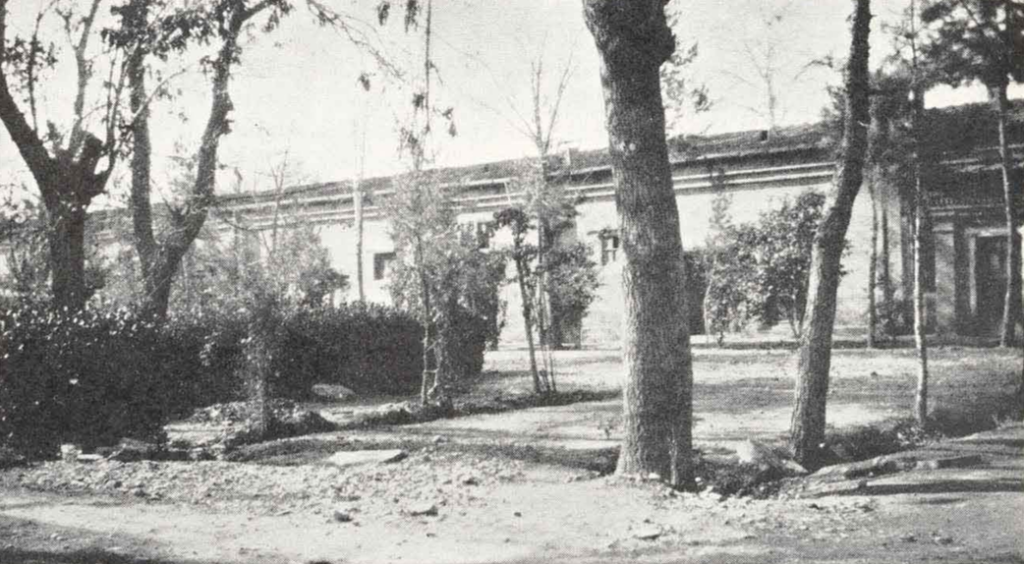
The Bahá’í community continued the work of Táhirih by giving agency to women and advancing their position in the community. Bahá’u’lláh encouraged this, writing that He had “lifted distinctions from between His servants and handmaidens, and… hath conferred upon all a station and rank of the same plane,” and had thus “broken the back of vain imaginings (in other words, disrupted the social constructs that maintain the patriarchy).”27From a Tablet of Bahá’u’lláh, in Compilation of Compilations 2 (Bahá’í Publications Australia, 1991), 357. See also Juan R. I. Cole, Modernity and the Millennium: The Genesis of the Baha’i Faith in the Nineteenth-century Middle East (Columbia University Press, 1998), 171–7.
Of course, the pronouncement of equality by the Founder of the religion did not immediately lead to full equality for women in the Bahá’í community. This was a lived, negotiated, and developing outcome, experienced within the cultural expectations and social constraints of a patriarchal society. But, as early as the 1870s, outside observers were noticing the improving position of women in the Bahá’í community. A Polish journalist visiting Baghdad and an Irish doctor born in Iran both wrote of this in the 1870s.28Jan Jasion, “‘A.J.’ and the Introduction of the Bahá’í Faith into Poland,” Bahá’í Studies 4 (1978), 31–7. Jablowonski calls the individuals he met “Babis” but that was the name by which the Bahá’ís were known throughout the nineteenth century. Edward Granville Browne, Materials for the Study of the Bábí Religion (Cambridge University Press, 1918), 262. The words that Professor Browne of Cambridge University heard in 1888 from a street peddler in Isfahan who was a Bahá’í demonstrated that this ethic of promoting women’s emancipation had penetrated all levels of the Bahá’í community: “We believe that women ought to be allowed to mix more freely with men, and should not be compelled to wear the veil.”29Edward Granville Browne, A Year among the Persians (Adam and Charles Black, 1893), 236. Individual Bahá’í women, such as Táyirih Khánum, contributed to the public discourse on women’s emancipation in the period before and after the Constitutional Revolution, writing articles for newspapers.30Dominic Parviz Brookshaw, “Women Poets,” in Literature of the Early Twentieth Century: From the Constitutional Period to Reza Shah, ed. Asghar Seyed-Gohrab (I.B. Tauris, 2015), 247–58. Afsaneh Najmabadi, “Ṭāyirih,” Nīmeh-ye Dīgar 2, no. 3 (Winter 1997), 146–95.
When the Bahá’ís began to establish a community administration at the beginning of the twentieth century, one of the first committees to be set up was a Committee for the Advancement of Women,31 Moojan Momen, “Role of Women in the Iranian Bahá’í Community during the Qajar Period,” in Religion and Society in Qajar Iran, ed. Robert M. Gleave (RoutledgeCurzon, 2005), 366, photograph, 360. and the advancement of women has remained a goal of the community up to the present. But perhaps the greatest contribution that the changes in the Bahá’í community made to the advancement of women is the progress that it made and continues to make towards the dismantling of the hierarchical social order that buttresses the patriarchy (see Part 2 of this article).
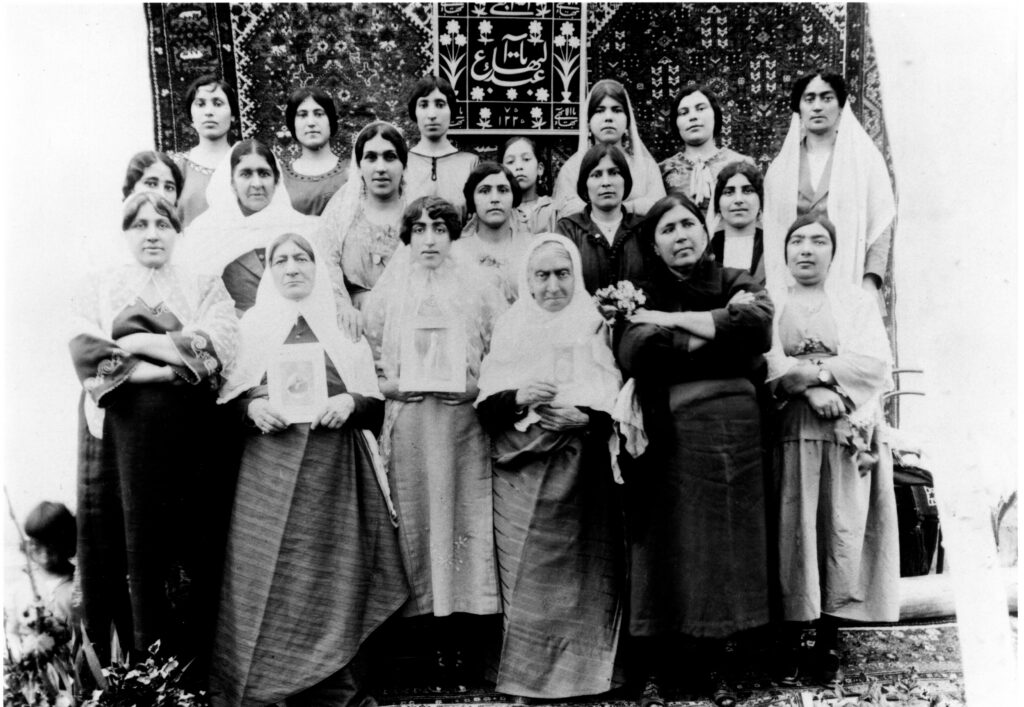
Bahá’u’lláh made it clear that His advocacy for modern education included girls as well as boys.32Bahá’u’lláh, Tablets, 128. Although urged by Western Bahá’í women to promote the unveiling of Eastern Bahá’í women (which was also a feature of the Iranian modernist discourse), ‘Abdu’l-Bahá judged that the more effective and sustainable way to promote the social advancement of women was through education. As the Bahá’í community began to build schools, ‘Abdu’l-Bahá made sure that they built girls’ schools alongside the boys’ schools, even saying that the education of girls took precedence over that of boys since they were the first educators of the next generation.33Compilation 1, 284; Compilation 2, 374. One result of this was that Iranian Bahá’í women were, in general, more educated than other women. By 1973, the Bahá’í community was able to announce a 100% literacy rate among women under 40 years of age at a time when nationally only 40% of Iranian women in this age range were literate.34Momen, “Role of Women,” 366.
It is noticeable that almost all of the Western Bahá’ís whom ‘Abdu’l-Bahá encouraged to settle in Iran to help to develop the Bahá’í community in the fields of education and health were women, who were then able to serve as role models for the Iranian Bahá’í women on how to claim agency and take on social roles.35Armstrong-Ingram, “American Bahá’í Women.”
There were other areas of life where the Bahá’ís were making innovative and radical changes ahead of what was happening in the rest of Iran, especially in agriculture and rural development, and in health and hygiene. But since the Iranian modernist reformers did not concern themselves much with these areas, there is little to compare these Bahá’í activities with and they will not be discussed here.36On agriculture, see Moojan Momen, “Social and Economic Development in an Iranian Village: The Bahá’í Community of Saysan,” Baha’i Studies Review 15 (2009): 67–81; on health and hygiene see, Seena B. Fazel and Minou Foadi, “Baha’i health initiatives in Iran: a preliminary survey,” in The Baha’is of Iran, 122–40.
CONTACTS BETWEEN THE REFORMERS AND BAHÁ’ÍS
As well as the evidence presented above that the Bahá’í leaders were ahead of the Iranian modernist reformers in the reforms they were advocating, there is also strong evidence that these reformers were in close contact with the Bahá’í leaders and the Bahá’í community. In the 1860s, two of the leading Iranian reformers were Mírzá Malkam Khán and Sayyid Jamálu’d-Dín Asadábádí (“Afghání”). The first of these was exiled to Baghdad in 1861 and is known to have met Bahá’u’lláh there. Later in 1866, he represented himself as being knowledgeable about the new religion to French scholar Ernest Renan, who encouraged him to write an article on the subject.37Hasan Balyuzi, Bahá’u’lláh: King of Glory (George Ronald, 1980), 151–3; Ernest Renan, Oeuvres Complètes 10, ed. Henriette Psichari (Calmann-Lévy, 1947–61), 453. See also Moojan Momen, The Bábí and Bahá’í Religions, 1844–1944: Some contemporary Western accounts (George Ronald, 1981), 23. Similarly, Asadábádí is said to have met Bahá’u’lláh in Baghdad, and he also represented himself as knowledgeable about the new religion such that Butrus al-Bustani asked him to contribute an article on the subject for his Arabic encyclopedia.38Nikki Keddie, Sayyid Jamāl ad-Dīn “al-Afghānī.”(University of California Press, 1972), 20–22. He tried to remain in close touch with the Bahá’í leadership, sending them copies of his newspaper al-Urwah al-Wuthqá from Paris in the 1880s.39Bahá’u’lláh, Tablets, 95.
The most consequential reformer from the next decade, the 1870s, was Mírzá Ḥusayn Khán Mushíru’d-Dawlih (Sipahsalár), who succeeded in becoming Prime Minister of Iran and began a reform agenda but was thwarted by the reactionary Iranian elite. He had at first been antagonistic to the Bahá’ís and, as Iranian ambassador to the Ottoman Government, was responsible for Bahá’u’lláh’s successive exiles from Baghdad to Istanbul, to Edirne, and to Acre. But after reading some of the letters addressed to Bahá’u’lláh by His followers after Bahá’u’lláh’s courier had been arrested in Aleppo in 1870, he realized that he had been wrong about Bahá’u’lláh. When he returned to Tehran and later became Prime Minister, he openly praised Bahá’u’lláh and protected the Bahá’ís on more than one occasion.40Ḥájí Mírzá Ḥaydar ‘Alí quoted in Balyuzi, Bahá’u’lláh, 441–4; See also Mina Yazdani, Awḍá‘-yi Ijtimá‘í-yi Írn dar ‘Ahd-i Qájár az khilál-i Áthár-i Baháʾí (Association for Bahā’ī Studies, 2003), 118–121. Information about the Bahá’í Faith probably came to him from his close friend Malkam Khán or one of his relatives who was a Bahá’í.41Moojan Momen, The Baha’i Communities of Iran 1 (George Ronald, 2015), 26, 498. Another close friend of Mushíru’d-Dawlih was Mírzá Yúsif Khán Mustasháru’d-Dawlih, who wrote the first reformist treatise to be published, Yik Kalamih. The Bahá’í scholar Mírzá Abu’l-Faḍl Gulpáygání records that he was passing through Tabriz where Mustasharu’d-Dawlih lived, and that the latter was present at a meeting where Gulpáygání debated with Reverend Robert Bruce, a British missionary, about the Bahá’í Faith.42Abu’l-Faḍá’i Gulpáygání, Rasá’il va Raqá’im (Mu’assih-yi-Milli-yi Maṭbú‘át-i Amrí 134 BE/1977), 210; Rúḥu’lláh Mihrábkhání, Zindigání-yi Mírzá Abu’l-Faḍl Gulpáygání (Bahá’í-Verlag, 1988), 125–31.
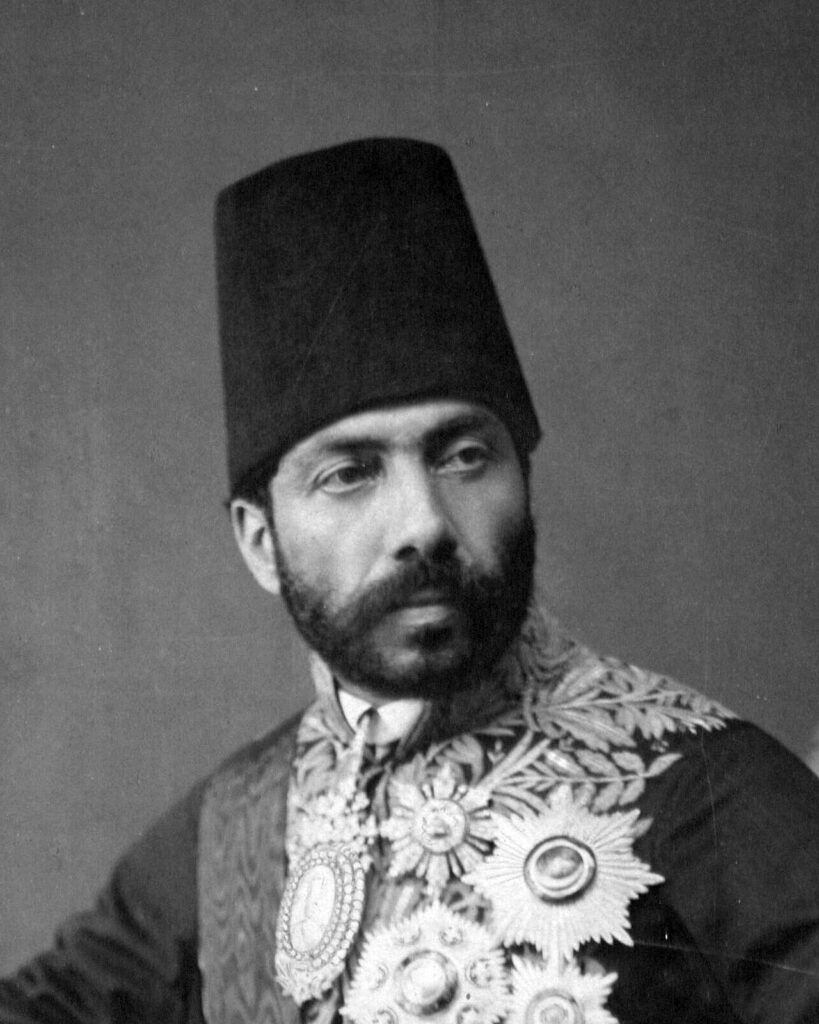
By the 1880s, there was an increasing debate about reform in Iran, fueled by newspapers and books printed outside Iran but circulated within the country. ‘Abdu’l-Bahá wrote an important treatise, the Risálih-yi Madaniyyih (The Secret of Divine Civilization), as a contribution to this debate. It was published in Bombay in 1882 and was probably only the second reform treatise (after Yik Kalamih) to be thus printed and circulated. It was published anonymously and with no overt reference to the Bahá’í Faith in it, so that prejudice against the new religion would not prevent it from being circulated and widely read. In this book, ‘Abdu’l-Bahá enters into the discourse that was going on among Iranian reformers about governmental reform and modern education, but, in contrast to these reformers, He emphasizes the need to develop a sound moral basis in society, upon which these other reforms could be established and develop.
One important focus of reform activity in the 1890s was the city of Isfahan. Here a group of modernist reformers gathered, calling themselves the Progress Society (Anjuman-i Taraqqí). It was one of the earliest such societies in Iran and did not just meet to discuss reform but carried out lines of social action, such as establishing a modern school. Almost all of the leading members of this group, which included such figures as Ḥájí Mírzá Naṣrulláh Maliku’l-Mutakallimín, Sayyid Jamál Vá`iz, Majdu’l-Islám Kirmání, Mírzá Asadu’lláh Vazír, and Mírzá Aḥmad Khán Fátiḥu’l-Mulk were at that time either Bahá’ís or closely associated with the Bahá’í community.43Momen, Baha’i Communities 2, 2:31–6. The first three named individuals moved to Tehran in 1902–3 and then became associated with the Azalí Bábís, but during the time they were in Isfahan there is no evidence that they were in contact with Azalís. Further details including evidence of these individuals being Bahá’ís or closely associated with the Bahá’í community in Isfahan can be found in Moojan Momen, “The Reform Movement in Isfahan, Iran: the role of Bábís and Bahá’ís,” Religions 17(6), (2026), 717; mdpi.com/2077-1444/17/6/717.
In the next decade, the 1900s, similar to the situation in Isfahan in the 1890s, almost all of the leading members of the reform movement in Sari in Mazandaran were either Bahá’ís or closely associated with the Bahá’í community. They set up the Anjuman-i Ḥaqíqat (The Truth Society) and undertook such activities as establishing a modern school.44Moojan Momen, “The Baha’is and the Constitutional Revolution: The Case of Sari, Mazandaran, 1906–1913,” Iranian Studies 41, no. 3 (2008), 343–363. Elsewhere in Iran, leading Constitutionalists such as Ḥájí Abu’l-Ḥasan Mírzá Shaykhu’r-Ra’ís were known to have been Bahá’ís,45Juan R. I. Cole, “Autobiography and Silence: The Early Career of Shaykh al-Ra’īs Qājār,” in Iran im 19. Jahrhundert und die Enstehung der Bahā’ī Religion, ed. Christoph Bürgel and Isabel Schayani (Georg Olms, 1998), 91–126; Juan R. I. Cole, “The Provincial Politics of Heresy and Reform in Qajar Iran: Shaykh al-Rais in Shiraz, 1895–1902,” Comparative Studies of South Asia, Africa and the Middle East 22, nos.1–2 (2002): 119–126; Momen, Baha’i Communities 1, 128–31. while Muḥammad Valí Khán Tunukábuní (Naṣru’s-Salṭanih, Sipahsalár-i A‘ẓam) and ‘Alí Qulí Khán Sardár As‘ad Bakhtiyárí, the two military leaders who led the Constitutionalist forces in their capture of Tehran in 1909, thus ending Muḥammad `Alí Sháh’s attempt to overthrow the Constitution, were both in close touch with the Bahá’í community, and both met ‘Abdu’l-Bahá in Paris.46Moojan Momen, “Who Was a Bahā’ī in the Upper Echelons of Qājār Iran?” Religions, 14, no. 4 (2023): 469, mdpi.com/2077-1444/14/4/469. Published in The Bahā’ī Faith: Doctrinal and Historical Explorations, ed. Moojan Momen and Zachery Heern (MDPI, 2024), 119–31.
Also of great interest and demonstrating the extent to which the modernist reformers looked to and may in some measure have modelled themselves on the Bahá’í community is the report by Náẓimu’l-Islám Kirmání, a historian who was closely involved with the reform movement, of the discussion at a meeting in March 1905 of the leading reformers at which he was present and where it was suggested that the reformers should look to the successful methods and tactics of the Bahá’ís for inspiration.47 Náẓimu’l-Islám Kirmání, Táríkh-i Bídárí-yi Írániyán (Amír Kabír, 1387/2008), 1:189. The text reads “Bábís,” but this is what the Bahá’ís were called at this time and it is unlikely that this refers to the Azalí Bábís, since they dissimulated their beliefs and were not known as an active group by this name.
There were also other factors that made it likely that the Bahá’ís may have been influencing Iranian society much more effectively than is often appreciated. In explaining their ideas, drawn as they were from European writings, the modernist reformers were introducing into their texts European terms and thus using words and concepts that were not immediately understandable to most Iranians and appeared as a rupture with Iranian culture. But the Bahá’í texts used words and ideas that were rooted in Iranian culture and therefore easily understood.48Ghazaleh Faridzadeh and Raed Faridzadeh, “Negotiating Freedom: Mostašār od-Doule’s Yek kalame and the Iranian Constitutional Experience,” Die Welt des Islams 61 (2021): 390–91; Algar, Malkam Khān, 27, 29; Nashat, Origins, 162–3. Indeed, the concept of the progressive revelation of religious truth, introduced by the Báb and developed by Bahá’u’lláh, created a pathway for a gradual organic modernization, in keeping with the culture of the nation and granting agency to all individuals in society.49Abbas Amanat, Iran: A Modern History (Yale University Press, 2017), 239–40.
Moreover, it should be borne in mind that the number of people engaged in the project of the Iranian reformers was very small, the readership for the writings they produced was very limited, and the ability of this small group to carry out any of their suggested changes was very constrained. Mahdí Malikzádih, who was himself part of the reform movement, suggests that the number in the reform circle in the last decades of the nineteenth century was only a few hundred,50Malikzádih, Tarikh, 1:69. and these reformers were operating within secret societies and only in a handful of large cities. By contrast, the Bahá’í community had a much greater membership (estimated to be 100,000 or more),51Peter Smith, “A Note on Babi and Baha’i Numbers in Iran,” Iranian Studies 17, no. 2/3 (Spring-Summer, 1984), 295–301. was distributed across the country, even in small towns and villages, and the Bahá’ís were trying to put these ideas into practice insofar as circumstances allowed.
The above evidence demonstrates that in decade after decade from the 1860s onward, the ideas put forward in the Bahá’í texts were presented earlier, more developed, and more easily understood than what appeared in the discourse and texts of the modernist reformers, and the Bahá’ís were implementing these changes in their communities scattered across the whole of Iran. Given this and the evidence presented above that many of the leading modernist reformers were in close touch with the Bahá’í leaders and the community, it is not unreasonable to suggest that Bahá’í ideas had some influence on the thinking of the reformers. The extent to which this may have occurred requires further research, as it would be hidden by these reformers to forestall opposition and persecution.
ATTACKS AND SETBACKS
Inevitably, the radical changes that the Bahá’í community was trying to make were either misunderstood or deliberately misrepresented to the people of Iran. And so, for example, the Bahá’í endeavor to advance the social role of women led to allegations of sexual immorality. The efforts of the Bahá’í community to introduce modern education led to claims that the Bahá’ís were trying to introduce foreign ideas into Iran. The ethos of modernity and progress cultivated within the Bahá’í community gave rise to accusations that the Bahá’ís were trying to undermine Iran’s culture and even, in later years, to conspiracy theories, which continue to the present day, that the Bahá’ís are agents of foreign powers. The global vision inculcated in the Bahá’í scriptures led to accusations that the Bahá’ís did not care about the welfare and progress of Iran. All of this led to persecution of the Bahá’í community by the religious leaders of Iran, who then recruited the intellectuals and politicians in their campaign against the Bahá’ís.
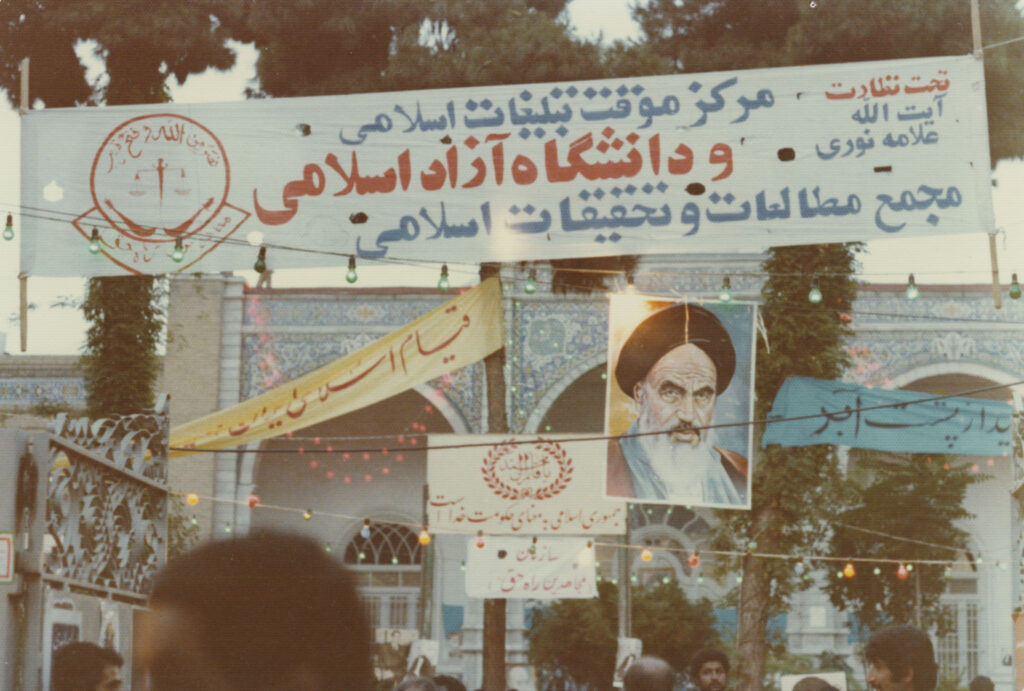
Although the Bahá’í community was striving to advance all of these areas of social progress, the constant persecution and the consequent social constraints that the community suffered did limit their efforts and cause setbacks. The hostile environment created by the opposition of the religious leadership in the country, and often the government, led to a situation in which the only public discourse about the community was hostile attacks. Even many of the secular nationalist reformers, whom one might have thought would have welcomed the Bahá’í social agenda, were contributing to these attacks by the time of Reza Shah’s reign.52 Mohammad Tavakoli-Targhi, “Anti-Baha’ism and Islamism in Iran,” in The Baha’is of Iran, 200–231; Chehabi, “Anatomy.”
The most public face of the Bahá’í community was its schools, and these were vehemently opposed by the Islamic religious leaders, many of whom were opposed both to all modern education and to any Bahá’í initiatives. In several instances, these schools were wrecked or closed down by the authorities, until finally the national government closed all of them permanently in 1934.53Shahvar, Forgotten Schools, 107–30. Another area where the efforts of the Bahá’í community were held back was in the social advancement of women. Thus, although women were able to vote for the Bahá’í leadership councils from 1923, it took until 1954 before conditions were right for them to be elected to these councils.54 Momen, “Role of Women,” 366. In all, there was a constant barrage of black propaganda against the community.
CONCLUSION
At no time since its founding in the latter part of the nineteenth century has the Bahá’í community been free to pursue its agenda for social reform or to enter into Iranian public discourse. The people of Iran have received only falsified facts and fanciful conspiracy theories about the Bahá’ís.55 See the examples provided by Chehabi in “Anatomy,” 186–94 of false allegations that Bahá’ís were enemies of the Iranian nation, tools of Russian and British imperialism, and prominent in the Shah’s regime; see also Reza Afshari, “The Discourse and Practice of Human Rights Violations of Iranian Bahaʾis in the Islamic Republic of Iran,” in The Baha’is of Iran (Routledge, 2008); Tavakoli-Targhi, “Anti-Baha’ism”; Vahman, 175 Years. As a result, Iranians have remained widely ignorant of the achievements of the Bahá’í community and the extent to which it has assisted the development of Iran.
In the mid-nineteenth century, Iran was in urgent need of reform and modernization. Two possible routes presented themselves: that of the modernist reformers and that of the Bahá’í community. In this article, we have traced the earliest suggestions made by the Iranian modernist reformers and pointed out that, in most instances, the Bahá’í leaders were making suggestions that were earlier and more progressive than those of the modernist reformers. It should not surprise us, however, that evidence for a direct influence of the Bahá’í teachings on the reformers is difficult to find, since it would have resulted in rejection and even danger for the reformers to admit to being influenced by a persecuted and reviled religious community. Given the evidence presented here that these modernist reformers were in many cases in close contact with the Bahá’í community and in some cases with the Bahá’í leadership, it would seem likely that at least some of the discourse of the modernist reformers was influenced by the Bahá’í teachings.
The equality of women and men is a spiritual reality asserted by Bahá’u’lláh and a pillar of Bahá’í belief, as evidenced by many statements in the Bahá’í writings. This spiritual reality, Bahá’ís believe, must be manifested today in its fullness in social reality.
Equality is an indispensable element for the progress of humanity, a principle which requires that women and men move forward together in dynamic partnership. ‘Abdu’l-Bahá has stated that “As long as women are prevented from attaining their highest possibilities, so long will men be unable to achieve the greatness which might be theirs.”1Paris Talks, Part 2, 40. Reiterating the principle in a statement to the United Nations in 2015, the Bahá’í International Community described the equality of women and men as “a facet of human reality” and asserted, “That which makes human beings human—their inherent dignity and nobility—is neither male nor female. The search for meaning, for purpose, for community; the capacity to love, to create, to persevere, has no gender,” concluding that “Such an assertion has profound implications for the organization of every aspect of human society.”2Toward a New Discourse on Religion and Gender Equality: The Bahá’í International Community’s Statement to the 59th Session of the United Nations Commission on the Status of Women and the 20th Anniversary of the United Nations World Conference on Women (1 February 2015), 2.
The Bahá’í community has, as a matter of faith, pursued the application of this principle over the entire span of the Faith’s history, basing its actions on Bahá’u’lláh’s statement “Praised be God, the Pen of the Most High hath lifted distinctions from between His servants and handmaidens, and, through His consummate favours and all-encompassing mercy, hath conferred upon all a station and rank of the same plane”3From a Tablet translated from the Persian, in Women, comp. Research Department of the Universal House of Justice, https://www.bahai .org/r/608244224—an assertion that was reinforced and elaborated upon in many statements and writings of ‘Abdu’l-Bahá, such as the following: “… in the sight of Bahá, women are accounted the same as men, and God hath created all humankind in His own image, and after His own likeness. That is, men and women alike are the revealers of His names and attributes, and from the spiritual viewpoint there is no difference between them.”4Selections from the Writings of ‘Abdu’l-Bahá, 38.3–4, https://www.bahai.org/r/604842208. In their efforts to realize this vision, Bahá’í individuals, institutions, and communities around the world have striven to understand more deeply its implications and have engaged in discourses and actions to promote gender equality ranging from grassroots initiatives to contributions at international fora.5See “Towards the Goal of Full Partnership: One Hundred and Fifty Years of the Advancement of Women,” The Bahá’í World 1993–94 (Haifa: Bahá’í World Centre, 1994), 237–75.
Since the Bahá’í writings emphasize both the importance of women as equal partners in the advancement of civilization and the key role of mothers as the first educators of the next generation, it was natural that the earliest endeavors in Persia focused on encouraging families to provide for the education of their girl children and on establishing schools for girls. Throughout the past century and a half, the geographical scope and range of activities related to gender equality have both broadened, and over the past 25 years, in particular, the training and community-building endeavors in which Bahá’ís in all parts of the globe are engaged have given further momentum to, and provided additional settings for, the practical expression of this principle.
DEVELOPING WOMEN’S CAPACITIES AT THE GRASSROOTS
The Bahá’í community recognizes that, while tremendous efforts in the areas of policy have been made at the international level by organizations such as the United Nations, the advancement of women cannot be brought about or sustained merely through legislation or policy directives that give women additional power within existing, unbalanced structures and systems. And even if attempts to change those social structures are made, such changes will not be sufficient to create conditions that allow women and girls to develop fully; unhealthy values may continue to be held by men and women, as well as boys and girls, sustaining exploitative behaviors.6See Bahá’í International Community, Beyond Legal Reforms: Culture and Capacity in the Eradication of Violence against Women and Girls (July 2006), 4. To effect the profound changes needed, educational processes that help to develop spiritual as well as intellectual capacities, that uphold the oneness of humanity, and that promote the equality of women and men play a pivotal role in establishing patterns of relationships that meet the needs of this age.7See Bahá’í International Community, Developing New Dynamics of Power to Transform the Structures of Society: Statement to the 64th Commission on the Status of Women (2019).
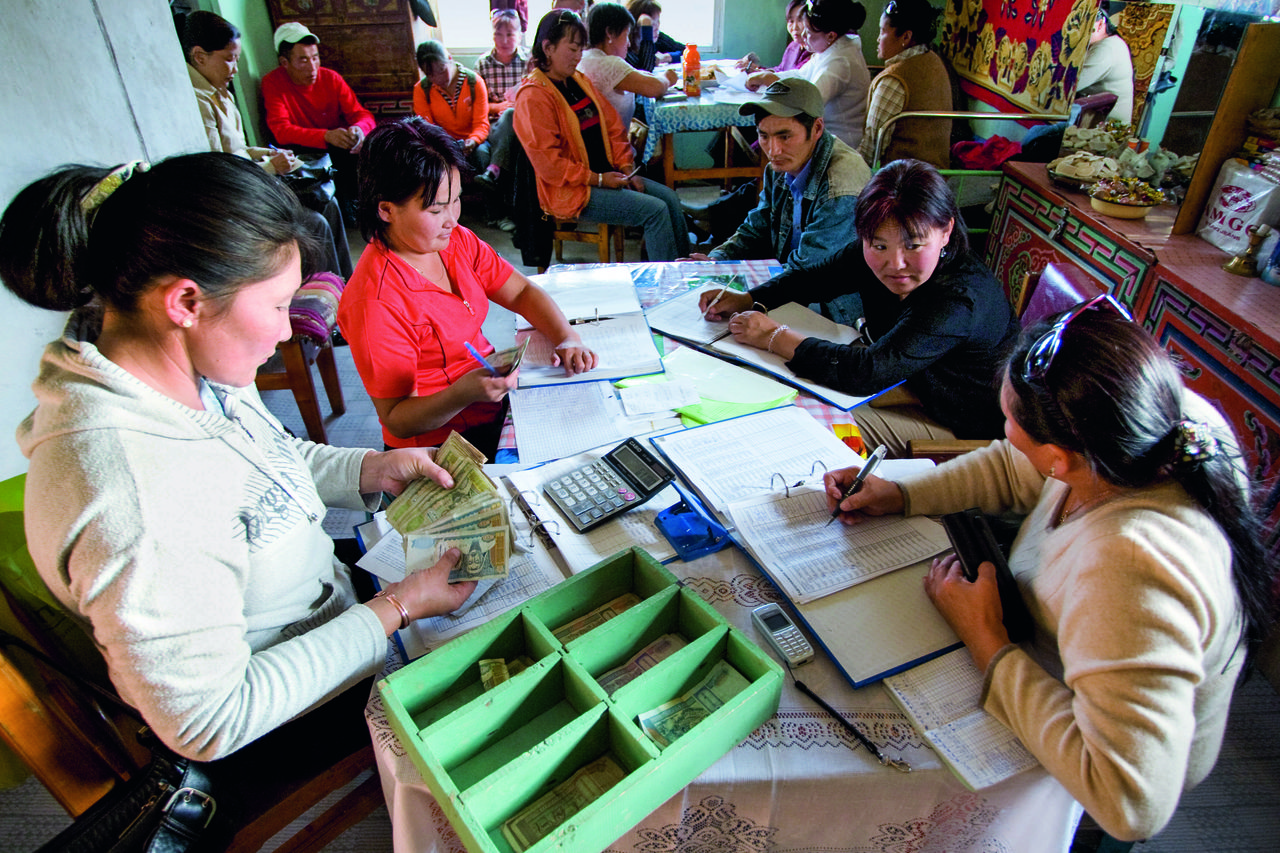
At the most basic level, the home is the nurturing ground of values such as truth or dishonesty, justice or injustice, kindness or violence. And from the home, behaviors rooted in these values radiate through society. For example, when boys are allowed to dominate their sisters within the family, what deters them from doing the same at their school or place of work—or even in national or international arenas? If, instead, sons and daughters are raised so that both participate in household duties and both participate in decision-making, these are the habits they will take out into the world as they grow to adulthood.8See Bahá’í International Community, Toward Prosperity: The Role of Women and Men in Building a Flourishing World Civilization— The Bahá’í International Community’s Contribution to the 61st United Nations Commission on the Status of Women (March 2017), 4. Efforts to nurture values that promote gender equality at the roots of community life are clearly key to change.
The purpose of the institute process which the Bahá’í community has been developing since 1996 (see “A New Institution of Learning,” in this volume) is to develop capacities in participants—women and men, boys and girls—to contribute to the spiritual and material advancement of their societies. The first quotation in the first book of the curriculum invites them to reflect on a statement of Bahá’u’lláh regarding their role as individuals: “The betterment of the world can be accomplished through pure and goodly deeds, through commendable and seemly conduct.”9Cited in Shoghi Effendi, The Advent of Divine Justice (Wilmette, Ill.: Bahá’í Publishing Trust, 1984), 24–25. The materials train participants to engage in behavior and facilitate activities that contribute directly to the advancement of the communities in which they live. Beyond the basic activities, participants acquire knowledge, skills and insights that equip them to participate in the discourses prevalent in their society and to engage in social action endeavors. Women have been at the heart of all these efforts. What is especially remarkable is that, in the aggregate, despite the vast inequalities between women and men in most societies, globally, women comprise half of those who have completed the first sequence of courses of the training institute—and in all except the first book, women outnumber men. This is also more dramatically the case in the higher sequence of courses where the ratio of women to men is around 60 percent. These remarkable statistics reflect the emphasis that the worldwide Bahá’í community places on the equality of women and men and the essential part that women play in social transformation.
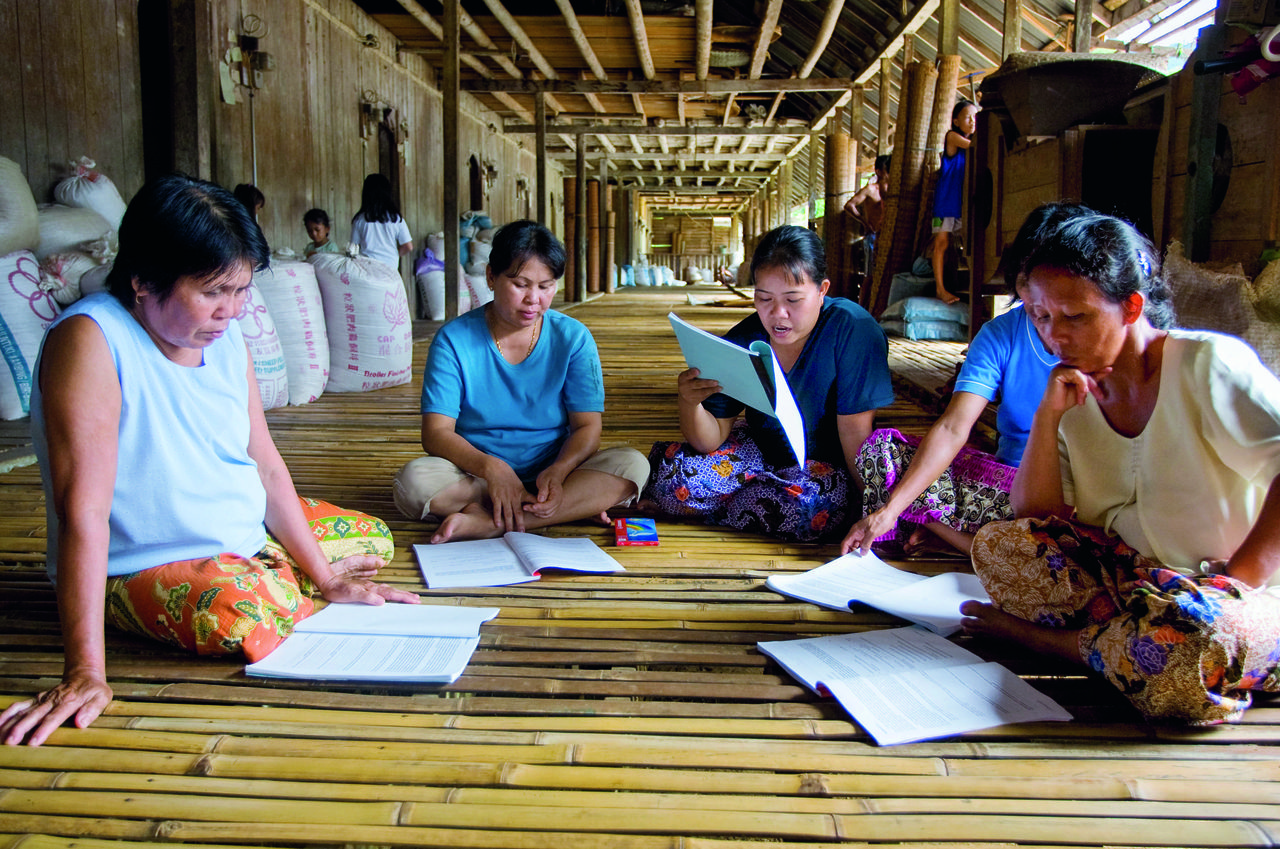
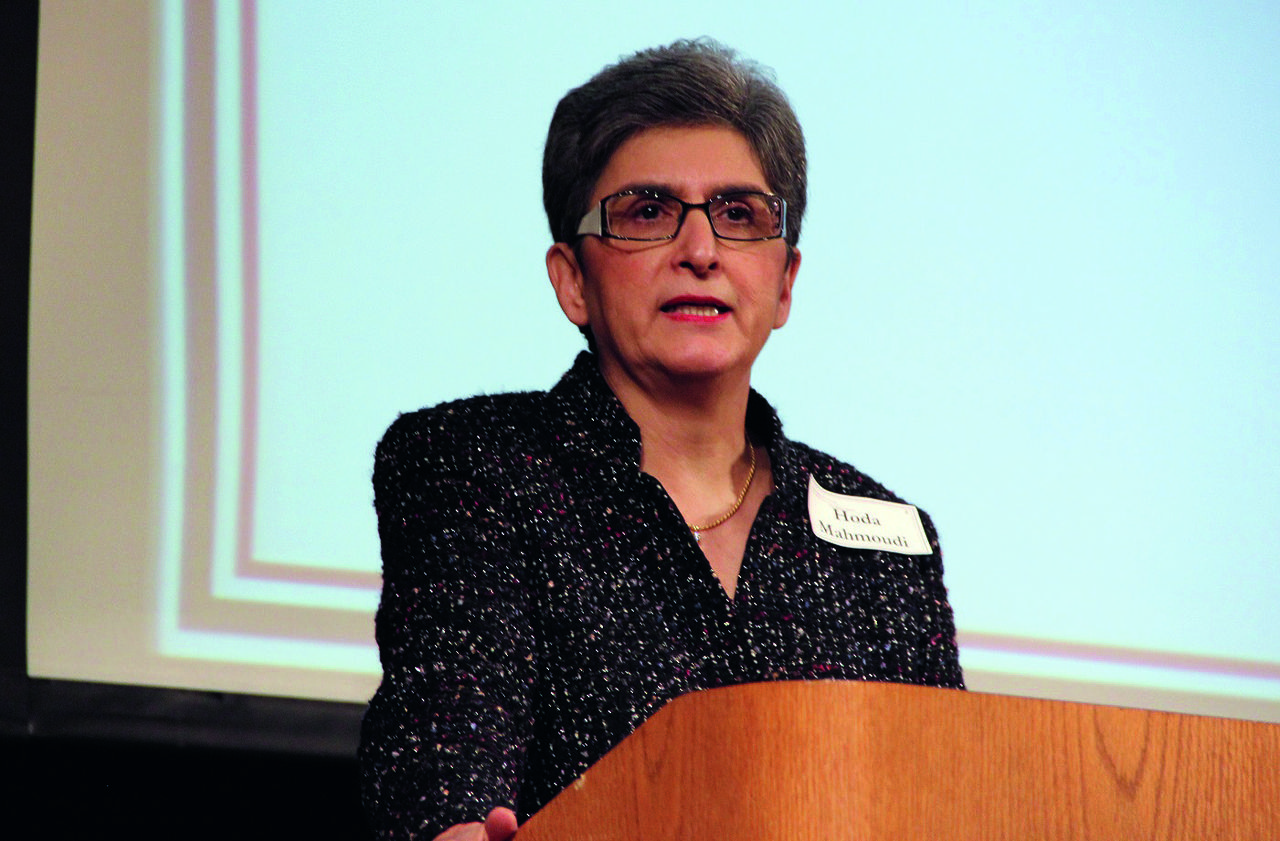
The percentage of women engaged in the educational processes of the institute reveals the central role they have played in promoting it in their own communities and in its dissemination to other parts of the world. Many of those who complete institute courses continue on to serve as tutors, teachers of children’s classes, and animators in the junior youth spiritual empowerment program. One example illustrating the level of female empowerment that has been achieved originates in the Central African Republic: In 2014, while only 20 percent of primary teachers in the national educational system were women, the percentage of primary teachers in community schools raised up through the training institute was 55 percent—rising to 60 percent in rural areas. Around the world, the level of women’s participation as animators and coordinators in the junior youth program is comparable. Such a level of engagement is a strong indicator of the effectiveness of the training institute in the enfranchisement of women and girls.
Specific attention is given to identifying, training, and accompanying women in their efforts, including practical actions related to program delivery. These include the decentralization of training seminars to allow women to participate close to home and the provision of childcare to mothers. Furthermore, the training institute materials themselves, as well as those developed for the junior youth spiritual empowerment program and other Bahá’í-inspired education programs, such as the Preparation for Social Action and community schools programs, all promote the principle of gender equality, whether explicitly or implicitly. For example, of the nine texts developed for the junior youth program by 2017, seven mention the equality of women, the advancement of women, or the education of girls, while more than half of the units in the Preparation for Social Action program make explicit reference to the theme.
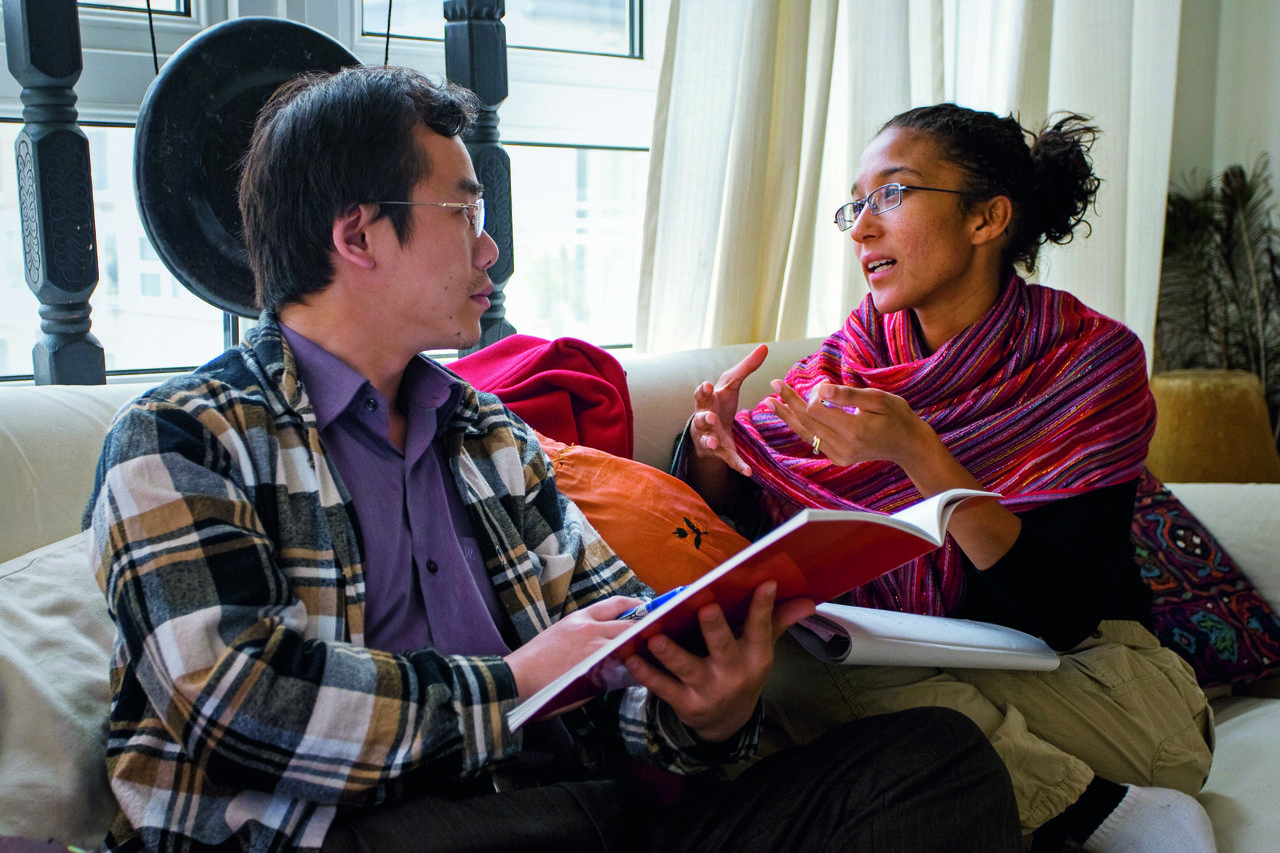
Assisting women to develop capacities through collaborative study, action, and reflection helps change culture by breaking down prejudices of sex and gender. Experience with community schools in Africa and Asia has shown that those starting with female teachers are more sustainable over the first few years than those starting with men. Women have been better able to persevere through this unstable period with little remuneration, while pressure on men to provide for their families makes it difficult for them to sacrifice to that level. Beyond the obvious benefits of sustainable educational opportunities, village councils are now beginning to appoint women teachers to serve on community development and administrative committees—positions that were previously filled only by men.
Clearly, when women and men and boys and girls all become advocates for gender equality, everyone benefits. Sometimes the steps towards such change are dramatic, and sometimes they are incremental. For example, the holding of gatherings to join with others in prayer may seem like a simple activity, but in a village in India, these gatherings have provided rare community acceptance for women to leave their houses. As a result, the “long-standing system requiring women to seclude and isolate themselves is starting to give way” as participants realize that long-established customs are less important than educating children, consulting with each other to solve problems together—and allowing women to participate in community activities.10See Bahá’í International Community, Leadership for a Culture of Equality, in Times of Peril and Peace: A Statement of the Bahá’í International Community to the 65th session of the UN Commission on the Status of Women (February 2021), 4–5.
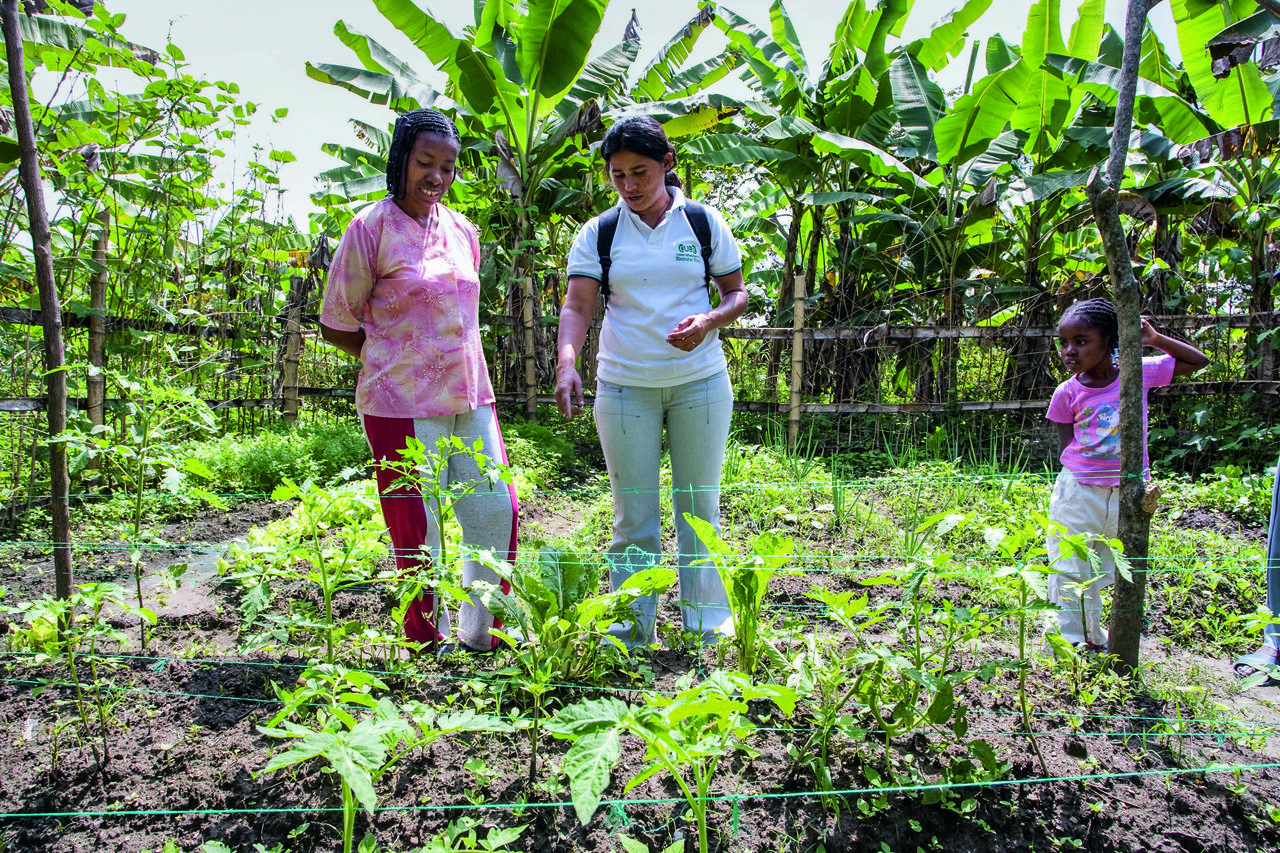
The proliferation of such efforts worldwide is helping to advance the creation of social environments and structures capable of meeting the needs of this age. Challenges such as social inequities, climate change, and global health emergencies, to mention a few, show in starker and starker relief the inadequacy of current outmoded customs and systems to deal with them. Advancing the role of women will undoubtedly serve to better equip humanity to address the ordeals it faces. As the Bahá’í International Community stated in 2021:
Against the backdrop of a world undergoing profound change, there is a growing recognition of the indispensable role that women in leadership play. In the early days of the coronavirus pandemic, nations in which women contributed more prominently to the leadership of society were seen to have generated a degree of stability across a variety of short-term indicators, including public health and economic security. At the community level, women continue to play an indispensable role—and often lead—in caring for the sick, educating the young, tending to the needy, and sustaining the social and economic fabric more broadly. Never has it been more clear how much humanity benefits when women’s leadership is embraced and promoted at every level of society, whether in the family or the village, the community or local government, the corporation or the nation.11Bahá’í International Community, Leadership, 1.
With regard to the issue of climate change, while it is true that women are greatly impacted by its negative effects on the natural environments from which they earn their living in many parts of the world, they are also equipped to respond to it. Experience is proving that participation in the institute courses has provided women with skills to deal with this issue at the grassroots level. For example, when a major cyclone hit Dili, in Timor-Leste, and cut off external assistance, participants in the training institute courses used the skills and networks they had formed through their collaborative study to assist more than 7,000 people across 13 villages and neighborhoods with access to food and other essentials. And in Okcheay, Cambodia, a tree-planting project that had been devised by youth participants protected roads in the area from soil erosion when severe flooding occurred several years later.
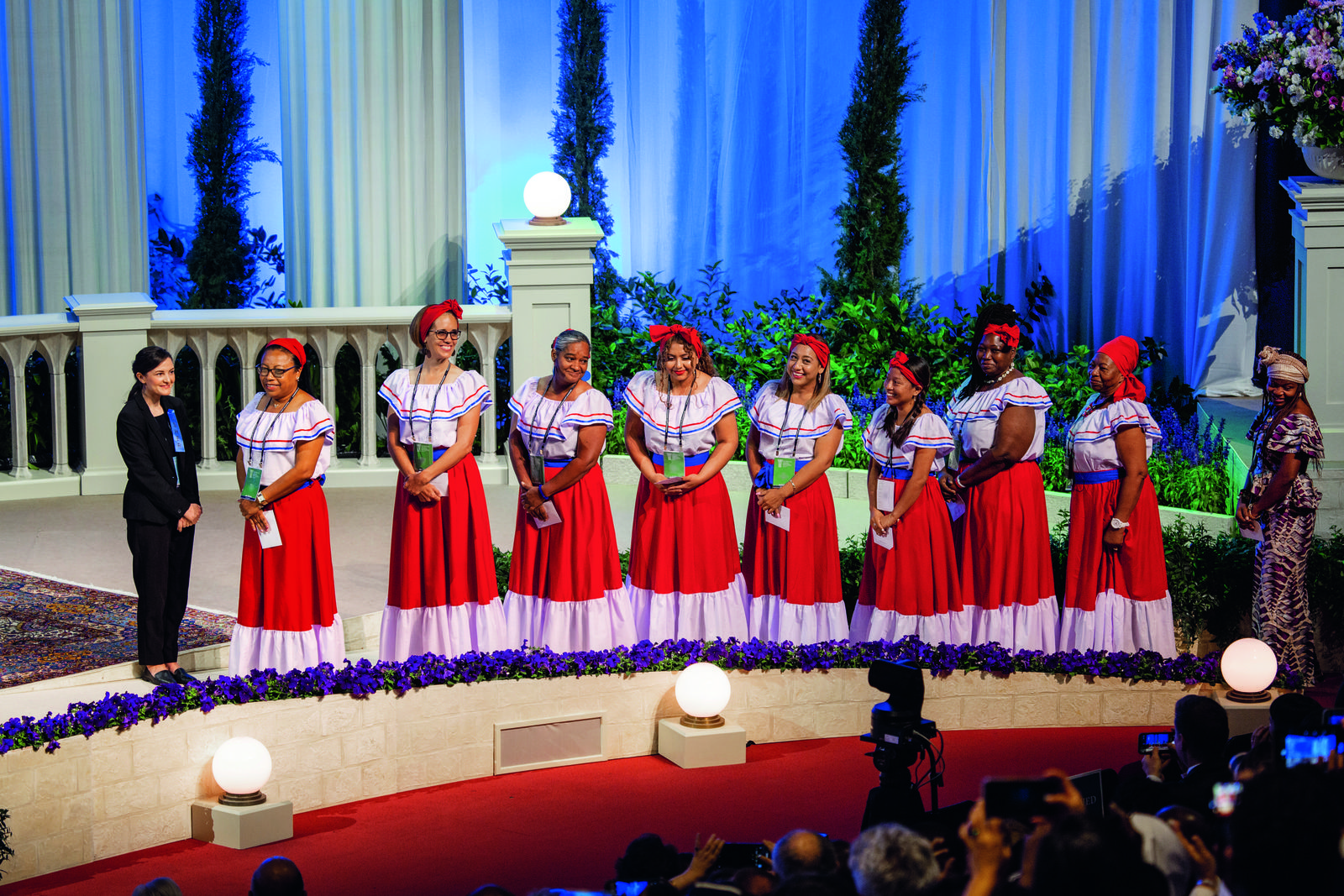

While difficult to live through, unstable periods provide humanity with opportunities to examine our collective values. Women, the Bahá’í writings assert, must have their rightful place as equals to men in every sphere of human endeavor, contributing at every level of decision making and bringing their capacities to bear on the fortunes of their communities, societies, and all of humankind.
DEVELOPING CAPACITIES AND ADMINISTRATIVE MEMBERSHIP
At the global level, experience has shown that increased emphasis on the education of women and girls results in a corresponding rise in the level of their participation in public life and community affairs.12See Bahá’í International Community, Toward a New Discourse, 5. Likewise, the Bahá’í community has witnessed, as a result of its efforts to develop the capacities of participants through its worldwide training institute process, a substantial increase in the membership of women on institutions within the Bahá’í community and their shouldering of administrative responsibilities.
The administrative order of the Bahá’í world community is composed of both elected and appointed arms. As of 20 April 2021, some 42 percent of those elected to serve on the 174 National Spiritual Assemblies around the world were women, rising from about 30 percent in 1994–95. The ratio of women serving as office-bearers rose to 35 percent, compared to 19 percent in 1983, and some 53 percent of those serving as the principal executive officer (titled “National Secretary”) were women. Membership of women on Regional Bahá’í Councils was about 46 percent. When considered in the global context of women’s representation in governing institutions, such a high percentage of membership is impressive. These figures are worldwide results, including numerous societies where equality may not yet be accepted even in principle. It indicates a growing embrace of the spiritual principle of gender equality by the men and women who elect their institutions through secret ballot as well as confidence in women’s administrative capacities.
On the appointed institutions, the percentage of women members is even higher—an indication of the attention given to identifying women of capacity and enlisting them to serve. As of April 2020, of the nine members comprising the International Teaching Centre, 56 percent were women, rising from 29 percent in 1973, when it was established. Of the 90 members of the Continental Boards of Counsellors, 47 percent were women (up from 19 percent in 1968 when the Continental Boards were created, and 52 percent of the 1,059 members of the Auxiliary Boards around the world were women.13Statistics supplied by the Department of Statistics at the Bahá’í World Centre.
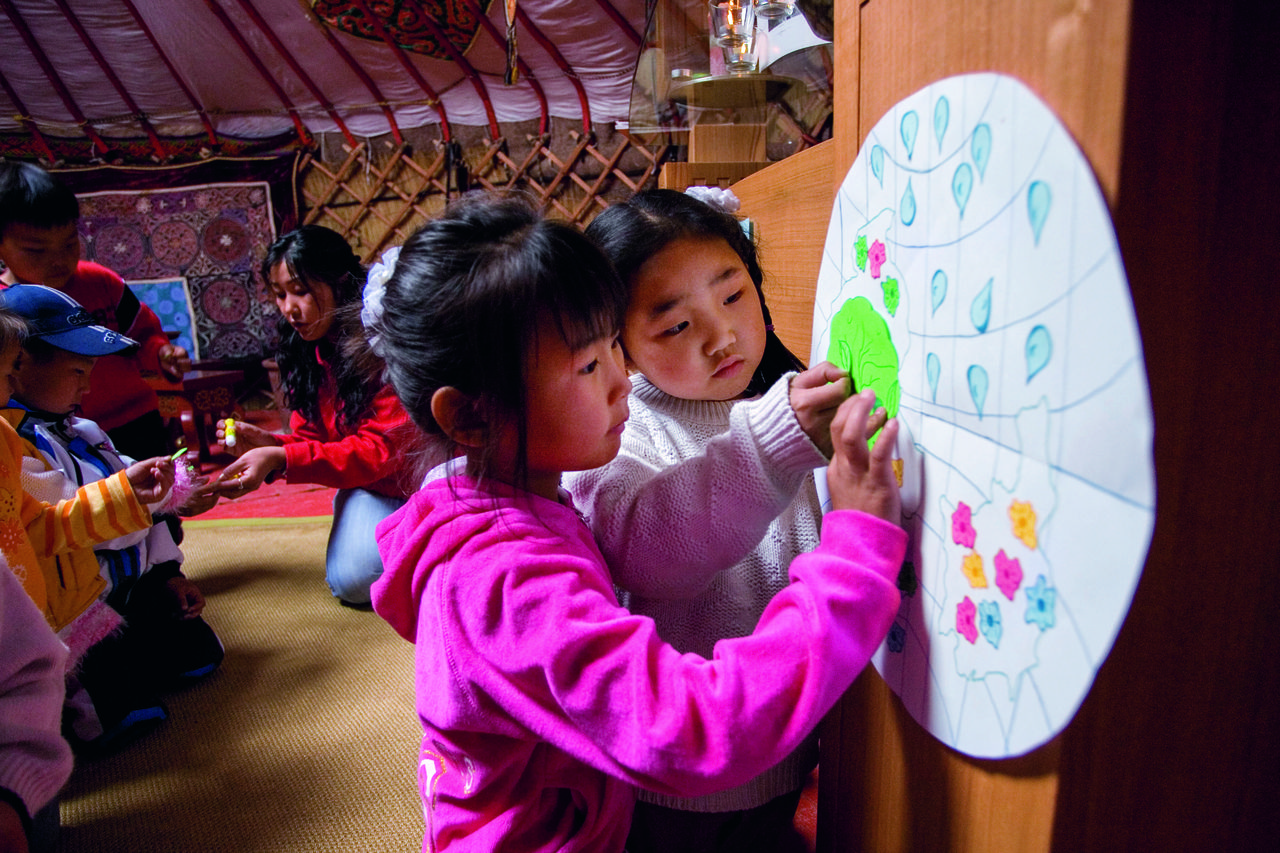
While there are variations among the continents in the percentage of women members, particularly on the elected institutions, the steady move towards more gender-balanced membership indicates an increased understanding of ‘Abdu’l-Bahá’s statement “Not until the world of women becomes equal to the world of men in the acquisition of virtues and perfections, can success and prosperity be attained as they ought to be.”14First Tablet to The Hague (17 December 1919), https://www.bahai.org/r/960386727.
ON THE INTERNATIONAL FRONT: PARTICIPATION IN DISCOURSES AT THE UNITED NATIONS
At the international level, the Bahá’í International Community (BIC) has advocated for the equality of women and men since the inception of the United Nations, making its first statement on gender equality in 1947. Shortly after it became an accredited non-governmental organization (NGO) in 1970, it began to advocate for the girl child. In 1974, as an NGO member of the UN Commission on the Status of Women, the BIC made a statement to the twenty-fifth Session of the Commission that recommended greater emphasis on the importance of educating girls. With regard to this topic, the Bahá’í International Community was ahead of its time. Over the decades, as the UN gave greater attention to the issue of the girl child and many other international organizations focused on it as a strategy for development, the BIC has continued to advocate for girls’ education and has made numerous official statements about it. The BIC has also collaborated with other NGOs and entities such as the United Nations Children’s Fund (UNICEF) and continues to serve on UNICEF’s NGO Working Group on Girls. The BIC was also one of the earliest proponents at the United Nations of the idea that men and boys play an important role in promoting gender equality, particularly that their full development depends upon the advancement of women, since a society based on gender equality serves the interests of both women and men.15See Bahá’í International Community, The Role of Men and Boys in Achieving Gender Equality—A Statement Prepared for the United Nations Commission on the Status of Women at its 48th Session Item 3a of the Provisional Agenda (2004).
In its statements and in discourses at the United Nations, the BIC has addressed topics as diverse as gender and leadership, violence against women and girls, the climate crisis as a catalyst for nurturing a more gender-balanced culture, the role of women as well as men in establishing a flourishing world civilization, transforming the structures of society, and religion and gender equality.
On this last theme, while acknowledging that religion has often been seen as a negative force, the Bahá’í International Community has urged the open examination of religion as “a basis for social and political mobilization” and has advocated for a discourse centered around three themes: the role of religious leaders in supporting gender equality, the role of men and boys in demonstrating “new understandings of masculinity,” and religious interpretations that discriminate against women and thus serve as an impediment to peace.16Toward a New Discourse, 6–7.
While it has always related its contributions to UN discussions on gender equality to spiritual principle, by 2008, the BIC began to draw as well on the rich experience of the Bahá’í community to contribute to the advancement of civilization. The film Glimpses into the Spirit of Gender Equality, produced on the twenty-fifth anniversary of the Beijing conference, combines footage from the United Nations, tracing the BIC’s efforts to advocate for the education of girls and for gender equality, with stories from the grass- roots.17The film is accessible at https://www. youtube.com/watch?v=lqOeUNMEpAI. 18. See Bahá’í International Community, Developing New Dynamics, 2. It showcases the experiences and initiatives of individuals, families, community members, and village leaders in Colombia, India, Malaysia, the United States, and Zambia, to illustrate how even small steps can contribute to change in a culture. The film offers insights gleaned from efforts made over the past 25 years to apply Bahá’u’lláh’s teachings regarding equality in different communities and settings. It conveys how the lessons being learned at the grassroots reinforce efforts being made in international fora for the advancement of women, providing a view of what has been learned thus far about building a civilization that values and nurtures both material and spiritual qualities in all its members.
CONCLUSION
In the long process of building a global civilization, sustained and coordinated action to establish gender equality is vital. While the Bahá’í community can take stock of its progress in this regard and the insights it has gleaned over almost 200 years in a growing variety of settings, the work is far from done. Efforts to nurture strong, vibrant communities in which women and men strive in dynamic partnership to build an equitable society must be extended and deepened.18 In this work, the community derives its vision and its impetus from statements such as the following, made by ‘Abdu’l-Bahá in 1912, during His travels in North America: “… until woman and man recognize and realize equality, social and political progress here or anywhere will not be possible. For the world of humanity consists of two parts or members: one is woman; the other is man. Until these two members are equal in strength, the oneness of humanity cannot be established, and the happiness and felicity of mankind will not be a reality.”18The Promulgation of Universal Peace no. 32, 2 May 1912.
Few would dispute that the pursuit of knowledge is central to human progress. Access to knowledge is not simply the right of every human being; all should be able to participate, each according to his or her talents and abilities, in its generation, application, and diffusion. For this to occur, far-reaching changes in current conceptions of the individual and in the structures and processes of society are called for. This demands, in turn, among other things, a conversation at the grassroots that involves more and more people committed to bringing these changes about. Such a conversation must necessarily be grounded in action. It must be organized in a way that enables individuals from all walks of life and from every background to enter it at an accessible level and build capacity for increasingly complex expressions of thought and action. It must have mechanisms for recording lessons learned and for disseminating them widely. In small groups in every spot on the globe, this conversation—unfolding in the context of action—is being fostered by the Bahá’í training institute. All are welcome to join the conversation, which, at its core, revolves around the application of the teachings of the Bahá’í Faith to individual and collective life. The institute process connects participants to these teachings and to the accumulating experience of the Bahá’í community in applying them. It involves them in the creation of this body of knowledge and in its further diffusion.
CONCEPTUAL FOUNDATIONS
The conceptual foundations of the institute process can be found in the Bahá’í teachings, particularly those related to the course and direction of history and the nature of social change. According to these teachings, humanity has entered a stage of unprecedented challenge and promise as it moves towards its maturity. While its physical evolution has followed the dictates of the laws of nature, there has also been a spiritual dimension to its long evolution, and the hallmark of the age of maturity will be the unification of the human race in a world civilization that pays due regard to both the material and spiritual dimensions of life. Thus, the processes and structures of this civilization must necessarily embody a host of spiritual and moral ideals. Among these are, for example, the elimination of all forms of prejudice, the promotion of the equality of men and women, the abolition of extremes of wealth and poverty—ideals in consonance with the principle of the oneness of humankind, the central teaching of the Bahá’í Faith.
The emergence of such a civilization, the Bahá’í writings further suggest, will not come about through attempts at bettering society alone, to the exclusion of the individual. Rather, its rise is understood in terms of a dual transformation—a complex set of interactions involving profound changes at the level of the individual and in the structure of society.
To be clear: In no way does the Bahá’í community expect the civilization envisaged in its writings to unfold as the exclusive result of its own actions. The convergence of human endeavor will occur as an inevitable outcome of the forces of history and as the result of the efforts of various groups. For its part, while confident in the direction of history, the Bahá’í community remains ever conscious of the imperative need for humanity to tread the path of change with highly sharpened spiritual perception. Failing this, the civilization emerging, no matter how well advanced materially, will not bring true happiness to the people of the world and will continue to perpetuate oppression. Indeed, it is difficult to escape the conclusion, given mounting evidence worldwide, that economic and political oppression is inherent in a purely materialistic view of existence.
With the above convictions in mind, Bahá’ís are trying to raise up communities built on strong spiritual foundations in localities throughout the globe, communities that reflect the ideals associated with the inherent oneness of humanity. They have no illusions about the magnitude of the challenge before them; there is no blueprint to follow, and they approach this task in a posture of learning. These few lines cannot describe in detail the various elements of the methodology being used to facilitate the requisite process of learning. Let it suffice to mention that they are broadly referred to as action, reflection on action, consultation, and study, all necessarily carried out—to maintain coherence and continuity of action—within an evolving conceptual framework. What is important to note here is that the insights gained from the kind of learning under discussion need to be both diffused and promoted through appropriate education and training.
HISTORICAL CONTEXT
The institute process has been unfolding in the Bahá’í community worldwide since the mid-1990s. It is overseen in every country, or region within a country, by an agency called the training institute. It is a process fundamentally concerned with capacity building. It seeks to open to great multitudes of people a path of service to humanity along which, through study and action, they gradually acquire insights and habits, skills and abilities, qualities and attitudes that enable them to become protagonists of their own spiritual and intellectual development.
The need for such a process of capacity building grew out of decades of earlier experience, particularly in the 1970s and 1980s, following the rapid spread of the Bahá’í Faith across the globe. This experience had made clear that large numbers of people everywhere were attracted to the vision of individual and collective life found in the Bahá’í teachings. But translating that vision into reality did not prove to be simple. Profound questions arose, not only about how to set in motion the process of transformation envisioned, but also about how to sustain it and widen its scope. One question soon stood out as most crucial: How could the great numbers drawn to the teachings be assisted in meeting the challenge of building communities befitting humanity’s budding maturity?
At first, the answer seemed obvious. If opportunities were created for individuals to increase their knowledge of the basic tenets of the Faith, surely that knowledge would spur them to action. And so, different kinds of courses, usually of short duration, were established to help individuals deepen their understanding of Bahá’í fundamentals. These courses, however, while enriching the spiritual life of the individual, did not bring about the level of participation in the field of service that had been expected. It is true that there were some who arose to serve, but not in numbers sufficient to meet the needs of the fledgling communities emerging everywhere. What eventually became evident is that another kind of educational process was called for, one that was not merely concerned with exposing participants to a body of knowledge, however important. The path of service opened by the institute process was laid out with this in mind. It was conceived with the conviction that understanding the implications of the teachings
both in terms of individual growth and social progress, increases manifold when study and service are joined and carried out concurrently. There, in the field of service, knowledge is tested, questions arise out of practice, and new levels of understanding are achieved. In the system of distance education that has now been established in country after country—the principal elements of which include the study circle, the tutor and the curriculum of the Ruhi Institute—the worldwide Bahá’í community has acquired the capacity to enable thousands, nay millions, to study the writings in small groups with the explicit purpose of translating the Bahá’í teachings into reality.…1Universal House of Justice to the Bahá’ís of the world, Riḍván 2010, https://www.bahai.org/r/178319844
The system of distance education now in operation in nearly every country is administered by a network of national and regional training institutes. Before describing the system in further detail, a few words should be said about the educational process that it seeks to foster.
THE EDUCATIONAL PROCESS
Like any educational process, the one fostered by the curriculum of the Ruhi Institute, currently used by Bahá’í training institutes worldwide, has a particular vision of the individual that it hopes to raise up. This vision draws inspiration from the Bahá’í writings, which suggest that, in order to act effectively at this moment in history, individuals must be imbued with a strong sense of purpose that impels them to take charge of their own spiritual and intellectual growth and contribute to the progress of society. This can be seen as a twofold moral purpose.
Briefly, intellectual and spiritual growth is understood in terms of the development of those vast potentialities that distinguish humanity from the rest of creation. Some of these are related to the powers of the human mind, which enable it to discover the mysteries of nature, produce beautiful works of art, and express noble sentiments and thoughts. Others are what may be called spiritual qualities—attributes deeply rooted in the individual that have to do with his or her inner essence, such as trustworthiness, honesty, generosity, and loving-kindness. The image of the individual that begins to emerge in the Bahá’í writings, then, is not of a receptacle waiting to be filled with information, much less a machine in need of programming to perform certain skills.
On a social level, the twofold purpose finds expression through dedication to promoting the welfare of the entire human race. This requires that individuals lend their strength to processes that counteract the destructive forces that are undermining the foundations of human existence and align themselves with the forces of integration that are leading humanity towards a new social order.
In the Bahá’í writings, these two aspects of moral purpose are viewed as complementary and fundamentally inseparable. Further, it is in the field of service that such a purpose can best be realized, for service unites the fulfillment of individual potential with the advancement of society.
Not surprisingly, then, the organizing principle of the Ruhi Institute’s curriculum is related to service. Specifically, the content and order of the courses are not based on a list of subject matter, but on a series of interconnected acts of service; they build capacity in participants to serve in increasingly complex ways and strengthen those habits of the mind required to work with full and complex thoughts.
The term act of service does not, in itself, require much explanation. In this context, however, it has a specific meaning. It refers to those activities that every individual can undertake which, experience has borne out, respond to the spiritual needs of a population. The acts of service are not random, then, but are determined by the exigencies of community building.
This short presentation cannot provide a survey of the acts of service treated in the courses, which begin with the simple act of hosting a gathering for prayer and meditation and grow in complexity to include, for example, conducting educational activities for the younger generations of a community: classes for the spiritual education of children and a program for the spiritual empowerment of those aged 12 to 15. What should be mentioned, however, is that progress along the path traced out by the courses makes it possible for individuals to develop a number of capabilities. Here, the word is not used to refer to skills and abilities that one develops once and for all. To be capable of engaging in meaningful and uplifting conversation, for example, is far more than a simple skill. In the context of the educational process under discussion, capabilities are developed progressively as one sharpens a set of interrelated skills and abilities, acquires relevant information, advances in the understanding of essential concepts and profound truths, and strengthens certain attitudes, habits, and spiritual qualities. As participants study the courses and engage in the action to which they give rise, their capabilities for service are thus enhanced, opening the way for them to undertake more demanding activities.
Invariably, in walking this path of service, individuals find themselves able to draw increasingly on those powers needed to withstand the destructive forces assailing society: the power of prayer and meditation, the power of faith and certitude, the power of thought and expression, the power of unity and mutual support, the power of humble and sacrificial deeds, and, above all, the power of divine confirmations.
The approach described above does not expect participants to progress at the same pace or achieve a specific set of goals in order to move forward in the educational process; it is for participants themselves to consider to what extent they have advanced at any given moment. From the start, then, everyone is an engaged protagonist in a process of personal and social transformation, responsible for his or her own learning.
Ultimately, however, as more and more people proceed through the sequence of courses and carry out the acts of service suggested, it should be possible to witness a corresponding advance at the level of culture. What starts out as a few discrete activities in a locality develops into a pattern of action that affects the rhythm of community life, and a number of questions can gradually come to guide collective learning. To what extent, for example, has a sense of community emerged—this, whether in an urban neighborhood where the forces of alienation and estrangement can be strong or in a village where traditional ties have been weakened by the forces of moral decay? Has unity of thought and purpose, so essential for collective progress, been strengthened? Has an environment been created that is characterized by patience and forbearance toward mistakes—one free of excessive criticism, of backbiting, of conflict and contention? Are meaningful patterns of communication among people of various backgrounds beginning to evolve? Do people of all walks of life feel welcome to join the conversation in action unfolding in the locality about building a better world?
Earlier, the concept of a dual transformation, at the level of the individual and in the structure of society, was discussed in the context of the rise of a new civilization, one materially and spiritually prosperous. The educational process fostered by the institute courses can be seen as an attempt to generate the kind of dynamics needed to advance this dual transformation.
A SYSTEM OF DISTANCE EDUCATION
The rise in the number of programs and systems for remote learning, which aim to replicate the traditional classroom experience, is evidence of an increasing awareness worldwide that access to education must be extended more broadly. While such forms of remote learning have their merits, the system of distance education administered by a Bahá’í training institute—which seeks to build capacity through study and action, in a process likened to walking a path of service—takes a wholly different shape.
Foremost among the features of this system are mutual support and assistance. Wherever individuals find themselves on the path of service, they also accompany others earlier on the path in their efforts to carry out acts of service, helping them to progress. This is a requirement of capacity building. Someone with more experience accompanies those with less as they strive to walk the path on their own and learn, in time, to assist others. Along the way, one very particular act of service, crucial to the perpetuation and expansion of the system itself, opens up to participants. Having completed a sufficient number of courses in the sequence and undertaken the acts of service they encourage, individuals are able to act as tutors.

Institute courses are generally studied in small groups with the assistance of such a tutor in the setting of a study circle—ten or so friends who meet regularly for a few hours in a home or other convenient space over an extended period. The relationship of the tutor to the group is not one of a teacher to his or her students. As a member of the group, the tutor is as engaged in the process of learning as the others, but, having gained more experience, helps to ensure that understanding is enhanced among the participants and that the purpose of the course is achieved. To this end, the tutor hopes to reinforce an environment in which all see themselves as active, responsible “owners” of their own learning, striving to fulfill the twofold moral purpose mentioned earlier, as they seek to apply the knowledge they are gaining to their own lives and the life of their community.
What is at stake, then, is a culture that promotes a way of thinking, studying, and acting in which all consider themselves as treading a common path of service—supporting one another and advancing together, respectful of the knowledge each possesses at any given moment and eschewing the inclination to divide people into categories such as “knowledgeable” and “uninformed.” These are the dynamics of a grassroots spiritual movement.
The learning process in which the Bahá’í community is engaged worldwide is still in its earliest stages. The training institute was created as an instrument for systematizing and propagating the learning that accumulates about how the Bahá’í teachings can be translated into reality and a new civilization brought into being, founded on the principle of the oneness of humanity. It represents a new kind of social institution, one concerned with the capacity of a population to become the protagonists of their own material and spiritual development.
From the beginning of time man has ever been conscious of the existence of God. The most primitive of men worshipped the Deity, in a primitive manner, perhaps, but nevertheless in conformity with their intelligence and such understanding as they believed they had of their Creator. It is not at all surprising that primitive man should have entertained such strange, and to us, such ridiculous ideas of Divinity because to them God was a mystery, even as today in this enlightened 20th century, God to us is still a mystery. But science with her many instruments has greatly enlarged modern man’s vision. With astronomy and the telescope, physics and the microscope, chemistry and its analyses, science has brought to man a better understanding of the vastness of the universe, but in regard to our Creator, it has caused Him to become only more incomprehensible to us than ever (if such a thing is possible).
Primitive man in attempting to describe his Creator naturally limited God to his own comprehension, and man today, in attempting to understand God, in like manner, can limit God only to that which his finite mind can conceive. The created thing can never hope to comprehend its Creator, any more than a table can hope to understand the carpenter who built it. For as we attempt to conceive this universe with infinite space extending out from us in every direction beyond limit; infinite time without beginning or end; infinite worlds and infinite suns, the mysteries of which man can never hope to fathom; and then right on this earth, in the very air we breathe and the water we drink, the mystery of infinite living creatures, invisible to our eye, and of unbelievable minuteness; these serve to indicate to us that a Creator which surrounds all of creation certainly is incomprehensible to man who represents such a small part of His Creation.
Bahá’u’lláh tells us that “God, singly and alone, abideth in His own Place, which is holy above space and time, mention and utterance, sign, description, and definition, height and depth,”1Bahá’í Scriptures, page 158 and in the Gospel of St. John we are told, “No man hath seen God at any time; the only begotten Son, which is in the bosom of the Father, he hath declared Him.”2John 1:18
Now as for man—in Genesis we read that man is the creation of God. Bahá’u’lláh writes that “The purpose of God in creating man hath been, and will ever be, to enable him to know his Creator and to attain His Presence. To this most excellent aim, this supreme objective, all the heavenly Books and the divinely revealed and weighty Scriptures unequivocally bear witness.”3Gleanings from the Writings of Bahá’u’lláh, page 70 And again He says, “From among all created things He hath singled out for His special favor the pure, the gem-like reality of man, and invested it with a unique capacity of knowing Him and reflecting the greatness of His glory.”4Gleanings from the Writings of Bahá’u’lláh, page 77
To know God, and to reflect His glory, should therefore be the aim of Man, and that this task is not beyond our possibilities is evident because God has created us for this very purpose. Because there is a way of knowing Him, we are not to consider that man can directly contact the Incomprehensible, or that the created thing can know its Creator. The finite can never comprehend the infinite, nor can a lower plane comprehend a higher one—for instance a stone representing the mineral kingdom, or a tree representing the vegetable kingdom, can never understand man representing the human kingdom.
The manner in which man acquires knowledge of God, the Unknowable Essence, is through an Intermediary, or Mediator, for God from the beginning of time has provided mankind with His Manifestations to serve as “vehicles for the transmission of the Grace of Divinity itself”—in other words to serve as a channel through which man may be enabled to know Him. The theory of an intermediary between man and his Creator exists in all great religions today. Each points to a mediator as receiving from God the “light of divine splendor” and thence distributing it over the human world. The Jews look to Moses and the Christians to Christ. For others it is Buddha, or Muhammad, or Zoroaster. In this day the Bahá’ís recognize in Bahá’u’lláh this same station as Intermediary between God and man.
Now the very nature of an intermediary immediately suggests to us a dual relationship, because it brings to us two extremes in relation to each other. Anything that might have but a single relationship could not be an intermediary, and so a Manifestation of God, serving as mediator between God, the Unknowable Essence, and Man, His Creation, must needs have a relationship with both the finite and the infinite. In other words he must have a divine relationship, and also a human relationship.
Considering first the divine relationship, or the relation of the Manifestation to God Himself, we have the following words of Bahá’u’lláh, “The door of the knowledge of the Ancient of Days being thus closed in the face of all beings, the Source of infinite grace hath caused those luminous Gems of Holiness to appear out of the realm of the spirit, in the noble form of the human temple, and be made manifest unto all men, that they may impart unto the world the mysteries of the unchangeable Being, and tell of the subtleties of His imperishable Essence. These sanctified Mirrors, these Daysprings of ancient glory are one and all the Exponents on earth of Him Who is the central Orb of the universe, its Essence and ultimate Purpose.”5The Kitáb-i-Íqán, page 99 Bahá’u’lláh further tells us “These Tabernacles of holiness, these primal Mirrors which reflect the light of unfading glory, are but expressions of Him Who is the Invisible of the Invisibles. By the revelation of these gems of divine virtue all the names and attributes of God, such as knowledge and power, sovereignty and dominion, mercy and wisdom, glory, bounty and grace, are made manifest.”6The Kitáb-i-Íqán, page 103
Thus the Intermediary, or the Manifestation, as we shall call Him, in the words of Bahá’u’lláh, “appears out of the realm of the spirit in the noble form of the human temple” and is thus “made manifest unto all men.”7Gleanings from the Writings of Bahá’u’lláh, XIX They impart unto the world the mysteries of God, by expressing to man the attributes of God. That God should reveal His attributes through His Manifestation rather than His Essence can be understood because it is not possible for God to reveal to man that which man cannot understand. Man cannot understand the nature of fire, but he does understand its attributes, such as heat and light, and in this manner he obtains a knowledge of fire. Likewise God’s attributes, expressed by His Manifestations, become our only means of knowing God, the Unknowable. The attributes of God, which Bahá’u’lláh has enumerated as knowledge, power, sovereignty and dominion, mercy, wisdom, glory, bounty and grace, are not realities in themselves and we can in no way consider them as independent existences. Detached from substance these attributes do not exist, because they are not substance, merely adjectives. So knowledge, power, sovereignty, dominion, mercy, etc., are not God, but only His attributes. They are not the Supreme Essence, and in recognizing them we have no cognizance of the Essence itself, only of Its attributes. And so God in His mercy has created for man an Intermediary or Manifestation, reflecting His attributes to man, and so perfectly do they fulfill this mission that Bahá’u’lláh states, “From Him proceed their knowledge and power; from Him is derived their sovereignty. The beauty of their countenance is but a reflection of His image, and their revelation a sign of His deathless glory. They are the Treasuries of divine knowledge, and the Repositories of celestial wisdom. Through them is transmitted a grace that is infinite, and by them is revealed the light that can never fade.”8Gleanings from the Writings of Bahá’u’lláh, XIX
So as we assume the Manifestation perfectly reflects God’s attributes we naturally consider that He is God. We speak of Him as God, in similar manner as we speak of light in reference to either the light or the lamp. The lamp, which is really the vehicle which transmits the light, is often called a light, and the Manifestation which is the “vehicle which transmits the grace of divinity” likewise is considered God. This conclusion is therefore legitimate, and while the followers of Moses, of Jesus, and Muhammad, do not all consider their prophet in this light, it is interesting to note that here in the western world, the largest single division of Christianity does regard Christ as God.
When ‘Abdu’l-Bahá was in London in 1911, He was asked, “Is the Divine Manifestation God?” and His answer was, “Yes, but not in Essence.”9‘Abdu’l-Bahá in London, page 61
In the passages quoted from The Kitáb-i-Íqán,” Bahá’u’lláh speaks of the Manifestations as “Mirrors of Sanctity, expressing the central Orb of the Universe.” ‘Abdu’l-Bahá again and again when speaking of the Manifestations of God described them in similar fashion, as Mirrors reflecting the light of the Divine Sun, and this picture so thoroughly covers the subject that every one should attempt to visualize His illustration.
Let us imagine a mirror placed in a room in such a position as to reflect the light of the sun. The mirror is to represent the Manifestation of God and the sun is to represent God, or the Divine Essence. A person might then say that he saw two suns; one in the sky and one in the mirror, a statement that could not be disproved. And yet we know that the sun in the sky and the sun in the mirror are one, and the appearance of the two suns can in no way refute the singleness of the heavenly sun. The sun of the heavens is considered the Divine Essence, but we cannot say this of the sun in the mirror. So then, we can say, the Divine Manifestation is God, but not in His Essence. The light is the same, but the Mirror is not the Sun.
The Sun we see in the mirror is a perfect reflection of the attributes of the Heavenly Sun. If we had a giant mirror so placed as to reflect the sunlight directly into a room, we could flood it with sunshine so perfectly that those inside would experience every sensation or attribute of the sun, as perfectly as though they might be outside. The light would be just as blinding, and the radiation just as definite. However those in the room would be receiving those sensations through an intermediary, the mirror, and not directly from the Sun.
This illustration might be carried even farther, by giving the mirror a name. Suppose it were named Moses, to demonstrate the relationship between God and the Jews. And then suppose other mirrors were brought forth which might be named Christ, Muhammad, and Bahá’u’lláh. Now each of these four mirrors would reflect the same light, yet none of them would be the sun. In this manner all of the Manifestations of God have the same relationship to God, and in this sense they are one, yet each has His own individual identity.
It would be interesting at this point to study each of the Manifestations of God in order to demonstrate how marvelously each is endowed with God’s attributes. However, this is a large subject which could not be covered properly in a few moments. Nevertheless, regardless of how well we know the life and teachings of Moses, of Jesus, of Muhammad, of the Báb or of Bahá’u’lláh, we are at least familiar enough with them to realize that when we think of God’s attributes, such as knowledge, power, dominion, we can visualize them practically all reflected in Their lives. Should some certain quality not visibly appear in any one of these Divine Beings, it would not necessarily mean that He did not possess that quality; for Bahá’u’lláh states that all of these brilliant Beings are endowed with all the attributes of God though all may not appear outwardly.10The Kitáb-i-Íqán, page 104 We can readily realize how reasonable this statement is, for in our daily lives we continually discover in even our most intimate friends qualities that they possess which outwardly are not apparent. For instance, a man may have amazing strength, but due to his occupation or mode of living, he is never called upon to display it, and the world may not recognize that such a quality existed in him. And so we could not truthfully say that a Prophet of God did not possess a certain attribute of God just because that attribute was not outwardly visible to the world.
The thought might come to us at this point, as to whether or not the teachings of Christ, or of Muhammad, show evidences of the relationship which Bahá’u’lláh states exists between God and His Manifestations, such as we have already discussed.
First turning to the Bible, we find in the Gospel of St. John countless references to the relationship of Jesus to God, some of which we will quote. We have the following words of John, “No man hath seen God at any time; the only begotten Son, which is in the bosom of the Father, he hath declared him.”11John 1:18 This verse was quoted before to show the relation of God to His creatures, but it also indicates that the knowledge of God is possible only through His Manifestations.
Then, where we find the Jews desiring to kill Jesus because He not only had broken the Sabbath but had said that God was His Father, apparently making Himself equal with God, we have the reply of Jesus, as follows, “Verily, verily, I say unto you, The Son can do nothing of himself, but what he seeth the Father do; for what things soever he doeth, these also doeth the Son likewise.” “For as the Father hath life in himself; so hath he given to the Son to have life in himself.” “That all men should honor the Son, even as they honor the Father. He that honoreth not the Son honoreth not the Father which hath sent him.”12John 5:16-23 In the light of the explanations which Bahá’u’lláh and ‘Abdu’l-Bahá have given us, these words of Jesus become easier for us to understand. If the Jews had understood His explanation they would have known that Jesus only claimed equality with God in the sense that He reflected His attributes. He made no mention of His Essence, but did state that He could do nothing of Himself; only that which He saw His Father do.
After Jesus foretold that Judas would betray Him and it became necessary for Him to comfort His disciples, we remember Philip coming to Him, saying, “Lord, shew us the Father and it sufficeth us,” and then we have Jesus’ reply, “Have I been so long with you, and yet hast thou not known me, Philip? He that hath seen me hath seen the Father; and how sayest thou then, Shew us the Father? Believest thou not that I am in the Father, and the Father in me? the words that I speak unto you I speak not of myself; but the Father that dwelleth in me, he doeth the works. Believe me that I am in the Father and the Father in me: or else believe me for the very works’ sake.”13John 14:8-11 The relationship of “the Father in Me” is one which Jesus mentioned many times, and is one that many have attempted to explain. In fact Jesus used it so often that a person could not honestly feel that he understood the true relationship of Christ to God, unless he also understood the relationship signified in “the Father in Me.” We could hardly be expected to understand this from a literal standpoint, because such an interpretation would be contrary to science and reason. We are therefore warranted in understanding this from a symbolic and allegorical standpoint. Christ often spoke in parables and it is an interesting fact that when He told His disciples a parable He never advised them that what He was telling them was a parable, but He always spoke as if it were an actual occurrence. Since we do interpret His parables as allegories it stands that we can also consider the “Father in Me” as allegorical and symbolical, particularly so because a literal interpretation of this statement is beyond reason. And so ‘‘Abdu’l-Bahá in explaining this statement of “the Father in Me” in Paris in 1913, spoke as follows, “The fatherhood and sonship are allegorical and symbolical. The Messianic reality is like unto a mirror through which the sun of divinity has become resplendent. If this mirror expresses, “The light is in me”—it is sincere in its claim; therefore Jesus was truthful when he said, ‘The Father is in Me.’ The sun in the sky and the sun in the mirror are one, are they not,—and yet we see there are apparently two suns.”14Divine Philosophy, page 152
And then as we leave the Bible and take up Muhammad and the Qur’án, we have first—”It is not for man that God should speak with him but by vision or behind a veil or he sendeth a Messenger to reveal by His permission what He will.”15Qur’án, Sura 42, verse 50 This confirms the truth, that the knowledge of God is possible only through His Manifestations, or Messengers, as was stated in this verse. Bahá’u’lláh quotes the following verse from the Qur’án: “There is no distinction whatsoever between Thee and Them; except that they are Thy servants, and are created of Thee.”16The Kitáb-i-Íqán, page 100 Again Bahá’u’lláh quotes from the Qur’án as follows: “Manifold and mysterious is My relationship with God. I am He, Himself, and He is I Myself, except that I am that I am, and He is that He is.”17Gleanings from the Writings of Bahá’u’lláh, page 66 These holy words of Muhammad require no explanation. They merely indicate to us, that the teachings of Muhammad are identical with those of Christ and Bahá’u’lláh, with regard to the relationship of the Manifestation to God.
And now let us consider the second relationship of the Manifestation: that of His relationship to man.
It was pointed out that since man cannot comprehend the Infinite, it must necessarily follow that the Manifestation of God must have human aspects. Were this not so, man could no more comprehend Him than he could the Supreme Essence, and those that have considered the Manifestation exclusively as God, and denied His human aspects, have perhaps unconsciously, but nevertheless in fact, denied the Infinity of God Himself. We have quoted Bahá’u’lláh where He states that God “caused luminous Gems of Holiness to appear from the worlds of spirit in noble human temples, among His creatures.”18The Kitáb-i-Íqán, page 99 From this we understand that God created His Manifestations in human form; that they each took on a physical body and a rational soul, and to each of them was assigned a different Name.
It should not be necessary to attempt to prove this point, for history tells us how the people of the time of a Manifestation have invariably recognized Him merely as one of their own fellowmen, and dealt with Him as such. They certainly could not have mistaken His knowledge, His mercy, His wisdom, His generosity, or His beneficence; as a matter of fact His enemies have even acknowledged that these qualities existed in Him whom they were so mercilessly persecuting. The persecutions the Manifestations endured were due entirely to the materialism of the people among whom They lived, who were thus permitted to see only the Manifestations’ physical condition, and were blinded from recognizing the significance of Their more important Spiritual aspects, which elevated Them to the true station of a Manifestation of God.
Entering this world as an infant, the Manifestation is administered to as any other child. His body develops gradually and is built up of elements just as man’s body has been developed. Composed of elements it is therefore also subject to decomposition. The Manifestation has human limitations similar to man in that He is subject to illness, endures pain, is dependent on food and drink, needs sleep and rest, and has either material means or is without them. And yet while the Manifestations have the same physical conditions as mankind, it is evident that these physical powers are often higher developed. For instance, man has ever been amazed at the suffering these Holy Beings were obliged to endure. Men have marveled at their remarkable endurance, their phenomenal recuperative powers. In the specific case of Bahá’u’lláh an account tells of the extraordinary condition of Bahá’u’lláh during the last three years of His life, a period during whch He ate practically nothing. Once when He was not feeling well a Greek physician examined His pulse and expressed his astonishment, stating that he had never seen a constitution so sensitive as that of Bahá’u’lláh.19Star of the West, Vol. VIII, page 178
The Manifestation also has a rational soul, or individual reality such as man; however, they are not exactly alike; the difference is explained by ‘Abdu’l-Bahá being as follows:—“But the individual reality of the Manifestations of God is a holy reality, and for that reason it is sanctified, and in that which concerns its nature and quality, is distinguished from all other things. It is like the sun, which by its essential nature produces light, and cannot be compared to the moon, just as the particles that compose the globe of the sun cannot be compared with those which compose the moon. The particles and organization of the former produce rays, but the particles of which the moon is composed do not produce rays, but need to borrow light. So other human realities are those souls who, like the moon, take light from the sun; but that holy reality is luminous in himself.”20Some Answered Questions, page 177
So then the Manifestation is similar to man in that He has a similar physical body, but more highly developed, and then like man, He has a rational soul, with the exception that His reality being holy is luminous, whereas man is dependent on his light from the Manifestation.
Where the Manifestation differs essentially from man is in His Divine Identity, which is known as the Divine Bounty. Obviously this is a station which cannot be shared by man, because it is of an environment beyond the realm of man. This station is described as the Word of God, the Holy Spirit, or the Reality of Prophethood.21Some Answered Questions, page 174 Being of the Divine World, it has neither beginning nor end. This station represents the radiance of the light of the Supreme Essence or the radiance of the light of the Sun from a perfect mirror, and is the station which Christ referred to when He spoke of “the Father in Me.” It is through this station that the Manifestation displays His Divine attributes; whereby He becomes a Creator of Spiritual Life. By His innate knowledge, He becomes both a Divine Educator and a Divine Physician; an Establisher of a New Social Order.
This Reality of Prophethood wherein the Manifestation differs so essentially from man, as was stated, is of the Divine World, and has neither beginning nor end, hence it does not come into being with the declaration of prophethood by the Manifestation, nor does it cease with the death of His physical body. We have the words of St. John: “In the beginning was the Word, and the Word was with God. The same was in the beginning with God,” from which we deduce that the station of Messiahship was always with Christ and existed prior to His baptism, or even to His physical birth. Likewise the Divine Identity of Bahá’u’lláh did not suddenly appear in His physical body while he was sleeping upon His couch, as a literal interpretation of His Tablet to the Sháh of Írán would have us believe. This is explained [by ‘‘Abdu’l-Bahá] in the following words: “Briefly, the Holy Manifestations have ever been, and ever will be, Luminous Realities; no change or variation takes place in their essence. Before declaring their manifestation, they are silent and quiet like a sleeper, and after their manifestation, they speak and are illuminated, like one who is awake.”22Some Answered Questions, page 98
As we study the utterance of the Manifestations, we learn that just as they have a dual relationship, They likewise have a dual form of utterance. There are times when They speak as a man, usually in a spirit of humility, such as the words of Jesus: “Nevertheless not my will, but Thine be done” or the words of Muhammad: “Say praise be to my Lord! Am I more than a man an apostle,” or “I am but a man like you.” In this connection there is also Bahá’u’lláh’s epistle to the Sháh or Írán, previously referred to. This Tablet is too lengthy to quote, however it clearly indicates Bahá’u’lláh speaking as man, and in addition indicates that the station of Manifestation He had assumed was not of His own will. In His Tablet of Ishráqát He expressed a similar thought by saying, “Had another exponent or speaker been found we would not have made ourself an object of censure, derision and calumnies on the part of the people.” Jesus spoke in like manner when He said, “Father, if it be possible, let this Cup pass from Me.”23Matthew 26:39
There are other times when the Manifestation speaks directly from the standpoint of the Deity. In this class of utterance His human personality is completely subservient, and we then have the Voice of God speaking direct to man, through Him. Dr. J. E. Esslemont, in Bahá’u’lláh and the New Era, states that through the Manifestation “God addresses His creatures, proclaiming His love for them, teaching them His attributes, making known His will, announcing His laws for their guidance and pleading for their love, their allegiance and service.” And continuing, Dr. Esslemont writes as follows: “In the writings of Bahá’u’lláh, the utterance frequently changes from one of these forms to another. Sometimes it is evidently the Man who is discoursing, then without a break the writing continues as if God were speaking in the first person. Even when speaking as a man, however, Bahá’u’lláh speaks as God’s messenger, as a living example of entire devotion to God’s will. His whole life is actuated by the Holy Spirit. Hence no hard and fast line can be drawn between the human and divine elements in His life or teachings.“ “Say: ‘Naught is seen in my temple but the Temple of God, and in my beauty, but His Beauty, and in my being, but His Being, and in myself but Himself, and in my movement but His Movement, and in my acquiescence but His Acquiescence and in my Pen but His Pen, the Precious, the Extolled’!” “Say: ‘Naught hath not been in my soul but the Truth, and in myself naught could be seen but God’.”24Bahá’u’lláh and the New Era, page 53