The equality of women and men is a spiritual reality asserted by Bahá’u’lláh and a pillar of Bahá’í belief, as evidenced by many statements in the Bahá’í writings. This spiritual reality, Bahá’ís believe, must be manifested today in its fullness in social reality.
Equality is an indispensable element for the progress of humanity, a principle which requires that women and men move forward together in dynamic partnership. ‘Abdu’l-Bahá has stated that “As long as women are prevented from attaining their highest possibilities, so long will men be unable to achieve the greatness which might be theirs.”1Paris Talks, Part 2, 40. Reiterating the principle in a statement to the United Nations in 2015, the Bahá’í International Community described the equality of women and men as “a facet of human reality” and asserted, “That which makes human beings human—their inherent dignity and nobility—is neither male nor female. The search for meaning, for purpose, for community; the capacity to love, to create, to persevere, has no gender,” concluding that “Such an assertion has profound implications for the organization of every aspect of human society.”2Toward a New Discourse on Religion and Gender Equality: The Bahá’í International Community’s Statement to the 59th Session of the United Nations Commission on the Status of Women and the 20th Anniversary of the United Nations World Conference on Women (1 February 2015), 2.
The Bahá’í community has, as a matter of faith, pursued the application of this principle over the entire span of the Faith’s history, basing its actions on Bahá’u’lláh’s statement “Praised be God, the Pen of the Most High hath lifted distinctions from between His servants and handmaidens, and, through His consummate favours and all-encompassing mercy, hath conferred upon all a station and rank of the same plane”3From a Tablet translated from the Persian, in Women, comp. Research Department of the Universal House of Justice, https://www.bahai .org/r/608244224—an assertion that was reinforced and elaborated upon in many statements and writings of ‘Abdu’l-Bahá, such as the following: “… in the sight of Bahá, women are accounted the same as men, and God hath created all humankind in His own image, and after His own likeness. That is, men and women alike are the revealers of His names and attributes, and from the spiritual viewpoint there is no difference between them.”4Selections from the Writings of ‘Abdu’l-Bahá, 38.3–4, https://www.bahai.org/r/604842208. In their efforts to realize this vision, Bahá’í individuals, institutions, and communities around the world have striven to understand more deeply its implications and have engaged in discourses and actions to promote gender equality ranging from grassroots initiatives to contributions at international fora.5See “Towards the Goal of Full Partnership: One Hundred and Fifty Years of the Advancement of Women,” The Bahá’í World 1993–94 (Haifa: Bahá’í World Centre, 1994), 237–75.
Since the Bahá’í writings emphasize both the importance of women as equal partners in the advancement of civilization and the key role of mothers as the first educators of the next generation, it was natural that the earliest endeavors in Persia focused on encouraging families to provide for the education of their girl children and on establishing schools for girls. Throughout the past century and a half, the geographical scope and range of activities related to gender equality have both broadened, and over the past 25 years, in particular, the training and community-building endeavors in which Bahá’ís in all parts of the globe are engaged have given further momentum to, and provided additional settings for, the practical expression of this principle.
DEVELOPING WOMEN’S CAPACITIES AT THE GRASSROOTS
The Bahá’í community recognizes that, while tremendous efforts in the areas of policy have been made at the international level by organizations such as the United Nations, the advancement of women cannot be brought about or sustained merely through legislation or policy directives that give women additional power within existing, unbalanced structures and systems. And even if attempts to change those social structures are made, such changes will not be sufficient to create conditions that allow women and girls to develop fully; unhealthy values may continue to be held by men and women, as well as boys and girls, sustaining exploitative behaviors.6See Bahá’í International Community, Beyond Legal Reforms: Culture and Capacity in the Eradication of Violence against Women and Girls (July 2006), 4. To effect the profound changes needed, educational processes that help to develop spiritual as well as intellectual capacities, that uphold the oneness of humanity, and that promote the equality of women and men play a pivotal role in establishing patterns of relationships that meet the needs of this age.7See Bahá’í International Community, Developing New Dynamics of Power to Transform the Structures of Society: Statement to the 64th Commission on the Status of Women (2019).
At the most basic level, the home is the nurturing ground of values such as truth or dishonesty, justice or injustice, kindness or violence. And from the home, behaviors rooted in these values radiate through society. For example, when boys are allowed to dominate their sisters within the family, what deters them from doing the same at their school or place of work—or even in national or international arenas? If, instead, sons and daughters are raised so that both participate in household duties and both participate in decision-making, these are the habits they will take out into the world as they grow to adulthood.8See Bahá’í International Community, Toward Prosperity: The Role of Women and Men in Building a Flourishing World Civilization— The Bahá’í International Community’s Contribution to the 61st United Nations Commission on the Status of Women (March 2017), 4. Efforts to nurture values that promote gender equality at the roots of community life are clearly key to change.
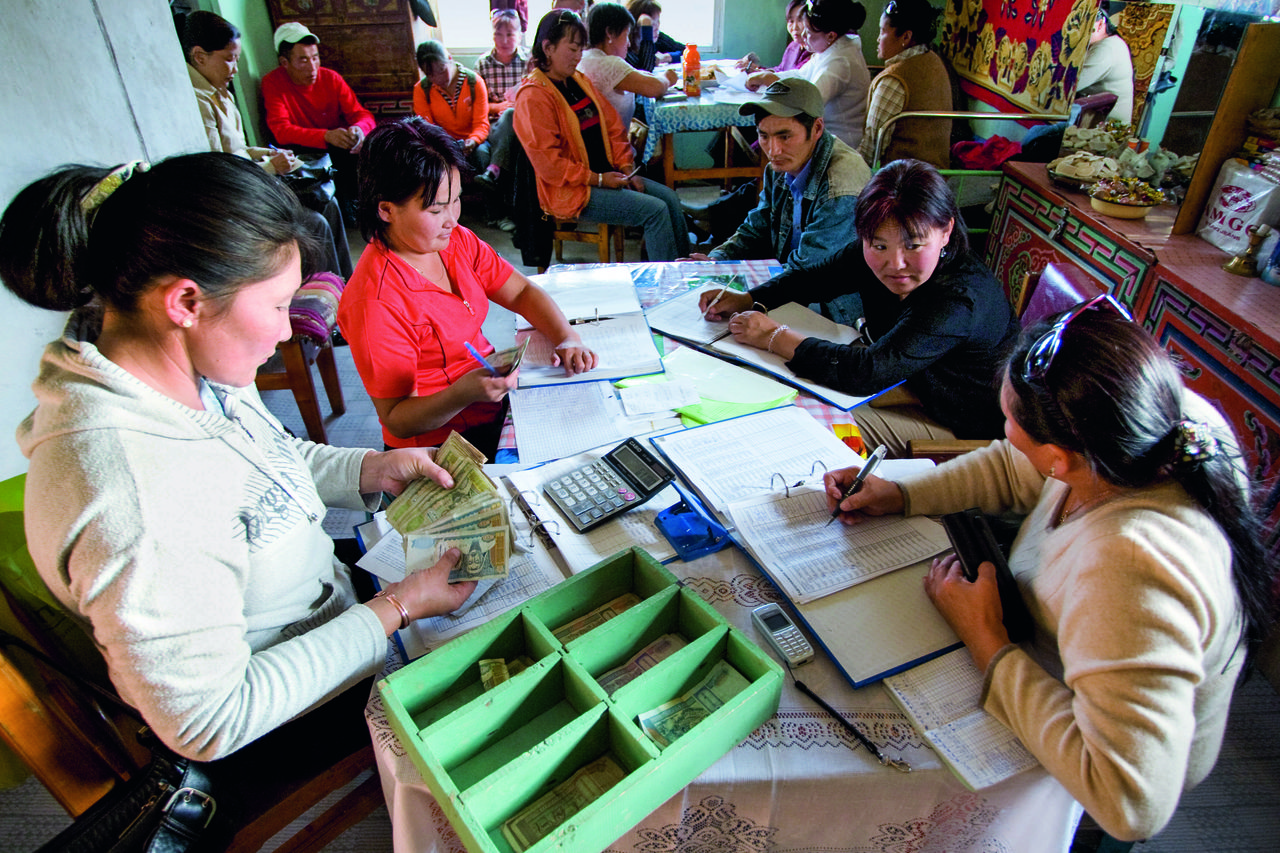
The purpose of the institute process which the Bahá’í community has been developing since 1996 (see “A New Institution of Learning,” in this volume) is to develop capacities in participants—women and men, boys and girls—to contribute to the spiritual and material advancement of their societies. The first quotation in the first book of the curriculum invites them to reflect on a statement of Bahá’u’lláh regarding their role as individuals: “The betterment of the world can be accomplished through pure and goodly deeds, through commendable and seemly conduct.”9Cited in Shoghi Effendi, The Advent of Divine Justice (Wilmette, Ill.: Bahá’í Publishing Trust, 1984), 24–25. The materials train participants to engage in behavior and facilitate activities that contribute directly to the advancement of the communities in which they live. Beyond the basic activities, participants acquire knowledge, skills and insights that equip them to participate in the discourses prevalent in their society and to engage in social action endeavors. Women have been at the heart of all these efforts. What is especially remarkable is that, in the aggregate, despite the vast inequalities between women and men in most societies, globally, women comprise half of those who have completed the first sequence of courses of the training institute—and in all except the first book, women outnumber men. This is also more dramatically the case in the higher sequence of courses where the ratio of women to men is around 60 percent. These remarkable statistics reflect the emphasis that the worldwide Bahá’í community places on the equality of women and men and the essential part that women play in social transformation.
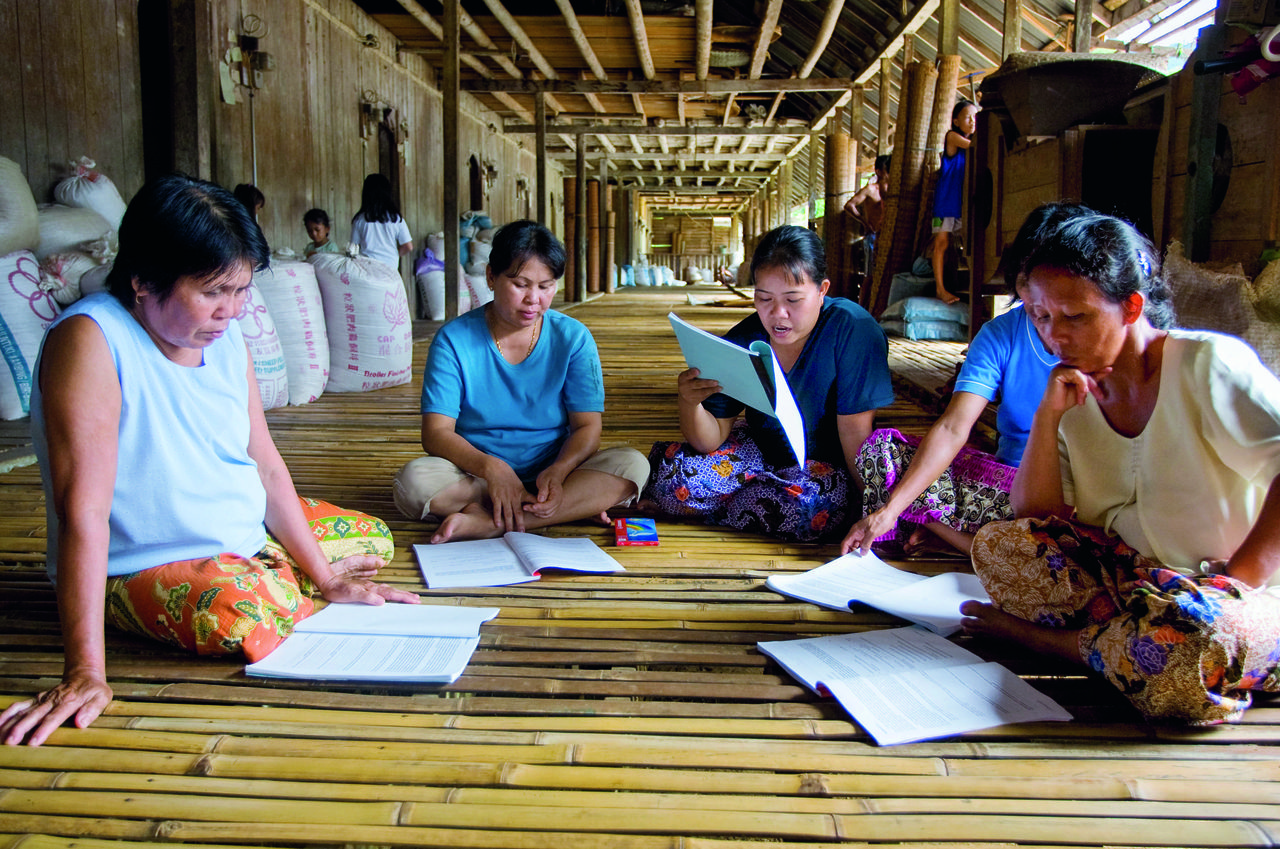
The percentage of women engaged in the educational processes of the institute reveals the central role they have played in promoting it in their own communities and in its dissemination to other parts of the world. Many of those who complete institute courses continue on to serve as tutors, teachers of children’s classes, and animators in the junior youth spiritual empowerment program. One example illustrating the level of female empowerment that has been achieved originates in the Central African Republic: In 2014, while only 20 percent of primary teachers in the national educational system were women, the percentage of primary teachers in community schools raised up through the training institute was 55 percent—rising to 60 percent in rural areas. Around the world, the level of women’s participation as animators and coordinators in the junior youth program is comparable. Such a level of engagement is a strong indicator of the effectiveness of the training institute in the enfranchisement of women and girls.
Specific attention is given to identifying, training, and accompanying women in their efforts, including practical actions related to program delivery. These include the decentralization of training seminars to allow women to participate close to home and the provision of childcare to mothers. Furthermore, the training institute materials themselves, as well as those developed for the junior youth spiritual empowerment program and other Bahá’í-inspired education programs, such as the Preparation for Social Action and community schools programs, all promote the principle of gender equality, whether explicitly or implicitly. For example, of the nine texts developed for the junior youth program by 2017, seven mention the equality of women, the advancement of women, or the education of girls, while more than half of the units in the Preparation for Social Action program make explicit reference to the theme.
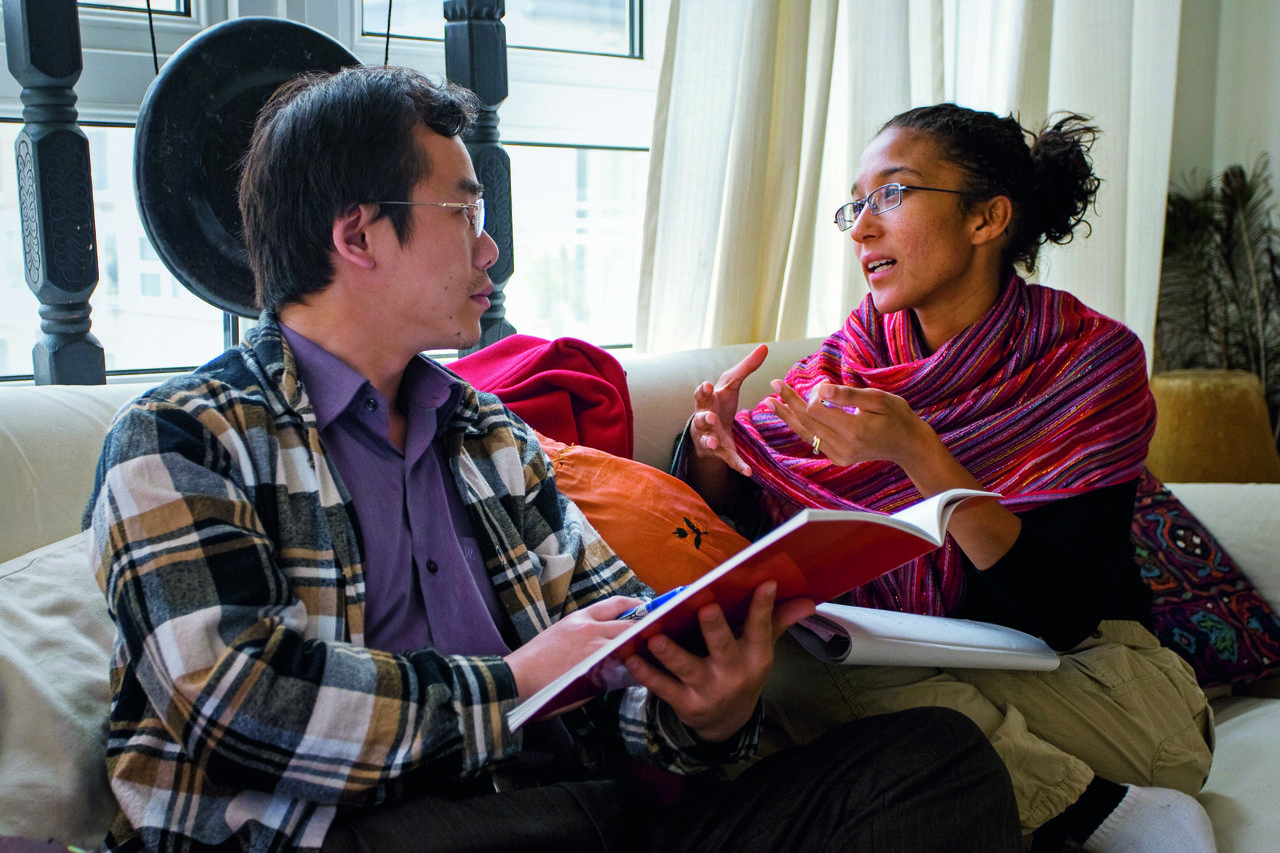
Assisting women to develop capacities through collaborative study, action, and reflection helps change culture by breaking down prejudices of sex and gender. Experience with community schools in Africa and Asia has shown that those starting with female teachers are more sustainable over the first few years than those starting with men. Women have been better able to persevere through this unstable period with little remuneration, while pressure on men to provide for their families makes it difficult for them to sacrifice to that level. Beyond the obvious benefits of sustainable educational opportunities, village councils are now beginning to appoint women teachers to serve on community development and administrative committees—positions that were previously filled only by men.
Clearly, when women and men and boys and girls all become advocates for gender equality, everyone benefits. Sometimes the steps towards such change are dramatic, and sometimes they are incremental. For example, the holding of gatherings to join with others in prayer may seem like a simple activity, but in a village in India, these gatherings have provided rare community acceptance for women to leave their houses. As a result, the “long-standing system requiring women to seclude and isolate themselves is starting to give way” as participants realize that long-established customs are less important than educating children, consulting with each other to solve problems together—and allowing women to participate in community activities.10See Bahá’í International Community, Leadership for a Culture of Equality, in Times of Peril and Peace: A Statement of the Bahá’í International Community to the 65th session of the UN Commission on the Status of Women (February 2021), 4–5.
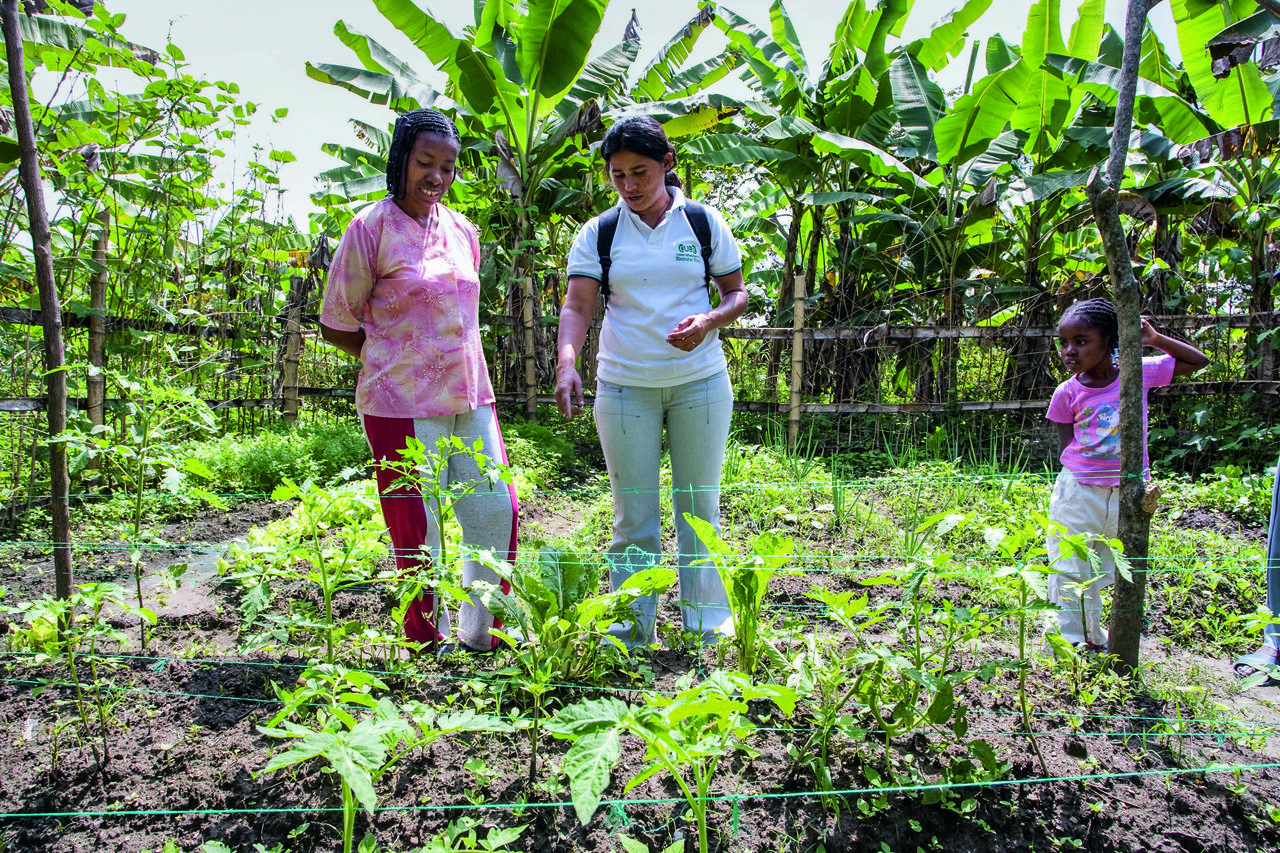
The proliferation of such efforts worldwide is helping to advance the creation of social environments and structures capable of meeting the needs of this age. Challenges such as social inequities, climate change, and global health emergencies, to mention a few, show in starker and starker relief the inadequacy of current outmoded customs and systems to deal with them. Advancing the role of women will undoubtedly serve to better equip humanity to address the ordeals it faces. As the Bahá’í International Community stated in 2021:
Against the backdrop of a world undergoing profound change, there is a growing recognition of the indispensable role that women in leadership play. In the early days of the coronavirus pandemic, nations in which women contributed more prominently to the leadership of society were seen to have generated a degree of stability across a variety of short-term indicators, including public health and economic security. At the community level, women continue to play an indispensable role—and often lead—in caring for the sick, educating the young, tending to the needy, and sustaining the social and economic fabric more broadly. Never has it been more clear how much humanity benefits when women’s leadership is embraced and promoted at every level of society, whether in the family or the village, the community or local government, the corporation or the nation.11Bahá’í International Community, Leadership, 1.
With regard to the issue of climate change, while it is true that women are greatly impacted by its negative effects on the natural environments from which they earn their living in many parts of the world, they are also equipped to respond to it. Experience is proving that participation in the institute courses has provided women with skills to deal with this issue at the grassroots level. For example, when a major cyclone hit Dili, in Timor-Leste, and cut off external assistance, participants in the training institute courses used the skills and networks they had formed through their collaborative study to assist more than 7,000 people across 13 villages and neighborhoods with access to food and other essentials. And in Okcheay, Cambodia, a tree-planting project that had been devised by youth participants protected roads in the area from soil erosion when severe flooding occurred several years later.
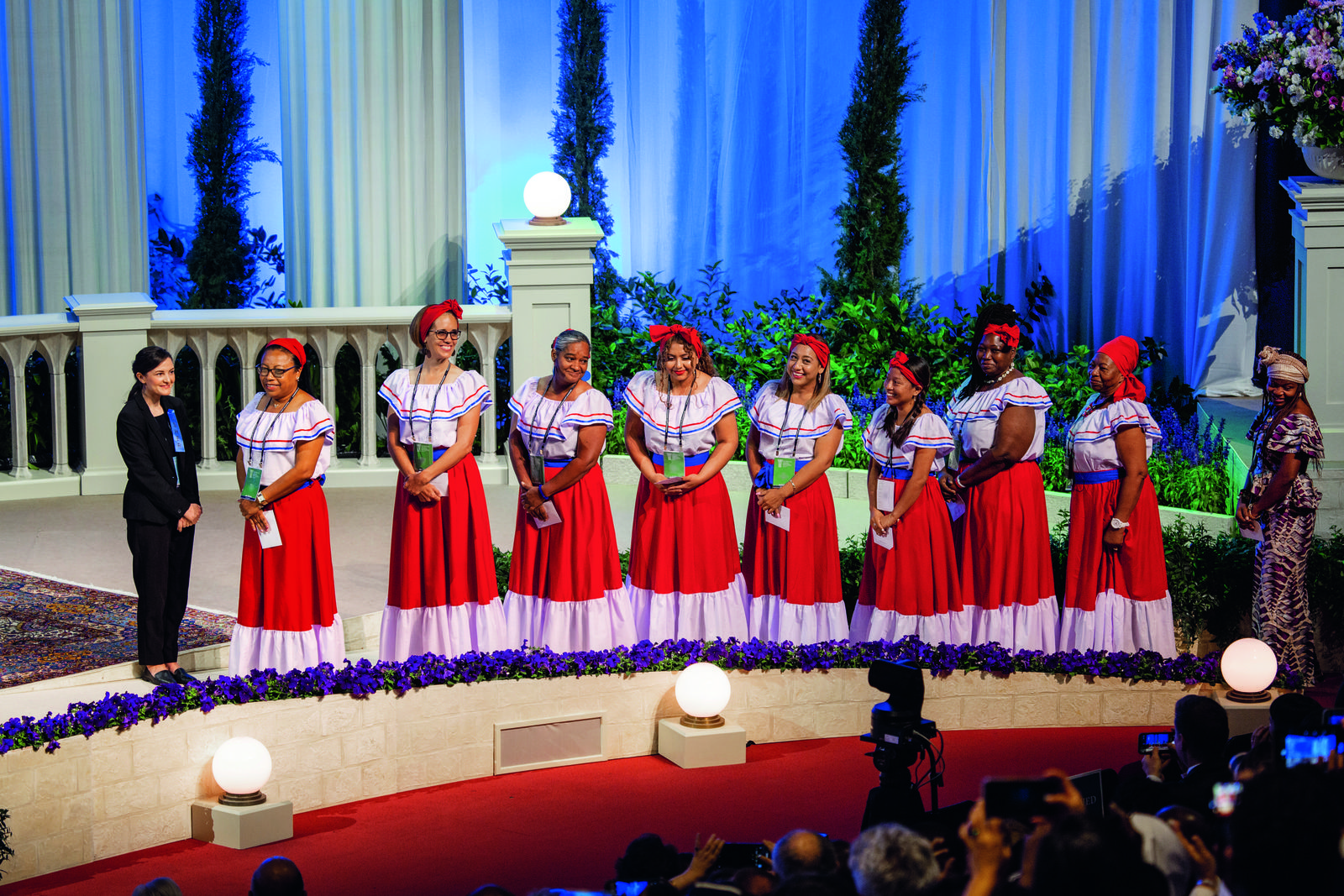

While difficult to live through, unstable periods provide humanity with opportunities to examine our collective values. Women, the Bahá’í writings assert, must have their rightful place as equals to men in every sphere of human endeavor, contributing at every level of decision making and bringing their capacities to bear on the fortunes of their communities, societies, and all of humankind.
DEVELOPING CAPACITIES AND ADMINISTRATIVE MEMBERSHIP
At the global level, experience has shown that increased emphasis on the education of women and girls results in a corresponding rise in the level of their participation in public life and community affairs.12See Bahá’í International Community, Toward a New Discourse, 5. Likewise, the Bahá’í community has witnessed, as a result of its efforts to develop the capacities of participants through its worldwide training institute process, a substantial increase in the membership of women on institutions within the Bahá’í community and their shouldering of administrative responsibilities.
The administrative order of the Bahá’í world community is composed of both elected and appointed arms. As of 20 April 2021, some 42 percent of those elected to serve on the 174 National Spiritual Assemblies around the world were women, rising from about 30 percent in 1994–95. The ratio of women serving as office-bearers rose to 35 percent, compared to 19 percent in 1983, and some 53 percent of those serving as the principal executive officer (titled “National Secretary”) were women. Membership of women on Regional Bahá’í Councils was about 46 percent. When considered in the global context of women’s representation in governing institutions, such a high percentage of membership is impressive. These figures are worldwide results, including numerous societies where equality may not yet be accepted even in principle. It indicates a growing embrace of the spiritual principle of gender equality by the men and women who elect their institutions through secret ballot as well as confidence in women’s administrative capacities.
On the appointed institutions, the percentage of women members is even higher—an indication of the attention given to identifying women of capacity and enlisting them to serve. As of April 2020, of the nine members comprising the International Teaching Centre, 56 percent were women, rising from 29 percent in 1973, when it was established. Of the 90 members of the Continental Boards of Counsellors, 47 percent were women (up from 19 percent in 1968 when the Continental Boards were created, and 52 percent of the 1,059 members of the Auxiliary Boards around the world were women.13Statistics supplied by the Department of Statistics at the Bahá’í World Centre.
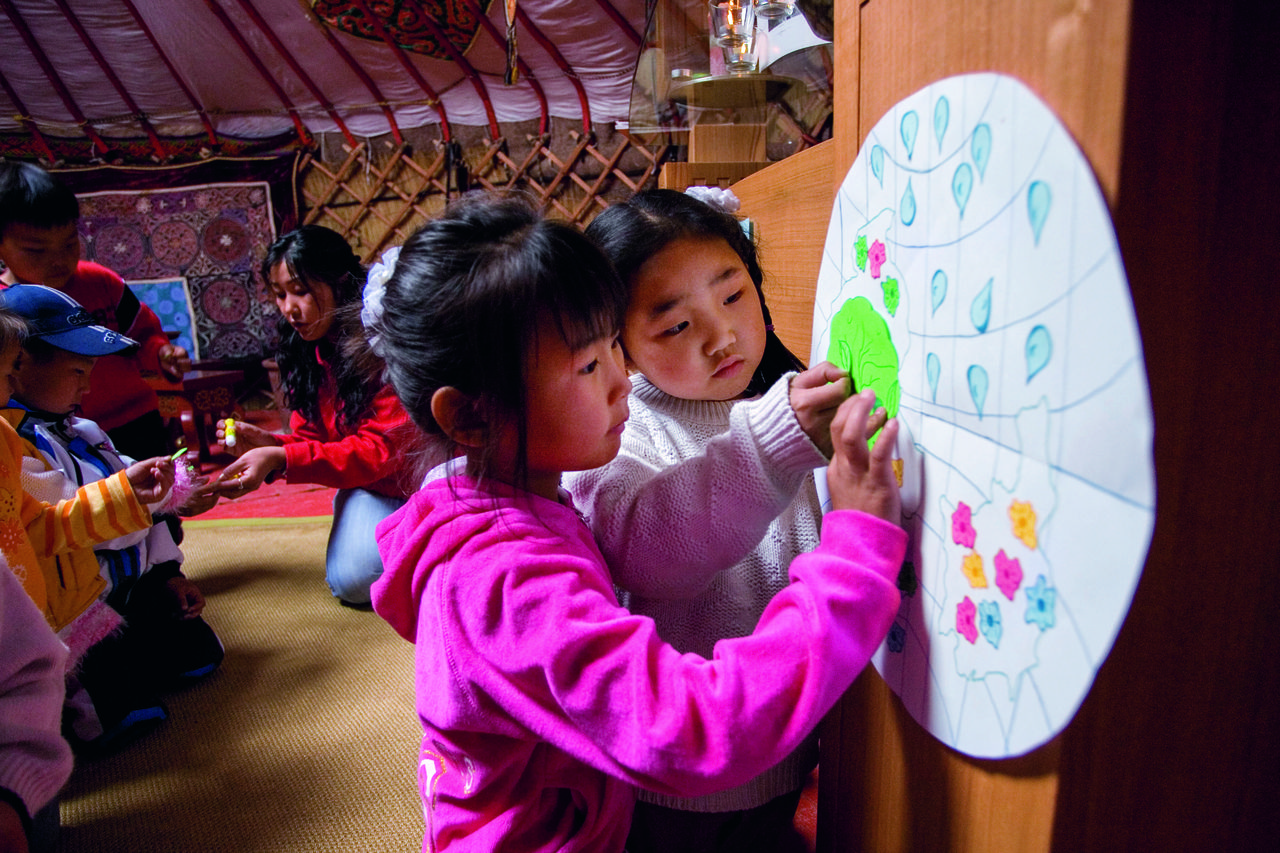
While there are variations among the continents in the percentage of women members, particularly on the elected institutions, the steady move towards more gender-balanced membership indicates an increased understanding of ‘Abdu’l-Bahá’s statement “Not until the world of women becomes equal to the world of men in the acquisition of virtues and perfections, can success and prosperity be attained as they ought to be.”14First Tablet to The Hague (17 December 1919), https://www.bahai.org/r/960386727.
ON THE INTERNATIONAL FRONT: PARTICIPATION IN DISCOURSES AT THE UNITED NATIONS
At the international level, the Bahá’í International Community (BIC) has advocated for the equality of women and men since the inception of the United Nations, making its first statement on gender equality in 1947. Shortly after it became an accredited non-governmental organization (NGO) in 1970, it began to advocate for the girl child. In 1974, as an NGO member of the UN Commission on the Status of Women, the BIC made a statement to the twenty-fifth Session of the Commission that recommended greater emphasis on the importance of educating girls. With regard to this topic, the Bahá’í International Community was ahead of its time. Over the decades, as the UN gave greater attention to the issue of the girl child and many other international organizations focused on it as a strategy for development, the BIC has continued to advocate for girls’ education and has made numerous official statements about it. The BIC has also collaborated with other NGOs and entities such as the United Nations Children’s Fund (UNICEF) and continues to serve on UNICEF’s NGO Working Group on Girls. The BIC was also one of the earliest proponents at the United Nations of the idea that men and boys play an important role in promoting gender equality, particularly that their full development depends upon the advancement of women, since a society based on gender equality serves the interests of both women and men.15See Bahá’í International Community, The Role of Men and Boys in Achieving Gender Equality—A Statement Prepared for the United Nations Commission on the Status of Women at its 48th Session Item 3a of the Provisional Agenda (2004).
In its statements and in discourses at the United Nations, the BIC has addressed topics as diverse as gender and leadership, violence against women and girls, the climate crisis as a catalyst for nurturing a more gender-balanced culture, the role of women as well as men in establishing a flourishing world civilization, transforming the structures of society, and religion and gender equality.
On this last theme, while acknowledging that religion has often been seen as a negative force, the Bahá’í International Community has urged the open examination of religion as “a basis for social and political mobilization” and has advocated for a discourse centered around three themes: the role of religious leaders in supporting gender equality, the role of men and boys in demonstrating “new understandings of masculinity,” and religious interpretations that discriminate against women and thus serve as an impediment to peace.16Toward a New Discourse, 6–7.
While it has always related its contributions to UN discussions on gender equality to spiritual principle, by 2008, the BIC began to draw as well on the rich experience of the Bahá’í community to contribute to the advancement of civilization. The film Glimpses into the Spirit of Gender Equality, produced on the twenty-fifth anniversary of the Beijing conference, combines footage from the United Nations, tracing the BIC’s efforts to advocate for the education of girls and for gender equality, with stories from the grass- roots.17The film is accessible at https://www. youtube.com/watch?v=lqOeUNMEpAI. 18. See Bahá’í International Community, Developing New Dynamics, 2. It showcases the experiences and initiatives of individuals, families, community members, and village leaders in Colombia, India, Malaysia, the United States, and Zambia, to illustrate how even small steps can contribute to change in a culture. The film offers insights gleaned from efforts made over the past 25 years to apply Bahá’u’lláh’s teachings regarding equality in different communities and settings. It conveys how the lessons being learned at the grassroots reinforce efforts being made in international fora for the advancement of women, providing a view of what has been learned thus far about building a civilization that values and nurtures both material and spiritual qualities in all its members.
CONCLUSION
In the long process of building a global civilization, sustained and coordinated action to establish gender equality is vital. While the Bahá’í community can take stock of its progress in this regard and the insights it has gleaned over almost 200 years in a growing variety of settings, the work is far from done. Efforts to nurture strong, vibrant communities in which women and men strive in dynamic partnership to build an equitable society must be extended and deepened.18 In this work, the community derives its vision and its impetus from statements such as the following, made by ‘Abdu’l-Bahá in 1912, during His travels in North America: “… until woman and man recognize and realize equality, social and political progress here or anywhere will not be possible. For the world of humanity consists of two parts or members: one is woman; the other is man. Until these two members are equal in strength, the oneness of humanity cannot be established, and the happiness and felicity of mankind will not be a reality.”18The Promulgation of Universal Peace no. 32, 2 May 1912.
The body lies crushed into a well, with rocks over it, somewhere near the center of Ṭihrán. Buildings have gone up around it, and traffic passes along the road near where the garden was. Bushes push donkeys to one side, automobiles from across the world graze the camels’ packs, carriages rock by. Toward sunset men scoop up water from a stream and fling it into the road to lay the dust. And the body is there, crushed into the ground, and men come and go, and think it is hidden and forgotten.
Beauty in women is a relative thing. Take Laylí, for instance, whose lover Majnún had to go away into the desert when she left him, because he could no longer bear the faces of others; whereupon the animals came, and sat around him in a circle, and mourned with him, as any number of poets and painters will tell you—even Laylí was not beautiful. Sa’dí describes how one of the kings of Arabia reasoned with Majnún in vain, and how finally “It came into the king’s heart to look upon the beauty of Laylí, that he might see the face that had wrought such ruin. He bade them seek through the tribes of Arabia and they found her and brought her to stand in the courtyard before him. The king looked at her; he saw a woman dark of skin and slight of body, and he thought little of her, for the meanest servant in his harem was fairer than she. Majnún read the king’s mind, and he said, ‘O king, you must look upon Laylí through the eyes of Majnún, till the inner beauty of her may be manifest.'” Beauty depends on the eyes that see it. At all events we know that Ṭáhirih was beautiful according to the thought of her time.
Perhaps she opened her mirror-case one day—the eight-sided case with a lacquer nightingale singing on it to a lacquer rose—and looked inside, and thought how no record of her features had been made to send into the future. She probably knew that age would never scrawl over the face, to cancel the beauty of it, because she was one of those who die young. But perhaps, kneeling on the floor by the long window, her book laid aside, the mirror before her she thought how her face would vanish, just as Laylí’s had, and Shírín’s, and all the others. So that she slid open her pen-case, and took out the reed pen, and holding the paper in her palm, wrote the brief self-portrait that we have of her: “Small black mole at the edge of the lip—A black lock of hair by either cheek-” she wrote; and the wooden pen creaked as she drove it over the paper.
Ṭáhirih loved pretty clothes, and perfumes, and she loved to eat. She could eat sweets all day long. Once, years after Ṭáhirih had gone, an American woman traveled to ‘Akká and sat at ‘Abdu’l-Bahá’s table; the food was good, and she ate plentifully, and then asked the Master’s forgiveness for eating so much. He answered: Virtue and excellence consist in true faith in God, not in having a small or a large appetite for food. … Jinab-i-Ṭáhirih had a good appetite. When asked concerning it, she would answer, “It is recorded in the Holy Traditions that one of the attributes of the people of paradise is ‘partaking of food, continually.’ ”
When she was a child, instead of playing games, she would listen to the theological discussion of her father and uncle, who were great ecclesiastics in Qazvín. Soon she could teach Islam down to the last ḥadíth! Her brother said, “We, all of us, her brothers, her cousins, did not dare to speak in her presence, so much did her knowledge intimidate us.” This from a Persian brother, who comes first in everything, and whose sisters wait upon him. As she grew, she attended the courses given by her father and uncle; she sat in the same hall with two or three hundred men students, but hidden behind a curtain, and more than once refuted what the two old men were expounding. In time some of the haughtiest ‘ulamás consented to certain of her views.
Ṭáhirih married her cousin and gave birth to children. It must have been the usual Persian marriage, where the couple hardly met before the ceremony, and where indeed the suitor was allowed only a brief glimpse of the girl’s face unveiled. Love marriages were thought shameful, and this must have been pre-arranged in the proper way. No, if she ever cared for anyone with a human love, we like to think it was Quddús, whom she was to know in later years; Quddús, who was a descendant of the Imám Ḥasan, grandson of the Prophet Muḥammad. People loved him very easily, they could hardly turn their eyes away from him. He was one of the first to be persecuted for his Master’s Faith on Persian soil—in Shíráz, when they tortured him and led him through the streets by a halter. Later on, it was Quddús who commanded the besieged men at Shaykh Ṭabarsí, and when the Fort had fallen through the enemy’s treachery, and been demolished, he was given over to the mob, in his home city of Bárfurúsh. He was led through the marketplace in chains, while the crowds attacked him. They fouled his clothing and slashed him with knives, and in the end they hacked his body apart and burned what was left. Quddús had never married; for years his mother had lived in the hope of seeing his wedding day; as he walked to his death, he remembered her and cried out, “Would that my mother were with me, and could see with her own eyes the splendor of my nuptials!”
So Ṭáhirih lived in Qazvín, the honey colored city of sunbaked brick, with her slim, tinkling poplars, and the bands of blue water along the yellow dust of the roads. She lived in a honey colored house round a courtyard, cool like the inside of an earthen jar, and there were niches in the whitewashed walls of the rooms, where she set her lamp, and kept her books, wrapped up in hand-blocked cotton cloth. But where other women would have been content with what she had, she could not rest; her mind harried her; and at last she broke away and went over the mountains out of Persia, to the domed city of Karbilá, looking for the Truth.
Then one night she had a dream. She saw a young man standing in the sky; He had a book in His hands and He read verses out of it. Ṭáhirih wakened and wrote down the verses to remember them, and later, when she found the same lines again in a commentary written by the Báb, she believed in Him. At once she spoke out. She broadcast her conversion to the Faith of the Báb, and the result was open scandal. Her husband, her father, her brothers, begged her to give up the madness; in reply she proclaimed her belief. She denounced her generation, the ways of her people, polygamy, the veiling of women, the corruption in high places, the evil of the clergy. She was not one of those who temporize and walk softly. She spoke out; she cried out for a revolution in all men’s ways; when at last she died it was by the words of her own mouth, and she knew it.
Nicolas tells us that she had “an ardent temperament, a just, clear intelligence, remarkable poise, untameable courage.” Gobineau says, “The chief characteristic of her speech was an almost shocking plainness, and yet when she spoke … you were stirred to the bottom of your soul, and filled with admiration, and tears came from your eyes.” Nabíl says that “None could resist her charm; few could escape the contagion of her belief. All testified to the extraordinary traits of her character, marveled at her amazing personality, and were convinced of the sincerity of her conviction.”
Most significant is the memory of ‘Abdu’l-Bahá . When He was a child, Ṭáhirih held Him on her lap while she conversed with the great Siyyid Yaḥyá-i-Dárábí, who sat outside the door. He was a man of immense learning. For example, he knew thirty thousand Islamic traditions by heart; and he knew the depths of the Qur’án, and would quote from the Holy Text to prove the truth of the Báb. Ṭáhirih called out to him, “Oh Siyyid! If you are a man of action, do some great deed!” He listened, and for the first time he understood; he saw that it was not enough to prove the claim of the Báb, but that he must sacrifice himself to spread the Faith. He rose and went out, and traveled and taught, and in the end he laid down his life in the red streets of Nayríz. They cut off his head, and stuffed it with straw, and paraded it from city to city.
Ṭáhirih never saw the Báb. She sent Him a message, telling her love for Him:
The effulgence of Thy face flashed forth and the rays of Thy visage arose on high;
Then speak the word “Am I not your Lord” and “Thou art, Thou art,” we will all reply.
The trumpet-call “Am I not” to greet how loud the drums of affliction beat!
At the gates of my heart there tramp the feet and camp the hosts of calamity…
She set about translating into Persian the Báb’s Commentary on the Súrih of Joseph. And He made her one of the undying company, the Letters of the Living.
We see her there in Karbilá, in the plains where more than a thousand years before, Imám Ḥusayn, grandson of the Prophet, had fallen of thirst and wounds. We see her on the anniversary of his death, when all the town was wailing for him and all had put on black in his memory, decked out in holiday clothing to celebrate the birthday of the Báb. This was a new day, she told them; the old agonies were spent. Then she traveled in her howdah, a sort of curtained cage balanced on a horse, to Baghdád and continued her teaching. Here the leaders of the Shí’ih and Sunní, the Christian and Jewish communities sought her out to convince her of her folly; but she astounded them and routed them and in the end she was ordered out of Turkish territory, and she traveled toward Persia, gathering disciples for the Báb. Everywhere princes, ‘ulamás, government officials crowded to see her; she was praised from a number of pulpits; one said, “Our highest attainments are but a drop compared to the immensity of her knowledge.” This of a woman, in a country of silent, shadow-women, who lived their quiet cycle behind the veil: marriage and sickness and childbirth, stirring the rice and baking the flaps of bread, embroidering a leaf on a strip of velvet, dying without a name.
Karbilá, Baghdád, Kirmánsháh, Hamadán. Then her father summoned her home to Qazvín, and once she was back in his house, her husband, the mujtahid, sent for her to return and live with him. This was her answer: “Say to my presumptuous and arrogant kinsman … ‘If your desire had really been to be a faithful mate and companion to me, you would have hastened to meet me in Karbilá and would on foot have guided my howdah all the way to Qazvín. I would … have aroused you from your sleep of heedlessness and would have shown you the way of truth. But this was not to be. … Neither in this world nor in the next can I ever be associated with you. I have cast you out of my life forever.’ ” Then her uncle and her husband pronounced her a heretic, and set about working against her night and day.
One day a mullá was walking through Qazvín, when he saw a gang of ruffians dragging a man along the street; they had tied the man’s turban around his neck for a halter, and were torturing him. The bystanders said that this man had spoken in praise of two beings, heralds of the Báb; and for that, Ṭáhirih’s uncle was banishing him. The mullá was troubled in his mind. He was not a Bábí, but he loved the two heralds of the Báb. He went to the bazar of the swordmakers, and bought a dagger and a spearhead of the finest steel, and bided his time. One dawn in the mosque, an old woman hobbled in and spread down a rug. Then Ṭáhirih’s uncle entered alone, to pray on it. He was prostrating himself when the mullá ran up and plunged the spearhead into his neck; he cried out, the mullá flung him on his back, drove the dagger deep into his mouth and left him bleeding on the mosque floor.
Qazvín went wild over the murder. Although the mullá confessed, and was identified by his dying victim, many innocent people were accused and made prisoner. In Ṭihrán, Bahá’u’lláh suffered His first affliction—some days’ imprisonment—because He sent them food and money and interceded for them. The heirs now put to death an innocent man, Shaykh Ṣáliḥ, an Arab from Karbílá. This admirer of Ṭáhirih was the first to die on Persian soil for the Cause of God; they killed him in Ṭihrán; he greeted his executioner like a well-loved friend, and his last words were, “I discarded . … the hopes and beliefs of men from the moment I recognized Thee, Thou Who art my hope and my belief!”
The remaining prisoners were later massacred, and it is said that no fragments were left of their bodies to bury.
But still the heirs were not content. They accused Ṭáhirih. They had her shut up in her father’s house and made ready to take her life; however, her hour was not yet come. It was then that a beggar-woman stood at the door and whined for bread; but she was no beggar-woman—she brought word that one sent by Bahá’u’lláh, was waiting with three horses near the Qazvín gate. Ṭáhirih went away with the woman, and by daybreak she had ridden to Ṭihrán, to the house of Bahá’u’lláh. All night long, they searched Qazvín for her, but she had vanished.
The scene shifts to the gardens of Badasht. Mud walls enclosing the jade orchards, a stream spread over the desert, and beyond, the sharp mountains cutting into the sky. The Báb was in His prison at Chihríq — “The Grievous Mountain.” He had two short years to live.
And now Bahá’u’lláh came to Badasht, with eighty-one leading Babís as His companions. His destiny was still unguessed. He, the Promised One of the Báb—of Muḥammad, of Christ, of Zoroaster, and beyond Them of prophet after prophet down into the centuries—was still unknown. How could they tell, at Badasht, that His name would soon be loved around the world? How could they hear it called upon, in cities across the earth; strange, unheard of places: San Francisco, Buenos Aires, Adelaide? How could they see the unguessed men and women that would arise to serve that name? But Ṭáhirih saw. “Behold,” she wrote, “the souls of His lovers dancing like motes in the light that has flashed from His face!”
It was in this village of Badasht that the old laws were broken. Up to these days, the Babís had thought that their Master was come to enforce Islám; but here one by one they saw the old laws go. And their confusion mounted, and their trouble, and some held to the old ways and could not go forward into the new.
Then one day, as they sat with Bahá’u’lláh in the garden, an unbearable thing came to pass. Ṭáhirih suddenly appeared before them, and she stood in their presence with her face unveiled. Ṭáhirih so holy; Ṭáhirih, whose very shadow a man would turn his eyes from; Ṭáhirih, the most venerated woman of her time, had stripped the veil from her face, and stood before them like a dancing girl ready for their pleasure. They saw her flashing skin, and the eyebrows joined together, like two swords, over the blazing eyes. And they could not look. Some hid their faces in their hands, some threw their garments over their heads. One cut his throat and fled shrieking and covered with blood.
Then she spoke out in a loud voice to those who were left, and they say her speech came like the words of the Qur’án. “This day,” she said, “this day is the day on which the fetters of the past are burst asunder—I am the Word which the Qá’im is to utter, the Word which shall put to flight the chiefs and nobles of the earth!” And she told them of the old order, yielding to the new, and ended with a prophetic verse from the Holy Book: “Verily, amid gardens and rivers shall the pious dwell in the seat of truth, in the presence of the potent King.”
Ṭáhirih was born in the same year as Bahá’u’lláh, and she was thirty-six when they took her life. European scholars have known her for a long time, under one of her names, Qurratu’l-‘Ayn, which means “Solace of the Eyes.” The Persians sing her poems, which are still waiting for a translator. Women in many countries are hearing of her, getting courage from her. Many have paid tribute to her. Gobineau says, after dwelling on her beauty, “(but) the mind and the character of this young woman were much more remarkable.” And Sir Francis Younghusband: ” … she gave up wealth, child, name and position for her Master’s service. … And her verses were among the most stirring in the Persian language.” And T. K. Cheyne, ” … one is chiefly struck by her fiery enthusiasm and by her absolute unworldliness. This world was, in fact, to her, as it was … to Quddús, a mere handful of dust.”
We see her now at a wedding in the Mayor’s house in Ṭihrán. Her curls are short around her forehead, and she wears a flowered kerchief reaching cape-wise to her shoulders and pinned under her chin. The tight-waisted dress flows to the ground; it is handwoven, trimmed with brocade and figured with the tree-of-life design. Her little slippers curl up at the toes. A soft, perfumed crowd of women pushes and rustles around her. They have left their tables, with the pyramids of sweets in silver dishes. They have forgotten the dancers, hired to stamp and jerk and snap their fingers for the wedding feast. The guests are listening to Ṭáhirih, she who is a prisoner here in the Mayor’s house. She is telling them of the new Faith, of the new way of living it will bring, and they forget the dancers and the sweets.
This Mayor, Maḥmúd Khán, whose house was Ṭáhirih’s prison, came to a strange end. Gobineau tells us that he was kind to Ṭáhirih and tried to give her hope, during those days when she waited in his house for the sentence of death. He adds that she did not need hope. That whenever Maḥmúd Khán would speak of her imprisonment, she would interrupt, and tell him of her Faith; of the true and the false; of what was real, and what was illusion. Then one morning, Maḥmúd Khán brought her good news; a message from the Prime Minister; she had only to deny the Báb, and although they would not believe her, they would let her go.
“Do not hope,” she answered, “that I would deny my Faith … for so feeble a reason as to keep this inconstant, worthless form a few days longer. … You, Maḥmúd Khán, listen now to what I am saying. … The master you serve will not repay your zeal; on the contrary, you shall perish, cruelly, at his command. Try, before your death, to raise your soul up to knowledge of the Truth.”1Gobineau, Comte de, Les Religions et les Philosophies dans l’Asie Centrale, p. 242. He went from the room, not believing. But her words were fulfilled in 1861, during the famine, when the people of Ṭihrán rioted for bread.
Here is an eye-witness’ account of the bread riots of those days; and of death of Maḥmúd Khán: “The distress in Ṭihrán was now culminating, and, the roads being almost impassable, supplies of corn could not reach the city. … As soon as a European showed himself in the streets he was surrounded by famishing women, supplicating assistance … on the 1st of March … the chief Persian secretary came in, pale and trembling, and said there was an émeute, and that the Kalántar, or mayor of the city, had just been put to death, and that they were dragging his body stark naked through the bazars. Presently we heard a great tumult, and on going to the windows saw the streets filled with thousands of people, in a very excited state, surrounding the corpse, which was being dragged to the place of execution, where it was hung up by the heels, naked, for three days.
“On inquiry we learned that on the 28th of February, the Sháh, on coming in from hunting, was surrounded by a mob of several thousand women, yelling for bread, who gutted the bakers’ shops of their contents, under the very eyes of the king. … Next day, the 1st of March … the Shah had ascended the tower, from which Hajji Baba’s Zainab was thrown, and was watching the riots with a telescope. The Kalántar … splendidly dressed, with a long retinue of servants, went up to the tower and stood by the Sháh who reproached him for suffering such a tumult to have arisen. On this the Kalántar declared he would soon put down the riot, and going amongst the women with his servants, he himself struck several of them furiously with a large stick. … On the women vociferously calling for justice, and showing their wounds, the Shah summoned the Kalántar and said, ‘If thou art thus cruel to my subjects before my eyes, what must be thy secret misdeeds!’ Then turning to his attendants, the king said, — ‘Bastinado him, and cut off his beard.’ And again, while this sentence was being executed, the Shah uttered that terrible word, Tanáb! ‘Rope! Strangle him!’”
One night Ṭáhirih called the Kalántar’s wife into her room. She was wearing a dress of shining white silk; her hair gleamed, her cheeks were delicately whitened. She had put on perfume and the room was fragrant with it.
“I am preparing to meet my Beloved,” she said. “… the hour when I shall be arrested and condemned to suffer martyrdom is fast approaching.”
After that, she paced in her locked room, and chanted prayers. The Kalántar’s wife stood at the door, and listened to the voice rising and falling, and wept. “Lord, Lord,” she cried, “turn from her … the cup which her lips desire to drink.” We cannot force the locked door and enter. We can only guess what those last hours were. Not a time of distributing property, of saying good-bye to friends, but rather of communion with the Lord of all peoples, the One alone Beloved of all men. And His chosen ones, His saints and His Messengers, They all were there; They are present at such hours; she was already with Them, beyond the flesh.
She was waiting, veiled and ready, when they came to take her. “Remember me,” she said as she went, “and rejoice in my gladness.” She mounted a horse they had brought and rode away through the Persian night. The starlight was heavy on the trees, and nightingales rustled. Camel-bells tinkled from somewhere. The horses’ hooves thudded in the dust of the road.
And then bursts of laughter from the drunken officers in the garden. Candles shone on their heavy faces, on the disordered banquet-cloth, the wine spilling over. When Ṭáhirih stood near them, their chief hardly raised his head. “Leave us!” he shouted. “Strangle her!” And he went back to his wine.
She had brought a silk handkerchief with her; she had saved it for this from long ago. Now she gave it to them. They twisted it round her throat, and wrenched it till the blood spurted. They waited till her body was quiet, then they took it up and laid it in an unfinished well in the garden. They covered it over and went away, their eyes on the earth, afraid to look at each other.
Many seasons have passed over Ṭihrán since that hour. In winter the mountains to the north have blazed with their snows, shaken like a million mirrors in the sun. And springs came on, with pear blossoms crowding the gardens, and blue swallows flashing. Summertimes, the city lay under a dust-cloud, and people went up to the moist rocks, the green clefts in the hills. And autumns, when the boughs were stripped, the dizzy space of plains and sky circled the town again. Much time has passed, almost a hundred years since that night.
But today there are a thousand voices where there was one voice then. Words in many tongues, books in many scripts, and temples rising. The love she died for caught and spread, till there are a thousand hearts offered now, for one heart then. She is not silent, there in the earth. Her lips are dust, but they speak.
I am happy to speak to you this evening about one of the greatest young women in the world, one of the most spiritual, one of the greatest poets of Írán, and the first woman of her time in Central Asia to lay aside the veil and work for the equal education of the girl and the boy. She was the first suffrage martyr in Central Asia. The woman suffrage movement did not begin with Mrs. Pankhurst in the West, but with Ṭáhirih, also often called Qurratu’l-‘Ayn of Írán. She was born in Qazvín, Persia, in 1817.
Picture to your mind one of the most beautiful young women of Írán, a genius, a poet, the most learned scholar of the Qur’an and the traditions, for she was born in a Muhammadan country; think of her as the daughter of a jurist family of letters, daughter of the greatest high priest of her province and very rich, enjoying high rank, living in an artistic palace, and distinguished among her young friends for her boundless, immeasurable courage. Picture what it must mean for a young woman like this, still in her twenties, to arise for the equality of men and women, in a country where, at that time, the girl was not allowed to learn to read and write!
The Journal Asiatic of 1866 presents a most graphic view of Ṭáhirih, the English translation of which is this: “How a woman, a creature so weak in Írán, and above all in a city like Qazvín where the clergy possess such a powerful influence, where the ‘Ulamás, the priests, because of their number and importance and power hold the attention of the government officials and of the people, how can it be that in such a country and district and under such unfavourable conditions a woman could have organized such a powerful party of heretics? It is unparalleled in past history.”
As I said, in her day girls were not permitted to learn to read and write, but Ṭáhirih had such a brilliant mind, and as a child was so eager for knowledge that her father, one of the most learned mullás of Írán, taught her himself and later had a teacher for her. This was most unusual, for in her day girls had no educational opportunities. She outdistanced her brothers in her progress and passed high in all examinations. Because she was a woman they would not give her a degree. Her father often said what a pity she had not been born a son, for then she could have followed in his career as a great mullá of the Empire.
Ṭáhirih was married when she was thirteen years old to her cousin, the son of the Imám-Juma, a great mullá who leads the prayers at the mosque on Fridays. She had three children, two sons and one daughter. She became a very great poet and was deeply spiritual, she was always studying religion, always seeking for truth. She became profoundly interested in the teachings of Shaykh Aḥsá’í and Siyyid Káẓím Rashti, who were liberalists and said great spiritual reforms would come. Her father was very angry with her because she read their books and her father-in-law was too. But she continued to study their books and she heard about the Báb and Bahá’u’lláh, and their teachings for universal peace and the equal education of the girl and the boy. She believed in these principles whole-heartedly and declared herself a believer.
This great young woman of Qazvín laid aside the veil which Muhammadan women wear; she didn’t put it aside altogether, but she many times let it slip from her face when she lectured. But she declared that women should not wear the veil, should not be isolated, but should have equal rights and opportunities. She quoted her great teacher, Bahá’u’lláh, that man and woman are as the two wings of the bird of humanity, and this bird of humanity cannot attain its highest, most perfect flight until the two wings are equally poised, equally balanced. She was too far ahead of her time, and like other pioneers of great progressive movements, she was imprisoned. Instead of putting her into jail, they made her a prisoner in the home of the Kalantar, that means the Mayor of Ṭihrán. Here several poets and some of the greatest women of the capital came to call, and every one was charmed by her presence. The Sháh-in-Sháh of Persia sent for her to be brought to his palace, and when he saw her he said: “I like her looks, leave her and let her be.”
Náṣiri’d-Dín-Sháh, the ruler, sent her a letter asking her to give up her very advanced ideas and telling her if she did, he would make her his bride, the greatest lady in the land. On the back of his letter she wrote her reply in verse declining his magnificently royal offer. Her words were:
“Kingdom, wealth and ruling be for thee,
Wandering, becoming a poor dervish and calamity be for me.
If that station is good, let it be for thee.
And if this station is bad, I long for it, let it be for me!”
She was a prisoner in the Mayor’s home for more than three years and during all this time the women of Írán came to love her more and more, and all people were enchanted with her poetry, and many came to believe as she did, that this is the dawn of a great new universal epoch when we must work for the oneness of mankind, for the independent investigation of truth, for the unity of religions and for the education of the girl equally with that of the boy. The orthodox clergy were afraid of these new progressive ideals and as they were the power behind the government, it was decided to put Ṭáhirih to death. They had to do it secretly because they knew how many hundreds of the most important people in Ṭihrán loved her.
They decided upon September 15, 1852, for her death. With her prophetic soul she must have divined it for she wrote in one of her poems: “At the gates of my heart I behold the feet and the tents of hosts of calamity.” That morning she took an elaborate bath, used rosewater, dressed herself in her best white dress. She said good-bye to everyone in the house, telling them that in the evening she was leaving to go on a long journey. After that she said she would like to be alone, and she spent the day, as they said, talking softly to herself, but we know she was praying. They came for her at night and she said to them, “I am ready!” The Mayor had them throw his own cloak about her so that no one would recognize her, and they put her upon his own horse. In a roundabout way through smaller streets they took her to a garden and had her wait in a servant’s room on the ground floor. The official called a servant and ordered him to go and kill the woman downstairs. He went but when Ṭáhirih spoke to him he was so touched by her sweetness and holiness, that he refused to strangle her, and carried the handkerchief again upstairs. The official dismissed him, called a very evil servant, gave him liquor to drink, then handed him a bag of gold as a present, put the handkerchief into his hands and said, “Go down and kill that woman below and do not let her speak to you.” The servant rushed in, brutally strangled her with the handkerchief, kicked her and while she was still living threw her into a dry well and filled it up with stones.
But they could not bury her there! Her influence had gone around the whole world. Ṭáhirih, Qurratu’l-‘Ayn, has become immortal in the minds of millions of men and women, and her spirit of love and heroism will be transmitted to millions yet unborn.
I should like to explain to you what her names mean. One of her teachers, Káẓím Rashti gave her the name of Qurratu’l-‘Ayn, which means “Consolation of the Eyes,” because she was so young, so beautiful, so spiritual. Bahá’u’lláh gave her the name Ṭáhirih, which means “The Pure One.” While still in the twenties she began to preach the equal rights of men and women, she was martyred at the age of thirty-six years, and yet today, eighty-seven years after her cruel martyrdom, the women of Írán and of many other countries of the Islámic world no longer are allowed to wear the veil, and girls are receiving education. She did not die in vain. Ṭáhirih’s courageous deathless personality forever will stand out against the background of eternity, for she gave her life for her sister women. The sweet perfume of her heroic selflessness is diffused in the whole five continents. People of all religions and of none, all races, all classes, all humanity, cherish the memory of Ṭáhirih and weep tears of love and longing when her great poems are chanted.
When I was in Vienna, Austria, a few years ago, I had an interview with the mother of the President of Austria, Mrs. Marinna Hainisch, the woman who has done most for woman’s education in Austria, that nation of great culture. Mrs. Hainisch established the first high schools for girls in her land. She told me that the inspiration of all her lifework had been Ṭáhirih of Írán. Mrs. Hainisch said: “I was a young girl, only seventeen years old when I heard of the martyrdom of Ṭáhirih, and I said, ‘I shall try to do for the girls of Austria what Ṭáhirih tried to do and gave her life to do, for the girls of Írán.’” She told me: “I was married, and my husband too, was only seventeen; everybody was against education for girls, but my young husband said: ‘If you wish to work for the education of girls, you can.’” I mentioned this interview over in Aligrah, India, a short time ago when I spoke to the university students at the home of Professor Ḥabíb, and at the close of my talk another guest of honor arose, a woman professor of Calcutta University, and asked if she could speak a few words. She said, “I am Viennese, I was born in Vienna and I wish to say that Mrs. Marinna Hainisch established the first college for the higher education of girls in Austria and I was graduated from the college.” This is a proof of the influence of Ṭáhirih. Mrs. Hainisch had said to me, “It is so easy for you, Miss Root, to go all around the world and be given the opportunity to speak on the equal education of the girl and the boy. It was so hard for me to interest people in this new idea in my day, but I remembered Ṭáhirih and I tried. Poor Ṭáhirih had to die for these very ideals which today the world accepts!”
When I was in Cawnpore, India, and spoke in a girls’ college on Ṭáhirih’s life the founder and the donor of that great college arose and said: “It is my hope that every girl in this school will become a Ṭáhirih of India.”
Sir Rai Bahadur Sapru of Allahabad, one of India’s greatest lawyers, said to me: “I love Ṭáhirih’s poems so much that I have named my favorite little granddaughter Ṭáhirih. I have tried for years to get her poems, and now today you give them to me.” When I was in the Pemberton Club in London one evening, a well known publisher said to me: “I shall get Ṭáhirih’s poems collected and publish them at a great price.” But he could never get them. I should like to tell you, dear listeners on the air, that the day after the martyrdom of Ṭáhirih, the authorities burned her clothing, her books, her poems, her birth certificate; they tried to wipe out every trace of her life; but other people had some of her poems, and a friend of mine worked for years to gather them together, copied them in longhand and gave them to me as a present when I was in Írán in 1930. Another friend in India, Mr. Isfandiar K. B. Bakhtiari of Karachi, has twice published one thousand copies of these poems for people in India. In my book Ṭáhirih the Pure, Írán’s Greatest Woman, published July, 1938, I included her poems and published three thousand copies. Two of these poems are translated into English, but the original poems are all in the Persian language. They would be very beautiful sung in the Persian language over your radio.
Professor Edward G. Browne of Cambridge University, in his book A Traveller’s Narrative, wrote: “The appearance of such a woman as Ṭáhirih, Qurratu’l-‘Ayn, is in any country and in any age a rare phenomenon, but in such a country as Persia it is a prodigy, nay, almost a miracle. Alike in virtue of her marvelous beauty, her rare intellectual gifts, her fervid eloquence, her fearless devotion and her glorious martyrdom, she stands forth incomparable amidst her countrywomen. Had the Bábí religion no other claim to greatness, this were sufficient, that it produced a heroine like Qurratu’l-‘Ayn.”
And now dear listeners, that we have heard of Ṭáhirih, Qurratu’l-‘Ayn, this first woman suffrage martyr, this first woman in Central Asia to work for the education of girls, what will our own endeavors show forth in this twentieth century?
Today you have equal education for girls and boys in Australia, and you have suffrage for women; but you in Australia and we in the United States and in all other parts of the globe are born into this world to work for universal peace, disarmament, a world court and a strong international police force to ensure arbitration. We are born into this world to work for universal education, a universal auxiliary language, for unity in religion and for the oneness of mankind. Our lives, our world, need strong spiritual foundations, and one of the finest traits of Ṭáhirih, and one that helped the world most, was her fidelity in searching for truth! She began as a little girl and continued until the very day of her passing from this world.
O Ṭáhirih, you have not passed out, you have only passed on! Your spiritual, courageous life will forever inspire, ennoble and refine humanity; your songs of the spirit will be treasured in innumerable hearts. You are to this day our living, thrilling teacher!