Iran is the birthplace of both the Bahá’í Faith and its predecessor, the Bábí movement. Although the Bahá’í Faith has now spread worldwide, establishing itself in almost every country, the role it has played in the development of its homeland is insufficiently recognized by both the people of Iran and by scholars.
At no time during the history of the Bahá’í community in Iran have there been articles in newspapers, journals, books, or academic publications in Iran that have presented the Bahá’í viewpoint, nor have Bahá’ís been able to publish refutations in Iran in response to numerous attacks and false information. The result is that the general population in Iran is ignorant of even the most basic facts about the Bahá’í Faith, and what it thinks it knows is actually the misinformation that has been fed to it. A number of well-known scholars in Iran have participated in these attacks on the Bahá’í community, even to the extent of fabricating evidence.1For example, the prominent historian Fereydun Adamiyat fabricated a relationship between the Báb’s first disciple, Mullá Ḥusayn Bushrú’í, and the British military intelligence officer Arthur Connolly (a relationship that could not have occurred), giving as his reference Connolly’s book (in which there is no mention of the matter); see Fereydun Vahman, 175 Years of Persecution: A History of the Babis and Baha’is of Iran (Oneworld Publications, 2019), 82–5. Houchang Chehabi, a well-known Iranian scholar, has described the resulting situation in Iran:
It is only a slight exaggeration to say that until very recently any discussion of the Baha’is and their religion that did not use abusive, disparaging, or at least sarcastic language was suspected of being an apologia, and that any writer or speaker who talked about Baha’is in respectful or even in a merely matter-of-fact way was suspected of being a Baha’i.2Houchang E. Chehabi, “Anatomy of Prejudice: Reflections on Secular Anti-Baha’ism in Iran,” in The Baha’is of Iran: Socio-historical studies, ed. Dominic Parviz Brookshaw and Seena B. Fazel (Routledge, 2008), 185. The late Heshmat Moayyad and the late Shapour Rassekh reported to the present writer that in the academic, intellectual, and government circles which they frequented in the 1960s and 1970s, their close Iranian friends and colleagues would even refrain from uttering the word “Bahá’í.” They would refer obliquely to “your group” or “your friends.”
With little information available to them, scholars outside Iran have often ignored the Bahá’í Faith in their analyses or reproduced the misinformation about the religion that abounds within Iran. Commonly, the Bábí movement is regarded as a failed rebellion, while the Bahá’í community is treated as though it played no significant role in the country’s development. There has been an improvement in this situation in recent decades, but there is still an insufficient appreciation of the extent of the influence of the Bahá’í community.
In this first of a series of two articles, the specific contributions that the Bahá’í community has made to the development of Iran will be described. The second article will attempt to portray just how revolutionary the concepts and changes in social structure within the Bahá’í community have been, the potential implications of these for the wider Iranian society, and the way that the ideas of the religion address many of the problems and issues that face Iran (and indeed other countries).3This and the following article are based on the academic paper: Moojan Momen, “The Bābī-Bahā’ī Revolution in Iran,” Iranian Studies 58, no. 2 (2025), 235–58.
In the mid-nineteenth century, following a series of damaging and humiliating military defeats at the hands of European powers, Iran was just becoming aware of the extent to which it had fallen back from being one of the most advanced countries in the world two hundred years earlier. The initial response of the government was to attempt to copy European military training and tactics by bringing European army instructors to Iran.
In the second half of the nineteenth century, however, the thoughts of progressive Iranians moved beyond just the military. Reports from Iranians who traveled abroad, reforms that were instituted in the Ottoman Empire, and the works written by Iranians living outside Iran began to focus the attention of some Iranians towards bringing social, educational, and governmental reforms to Iran. Thus, a cohort of reformers gradually emerged in Iran (and among Iranians living outside Iran), who wrote works suggesting what changes would benefit Iran and help to bring it up to the level of progress and prosperity that Europe had achieved.
The Iranian modernist reformers were making proposals across various areas of social life, and, in particular, they were looking at law, the governance of society, modern education, and, to a lesser extent, the position of women in society. The Bahá’í leaders were making proposals about the same areas of social life, and so, there was a common area of discourse between these two groups. What this article sets out to demonstrate is that the ideas in the writings of the Bahá’í leaders were put forward earlier and were more progressive than what was being advanced by the modernist reformers, that these reformers were in close contact with the Bahá’í leaders and the community, and therefore, that it is not unreasonable to suggest that the reformers may have been influenced by the Bahá’ís in what they wrote and did, although of course, they would have carefully concealed any such borrowing of ideas from what was regarded in Iran as a heretical and misguided sect.
THE GOVERNANCE OF SOCIETY
A good example of the way that the Bahá’í leaders were earlier and more progressive in their proposals about reform is in the area of the governance of society. In the late 1860s and early 1870s, Iranian reformers, such as Mírzá Ḥusayn Khán Mushíru’d-Dawlih and Mírzá Malkam Khán, were advocating that the autocratic Shah should move away from being the sole decision-maker in the governance of Iran and that he should appoint a cabinet and give them responsibility.4Hamid Algar, Mīrzā Malkam Khān: A Biographical Study in Iranian Modernism (University of California Press, 1973), 30–31, 34–5, 105–6; Guity Nashat, The Origins of Modern Reform in Iran (University of Chicago Press, 1982), 79–82, 105–7. At this same time, Bahá’u’lláh went much further, commending democracy and constitutional monarchy in His writings, and His son who was later to succeed Him, ‘Abdu’l-Bahá, specifically wrote in an 1875 treatise about the need for Iran to adopt a representative democracy.5In about 1870, Bahá’u’lláh wrote to Queen Victoria commending the British system of democracy, see The Summons of the Lord of Hosts (Bahá’í World Centre, 2002), 90; He predicted in about 1873 that democracy would soon come to Iran, see The Kitáb-i-Aqdas, par. 91–3. ‘Abdu’l-Bahá recommended representative democracy in His 1875 treatise, see The Secret of Divine Civilization, trans. Marzieh Gail (Bahá’í Publishing Trust, 1990), 23–4. This is all the more remarkable given that the majority of European nations were ruled by autocratic regimes at the time, so such ideas were progressive even for Europe, let alone the Middle East.
And the Bahá’í community in Iran gradually, as circumstances allowed, put these teachings into effect. Thus, Bahá’u’lláh and ‘Abdu’l-Bahá directed the community to have leadership councils, which became called Spiritual Assemblies, and encouraged the Bahá’ís to turn to these councils and abide by the consultative decision-making process that was instituted in them. Eventually these Spiritual Assemblies became elected bodies that guided the community in the area under their jurisdiction. In this way, the ideas about representative democracy from the Bahá’í scriptures became realized in the Bahá’í community.
In addition, Bahá’u’lláh called for world peace at a time when almost no one was talking about this, neither in Iran nor in the West. And He made practical suggestions as to how this may be achieved. In about 1888, He called for a world congress at which all territorial and similar disputes would be settled (by arbitration if necessary) and a treaty signed whereby all the nations would agree to arise collectively against any nation that attacked another nation. This collective guarantee of security would allow all nations to reduce their expenditure on arms and spend the savings on measures that would benefit their citizens. Furthermore, the Bahá’í teachings foresee that a world government and a world security force would be needed to regulate this so that weaker nations would not be disadvantaged.6Tablets of Bahá’u’lláh revealed after the Kitáb-i-Aqdas (Bahá’í World Centre, 1978), 165; see also Gleanings from the Writings of Bahá’u’lláh, trans. Shoghi Effendi (Bahá’í Publishing Trust, 1983), 160–1; ‘Abdu’l-Bahá, Secret, 64–5; Selections from the Writings of ‘Abdu’l-Bahá (Bahá’í World Centre, 1978), 306–7; Shoghi Effendi, The World Order of Bahá’u’lláh (Bahá’í Publishing Trust, 1991), 203–4. Thus, the Bahá’í leaders were envisioning world peace, multilateral disarmament, collective security, a global peace treaty, and global institutions many decades before it was within the conceptual world of anyone in Iran or most of the rest of the world.
There was also an important difference between the Iranian modernist reformers and the Bahá’í leaders in the means by which these aims were to be achieved. The Iranian reformers of the nineteenth and early twentieth centuries looked to political reform as the best way to introduce modernization into Iran and were therefore focused on achieving political power. The Bahá’í leaders, however, specifically advocated against political involvement and confrontation (the reasons for this will be discussed in the next article), and so theirs was a nonviolent, grassroots movement, aiming to transform the social order and the value system upon which it was based, initially within the Bahá’í community but eventually across society as a whole. Since it did not operate at the political level and, apart from a turbulent Bábí period (1848–52), proceeded quietly and slowly, its revolutionary nature remained largely hidden from the populace, from observers and scholars, and perhaps even from many Bahá’ís.
Among the Iranian modernizers, there were some who advocated a wholesale adoption of Western ideas and practices. The Báb, Bahá’u’lláh, and ‘Abdu’l-Bahá rejected this attitude that set the West up as the reference point and standard for progress and modernization. They called for the adoption of those aspects of Western development that would be beneficial to Iran: democracy, modern education, some of the West’s technology, as well as advances in communication such as newspapers and a postal service, as long as the benefits of these were available to all. However, they rejected certain aspects of Western culture. Bahá’u’lláh was critical of the colonialism, militarism, and hypocrisy shown by some of the European powers. Thus, when the British professor Edward G. Browne visited Bahá’u’lláh in 1890, he heard Him criticize the expenditure on the arms race among the European powers. In some of His writings, Bahá’u’lláh expressed His disapproval of Britain’s colonialist campaign in Egypt leading to the bombardment that destroyed much of the city of Alexandria in 1882. He also criticized the hypocrisy of European governments that proclaimed liberal values but allowed pogroms against the Jews.7Edward G. Browne in [‘Abdu’l-Bahá], A Traveller’s Narrative, written to illustrate the Episode of the Báb 2 (Cambridge University Press, 1891), xl; Bahá’u’lláh, in Iranian National Bahá’í Archives 27, 317–8; 22, 323–5, afnanlibrary.org/inba/; Bahá’u’lláh, Tablets, 170. ‘Abdu’l-Bahá praised the scientific and technological advances He witnessed in Europe, while at the same time decrying the materialism of the West8‘Abdu’l-Bahá, The Promulgation of Universal Peace (Bahá’í Publishing Trust, 1982), 16, 261. and warning against the use of science and technology to build ever more destructive weapons: “the malignant fruits of material civilization” as He called them.9‘Abdu’l-Bahá, Selections, 303. He also criticized the Eurocentric arrogance that led to the lives of other people being regarded as without value and unworthy of ethical concern.10See His comments regarding a rail disaster in France, “Let There be Peace,” Star of the West 7, no. 11 (27 Sept 1916): 106–7. In His 1875 treatise, He presented His reasons for regarding the West as “morally uncivilized.”11‘Abdu’l-Bahá, Secret, 62.
The next Bahá’í leader, Shoghi Effendi, who succeeded ‘Abdu’l-Bahá in 1921, took much the same attitude as his predecessors. Shoghi Effendi has been criticized by some Western scholars for being “orientalist.”12One who pigeon-holes the East in a one-dimensional and patronizing manner that pictures it as exotic, backward, and inferior. In fact, Shoghi Effendi’s criticism of the East was mainly directed towards its religious and secular leaders whom he regarded as the main obstacles to progress there. But this is no different from his view of the leadership of most of the rest of the world. While praising certain aspects of the West and appreciative of such advances as the Western educational system, he criticized the hypocrisy, war-mongering, corruption, racism, and colonialism of the leadership of the West that led eventually to the Second World War.13Effendi, World Order, 182; Shoghi Effendi, The Promised Day is Come, rev. ed. (Bahá’í Publishing Trust, 1980), 113. In the opening years of that war, Shoghi Effendi wrote of the three “false gods” of “Nationalism, Racialism and Communism” that were corroding and destroying governments and peoples.14Effendi, Promised Day, 113. In his last general letter to the Bahá’ís of the United States of America in 1957, he wrote of the “all-pervasive materialism” and “the cancerous growth of militant racialism, political corruption, unbridled capitalism, wide-spread lawlessness, and gross immorality” affecting that country.15Shoghi Effendi, Citadel of Faith: Messages to America 1947–1957, 154, see also 124, 155; Effendi, Promised Day, 66–9, 113; Effendi, World Order, 182; Shoghi Effendi, The Unfolding Destiny of the British Bahá’í Community: The Messages of the Guardian of the Bahá’í Faith to the Bahá’ís of the British Isles (Bahá’í Publishing Trust, 1981), 460.
MODERN EDUCATION
One of the major factors that impeded the development and progress of Iran was the fact that the only education available to almost the whole population was in small schools run by a single religious leader, usually in his own home with a religiously-oriented curriculum that did not prepare children for any useful occupation and was of little relevance to the needs of the country—and this only for the small number of families who were able to pay the fees.16David Menashri, Education and the Making of Modern Iran (Cornell University Press, 1992), 39–43. The military defeats at the beginning of the nineteenth century had led to the inauguration in 1851 of a single educational establishment in Tehran, the Dar al-Funun, but this was primarily focused on the ancillary needs of the army. The modernist reformers did write about the need for modern education and opened some schools,17In particular, Mírzá Fatḥ-‘Alí Ákhúndzádih appears to have had an interest in modern education. but they generally considered that the most important objective was achieving political power and then such goals as modern education could be achieved, but these were of secondary importance; they could be implemented once political power was gained. There were some schools opened by European missionaries teaching modern subjects, but these catered almost exclusively to children from Christian families. Many of the Muslim clerics were, moreover, opposed to modern schools, considering them an importation of ideas from the infidel West.18Menashri, Education, 19–22, 38–9.
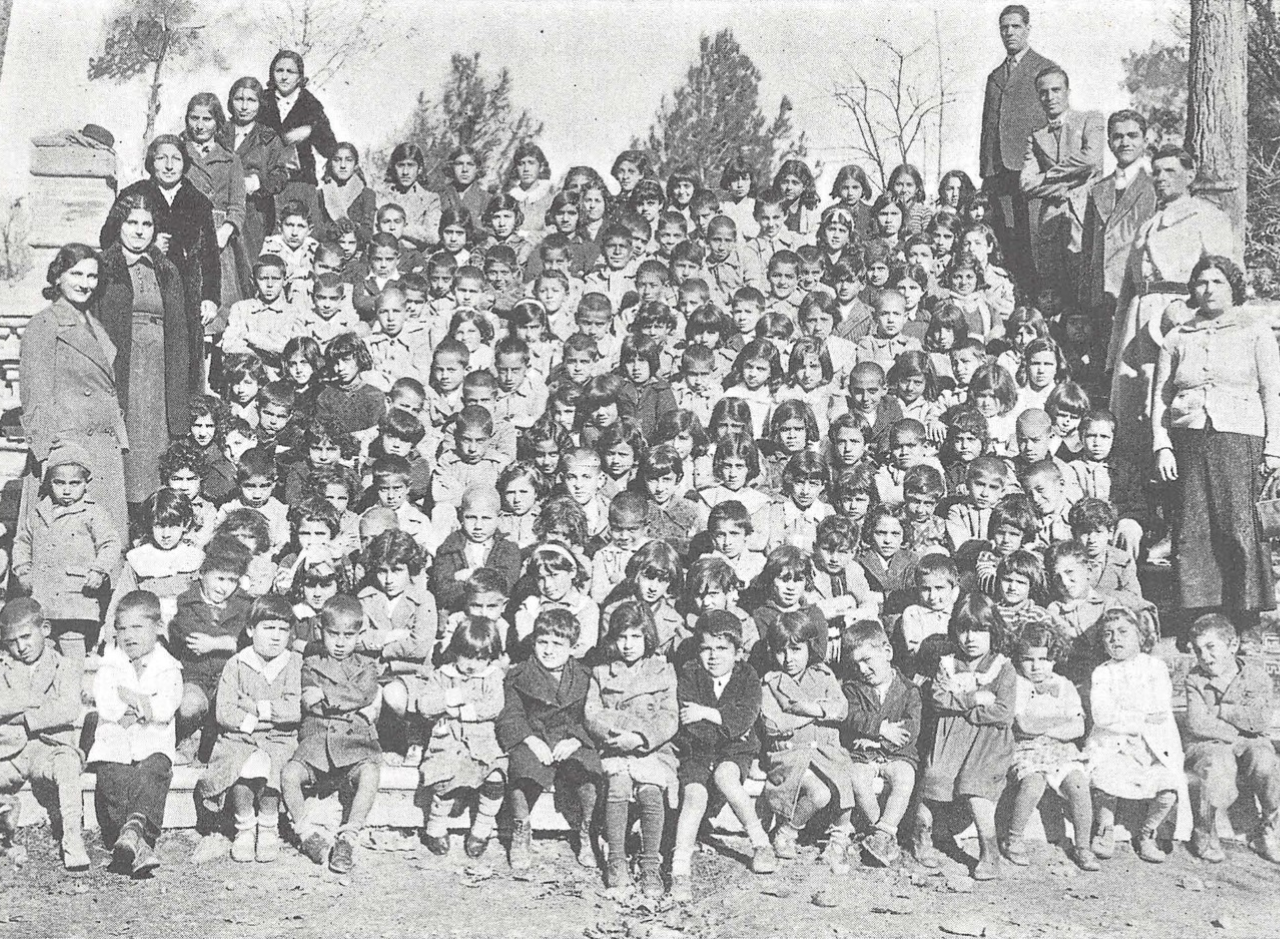
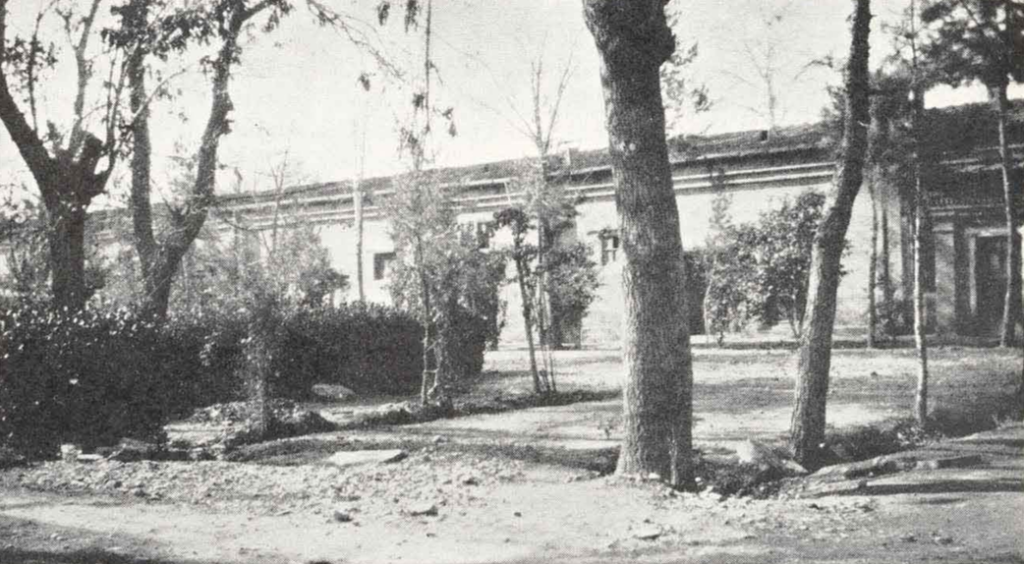
Bahá’u’lláh gave great importance to education, stating: “Regard man as a mine rich in gems of inestimable value. Education can, alone, cause it to reveal its treasures, and enable mankind to benefit therefrom.”19Bahá’u’lláh, Tablets, 161–2, see also 90, 128. In His 1875 treatise, ‘Abdu’l-Bahá called for universal education and the establishment of modern schools throughout Iran, calling this the “primary” and “most urgent requirement.”20‘Abdu’l-Bahá, Secret, 109, see also 14, 91, 97–8, 105–7, 109–12, 115. The Bahá’ís responded, as soon as it was possible to do so, given the intense persecution and pressure to which they were subjected, by establishing modern schools. One difference between the schools that the Bahá’ís were establishing and the schools that the Iranian reformers were establishing was that these latter were only in the major cities of Iran, while Bahá’í schools could also be found in small towns and even villages where there was a sufficient number of Bahá’ís. ‘Abdu’l-Bahá encouraged a number of American Bahá’ís who were experienced educators to go to Iran in order to assist with the running and curriculum of Bahá’í schools.21Soli Shahvar, The Forgotten Schools: The Baha’is and Modern Education in Iran (Tauris Academic Studies, 2009); Moojan Momen, “Baha’i Schools in Iran,” in The Baha’is of Iran, 94–121. For more on the American Bahá’ís who came to Iran, see R. Jackson Armstrong-Ingram, “American Bahá’í Women and the Education of Girls in Tehran, 1909–1934” in In Iran: Studies in Bábí and Bahá’í History 3, ed. Peter Smith (Kalimat Press, 1986), 181–210.
The following passage records what the district governor said to Shaháb Shahmírzádí, a Bahá’í educator, who was trying to set up a school in the village of Ivel in Mazandaran in 1922. It gives an indication of how difficult this task was and how revolutionary the idea of a village school was for the people of Iran:
How do you hope, here in the middle of the jungle, to convince these wild and ill-behaved people, who are a hundred centuries removed from education and civilisation and spend their days from dawn to dusk in the paddy-fields up to their waists in mud and water accompanied by cows, of the benefits of education and knowledge or that Moses or Jesus or Muhammad or Bahā’u’llāh has commanded this or forbidden that? They are not able to understand such matters . . . What an optimist you are! I have been to Īvil. There is no possibility of a school there. Governors have come to the Chahārdānga district and tried to set up a school here in Kiyāsar which is the centre of the district and has almost 500 families, most of them having wealth and land, and they have failed. Two years ago, A‘ẓam al-Vuzarā was the governor here. He really tried hard in this regard and spent fifty tūmāns of his own money for the furniture of the school. They constructed tables and benches. But he was not able to get the children to come to school for even a day. After he left, they used the furniture of the school for firewood . . . What do these people know of education and training?’22Momen, “Baha’i Schools in Iran,” 100–1; see also 104 for a similar story regarding the Bahá’í girls’ school in Abadeh.
The Bahá’í schools were also different from the other schools in Iran in the extent to which corporal punishment was used. While the beating of children was a routine daily occurrence in Iran (and largely continues to be so to the present day), ‘Abdu’l-Bahá strongly advised against this, and the practice died out in the Bahá’í schools.23 ‘Abdu’l-Bahá, Selections, 125; see for example Shaqáyiq Íqání, “Taríkhchih-yi madáris-i Bahá’í dar Mázandarán” (Graduation thesis, Institute for Advanced Bahá’í Studies, Iran, 2001), 83; Moojan Momen, The Baha’i Communities of Iran 2 (George Ronald, 2021), 301–2.
The Bahá’í schools were closed on government orders in 1934. The impact of the Bahá’í schools on Iran was probably quite considerable. Because Bahá’í schools were open to everyone, they must have had an impact in reducing the hostility towards modern education that had been instilled in the population by many of the Muslim clerics. People could begin to see the benefits of it for themselves. In many smaller localities, the Bahá’í school was the only modern school available; therefore, many children from Muslim or other backgrounds attended. Even in the larger towns and cities where other schools were available, many families who were not Bahá’í preferred to send their children to the Bahá’í schools because of their good reputation. In this way, many who became prominent ministers, politicians, scholars, and writers in the second half of the twentieth century had attended Bahá’í schools as children.24For a partial list, see Shahvar, Forgotten Schools, 179–182.
THE WORLD OF WOMEN
Women in Iran were confined and constrained by a heavy burden of religious and traditional laws and customs, leading to a lack of education and limited social options. While the reform movement and the Constitutional Revolution resulted in some discussion of women’s issues, this did not lead to much in the way of social change. It did not result, for example, in giving women the right to vote, and only a handful of girls’ schools were set up by private individuals in some large cities. The reign of Reza Shah Pahlavi (1925–41) appeared to bring some improvement for women, but the prohibition of the veil was forced on all women and, as one Iranian historian has commented, initiatives that appeared to favor women were actually a means for Reza Shah’s efforts to subdue the religious leadership and transfer their patriarchal authority to himself.25Hamideh Sedghi, Women and Politics in Iran: Veiling, Unveiling, and Reveiling (Cambridge University Press, 2009), 62–98, esp. 67. By the mid-1930s, all women’s organizations were closed down and replaced by a single state-sponsored institution.26Haideh Moghissi, Populism and Feminism in Iran: Women’s Struggle in a Male-Defined Revolutionary Movement (MacMillan, 1996), 40–1.
Women in the Bahá’í community in Iran took much of their inspiration from the Bábí heroine, Táhirih Qurrat al-ʿAyn. She disrupted all the norms that constrained the women of her society. She tore up the script that every woman in her society was given at birth, that of an obedient, submissive and silent daughter, wife, and mother, and wrote her own script. Although she came from a traditional clerical family, she challenged the religious orthodoxy of her family by adopting first the heterodox teachings of the Shaykhí school and later the revolutionary new teachings of the Báb. She upended gender norms by refusing to be submissive to her husband and going off to Karbala to pursue her religious quest, even facing the social opprobrium consequent to being divorced by her husband. She defied religious conventions by joyously celebrating the holy day of the Birth of the Báb during the time of year when Shi’íh Muslims traditionally were in mourning. She disrupted social norms by being appointed to the highest echelon among the followers of the Báb and teaching and leading a large cohort among His male disciples, by preceding the other leading Bábís in realizing the full import of the claims of the Báb, and most famously of all, by appearing unveiled and daring to raise her voice and be heard in a gathering of the leading disciples of the Báb, raising the call announcing the end of the Islamic Dispensation. She did all this knowing that it would lead to the loss of her family, children, social standing, liberty, and even of life itself. In thus claiming agency and making her own choices, Táhirih was not just instituting the women’s movement in Iran; she was the dawn of modernity for both women and men, breaking the shackles of traditional society.
The Bahá’í community continued the work of Táhirih by giving agency to women and advancing their position in the community. Bahá’u’lláh encouraged this, writing that He had “lifted distinctions from between His servants and handmaidens, and… hath conferred upon all a station and rank of the same plane,” and had thus “broken the back of vain imaginings (in other words, disrupted the social constructs that maintain the patriarchy).”27From a Tablet of Bahá’u’lláh, in Compilation of Compilations 2 (Bahá’í Publications Australia, 1991), 357. See also Juan R. I. Cole, Modernity and the Millennium: The Genesis of the Baha’i Faith in the Nineteenth-century Middle East (Columbia University Press, 1998), 171–7.
Of course, the pronouncement of equality by the Founder of the religion did not immediately lead to full equality for women in the Bahá’í community. This was a lived, negotiated, and developing outcome, experienced within the cultural expectations and social constraints of a patriarchal society. But, as early as the 1870s, outside observers were noticing the improving position of women in the Bahá’í community. A Polish journalist visiting Baghdad and an Irish doctor born in Iran both wrote of this in the 1870s.28Jan Jasion, “‘A.J.’ and the Introduction of the Bahá’í Faith into Poland,” Bahá’í Studies 4 (1978), 31–7. Jablowonski calls the individuals he met “Babis” but that was the name by which the Bahá’ís were known throughout the nineteenth century. Edward Granville Browne, Materials for the Study of the Bábí Religion (Cambridge University Press, 1918), 262. The words that Professor Browne of Cambridge University heard in 1888 from a street peddler in Isfahan who was a Bahá’í demonstrated that this ethic of promoting women’s emancipation had penetrated all levels of the Bahá’í community: “We believe that women ought to be allowed to mix more freely with men, and should not be compelled to wear the veil.”29Edward Granville Browne, A Year among the Persians (Adam and Charles Black, 1893), 236. Individual Bahá’í women, such as Táyirih Khánum, contributed to the public discourse on women’s emancipation in the period before and after the Constitutional Revolution, writing articles for newspapers.30Dominic Parviz Brookshaw, “Women Poets,” in Literature of the Early Twentieth Century: From the Constitutional Period to Reza Shah, ed. Asghar Seyed-Gohrab (I.B. Tauris, 2015), 247–58. Afsaneh Najmabadi, “Ṭāyirih,” Nīmeh-ye Dīgar 2, no. 3 (Winter 1997), 146–95.
When the Bahá’ís began to establish a community administration at the beginning of the twentieth century, one of the first committees to be set up was a Committee for the Advancement of Women,31 Moojan Momen, “Role of Women in the Iranian Bahá’í Community during the Qajar Period,” in Religion and Society in Qajar Iran, ed. Robert M. Gleave (RoutledgeCurzon, 2005), 366, photograph, 360. and the advancement of women has remained a goal of the community up to the present. But perhaps the greatest contribution that the changes in the Bahá’í community made to the advancement of women is the progress that it made and continues to make towards the dismantling of the hierarchical social order that buttresses the patriarchy (see Part 2 of this article).
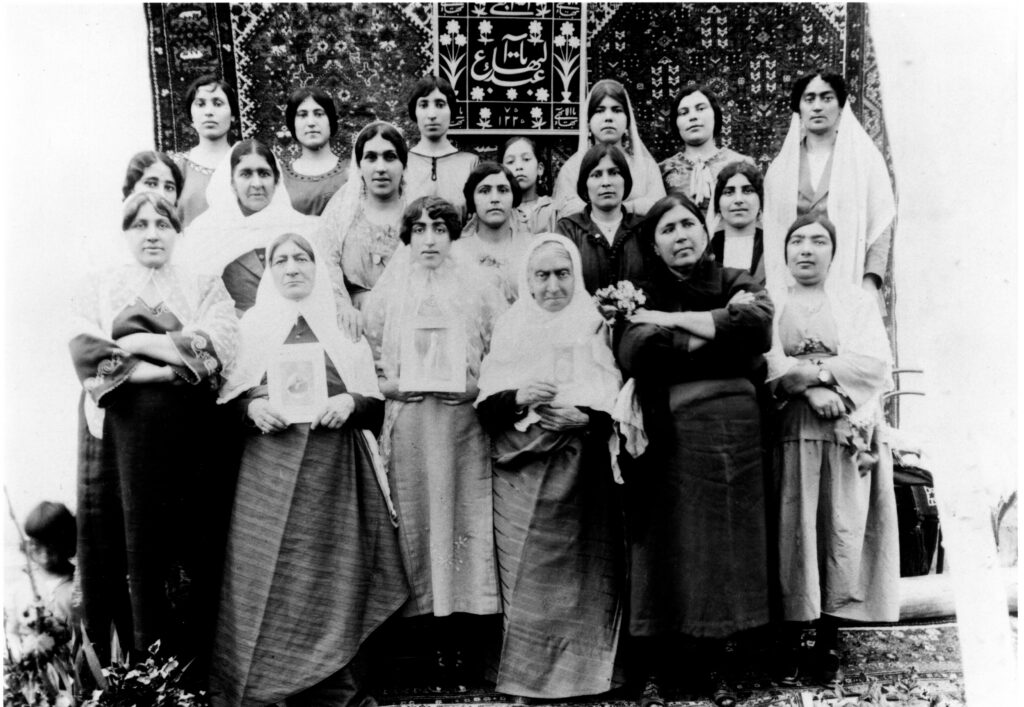
Bahá’u’lláh made it clear that His advocacy for modern education included girls as well as boys.32Bahá’u’lláh, Tablets, 128. Although urged by Western Bahá’í women to promote the unveiling of Eastern Bahá’í women (which was also a feature of the Iranian modernist discourse), ‘Abdu’l-Bahá judged that the more effective and sustainable way to promote the social advancement of women was through education. As the Bahá’í community began to build schools, ‘Abdu’l-Bahá made sure that they built girls’ schools alongside the boys’ schools, even saying that the education of girls took precedence over that of boys since they were the first educators of the next generation.33Compilation 1, 284; Compilation 2, 374. One result of this was that Iranian Bahá’í women were, in general, more educated than other women. By 1973, the Bahá’í community was able to announce a 100% literacy rate among women under 40 years of age at a time when nationally only 40% of Iranian women in this age range were literate.34Momen, “Role of Women,” 366.
It is noticeable that almost all of the Western Bahá’ís whom ‘Abdu’l-Bahá encouraged to settle in Iran to help to develop the Bahá’í community in the fields of education and health were women, who were then able to serve as role models for the Iranian Bahá’í women on how to claim agency and take on social roles.35Armstrong-Ingram, “American Bahá’í Women.”
There were other areas of life where the Bahá’ís were making innovative and radical changes ahead of what was happening in the rest of Iran, especially in agriculture and rural development, and in health and hygiene. But since the Iranian modernist reformers did not concern themselves much with these areas, there is little to compare these Bahá’í activities with and they will not be discussed here.36On agriculture, see Moojan Momen, “Social and Economic Development in an Iranian Village: The Bahá’í Community of Saysan,” Baha’i Studies Review 15 (2009): 67–81; on health and hygiene see, Seena B. Fazel and Minou Foadi, “Baha’i health initiatives in Iran: a preliminary survey,” in The Baha’is of Iran, 122–40.
CONTACTS BETWEEN THE REFORMERS AND BAHÁ’ÍS
As well as the evidence presented above that the Bahá’í leaders were ahead of the Iranian modernist reformers in the reforms they were advocating, there is also strong evidence that these reformers were in close contact with the Bahá’í leaders and the Bahá’í community. In the 1860s, two of the leading Iranian reformers were Mírzá Malkam Khán and Sayyid Jamálu’d-Dín Asadábádí (“Afghání”). The first of these was exiled to Baghdad in 1861 and is known to have met Bahá’u’lláh there. Later in 1866, he represented himself as being knowledgeable about the new religion to French scholar Ernest Renan, who encouraged him to write an article on the subject.37Hasan Balyuzi, Bahá’u’lláh: King of Glory (George Ronald, 1980), 151–3; Ernest Renan, Oeuvres Complètes 10, ed. Henriette Psichari (Calmann-Lévy, 1947–61), 453. See also Moojan Momen, The Bábí and Bahá’í Religions, 1844–1944: Some contemporary Western accounts (George Ronald, 1981), 23. Similarly, Asadábádí is said to have met Bahá’u’lláh in Baghdad, and he also represented himself as knowledgeable about the new religion such that Butrus al-Bustani asked him to contribute an article on the subject for his Arabic encyclopedia.38Nikki Keddie, Sayyid Jamāl ad-Dīn “al-Afghānī.”(University of California Press, 1972), 20–22. He tried to remain in close touch with the Bahá’í leadership, sending them copies of his newspaper al-Urwah al-Wuthqá from Paris in the 1880s.39Bahá’u’lláh, Tablets, 95.
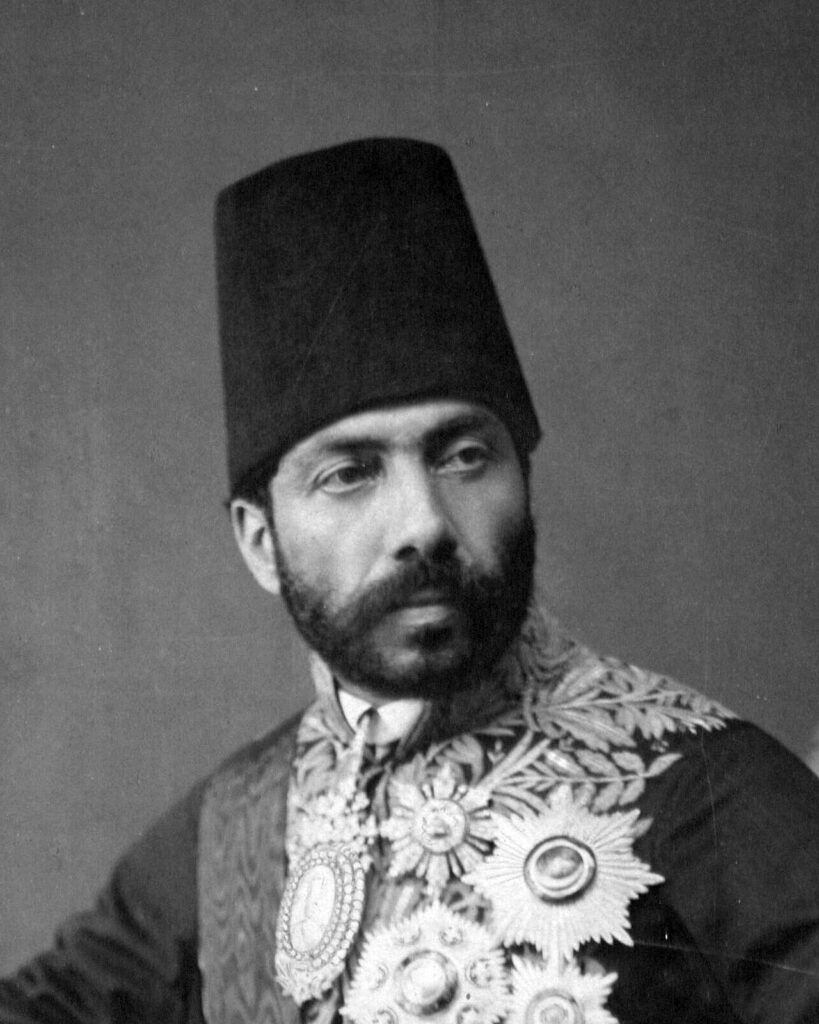
The most consequential reformer from the next decade, the 1870s, was Mírzá Ḥusayn Khán Mushíru’d-Dawlih (Sipahsalár), who succeeded in becoming Prime Minister of Iran and began a reform agenda but was thwarted by the reactionary Iranian elite. He had at first been antagonistic to the Bahá’ís and, as Iranian ambassador to the Ottoman Government, was responsible for Bahá’u’lláh’s successive exiles from Baghdad to Istanbul, to Edirne, and to Acre. But after reading some of the letters addressed to Bahá’u’lláh by His followers after Bahá’u’lláh’s courier had been arrested in Aleppo in 1870, he realized that he had been wrong about Bahá’u’lláh. When he returned to Tehran and later became Prime Minister, he openly praised Bahá’u’lláh and protected the Bahá’ís on more than one occasion.40Ḥájí Mírzá Ḥaydar ‘Alí quoted in Balyuzi, Bahá’u’lláh, 441–4; See also Mina Yazdani, Awḍá‘-yi Ijtimá‘í-yi Írn dar ‘Ahd-i Qájár az khilál-i Áthár-i Baháʾí (Association for Bahā’ī Studies, 2003), 118–121. Information about the Bahá’í Faith probably came to him from his close friend Malkam Khán or one of his relatives who was a Bahá’í.41Moojan Momen, The Baha’i Communities of Iran 1 (George Ronald, 2015), 26, 498. Another close friend of Mushíru’d-Dawlih was Mírzá Yúsif Khán Mustasháru’d-Dawlih, who wrote the first reformist treatise to be published, Yik Kalamih. The Bahá’í scholar Mírzá Abu’l-Faḍl Gulpáygání records that he was passing through Tabriz where Mustasharu’d-Dawlih lived, and that the latter was present at a meeting where Gulpáygání debated with Reverend Robert Bruce, a British missionary, about the Bahá’í Faith.42Abu’l-Faḍá’i Gulpáygání, Rasá’il va Raqá’im (Mu’assih-yi-Milli-yi Maṭbú‘át-i Amrí 134 BE/1977), 210; Rúḥu’lláh Mihrábkhání, Zindigání-yi Mírzá Abu’l-Faḍl Gulpáygání (Bahá’í-Verlag, 1988), 125–31.
By the 1880s, there was an increasing debate about reform in Iran, fueled by newspapers and books printed outside Iran but circulated within the country. ‘Abdu’l-Bahá wrote an important treatise, the Risálih-yi Madaniyyih (The Secret of Divine Civilization), as a contribution to this debate. It was published in Bombay in 1882 and was probably only the second reform treatise (after Yik Kalamih) to be thus printed and circulated. It was published anonymously and with no overt reference to the Bahá’í Faith in it, so that prejudice against the new religion would not prevent it from being circulated and widely read. In this book, ‘Abdu’l-Bahá enters into the discourse that was going on among Iranian reformers about governmental reform and modern education, but, in contrast to these reformers, He emphasizes the need to develop a sound moral basis in society, upon which these other reforms could be established and develop.
One important focus of reform activity in the 1890s was the city of Isfahan. Here a group of modernist reformers gathered, calling themselves the Progress Society (Anjuman-i Taraqqí). It was one of the earliest such societies in Iran and did not just meet to discuss reform but carried out lines of social action, such as establishing a modern school. Almost all of the leading members of this group, which included such figures as Ḥájí Mírzá Naṣrulláh Maliku’l-Mutakallimín, Sayyid Jamál Vá`iz, Majdu’l-Islám Kirmání, Mírzá Asadu’lláh Vazír, and Mírzá Aḥmad Khán Fátiḥu’l-Mulk were at that time either Bahá’ís or closely associated with the Bahá’í community.43Momen, Baha’i Communities 2, 2:31–6. The first three named individuals moved to Tehran in 1902–3 and then became associated with the Azalí Bábís, but during the time they were in Isfahan there is no evidence that they were in contact with Azalís. Further details including evidence of these individuals being Bahá’ís or closely associated with the Bahá’í community in Isfahan can be found in Moojan Momen, “The Reform Movement in Isfahan, Iran: the role of Bábís and Bahá’ís,” Religions 17(6), (2026), 717; mdpi.com/2077-1444/17/6/717.
In the next decade, the 1900s, similar to the situation in Isfahan in the 1890s, almost all of the leading members of the reform movement in Sari in Mazandaran were either Bahá’ís or closely associated with the Bahá’í community. They set up the Anjuman-i Ḥaqíqat (The Truth Society) and undertook such activities as establishing a modern school.44Moojan Momen, “The Baha’is and the Constitutional Revolution: The Case of Sari, Mazandaran, 1906–1913,” Iranian Studies 41, no. 3 (2008), 343–363. Elsewhere in Iran, leading Constitutionalists such as Ḥájí Abu’l-Ḥasan Mírzá Shaykhu’r-Ra’ís were known to have been Bahá’ís,45Juan R. I. Cole, “Autobiography and Silence: The Early Career of Shaykh al-Ra’īs Qājār,” in Iran im 19. Jahrhundert und die Enstehung der Bahā’ī Religion, ed. Christoph Bürgel and Isabel Schayani (Georg Olms, 1998), 91–126; Juan R. I. Cole, “The Provincial Politics of Heresy and Reform in Qajar Iran: Shaykh al-Rais in Shiraz, 1895–1902,” Comparative Studies of South Asia, Africa and the Middle East 22, nos.1–2 (2002): 119–126; Momen, Baha’i Communities 1, 128–31. while Muḥammad Valí Khán Tunukábuní (Naṣru’s-Salṭanih, Sipahsalár-i A‘ẓam) and ‘Alí Qulí Khán Sardár As‘ad Bakhtiyárí, the two military leaders who led the Constitutionalist forces in their capture of Tehran in 1909, thus ending Muḥammad `Alí Sháh’s attempt to overthrow the Constitution, were both in close touch with the Bahá’í community, and both met ‘Abdu’l-Bahá in Paris.46Moojan Momen, “Who Was a Bahā’ī in the Upper Echelons of Qājār Iran?” Religions, 14, no. 4 (2023): 469, mdpi.com/2077-1444/14/4/469. Published in The Bahā’ī Faith: Doctrinal and Historical Explorations, ed. Moojan Momen and Zachery Heern (MDPI, 2024), 119–31.
Also of great interest and demonstrating the extent to which the modernist reformers looked to and may in some measure have modelled themselves on the Bahá’í community is the report by Náẓimu’l-Islám Kirmání, a historian who was closely involved with the reform movement, of the discussion at a meeting in March 1905 of the leading reformers at which he was present and where it was suggested that the reformers should look to the successful methods and tactics of the Bahá’ís for inspiration.47 Náẓimu’l-Islám Kirmání, Táríkh-i Bídárí-yi Írániyán (Amír Kabír, 1387/2008), 1:189. The text reads “Bábís,” but this is what the Bahá’ís were called at this time and it is unlikely that this refers to the Azalí Bábís, since they dissimulated their beliefs and were not known as an active group by this name.
There were also other factors that made it likely that the Bahá’ís may have been influencing Iranian society much more effectively than is often appreciated. In explaining their ideas, drawn as they were from European writings, the modernist reformers were introducing into their texts European terms and thus using words and concepts that were not immediately understandable to most Iranians and appeared as a rupture with Iranian culture. But the Bahá’í texts used words and ideas that were rooted in Iranian culture and therefore easily understood.48Ghazaleh Faridzadeh and Raed Faridzadeh, “Negotiating Freedom: Mostašār od-Doule’s Yek kalame and the Iranian Constitutional Experience,” Die Welt des Islams 61 (2021): 390–91; Algar, Malkam Khān, 27, 29; Nashat, Origins, 162–3. Indeed, the concept of the progressive revelation of religious truth, introduced by the Báb and developed by Bahá’u’lláh, created a pathway for a gradual organic modernization, in keeping with the culture of the nation and granting agency to all individuals in society.49Abbas Amanat, Iran: A Modern History (Yale University Press, 2017), 239–40.
Moreover, it should be borne in mind that the number of people engaged in the project of the Iranian reformers was very small, the readership for the writings they produced was very limited, and the ability of this small group to carry out any of their suggested changes was very constrained. Mahdí Malikzádih, who was himself part of the reform movement, suggests that the number in the reform circle in the last decades of the nineteenth century was only a few hundred,50Malikzádih, Tarikh, 1:69. and these reformers were operating within secret societies and only in a handful of large cities. By contrast, the Bahá’í community had a much greater membership (estimated to be 100,000 or more),51Peter Smith, “A Note on Babi and Baha’i Numbers in Iran,” Iranian Studies 17, no. 2/3 (Spring-Summer, 1984), 295–301. was distributed across the country, even in small towns and villages, and the Bahá’ís were trying to put these ideas into practice insofar as circumstances allowed.
The above evidence demonstrates that in decade after decade from the 1860s onward, the ideas put forward in the Bahá’í texts were presented earlier, more developed, and more easily understood than what appeared in the discourse and texts of the modernist reformers, and the Bahá’ís were implementing these changes in their communities scattered across the whole of Iran. Given this and the evidence presented above that many of the leading modernist reformers were in close touch with the Bahá’í leaders and the community, it is not unreasonable to suggest that Bahá’í ideas had some influence on the thinking of the reformers. The extent to which this may have occurred requires further research, as it would be hidden by these reformers to forestall opposition and persecution.
ATTACKS AND SETBACKS
Inevitably, the radical changes that the Bahá’í community was trying to make were either misunderstood or deliberately misrepresented to the people of Iran. And so, for example, the Bahá’í endeavor to advance the social role of women led to allegations of sexual immorality. The efforts of the Bahá’í community to introduce modern education led to claims that the Bahá’ís were trying to introduce foreign ideas into Iran. The ethos of modernity and progress cultivated within the Bahá’í community gave rise to accusations that the Bahá’ís were trying to undermine Iran’s culture and even, in later years, to conspiracy theories, which continue to the present day, that the Bahá’ís are agents of foreign powers. The global vision inculcated in the Bahá’í scriptures led to accusations that the Bahá’ís did not care about the welfare and progress of Iran. All of this led to persecution of the Bahá’í community by the religious leaders of Iran, who then recruited the intellectuals and politicians in their campaign against the Bahá’ís.
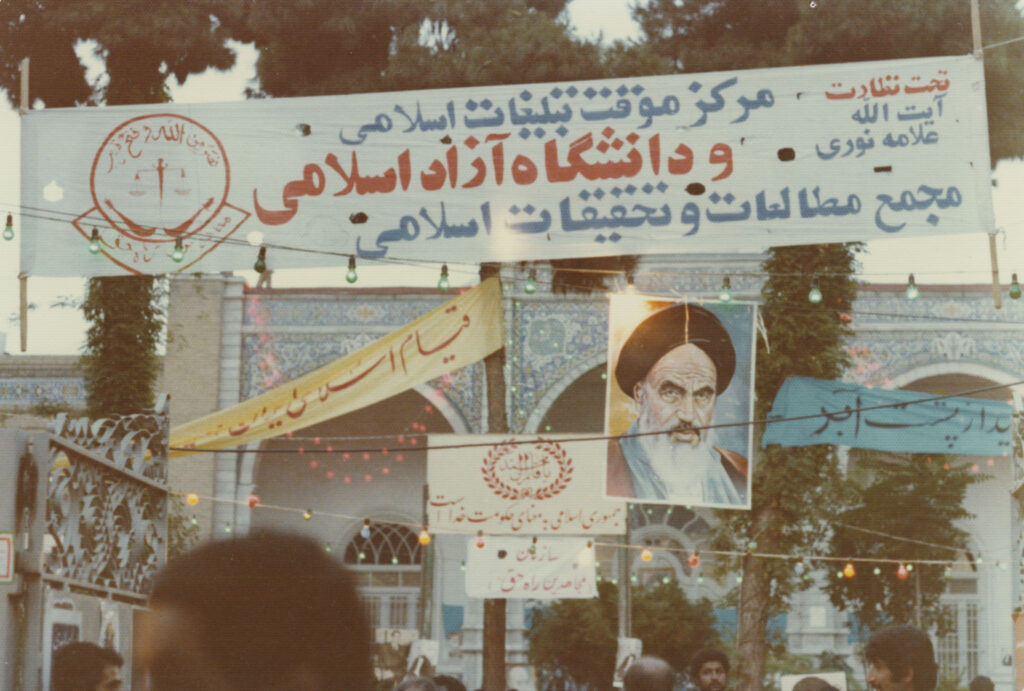
Although the Bahá’í community was striving to advance all of these areas of social progress, the constant persecution and the consequent social constraints that the community suffered did limit their efforts and cause setbacks. The hostile environment created by the opposition of the religious leadership in the country, and often the government, led to a situation in which the only public discourse about the community was hostile attacks. Even many of the secular nationalist reformers, whom one might have thought would have welcomed the Bahá’í social agenda, were contributing to these attacks by the time of Reza Shah’s reign.52 Mohammad Tavakoli-Targhi, “Anti-Baha’ism and Islamism in Iran,” in The Baha’is of Iran, 200–231; Chehabi, “Anatomy.”
The most public face of the Bahá’í community was its schools, and these were vehemently opposed by the Islamic religious leaders, many of whom were opposed both to all modern education and to any Bahá’í initiatives. In several instances, these schools were wrecked or closed down by the authorities, until finally the national government closed all of them permanently in 1934.53Shahvar, Forgotten Schools, 107–30. Another area where the efforts of the Bahá’í community were held back was in the social advancement of women. Thus, although women were able to vote for the Bahá’í leadership councils from 1923, it took until 1954 before conditions were right for them to be elected to these councils.54 Momen, “Role of Women,” 366. In all, there was a constant barrage of black propaganda against the community.
CONCLUSION
At no time since its founding in the latter part of the nineteenth century has the Bahá’í community been free to pursue its agenda for social reform or to enter into Iranian public discourse. The people of Iran have received only falsified facts and fanciful conspiracy theories about the Bahá’ís.55 See the examples provided by Chehabi in “Anatomy,” 186–94 of false allegations that Bahá’ís were enemies of the Iranian nation, tools of Russian and British imperialism, and prominent in the Shah’s regime; see also Reza Afshari, “The Discourse and Practice of Human Rights Violations of Iranian Bahaʾis in the Islamic Republic of Iran,” in The Baha’is of Iran (Routledge, 2008); Tavakoli-Targhi, “Anti-Baha’ism”; Vahman, 175 Years. As a result, Iranians have remained widely ignorant of the achievements of the Bahá’í community and the extent to which it has assisted the development of Iran.
In the mid-nineteenth century, Iran was in urgent need of reform and modernization. Two possible routes presented themselves: that of the modernist reformers and that of the Bahá’í community. In this article, we have traced the earliest suggestions made by the Iranian modernist reformers and pointed out that, in most instances, the Bahá’í leaders were making suggestions that were earlier and more progressive than those of the modernist reformers. It should not surprise us, however, that evidence for a direct influence of the Bahá’í teachings on the reformers is difficult to find, since it would have resulted in rejection and even danger for the reformers to admit to being influenced by a persecuted and reviled religious community. Given the evidence presented here that these modernist reformers were in many cases in close contact with the Bahá’í community and in some cases with the Bahá’í leadership, it would seem likely that at least some of the discourse of the modernist reformers was influenced by the Bahá’í teachings.