In 2013, as winter gave way to spring, a group of villagers in Bihar Sharif, some 1,100 kilometers east of Delhi, India, gathered together on the rooftop of one of their homes to discuss the purpose and function of a local Bahá’í House of Worship, for which the planning had recently begun. These families, friends, and neighbors were consulting about what it would mean for their community to have a Bahá’í Temple raised in their midst, dedicated to prayer and meditation, embracing all people equally, regardless of religious affiliation, background, ethnicity, gender, or caste. In a quiet moment, tears welled in the eyes of one elderly resident as he came to understand that his family would be welcome in this special place. For generations, he explained, they had been denied entry to temples.
Unique in its functioning as a universal place of worship, the institution of the Mashriqu’l-Adhkár (from the Arabic, meaning “dawning-place of the mention of God”) was founded by Bahá’u’lláh, Who described its role in society in His sacred writings. Within, there are neither idols nor pictures, neither clergy nor preaching, and no calls for contributions. There is no requirement for an intermediary between the worshipper and God. It is open for personal prayer, meditation, and reflection as well as for devotional programs where prayers and passages from sacred scripture are read aloud, chanted, or sung by adults and children, without instrumental accompaniment. There are no formulas to be followed, allowing for diverse expressions of devotion.
THE FIRST MASHRIQU’L-ADHKÁRS IN THE EAST AND WEST
Since the earliest days of the Faith, Bahá’ís have gathered together for collective worship, which ‘Abdu’l-Bahá described as an embryonic expression of the Mashriqu’l-Adhkár. The world’s first Bahá’í House of Worship, in ‘Ishqábád, Turkmenistan, was raised on a parcel of land set aside years earlier at the instruction of Bahá’u’lláh and was fostered at every stage of its development by ‘Abdu’l-Bahá.
Moved by news of the building of the Temple in ‘Ishqábád, the Bahá’ís in North America sought ‘Abdu’l-Bahá’s approval for a similar project on their continent, which was granted in 1903. The “Mother Temple of the West” at Wilmette, near Chicago, was completed 50 years later.
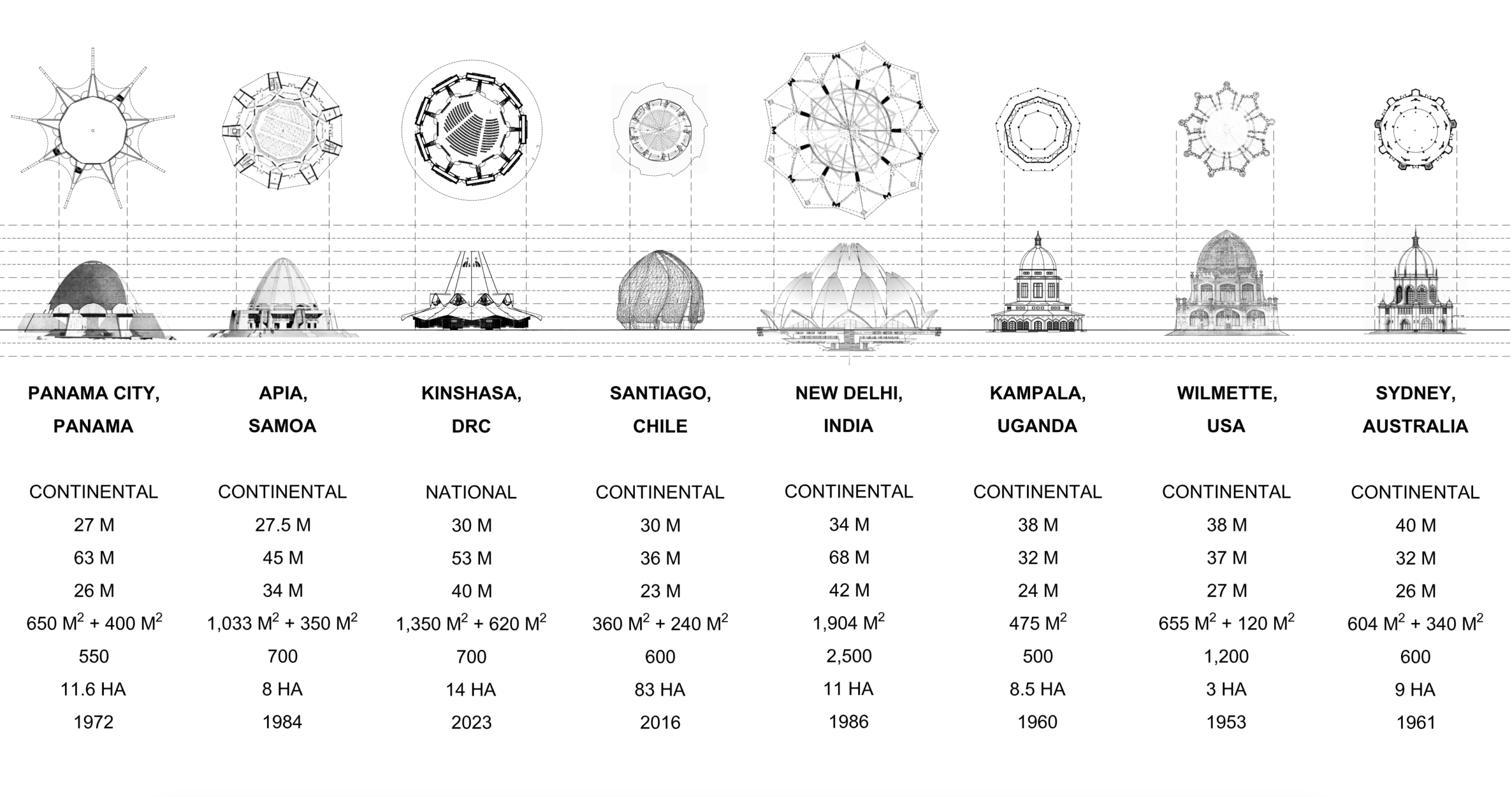
Upon completion of the House of Worship in the United States, Shoghi Effendi initiated two new processes: the construction of continental Temples, in Africa (Kampala, Uganda, completed in 1961), Australasia (Sydney, Australia, completed in 1961), and Europe (Frankfurt, Germany, completed in 1964); and securing land for Temples that would be built in the future. On 8 October 1952, Shoghi Effendi announced that the purchase of land for eleven future Bahá’í Houses of Worship would be an objective of the forthcoming decade-long Plan, along with the acquisition of the site for a future Mashriqu’l-Adhkár on Mount Carmel in the Holy Land. By 1963, some 46 sites for future Houses of Worship had been acquired. Continuing this opening stage of raising continental Temples, the Universal House of Justice proceeded with the building of Temples in Panama City, Panama (1972); Apia, Samoa (1984); and New Delhi, India (1986).
THE EMERGENCE OF NATIONAL AND LOCAL HOUSES OF WORSHIP
Pursuant to Bahá’u’lláh’s instruction “Build ye houses of worship throughout the lands in the name of Him Who is the Lord of all religions,”1The Kitáb-i-Aqdas: The Most Holy Book, https://www.bahai.org/r/763968510 ‘Abdu’l-Bahá affirmed that Mashriqu’l- Adhkárs would “be established in every hamlet and city.”2Selections from the Writings of ‘Abdu’l-Bahá, no. 55, https://www.bahai.org/r/681408626
As with all developments in the Bahá’í community, a deliberate and careful approach has been adopted in raising up Temples. For example, although the Temple site in ‘Ishqábád had been prepared for some 15 years, ‘Abdu’l-Bahá waited until the means had been secured before permitting the construction to begin, so that the work could proceed without interruption.
In 1996, at the outset of the 25-year series of plans recently concluded, the Universal House of Justice described the elements of a flourishing community, highlighting the benefits of the practice of collective worship and regular devotional meetings to its spiritual life. However, as critical and transformative as individual and collective prayer may be, worship is not seen by Bahá’ís as an end in itself; rather, it ideally results in “endeavours to uplift the spiritual, social, and material conditions of society” and “deeds that give outward expression to that inner transformation.”3Universal House of Justice to the Bahá’ís of the world, 1 August 2013, https://www.bahai .org/r/980781985; Universal House of Justice to the Bahá’ís of Iran, 18 December 2014, in The Institution of the Mashriqu’l-Adhkár, https://www.bahai.org/r/250953299 These two inseparable aspects of Bahá’í life—worship and service—are expressed in the institution of the Mashriqu’l-Adhkár.
In one way, this expression can be seen through the role a House of Worship can play as the spiritual center of a community. People, turning their hearts to their Creator, pray and meditate within the Temple and find inspiration and spiritual strength to inspire their actions as they go about all aspects of their life, striving to make their contribution to their family and community. In another sense, the central edifice, in which people gather to pray, can be viewed as an aspect of the institution of the Mashriqu’l-Adhkár. The process of raising up a Mashriqu’l-Adhkár will continue to develop to a stage where the central edifice will be surrounded by “dependencies dedicated to the social, humanitarian, educational, and scientific advancement of mankind.”4Universal House of Justice to the Bahá’ís of the world, 20 October 1983, https://www .bahai.org/r/346303577
In 2001, the Universal House of Justice announced plans to build the last continental Temple in Santiago, Chile. The House of Justice explained that a particular focus of that stage of the Bahá’í world’s development would include the enrichment of communities’ devotional life through the erection of national Houses of Worship.
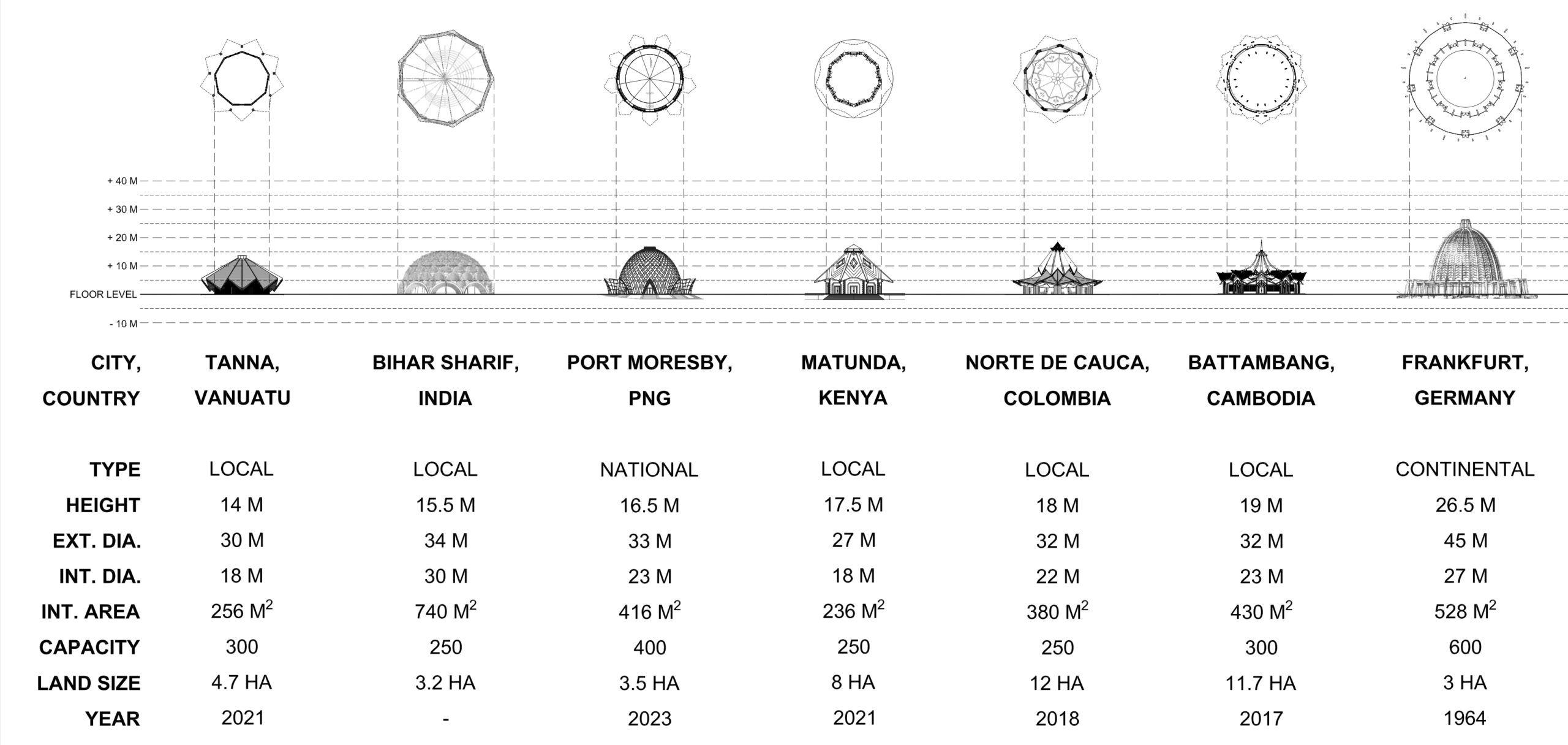
Eleven years later, in April 2012, when the enterprise in Chile was well underway, the House of Justice announced plans to construct the first two national Houses of Worship in the Democratic Republic of the Congo and Papua New Guinea, countries it had determined had experienced vibrant community-building endeavors. The House of Justice further announced that conditions were favorable for the launch of projects to build the first local Houses of Worship. The locations selected were Battambang, Cambodia; Bihar Sharif, India; Matunda Soy, Kenya; Norte del Cauca, Colombia; and Tanna, Vanuatu.
To support the construction of the new national and local Houses of Worship, the Universal House of Justice established two new entities at the Bahá’í World Centre: a Temples Fund to which Bahá’ís around the globe were invited to contribute, and the Office of Temples and Sites, to assist National Spiritual Assemblies whose countries had been selected.
THE COMMENCEMENT OF NATIONAL AND LOCAL TEMPLE PROJECTS
Shortly after the April 2012 announcement, National Spiritual Assemblies began to take practical steps to advance the projects. At the same time, Temple committees were established and began exploring strategies to stimulate awareness about the nature and purpose of the Mashriqu’l-Adhkár and what it would mean for a community to house such an edifice. With a vision that the Temple would be for everyone, efforts were made to promote widespread participation among all the people whose lives would be directly impacted. Crucially, communities that had been developing the capacity to operate in a learning mode could now apply that capacity to the process of raising a Mashriqu’l-Adhkár.
Deliberations on the ideal features of Temple land required the balancing of practical and economic factors. This process, diligently undertaken, helped National Assemblies identify strategically located and accessible sites, thinking not only of prominence, but where regular visits to the House of Worship could naturally become part of a pattern of vibrant community life.
In countries where the national community had been in possession of a Temple site for decades, the suitability of the site was reassessed through the same lens. Architects were briefed about the design requirements of a Mashriqu’l-Adhkár—for example, that the House of Worship is nine-sided, circular in shape, and may have a dome. Design specifications called for simpler, more modest designs than those for the continental Houses of Worship. Yet, at the same time, architects would need to ensure that the building’s design would be beautiful and dignified, in harmony with its surroundings and with the cultural context where it would be constructed.
Where possible, local materials and building techniques drawing on generations of experience were given priority, as was an understanding of the native environment. While architects sought inspiration from the principles of the Bahá’í Faith, such as the oneness of humankind and the unity of religions, the design concepts were diverse, ranging from indigenous flowers and plants—for example, the lotus flower or cocoa fruit—to activities that form part of a culture’s identity, such as the practice of weaving. From the outset, the question of ongoing maintenance was carefully considered at the design stage, with the hope that Temples could mostly be maintained through the efforts of the local community.
Within a year of the completion of the Mother Temple of South America in Chile in October 2016, the local House of Worship in Battambang was dedicated in September 2017, followed by the Temple in Norte del Cauca in July 2018. As April 2021 approached, the Kenyan community prepared for the dedication of the local House of Worship in Matunda Soy. Progress continued in all designated locations; the construction of the Tanna Temple was at a late stage, and construction of the national Temples in Papua New Guinea and the Democratic Republic of the Congo had begun. Initial steps to prepare the site in Bihar Sharif had commenced.
As of April 2021, national and local Temple projects ranged from roughly five to nine years from announcement to completion: Cambodia and Colombia within five to six years; Kenya in nine years; Vanuatu, Papua New Guinea, and Democratic Republic of the Congo forecast for nine to eleven years; and India expected to be completed by 2024 or 2025. Construction has been the most consistent stage, ranging from one and a half to two and a half years. The process of land acquisition, at one and a quarter to seven years, and architect selection, at one and three quarters to almost eight years, seem to present the greatest opportunity for optimization, particularly by providing clearer parameters based on experience and simplifying approaches to engaging architects.
REFLECTIONS ON A NEW ERA
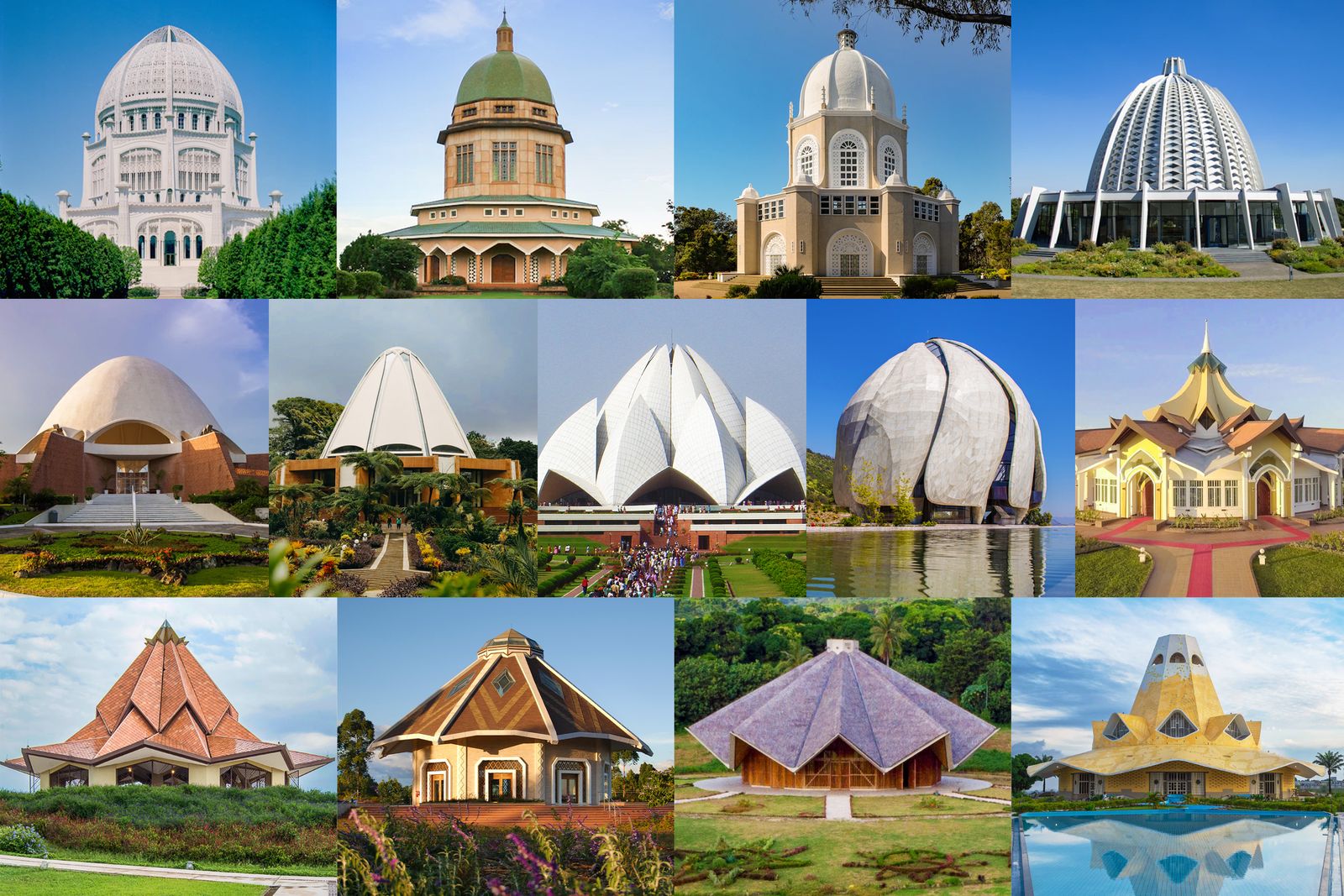
The development of the institution of the Mashriqu’l-Adhkár during the period under review witnessed the completion of the last of the continental Temples—iconic structures that have, in part, symbolized the establishment of the Faith on all continents. An era has opened in which local and national Houses of Worship are emerging around the world. In such countries and cities where establishing a universally accessible place of worship seems to be a natural step in the development of community life, new opportunities and insights are galvanizing a process of community development already underway.
As Bahá’í communities have become more outwardly focused, planning for construction and operation of future Houses of Worship has begun to take on different dimensions. Those involved in managing the Temple complex and those coordinating community-building activities together are exploring what it means to have the Temple integrated into the pattern of community life. How does the relationship with a House of Worship move beyond the occasional special visit to being interwoven into one’s life, a place for regular meditation, reflection, and prayer? What conditions enable local inhabitants to see the Temple as “our” House of Worship? Do such questions also present an opportunity to revisit more traditional approaches to design and construction, through which they can be aligned to a greater degree with the transformative processes through which populations are taking greater ownership of their own spiritual, intellectual, and, ultimately, social and economic development?
Naturally, local Houses of Worship emerge in communities with burgeoning community-based social and economic development activities. As this process expands, so too will the opportunities to learn about the development of “dependencies dedicated to the social, humanitarian, educational, and scientific advancement of mankind,” a practical expression of the interconnection of worship and service.
On the horizon lies a period of discovery and development through which the influence of the Mashriqu’l-Adhkár “on every phase of life” can be realized in ever greater measure.
From the beginning of time man has ever been conscious of the existence of God. The most primitive of men worshipped the Deity, in a primitive manner, perhaps, but nevertheless in conformity with their intelligence and such understanding as they believed they had of their Creator. It is not at all surprising that primitive man should have entertained such strange, and to us, such ridiculous ideas of Divinity because to them God was a mystery, even as today in this enlightened 20th century, God to us is still a mystery. But science with her many instruments has greatly enlarged modern man’s vision. With astronomy and the telescope, physics and the microscope, chemistry and its analyses, science has brought to man a better understanding of the vastness of the universe, but in regard to our Creator, it has caused Him to become only more incomprehensible to us than ever (if such a thing is possible).
Primitive man in attempting to describe his Creator naturally limited God to his own comprehension, and man today, in attempting to understand God, in like manner, can limit God only to that which his finite mind can conceive. The created thing can never hope to comprehend its Creator, any more than a table can hope to understand the carpenter who built it. For as we attempt to conceive this universe with infinite space extending out from us in every direction beyond limit; infinite time without beginning or end; infinite worlds and infinite suns, the mysteries of which man can never hope to fathom; and then right on this earth, in the very air we breathe and the water we drink, the mystery of infinite living creatures, invisible to our eye, and of unbelievable minuteness; these serve to indicate to us that a Creator which surrounds all of creation certainly is incomprehensible to man who represents such a small part of His Creation.
Bahá’u’lláh tells us that “God, singly and alone, abideth in His own Place, which is holy above space and time, mention and utterance, sign, description, and definition, height and depth,”1Bahá’í Scriptures, page 158 and in the Gospel of St. John we are told, “No man hath seen God at any time; the only begotten Son, which is in the bosom of the Father, he hath declared Him.”2John 1:18
Now as for man—in Genesis we read that man is the creation of God. Bahá’u’lláh writes that “The purpose of God in creating man hath been, and will ever be, to enable him to know his Creator and to attain His Presence. To this most excellent aim, this supreme objective, all the heavenly Books and the divinely revealed and weighty Scriptures unequivocally bear witness.”3Gleanings from the Writings of Bahá’u’lláh, page 70 And again He says, “From among all created things He hath singled out for His special favor the pure, the gem-like reality of man, and invested it with a unique capacity of knowing Him and reflecting the greatness of His glory.”4Gleanings from the Writings of Bahá’u’lláh, page 77
To know God, and to reflect His glory, should therefore be the aim of Man, and that this task is not beyond our possibilities is evident because God has created us for this very purpose. Because there is a way of knowing Him, we are not to consider that man can directly contact the Incomprehensible, or that the created thing can know its Creator. The finite can never comprehend the infinite, nor can a lower plane comprehend a higher one—for instance a stone representing the mineral kingdom, or a tree representing the vegetable kingdom, can never understand man representing the human kingdom.
The manner in which man acquires knowledge of God, the Unknowable Essence, is through an Intermediary, or Mediator, for God from the beginning of time has provided mankind with His Manifestations to serve as “vehicles for the transmission of the Grace of Divinity itself”—in other words to serve as a channel through which man may be enabled to know Him. The theory of an intermediary between man and his Creator exists in all great religions today. Each points to a mediator as receiving from God the “light of divine splendor” and thence distributing it over the human world. The Jews look to Moses and the Christians to Christ. For others it is Buddha, or Muhammad, or Zoroaster. In this day the Bahá’ís recognize in Bahá’u’lláh this same station as Intermediary between God and man.
Now the very nature of an intermediary immediately suggests to us a dual relationship, because it brings to us two extremes in relation to each other. Anything that might have but a single relationship could not be an intermediary, and so a Manifestation of God, serving as mediator between God, the Unknowable Essence, and Man, His Creation, must needs have a relationship with both the finite and the infinite. In other words he must have a divine relationship, and also a human relationship.
Considering first the divine relationship, or the relation of the Manifestation to God Himself, we have the following words of Bahá’u’lláh, “The door of the knowledge of the Ancient of Days being thus closed in the face of all beings, the Source of infinite grace hath caused those luminous Gems of Holiness to appear out of the realm of the spirit, in the noble form of the human temple, and be made manifest unto all men, that they may impart unto the world the mysteries of the unchangeable Being, and tell of the subtleties of His imperishable Essence. These sanctified Mirrors, these Daysprings of ancient glory are one and all the Exponents on earth of Him Who is the central Orb of the universe, its Essence and ultimate Purpose.”5The Kitáb-i-Íqán, page 99 Bahá’u’lláh further tells us “These Tabernacles of holiness, these primal Mirrors which reflect the light of unfading glory, are but expressions of Him Who is the Invisible of the Invisibles. By the revelation of these gems of divine virtue all the names and attributes of God, such as knowledge and power, sovereignty and dominion, mercy and wisdom, glory, bounty and grace, are made manifest.”6The Kitáb-i-Íqán, page 103
Thus the Intermediary, or the Manifestation, as we shall call Him, in the words of Bahá’u’lláh, “appears out of the realm of the spirit in the noble form of the human temple” and is thus “made manifest unto all men.”7Gleanings from the Writings of Bahá’u’lláh, XIX They impart unto the world the mysteries of God, by expressing to man the attributes of God. That God should reveal His attributes through His Manifestation rather than His Essence can be understood because it is not possible for God to reveal to man that which man cannot understand. Man cannot understand the nature of fire, but he does understand its attributes, such as heat and light, and in this manner he obtains a knowledge of fire. Likewise God’s attributes, expressed by His Manifestations, become our only means of knowing God, the Unknowable. The attributes of God, which Bahá’u’lláh has enumerated as knowledge, power, sovereignty and dominion, mercy, wisdom, glory, bounty and grace, are not realities in themselves and we can in no way consider them as independent existences. Detached from substance these attributes do not exist, because they are not substance, merely adjectives. So knowledge, power, sovereignty, dominion, mercy, etc., are not God, but only His attributes. They are not the Supreme Essence, and in recognizing them we have no cognizance of the Essence itself, only of Its attributes. And so God in His mercy has created for man an Intermediary or Manifestation, reflecting His attributes to man, and so perfectly do they fulfill this mission that Bahá’u’lláh states, “From Him proceed their knowledge and power; from Him is derived their sovereignty. The beauty of their countenance is but a reflection of His image, and their revelation a sign of His deathless glory. They are the Treasuries of divine knowledge, and the Repositories of celestial wisdom. Through them is transmitted a grace that is infinite, and by them is revealed the light that can never fade.”8Gleanings from the Writings of Bahá’u’lláh, XIX
So as we assume the Manifestation perfectly reflects God’s attributes we naturally consider that He is God. We speak of Him as God, in similar manner as we speak of light in reference to either the light or the lamp. The lamp, which is really the vehicle which transmits the light, is often called a light, and the Manifestation which is the “vehicle which transmits the grace of divinity” likewise is considered God. This conclusion is therefore legitimate, and while the followers of Moses, of Jesus, and Muhammad, do not all consider their prophet in this light, it is interesting to note that here in the western world, the largest single division of Christianity does regard Christ as God.
When ‘Abdu’l-Bahá was in London in 1911, He was asked, “Is the Divine Manifestation God?” and His answer was, “Yes, but not in Essence.”9‘Abdu’l-Bahá in London, page 61
In the passages quoted from The Kitáb-i-Íqán,” Bahá’u’lláh speaks of the Manifestations as “Mirrors of Sanctity, expressing the central Orb of the Universe.” ‘Abdu’l-Bahá again and again when speaking of the Manifestations of God described them in similar fashion, as Mirrors reflecting the light of the Divine Sun, and this picture so thoroughly covers the subject that every one should attempt to visualize His illustration.
Let us imagine a mirror placed in a room in such a position as to reflect the light of the sun. The mirror is to represent the Manifestation of God and the sun is to represent God, or the Divine Essence. A person might then say that he saw two suns; one in the sky and one in the mirror, a statement that could not be disproved. And yet we know that the sun in the sky and the sun in the mirror are one, and the appearance of the two suns can in no way refute the singleness of the heavenly sun. The sun of the heavens is considered the Divine Essence, but we cannot say this of the sun in the mirror. So then, we can say, the Divine Manifestation is God, but not in His Essence. The light is the same, but the Mirror is not the Sun.
The Sun we see in the mirror is a perfect reflection of the attributes of the Heavenly Sun. If we had a giant mirror so placed as to reflect the sunlight directly into a room, we could flood it with sunshine so perfectly that those inside would experience every sensation or attribute of the sun, as perfectly as though they might be outside. The light would be just as blinding, and the radiation just as definite. However those in the room would be receiving those sensations through an intermediary, the mirror, and not directly from the Sun.
This illustration might be carried even farther, by giving the mirror a name. Suppose it were named Moses, to demonstrate the relationship between God and the Jews. And then suppose other mirrors were brought forth which might be named Christ, Muhammad, and Bahá’u’lláh. Now each of these four mirrors would reflect the same light, yet none of them would be the sun. In this manner all of the Manifestations of God have the same relationship to God, and in this sense they are one, yet each has His own individual identity.
It would be interesting at this point to study each of the Manifestations of God in order to demonstrate how marvelously each is endowed with God’s attributes. However, this is a large subject which could not be covered properly in a few moments. Nevertheless, regardless of how well we know the life and teachings of Moses, of Jesus, of Muhammad, of the Báb or of Bahá’u’lláh, we are at least familiar enough with them to realize that when we think of God’s attributes, such as knowledge, power, dominion, we can visualize them practically all reflected in Their lives. Should some certain quality not visibly appear in any one of these Divine Beings, it would not necessarily mean that He did not possess that quality; for Bahá’u’lláh states that all of these brilliant Beings are endowed with all the attributes of God though all may not appear outwardly.10The Kitáb-i-Íqán, page 104 We can readily realize how reasonable this statement is, for in our daily lives we continually discover in even our most intimate friends qualities that they possess which outwardly are not apparent. For instance, a man may have amazing strength, but due to his occupation or mode of living, he is never called upon to display it, and the world may not recognize that such a quality existed in him. And so we could not truthfully say that a Prophet of God did not possess a certain attribute of God just because that attribute was not outwardly visible to the world.
The thought might come to us at this point, as to whether or not the teachings of Christ, or of Muhammad, show evidences of the relationship which Bahá’u’lláh states exists between God and His Manifestations, such as we have already discussed.
First turning to the Bible, we find in the Gospel of St. John countless references to the relationship of Jesus to God, some of which we will quote. We have the following words of John, “No man hath seen God at any time; the only begotten Son, which is in the bosom of the Father, he hath declared him.”11John 1:18 This verse was quoted before to show the relation of God to His creatures, but it also indicates that the knowledge of God is possible only through His Manifestations.
Then, where we find the Jews desiring to kill Jesus because He not only had broken the Sabbath but had said that God was His Father, apparently making Himself equal with God, we have the reply of Jesus, as follows, “Verily, verily, I say unto you, The Son can do nothing of himself, but what he seeth the Father do; for what things soever he doeth, these also doeth the Son likewise.” “For as the Father hath life in himself; so hath he given to the Son to have life in himself.” “That all men should honor the Son, even as they honor the Father. He that honoreth not the Son honoreth not the Father which hath sent him.”12John 5:16-23 In the light of the explanations which Bahá’u’lláh and ‘Abdu’l-Bahá have given us, these words of Jesus become easier for us to understand. If the Jews had understood His explanation they would have known that Jesus only claimed equality with God in the sense that He reflected His attributes. He made no mention of His Essence, but did state that He could do nothing of Himself; only that which He saw His Father do.
After Jesus foretold that Judas would betray Him and it became necessary for Him to comfort His disciples, we remember Philip coming to Him, saying, “Lord, shew us the Father and it sufficeth us,” and then we have Jesus’ reply, “Have I been so long with you, and yet hast thou not known me, Philip? He that hath seen me hath seen the Father; and how sayest thou then, Shew us the Father? Believest thou not that I am in the Father, and the Father in me? the words that I speak unto you I speak not of myself; but the Father that dwelleth in me, he doeth the works. Believe me that I am in the Father and the Father in me: or else believe me for the very works’ sake.”13John 14:8-11 The relationship of “the Father in Me” is one which Jesus mentioned many times, and is one that many have attempted to explain. In fact Jesus used it so often that a person could not honestly feel that he understood the true relationship of Christ to God, unless he also understood the relationship signified in “the Father in Me.” We could hardly be expected to understand this from a literal standpoint, because such an interpretation would be contrary to science and reason. We are therefore warranted in understanding this from a symbolic and allegorical standpoint. Christ often spoke in parables and it is an interesting fact that when He told His disciples a parable He never advised them that what He was telling them was a parable, but He always spoke as if it were an actual occurrence. Since we do interpret His parables as allegories it stands that we can also consider the “Father in Me” as allegorical and symbolical, particularly so because a literal interpretation of this statement is beyond reason. And so ‘‘Abdu’l-Bahá in explaining this statement of “the Father in Me” in Paris in 1913, spoke as follows, “The fatherhood and sonship are allegorical and symbolical. The Messianic reality is like unto a mirror through which the sun of divinity has become resplendent. If this mirror expresses, “The light is in me”—it is sincere in its claim; therefore Jesus was truthful when he said, ‘The Father is in Me.’ The sun in the sky and the sun in the mirror are one, are they not,—and yet we see there are apparently two suns.”14Divine Philosophy, page 152
And then as we leave the Bible and take up Muhammad and the Qur’án, we have first—”It is not for man that God should speak with him but by vision or behind a veil or he sendeth a Messenger to reveal by His permission what He will.”15Qur’án, Sura 42, verse 50 This confirms the truth, that the knowledge of God is possible only through His Manifestations, or Messengers, as was stated in this verse. Bahá’u’lláh quotes the following verse from the Qur’án: “There is no distinction whatsoever between Thee and Them; except that they are Thy servants, and are created of Thee.”16The Kitáb-i-Íqán, page 100 Again Bahá’u’lláh quotes from the Qur’án as follows: “Manifold and mysterious is My relationship with God. I am He, Himself, and He is I Myself, except that I am that I am, and He is that He is.”17Gleanings from the Writings of Bahá’u’lláh, page 66 These holy words of Muhammad require no explanation. They merely indicate to us, that the teachings of Muhammad are identical with those of Christ and Bahá’u’lláh, with regard to the relationship of the Manifestation to God.
And now let us consider the second relationship of the Manifestation: that of His relationship to man.
It was pointed out that since man cannot comprehend the Infinite, it must necessarily follow that the Manifestation of God must have human aspects. Were this not so, man could no more comprehend Him than he could the Supreme Essence, and those that have considered the Manifestation exclusively as God, and denied His human aspects, have perhaps unconsciously, but nevertheless in fact, denied the Infinity of God Himself. We have quoted Bahá’u’lláh where He states that God “caused luminous Gems of Holiness to appear from the worlds of spirit in noble human temples, among His creatures.”18The Kitáb-i-Íqán, page 99 From this we understand that God created His Manifestations in human form; that they each took on a physical body and a rational soul, and to each of them was assigned a different Name.
It should not be necessary to attempt to prove this point, for history tells us how the people of the time of a Manifestation have invariably recognized Him merely as one of their own fellowmen, and dealt with Him as such. They certainly could not have mistaken His knowledge, His mercy, His wisdom, His generosity, or His beneficence; as a matter of fact His enemies have even acknowledged that these qualities existed in Him whom they were so mercilessly persecuting. The persecutions the Manifestations endured were due entirely to the materialism of the people among whom They lived, who were thus permitted to see only the Manifestations’ physical condition, and were blinded from recognizing the significance of Their more important Spiritual aspects, which elevated Them to the true station of a Manifestation of God.
Entering this world as an infant, the Manifestation is administered to as any other child. His body develops gradually and is built up of elements just as man’s body has been developed. Composed of elements it is therefore also subject to decomposition. The Manifestation has human limitations similar to man in that He is subject to illness, endures pain, is dependent on food and drink, needs sleep and rest, and has either material means or is without them. And yet while the Manifestations have the same physical conditions as mankind, it is evident that these physical powers are often higher developed. For instance, man has ever been amazed at the suffering these Holy Beings were obliged to endure. Men have marveled at their remarkable endurance, their phenomenal recuperative powers. In the specific case of Bahá’u’lláh an account tells of the extraordinary condition of Bahá’u’lláh during the last three years of His life, a period during whch He ate practically nothing. Once when He was not feeling well a Greek physician examined His pulse and expressed his astonishment, stating that he had never seen a constitution so sensitive as that of Bahá’u’lláh.19Star of the West, Vol. VIII, page 178
The Manifestation also has a rational soul, or individual reality such as man; however, they are not exactly alike; the difference is explained by ‘Abdu’l-Bahá being as follows:—“But the individual reality of the Manifestations of God is a holy reality, and for that reason it is sanctified, and in that which concerns its nature and quality, is distinguished from all other things. It is like the sun, which by its essential nature produces light, and cannot be compared to the moon, just as the particles that compose the globe of the sun cannot be compared with those which compose the moon. The particles and organization of the former produce rays, but the particles of which the moon is composed do not produce rays, but need to borrow light. So other human realities are those souls who, like the moon, take light from the sun; but that holy reality is luminous in himself.”20Some Answered Questions, page 177
So then the Manifestation is similar to man in that He has a similar physical body, but more highly developed, and then like man, He has a rational soul, with the exception that His reality being holy is luminous, whereas man is dependent on his light from the Manifestation.
Where the Manifestation differs essentially from man is in His Divine Identity, which is known as the Divine Bounty. Obviously this is a station which cannot be shared by man, because it is of an environment beyond the realm of man. This station is described as the Word of God, the Holy Spirit, or the Reality of Prophethood.21Some Answered Questions, page 174 Being of the Divine World, it has neither beginning nor end. This station represents the radiance of the light of the Supreme Essence or the radiance of the light of the Sun from a perfect mirror, and is the station which Christ referred to when He spoke of “the Father in Me.” It is through this station that the Manifestation displays His Divine attributes; whereby He becomes a Creator of Spiritual Life. By His innate knowledge, He becomes both a Divine Educator and a Divine Physician; an Establisher of a New Social Order.
This Reality of Prophethood wherein the Manifestation differs so essentially from man, as was stated, is of the Divine World, and has neither beginning nor end, hence it does not come into being with the declaration of prophethood by the Manifestation, nor does it cease with the death of His physical body. We have the words of St. John: “In the beginning was the Word, and the Word was with God. The same was in the beginning with God,” from which we deduce that the station of Messiahship was always with Christ and existed prior to His baptism, or even to His physical birth. Likewise the Divine Identity of Bahá’u’lláh did not suddenly appear in His physical body while he was sleeping upon His couch, as a literal interpretation of His Tablet to the Sháh of Írán would have us believe. This is explained [by ‘‘Abdu’l-Bahá] in the following words: “Briefly, the Holy Manifestations have ever been, and ever will be, Luminous Realities; no change or variation takes place in their essence. Before declaring their manifestation, they are silent and quiet like a sleeper, and after their manifestation, they speak and are illuminated, like one who is awake.”22Some Answered Questions, page 98
As we study the utterance of the Manifestations, we learn that just as they have a dual relationship, They likewise have a dual form of utterance. There are times when They speak as a man, usually in a spirit of humility, such as the words of Jesus: “Nevertheless not my will, but Thine be done” or the words of Muhammad: “Say praise be to my Lord! Am I more than a man an apostle,” or “I am but a man like you.” In this connection there is also Bahá’u’lláh’s epistle to the Sháh or Írán, previously referred to. This Tablet is too lengthy to quote, however it clearly indicates Bahá’u’lláh speaking as man, and in addition indicates that the station of Manifestation He had assumed was not of His own will. In His Tablet of Ishráqát He expressed a similar thought by saying, “Had another exponent or speaker been found we would not have made ourself an object of censure, derision and calumnies on the part of the people.” Jesus spoke in like manner when He said, “Father, if it be possible, let this Cup pass from Me.”23Matthew 26:39
There are other times when the Manifestation speaks directly from the standpoint of the Deity. In this class of utterance His human personality is completely subservient, and we then have the Voice of God speaking direct to man, through Him. Dr. J. E. Esslemont, in Bahá’u’lláh and the New Era, states that through the Manifestation “God addresses His creatures, proclaiming His love for them, teaching them His attributes, making known His will, announcing His laws for their guidance and pleading for their love, their allegiance and service.” And continuing, Dr. Esslemont writes as follows: “In the writings of Bahá’u’lláh, the utterance frequently changes from one of these forms to another. Sometimes it is evidently the Man who is discoursing, then without a break the writing continues as if God were speaking in the first person. Even when speaking as a man, however, Bahá’u’lláh speaks as God’s messenger, as a living example of entire devotion to God’s will. His whole life is actuated by the Holy Spirit. Hence no hard and fast line can be drawn between the human and divine elements in His life or teachings.“ “Say: ‘Naught is seen in my temple but the Temple of God, and in my beauty, but His Beauty, and in my being, but His Being, and in myself but Himself, and in my movement but His Movement, and in my acquiescence but His Acquiescence and in my Pen but His Pen, the Precious, the Extolled’!” “Say: ‘Naught hath not been in my soul but the Truth, and in myself naught could be seen but God’.”24Bahá’u’lláh and the New Era, page 53