In this article from Volume XV of the Bahá’í World (1968-1973), Adib Taherzadeh looks at the extraordinary period of Revelation immediately after Bahá’u’lláh’s imprisonment in Akká.
At this particular juncture in the history of the Formative Age of the Faith, when the followers of Bahá’u’lláh in most parts of the world have, under the unerring guidance of the Universal House of Justice, embarked upon extensive programmes of proclamation designed to bring the Faith out of obscurity into the notice of the generality of mankind, it is most appropriate that we turn our hearts and souls to the events of a century ago when the King of Kings was issuing the remainder of His majestic summons to the kings and rulers of the world from the prison of ‘Akká.
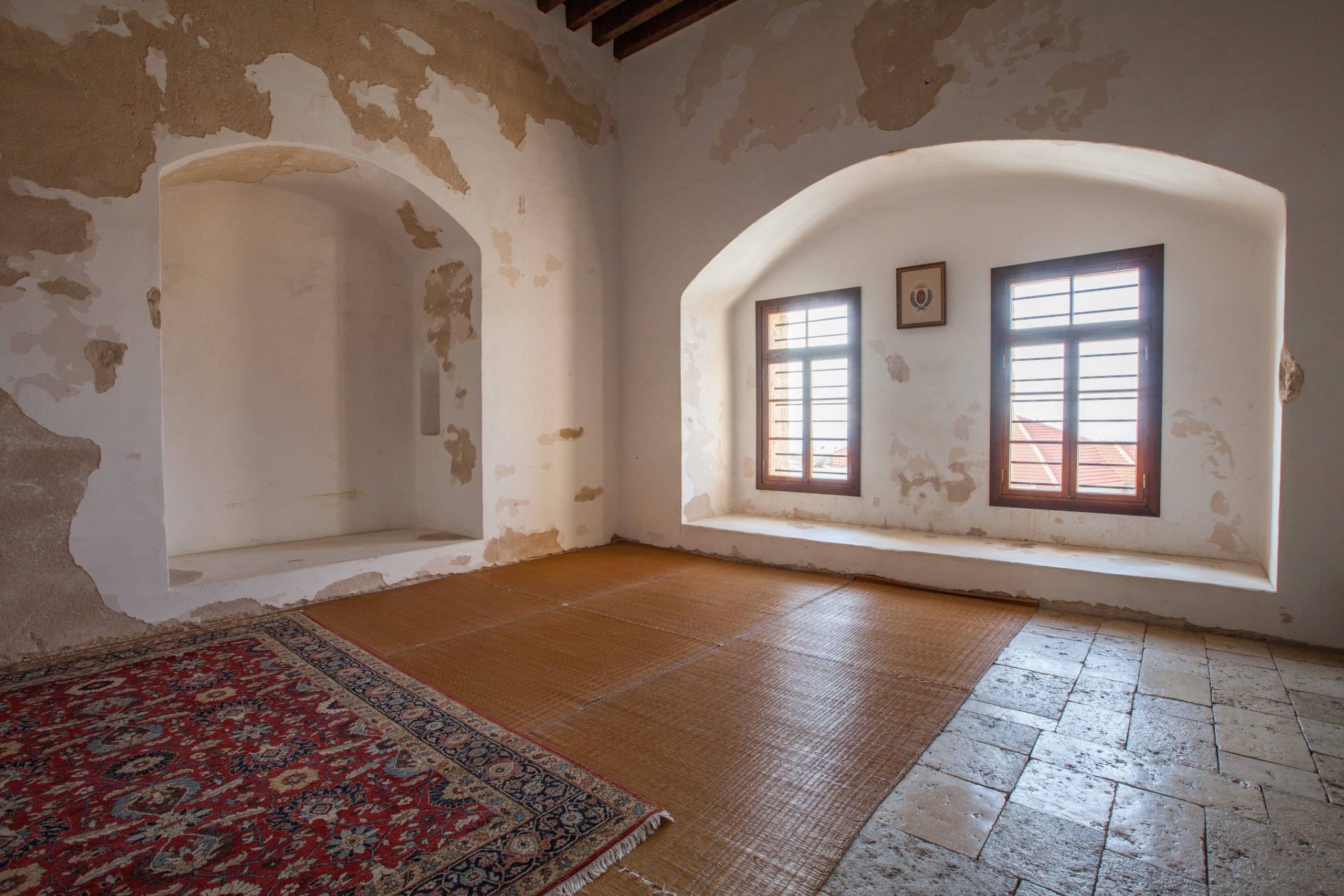
In the summer of 1868, through the intrigues of the Persian Ambassador in Turkey and the hostility of ‘Álí Páshá, Grand Vizir of the Sultan (of Turkey), Bahá’u’lláh was imprisoned in the barracks of ‘Akká and confined to a small room which looked desolate and depressing. This room, the interior of which today is kept in good condition and is visited by innumerable pilgrims from all the world over, was, in the days of Bahá’u’lláh, uninhabitable and dilapidated. He Himself mentions in a Tablet that its floor was covered with thick dust, and what plaster remained on the ceiling was often falling down.
A number of officials, ill disposed, hateful, and unaccommodating, were commissioned to guard and isolate Him from the outside world. Thus Bahá’u’lláh, the Supreme Manifestation Of God, He at Whose advent “the hearts of the entire company” of God’s “Messengers and Prophets were proved”, “Whose presence” Moses “hath longed to attain”, for “Whose love” the spirit of Jesus “ascended to heaven”, “the beauty of Whose countenance” Muhammad “had yearned to behold”, and “for Whose sake” the Báb had “sacrificed” Himself—the Bearer of such a mighty Revelation, fallen into the hands of a perverse generation, being wronged and afflicted with calamities, was now secluded within the walls of a barracks designated by Him as the “Most Great Prison”.
The Cause He revealed, however, had by then been well established in the land of His birth. His followers after years of misfortune and uncertainty were reinvigorated, their faith strengthened and their souls galvanized.
At the time of Bahá’u’lláh’s arrival in the prison city of ‘Akká, well nigh six years had elapsed since the Most Great Festival had been ushered in through Bahá’u’lláh’s declaration in the Garden of Riḍván, when the whole creation was “immersed in the sea of purification” and the splendours of the light of His countenance broke upon the world.
The Cause of God had by then witnessed a prodigious outpouring of divine Revelation for five years in Adrianople, culminating in the historic proclamation of His Message in that land. The Súriy-i-Mulúk (Súrih of the Kings) had been revealed in a language of authority and power; through it the clarion call of a mighty King had been sounded and His claims fully asserted.
The Tablet described by Him as “the rumbling” of His proclamation, addressed to Náṣiri’d-Dín Sháh of Persia, had been revealed though not yet delivered.
His first Tablet to Napoleon III, in which the sincerity of that monarch concerning His statement in defence of the oppressed among the Turks was tested, had been dispatched and received. The Súriy-i-Ra’ís (Arabic), in which ‘Álí Páshá had been severely rebuked, and about which Baha’u’llah had testified that from the moment of its revelation “until the present day, neither hath the world been tranquilized, nor have the hearts of its people been at rest,” had been revealed and the prophecies it contained had been noted with awe and wonder.
Now in ‘Akká, though confined to a cell and cut off from the body of the believers, the outpourings of Bahá’u’lláh’s Revelation did not cease. The ocean of His utterance continued to surge, and the “Tongue of Grandeur” spoke with authority and might. The Pen of the Most High directed its warnings and exhortations first to His immediate persecutors and then to some of the more outstanding monarchs of the world at that time.
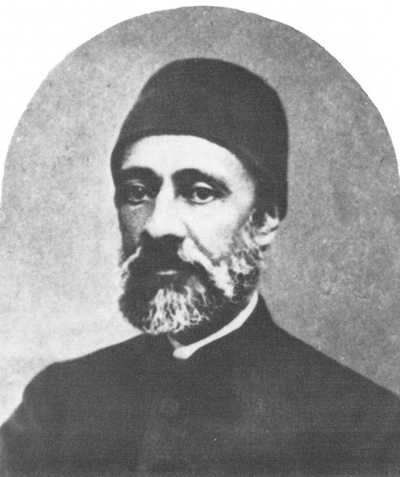
BAHÁ’U’LLÁH WARNS ‘ÁLÍ PÁSHÁ
Soon after His confinement in the prison barracks in 1868, Bahá’u’lláh addressed another Tablet of tremendous importance to ‘Álí Páshá, who had been an implacable enemy and the prime instigator of His banishment to the prison of ‘Akká, and who previously had been addressed by Him as Ra’ís (i.e. Chief).
In this second Tablet (Persian), known as the Lawḥ-i-Ra’ís, Bahá’u’lláh recounts with much tenderness and resignation the hardships and sufferings to which He and His companions had been subjected on their arrival in ‘Akká; describes very movingly the cruelties perpetrated by the guards in the prison; reminds the Grand Vizir that the Manifestations of God in every age had suffered at the hands of the ungodly; narrates a story for him of His own childhood, portraying in a dramatic way the instability and futility of this earthly life; counsels him not to rely on his pomp and glory as they would come to an end soon; reveals to him the greatness of this Revelation; points out his impotence to quench the fire of the Cause of God; admonishes him for the iniquities he had perpetrated; emphatically warns him that God’s chastisement would assail him from every direction and confusion overtake his peoples and government; and affirms that the wrath of God had so surrounded him that he would never be able to repent or make amends.
On this last point Mírzá Áqá Ján, Bahá’u’lláh’s amanuensis, asked Bahá’u’lláh what would happen if ‘Álí Páshá changed his attitude and truly repented. Bahá’u’lláh’s emphatic response was that whatever had been revealed in the Lawḥ-i-Ra’ís would inevitably be fulfilled, and if the whole world were to join together in order to change one word of that Tablet they would be impotent to do so.
A majestic contrast took place one hundred years later when passages from this very Tablet, depicting the rigours and hardships of the Most Great Prison, were chanted in the vicinity of Bahá’u’lláh’s Most Holy Tomb, in the presence of over two thousand of His followers gathered from every corner of the world to commemorate the centenary of the arrival in ‘Akká of the One Whom the world had wronged.
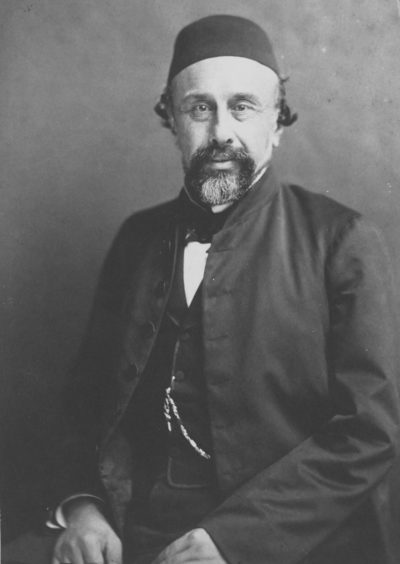
THE TABLET OF FU’ÁD
Another Tablet of great significance, the The Tablet of Fu’ád, was revealed in 1869, soon after the premature death in Nice, France, of Fu’ád Pasha, the foreign minister of the Sultan and a faithful accomplice of the Prime Minister in bringing about the exile of Bahá’u’lláh to ‘Akká. It was revealed in honour of one of Bahá’u’lláh’s most devoted apostles, Shaykh Káẓim-i-Samandar (father of the late Hand of the Cause of God Ṭaráẓu’lláh Samandarí). The following passage from it contains the clear prediction of the downfall of ‘Álí Páshá and the Sultan himself: “Soon will We dismiss the one who was like unto him (i.e. ‘Álí Páshá), and will lay hold on their Chief (i.e. the Sultan) who ruleth the land, and l, verily, am the Almighty, the All-Compelling.” Soon after the revelation of the Tablet, ‘Álí Páshá: was dismissed from his post, and two years later he died.
In those days the believers in Persia often referred to Baha’u’llah’s newly revealed Tablets to the kings and rulers of the world, and many non-Bahá’ís made their acceptance of the Faith conditional upon the fulfilment of the warnings they contained.
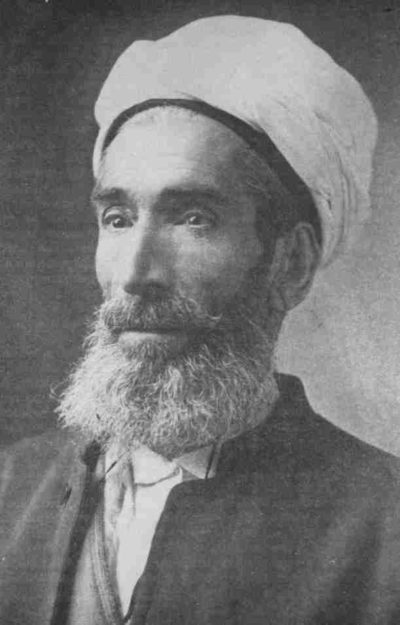
A notable example is the case of Mírzá Abu’l-Faḍl, the greatest of Bahá’í scholars. He was renowned for his knowledge and learning among the divines of lslam, and was the head of the Theological College in Tihran. His first contact with the Faith was through meeting a blacksmith who was a Bahá’í at his shop in the outskirts of Tihran. Never before had Mírzá Abu’l-Faḍl been so humiliated as on this occasion, when, with all his knowledge, he was utterly confounded by the amazing force of the argument of this illiterate Bahá’í. The blacksmith immediately reported this whole episode to a Bahá’í friend, ‘Abdu’l-Karím, who, although he did not belong to the learned class, pursued Mírzá Abu’l-Faḍl and eventually succeeded in bringing him to his house to discuss the Faith.
At this meeting, and subsequent ones, Mírzá Abu’l-Faḍl, confronted with some simple Bahá’ís who were not of his calibre, found himself over and over again incapable of refuting the clear proofs and arguments put forward by his uneducated Bahá’í teachers. He marvelled at these men who answered his difficult and abstruse questions so simply and so brilliantly. From there on he visited more often the house of ‘Abdu’l-Karim. He read many of the Writings of Bahá’u’lláh and met many learned Bahá’ís, but his immense knowledge was a barrier and a veil.
One day in 1876 he met Ḥájí Muḥammad Ismá‘íl-i-Káshání, surnamed Anís. Mírzá Abu’l-Faḍl was handed the original copy of this Súrih in the very handwriting of Mírzá Áqá Ján, Bahá’u’lláh’s amanuensis; the Tablet wherein Baha’u’llah foretells that Adrianople will pass out of the Sultan’s hand and that confusion will overtake his kingdom. He was also given the Tablet of Fu’ád, in which the downfall of the Sultan is clearly prophesied. Upon seeing these two Tablets Mírzá Abu’l-Faḍl made his acceptance of the Faith conditional upon the fulfilment of these prophecies.
His Bahá’í friends pursued him no longer. A few months passed and the news of the assassination of Sulṭán ‘Abdu’l-‘Azíz reached Tihran. On hearing the news Abu’l-Faḍl became very agitated. His soul was yearning for confirmation of the truth of this Cause, and yet his heart was not touched by the light of faith. He sat the whole night, read some Tablets of Bahá’u’lláh, and prayed with absolute sincerity until his eyes were opened and he knew the truth of the Cause of God. At the hour of dawn he went to the house of that faithful friend ‘Abdu’l-Karím, and when the door was opened he kissed the threshold of that house and prostrated himself at the feet of the man who, through perseverance and love, had given him the gift of the Faith and led him to the truth.
It is no exaggeration to say that among the apostles of Baha’u’llah there was no one who surpassed Mírzá Abu’l-Faḍl in his knowledge, his humility and self-effacement. Ali-Kuli Khan, a well-known and learned Bahá’í who was commissioned by ‘Abdu’l-Bahá to serve Mírzá Abu’l-Faḍl in America and act as his interpreter, has described him so well in these few lines: “If I had never seen ‘Abdu’l-Bahá and Shoghi Effendi, I would consider Mírzá Abu’l-Faḍl the greatest being I ever laid eyes on.”
THE DOWNFALL OF A MONARCH AND A POPE
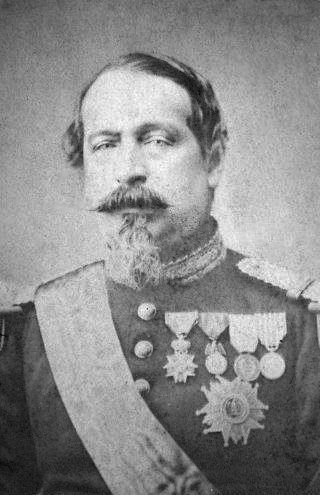
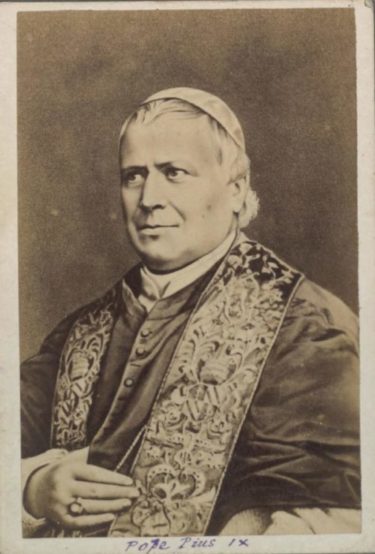
Let us turn our thoughts again to Bahá’u’lláh. Though captive in the hands of His enemies and cut off from the outside world, the Supreme Pen wrote many more Tablets in the prison of ‘Akká. In the year 1869 two important Tablets were revealed and delivered; one addressed to Napoleon III, in which Bahá’u’lláh explicitly foretells his extinction; the other to Pope Pius IX. Within almost a year’s time Napoleon, the most powerful monarch of his time in Europe, was driven into exile and suffered an ignominious death, while in the same year the supreme Pontiff’s temporal powers which had existed for many centuries, were seized from him and his vast dominion was reduced to the tiny Vatican State.
Parallel with these events and indeed, ever since Bahá’u’lláh had been sent to the prison of ‘Akká, the believers in Persia were desperately trying to establish contact with Him. Many travelled on foot all the way, but could not gain admittance to that city. The officials had taken many precautions in order to prevent the Bahá’ís from entering. The few Azalís, headed by the notorious Siyyid Muḥammad-i-Iṣfahání, who is described by the beloved Guardian as the “embodiment of wickedness”, were housed in a certain room overlooking the landgate. One of their functions was to watch for any Bahá’í who might wish to enter the city and to inform the guards. This they did with great zeal and enthusiasm. Many believers, even though they had disguised themselves, were recognized by these men and were not allowed to enter.
Every day a party consisting of a small number of Baha’u’llah’s companions, including ‘Abdu’l-Bahá, was allowed out of the barracks in order to purchase food and other necessities in the markets of ‘Akká. The first time that the people of ‘Akká took notice of ‘Abdu’l-Bahá was in a butcher’s shop. While waiting to be served He noticed that a Christian and a Muslim were discussing their faiths, but the Muslim was being defeated. Thereupon, ‘Abdu’l-Bahá simply and eloquently proved the authenticity and truth of Islam for the Christian. The news of this spread and warmed the hearts of many people of ‘Akká towards the Master; this was the beginning of His immense popularity among the inhabitants of that city.
During these daily visits, the people of ‘Akká came in touch with the person of ‘Abdu’l-Bahá. They felt His genuine love and compassion and were attracted to His magnetic personality. Gradually their fear and animosity towards Bahá’u’lláh and His followers were removed, and many became sympathetic to the Faith and its Founder. Some of these people who were attracted to the Faith tried, at times to help the believers, who were refused entry, by lowering ropes and pulling the believers up over the walls of the city—attempts which however were foiled by the guards.
The first two believers who managed to get into the city were Ḥájí Sháh Muḥammad and Ḥájí Abu’l-Ḥasan, both from the province of Yazd. The former was the first Trustee of Bahá’u’lláh, and was martyred. The latter, known also as Ḥájí Amín who succeeded him, lived to an old age and continued to be the Trustee of the Ḥuqúqu’lláh during the ministry of ‘Abdu’l-Bahá and part of that of the Guardian. The dominating factor in the lives of these two heroes of the Faith was a passionate love for Bahá’u’lláh. In order to enter the city they bought some camels and disguised themselves as Arabs. No one recognized them as Bahá’ís, and they were allowed in.
In the city they met ‘Abdu’l-Bahá, and the news of their arrival was conveyed to Baha’u’lláh. Arrangements were made for them to meet Bahá’u’lláh in the public bath, but with the strict instructions that they show no signs of recognition or emotion. However, on beholding the face of his Beloved, Ḥájí Amín was so overwhelmed that his body began to tremble. He fell to the ground and hit his head on a stone, was badly injured, and was hurriedly carried out by his friend.
The arrival in ‘Akká of these two souls, and a few others who managed to get in afterwards, established a vital link between the Community of the Most Great Name and its exalted Founder, from Whom they were so cruelly cut off. Letters from the believers began to pour in, and Tablets were sent out. This process, which called for acts of sacrifice and heroism on the part of the many believers who risked their lives in order to maintain a two-way communication channel, continued throughout Bahá’u’lláh’s life. Men like Shaykh Salmán, honoured by the appellation of “the Messenger of the Merciful”, who in previous years had carried Bahá’u’lláh’s Tablets from ‘Iráq and Adrianople, continued in this arduous task, travelling on foot between ‘Akká and Persia, and, in the utmost poverty, eating mostly bread and onions for sustenance. This great hero of the Cause, though illiterate, stands out among the disciples of Bahá’u’lláh as one of the spiritual giants of this Dispensation.
BADÍ—THE HANDFUL OF DUST
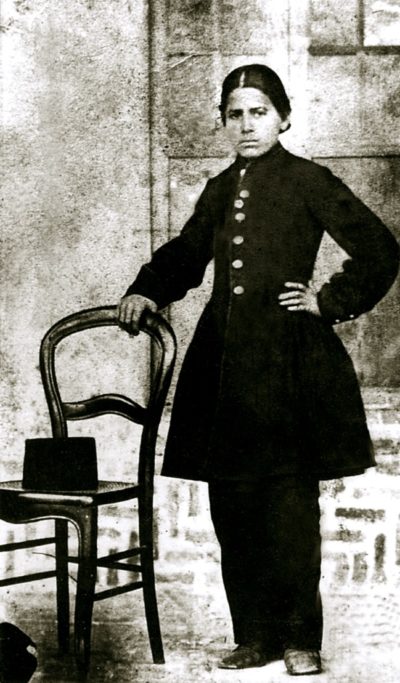
About a year after Bahá’u’lláh’s arrival in ‘Akká, a young Persian, aged seventeen, by the name of Áqá Buzurg, disguised himself as an Arab and entered the city. Although his father, a survivor of the upheaval of Shaykh Ṭabarsí, had been a devoted Bahá’í, Áqá Buzurg had shown no interest in the Faith until he met Nabil in the city of Níshápúr, in northeast Persia, and was converted. He then decided to go and attain the presence of Bahá’u’lláh.
Upon his arrival in the city of ‘Akká in 1869 he began to roam around until he came to a mosque where he saw a few Persians and recognized the Master among them. He wrote a note, in which he declared his faith, and handed it to ‘Abdu’l-Bahá, Who greeted him warmly and took him along with the party straight to the barracks, where he was ushered into the presence of Bahá’u’lláh.
In a Tablet Mírzá Áqá Ján mentions that Áqá Buzurg was summoned twice to meet Bahá’u’lláh alone. It was in the course of these momentous audiences that the hands of Bahá’u’lláh created a new being and bestowed upon him the title of Badí‘ (i.e. wonderful). For more than two years Bahá’u’lláh had been waiting for a devoted soul to arise and deliver His Tablet to Náṣiri’d-Dín Sháh of Persia. While in Adrianople He had written some passages on the cover of the Tablet, anticipating that the Almighty would cause one of His servants to arise, detach himself from all earthly things, adorn his heart with the ornament of courage and strength, take the Tablet, walk all the way to the capital of Persia, hand it in the manner described by Him to the King, and in the end be prepared to give his life, if necessary, with great joy and thankfulness. “We took a handful of dust,” is Bahá’u’lláh’s own testimony referring to Badí‘, “mixed it with the waters of might and power and breathed into it the spirit of assurance.”
In a Tablet revealed in honour of the father of Badí‘, who was also martyred a few years later, the Pen of the Most High, in great detail, portrays the manner in which this new creation came into being. He describes that when the appointed time had arrived the Tongue of Grandeur uttered “one word” which caused his whole being to tremble, and that were it not for God’s protection he would have been dumbfounded. Then the Hand of Omnipotence began creating the new creation, and “breathed into him the spirit of might and power”. So great had been the infusion of this might, as attested by Bahá’u’lláh, that, single and alone, Badí‘ could have conquered all that is on earth and in heaven. Bahá’u’lláh mentions that when this new creation came into being, Badí‘ had smiled in His presence and manifested such steadfastness that the Concourse on high was deeply moved and uplifted.
In the same Tablet, referring to the loftiness of the station of Badí‘, He states that no Tablet can convey its significance nor any pen describe its glory. Badí‘ left the Most Great Prison and went to Haifa. Baha’u’llah entrusted Ḥájí Sháh Muḥammad Amín (His Trustee) with a small case and a Tablet to be delivered into the hands of Badí‘ at Haifa. The following is the story as recounted by this Trustee to an eminent Bahá’í historian.
I was given a small case and was instructed to hand it to Badi‘ at Haifa together with some money. I did not know anything about the contents of the case. I met him at Haifa and gave him the glad tidings that he had been honoured with a trust . . . we left the town and walked up Mount Carmel where I handed him the case. He took it into his hands, kissed it, and knelt with his forehead to the ground; he also took the sealed envelope, walked twenty to thirty paces away from me, sat down facing ‘Akká, read it, and again knelt with his forehead to the ground. The rays of ecstasy and the signs of gladness and joy appeared on his face.
I asked him if I could read the Tablet also. He replied, ‘There is no time’. I knew it was a confidential matter. But what it was I had no idea—l could not imagine such a mission.
I mentioned that we had better go to Haifa, in order that, as instructed, I might give him some money. He declined to go with me, but suggested that I could go alone and bring it to him.
When I returned, in spite of much searching, I could not find him. He had gone. . . We had no news of him until we heard of his martyrdom in Ṭihrán. Then I knew that the case contained the Tablet of Bahá’u’lláh to the Sháh, and the sealed envelope, a holy Tablet containing the glad tidings of the future martyrdom of the one who was the essence of steadfastness and strength.
The same chronicler has written the following account given by a certain believer who met Badí‘ on his way to Persia and travelled with him for some distance.
. . he was very happy and smiling, patient, thankful, gentle, and humble. All that we knew was that he had attained the presence of Bahá’u’lláh and was now returning to his home in Khurásán. Many a time he could be seen to have walked about a hundred steps, leaving the road in either direction, turning his face towards ‘Akká, kneeling with his forehead to the ground and could be heard saying, ‘O God! Do not take back, through Thy justice, what Thou hast vouchsafed unto me through Thy bounty, and grant me the strength for its protection.’
Thus Badí‘ travelled on foot all the way to Ṭihrán and did not meet with anyone there. On arrival he discovered that the King was staying at his summer residence. He made his way to that area and sat on the top of the hill overlooking the Sháh’s palace at Níyávarán. The King on successive days, looking through his binoculars, saw the same man dressed in white, sitting in the same position on the hill. He ordered his men to find out who he was and what he wanted.
Badí‘ told them that he had a letter from a very important personage for the Sháh and must hand it personally to him. After searching him they brought him to the King.
Only those who are well versed in the history of Persia in the nineteenth century can appreciate the immense dangers which faced an ordinary person like Badí‘ wishing to meet a palace official, let alone the King. For at that time the King enjoyed absolute power and was surrounded by ruthless officials who would put to the sword anyone who would dare to utter one word, or raise a finger, against the established institutions of that oppressive regime. The loud voice of the “herald” who announced to the public in the streets the approach of the King’s carriage, shouting, “Everyone die! Everyone go blind!” would strike terror into the hearts of the citizens who, with eyes cast to the ground, stood motionless and still as their King and his men passed by.
Being invested by Bahá’u’lláh with tremendous powers, this young man of seventeen, assured and confident, stood straight as an arrow, face to face with the King. Calmly and courteously he handed him the Tablet and in a loud voice called out the celebrated Arabic phrase: “O King! I have come to thee from Sheba with a weighty message.”
The King sent the Tablet to the divines of Ṭihrán and commanded them to write an answer to Bahá’u’lláh. Finding themselves incapable of doing so, they evaded the issue and put forward some excuses which displeased the King immensely.
Badí‘ was arrested, and brutally tortured. His endurance and fortitude amazed the executioner and other officials. They took a photograph of him as he sat in front of a brazier containing hot bars of iron with which he was branded. Eventually his head was beaten to a pulp and his body thrown into a pit. This was July 1870.
For three years after the martyrdom of Badí‘, Bahá’u’lláh referred in His Tablets to his steadfastness and sacrifice, extolled his station, and bestowed upon him the title “Pride of Martyrs”.

THE TABLET TO THE SHÁH
For over two decades the people of Persia had witnessed memorable acts of heroism performed by a small band of God-intoxicated heroes, whose devotion and self-sacrifice had lit a great conflagration throughout that country. The Message of the Báb, the accounts of His martyrdom, and the transforming power of His Cause had already reached to every corner of that land; and from there its reverberations had echoed to the Western world. And yet, as attested by Bahá’u’lláh, not until this momentous Tablet was delivered to the King had the nature of the Cause of God or the claims of its Founder, or its principles and teachings, been clearly enunciated to those who held the reins of power in their hands.
In the annals of the Faith, Badí‘ stands out among the first heroic souls to arise for the proclamation of the Cause of Bahá’u’lláh. He joyously sacrificed himself in His path.
This sacrifice was not in vain. The Cause of Bahá’u’lláh—which, from the time of its inception, had been suppressed; whose adherents in the land of its birth had been so cruelly persecuted and at times mowed down in thousands; whose very name, as anticipated by Náṣiri’d-Dín Sháh and the divines of Persia, was to have been obliterated from the pages of history—has, in spite of much opposition, tremendously expanded during the last hundred years. Its light has been systematically diffused to all the continents of the world. The army of its pioneers and teachers, recruited from every race, class and colour, proclaiming to mankind the advent of the Lord of Hosts, has encircled the globe. The rising institutions of its divinely guided Administrative Order have been established, and within its World Centre, in the vicinity of its Holy Shrines, the crowning Edifice of that same Order (The Universal House of Justice)—the only refuge for the world’s tottering civilization —has been majestically erected.
This glorious unfoldment of the Cause in the Formative Age and its future sovereignty in the Golden Age are the direct consequences, on the one hand, of the outpourings of Bahá’u’lláh’s Revelation and, on the other, of the mysterious power generated by the sacrifice of countless martyrs, whose precious blood has flowed in great profusion during the Heroic Age of the Faith.
We drove through the newer part of ‘Akká down to the great sweep of sandy beach where a stormy wind lashed the great breakers and drove them as far into the old city as possible. We turned left and wound our way over the hill down into the old city again. The wind blew everyone’s coat collar up around the neck. The day was still gray, misty and chill. The cold crashing of the surf punctuated the silent spots in our conversation as we stood, our backs to the sea wall, gazing across the way at the House of ‘Abbúd.
The sea, the wind, the swirling mist, none could cool down the ardor that stirred inside the pilgrim as he looked upon this gray shell of a house that once sheltered the Supreme Prophet of God. This was once the sanctuary of the Supreme Pen. Its walls had resounded to the words of the Most Great Book, the Mighty Aqdas. Here were formed the laws which would stand inviolate and unaltered for a thousand years. Here were fashioned the provisions which would lay the foundation for the greatest structure in the social history of mankind. Here, those ancient prophetic words had come true, “The Government shall be upon His shoulders.” Here, the Author of the Bahá’í Faith, protected by these blessed walls from the stinging winds of the sea, had poured out the fairest fruit of all His Revelation, the Aqdas—pre-eminent among all the writings which had streamed forth in a never-ending river from His holy pen.
What a plain, unimposing structure. Two stories in height with a small balcony around the second floor front, drab gray in color, bleak in appearance, beautiful to the believer.
We were all staring silently up at the balcony which surrounds the bedroom of Bahá’u’lláh. Many long hours He had paced this balcony, looking out over the sea and down upon the very earth where we were standing. This small balcony, which can be crossed in less than ten paces, furnished almost the only outside exercise for Bahá’u’lláh in seven long years of imprisonment within the walls of this house.

Before entering the House, we walked to the small public square in the rear. Our gracious host, Leroy Ioas, holding his hat and coat-collar against a wind that whirled tiny cyclones of ‘Akká dust across the courtyard, showed us the exact spot where the Master had stood and distributed alms and food to the poor.
Salah led us back between the houses and into the side door of the House of ‘Abbúd. We crossed an inner court and started up a flight of stairs, turning to the right twice and continuing to climb until we reached the living quarters of the Holy Family. We saw the small room that held thirteen believers the first night spent in this house. We saw the upper shelf which one of the friends had slept upon that first night and, rolling over too far to one side, had toppled down upon the Master.

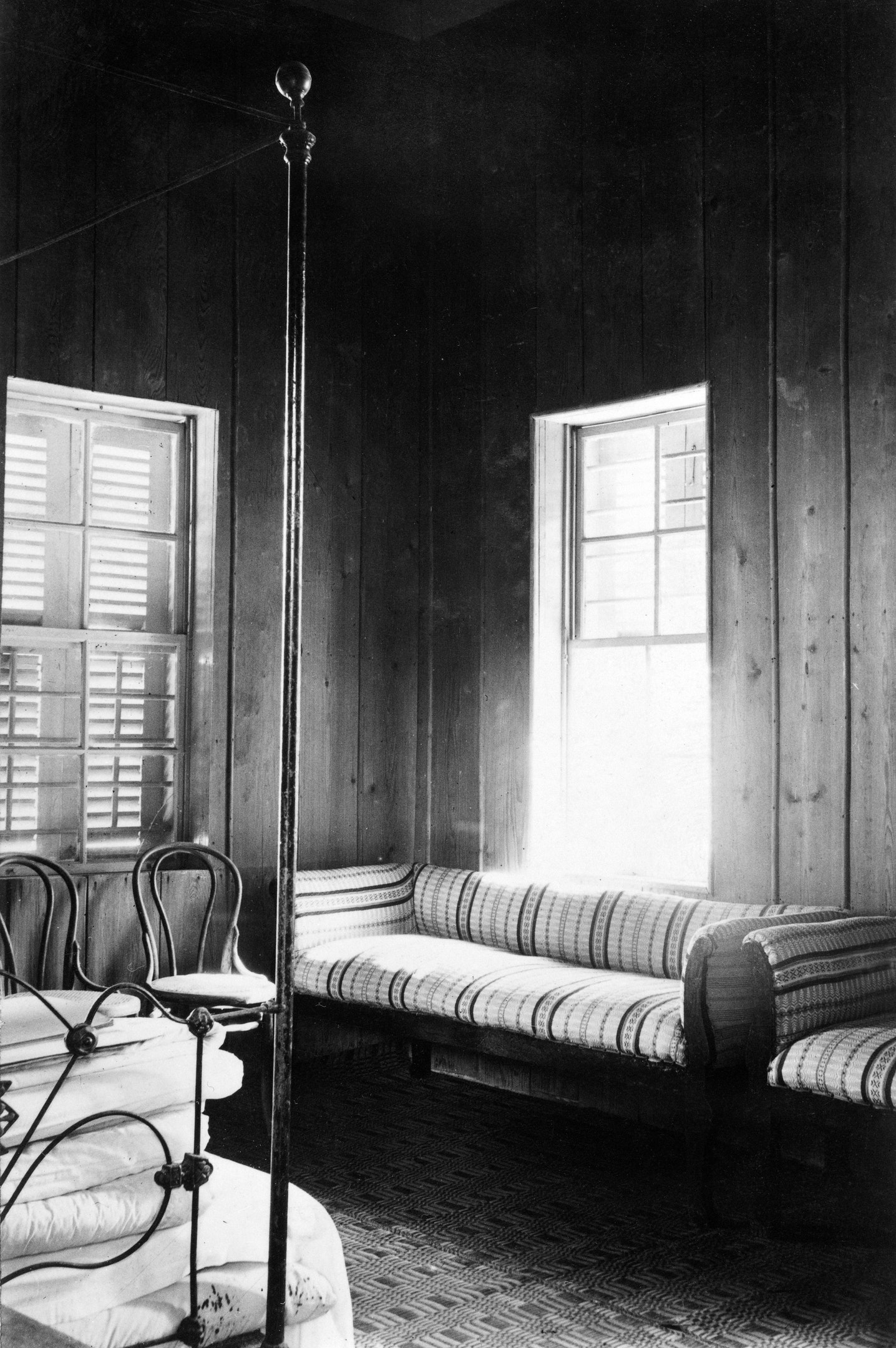
We removed our shoes and walked across another room of soft carpets, through a small hallway and then turned left into Bahá’u’lláh’s bedroom. Against the wall on the sea-side of the room was a long cushioned bench. Upon the south end, toward Haifa, rested the táj of Baha’u’llah, marking the place where He often would sit. A few feet away, along the south wall, was a rocking chair which He used. Upon the floor, a carpet brought with them all the way from Adrianople.
As I write this now in Johannesburg, I am back there again. I can feel my pulse accelerate and my heart beat stronger. The atmosphere of these holy places never leaves you. It comes rushing back whenever you turn to ‘Akká and Haifa. Hour after hour, month after month, year upon year, Bahá’u’lláh had moved back and forth in this room. At times He would turn left in the doorway and go out on the balcony which runs across the front of the house. After Salah chanted a prayer, we followed Bahá’u’lláh’s path to the balcony and looked out upon the turbulent sea. The wind, it seemed to us, was still whipping up the indifferent Mediterranean and driving it toward the shore, where in mighty rollers it bowed and prostrated itself before the throne of Majesty.
The room of revelation (where Baha’u’llah revealed the Aqdas) is quite different from the others. This was also ‘Abdu’l-Bahá’s bedroom. It is paneled in wood which is to be found in other places associated with Him. This bedroom is in the back corner of the House. We could look down into the back courtyard. … We saw many of the books of ‘Abdu’l-Bahá, His writing equipment, papers, the simple iron bed—many things that were much loved by Him and are revered by all who look upon them.
Above all else, the mind tries to take in the truth that here in this room, a room that is simplicity itself, was revealed the Book of Laws, the Most Great Book, the mightiest written testimony since the beginning of our recorded times. Its Author would cast His Shadow of guidance for five hundred thousand years!
It is too much to understand. The mind willingly surrenders and turns to examine the surroundings, the little things it can comprehend. ‘Abdu’l-Bahá sat here, He walked here, He knelt here, He looked out this window. But irresistibly your thoughts keep coming back to that one inescapable fact—it was here that Bahá’u’lláh revealed the Aqdas.
Emptying yourself of every single thing to which the mind can cling, you ask Almighty God to pour into your heart a true appreciation of this experience you are undergoing. … The presence and significance of these holy places are like hammer-blows to those of us who have lived in a world so remote from the spirit.
Those veritably spiritual thunderbolts the Shrine of Bahá’u’lláh, of the Báb, and of ‘Abdu’l-Bahá, the room at Bahjí where Bahá’u’lláh passed away, the mansion of Mazra‘ih, the Garden of Riḍván—all had numbed the senses until the cup could not contain the flood.
Each of us said a prayer before departing from this cradle of future civilization. When we made our way downstairs, there was additional conversation, but none of it registers. The hearing was working, but the comprehension and recording instruments were unable to function. This was a mercy of God. The body must be much like an electrical system. It can successfully carry its normal “load” of power, but when subjected suddenly to an incredibly strong current, it “blows out” the fuse at its point of protection. A similar phenomenon happens to the pilgrim, several times, in fact. Something breaks the connection and permits no more impulses to register. The system cannot bear them. (Bahá’u’lláh has written of this spirit, saying of the wine of revelation that it is so inebriating to the Prophet, Himself, that the pen is stilled and can move no more.)
The sun came out gaily for a brief moment, for the first time, as we strolled through the picturesque streets of “Old ‘Akká.” It splashed against the drab earth-colored walls and transformed them into a happy tan. We traced our way along many of the favorite walks of the Master.
We paused and took photographs in the doorway of the house of the former Mufti of ‘Akká. He had been a bitter enemy of Bahá’u’lláh. Salah, caretaker at Bahjí, told us the story of the two attempts on the life of Bahá’u’lláh made by this Mufti while Bahá’u’lláh was still in prison. Once with a hidden dagger, but Baha’u’llah before admitting him to His presence said, “Let him first cleanse his hands.” A second time, the Mufti planned to strangle the Blessed Beauty, and Bahá’u’lláh said before admitting him, “First let him cleanse his heart.” The Mufti became an ardent believer and collected all the “traditions” to be found in the Faith about ‘Akká.
What a delightful city “Old ‘Akká” is to visit. Salah, who was born within its walls, greeted almost everyone. He told us many intriguing stories about its non-Bahá’í history as well. We entered a small door built in one of the lower walls of the prison, walked to the center of a cellar-like cavern. Below us excavation had been started. How strange to know that beneath the prison lies this famous church built by Richard, the Lion-hearted. The packed earth on which we stood was high up toward the top of the Gothic arches. The pillars were buried many, many feet in the solid earth below us.
Salah pointed out the house to which Bahá’u’lláh had been taken in custody when some of His followers had disobeyed His commands, quarreled with three enemies of the Faith and slew them. Bahá’u’lláh was dictating Tablets to His secretary when troops surrounded His house. Crowds gathered quickly. They shouted at Bahá’u’lláh as the Governor, sword in hand, led Him away for questioning. His innocence was established and Bahá’u’lláh was freed; the Governor apologized for his own bad behavior.
We began our approach to the prison itself. The steps up which Bahá’u’lláh had walked to enter the fortress that first time have been taken down. They have left their scar across the body of the prison wall. We all stopped and gazed up at the marks of that old stairway. This was as far as we could retrace the steps of banishment. In order to enter the prison, we had to drive around the city to the front by the sea wall.
We parked by the gate, passed the guards, and walked about three hundred yards up to the prison entrance. As you cross the small bridge over the moat, you can see the cannon balls of Napoleon embedded in the walls. They are splashed with red paint to make them easily visible. Passing through a small arched entrance, we approached the courtyard.
The prison is now a hospital for the insane and feeble-minded. You can see them exercising in the very courtyard where the believers were herded together that first day. There was a sound of heavy keys rattling in a metal door, the door swung open, and you entered the prison barracks. Passing through an ante-room of poor, unfortunate sick ones, you enter the cell-block. In the far left-hand corner is a plaque which reads: Bahá’í Holy Place. . . . This is the cell of Baha’u’llah. The plaque is written in both English and Hebrew.
We removed our shoes outside the great door, and then entered the prison cell where for over two years Bahá’u’lláh had been shut away from the world. This was the heart of the “Most Great Prison.” Even that Black Pit in Ṭihrán, the Siyáh-Chál, a place foul beyond comparison, a dungeon wrapped in thick darkness, so dreadful that no tongue could describe its loathsome smell, had not been called by such a name.
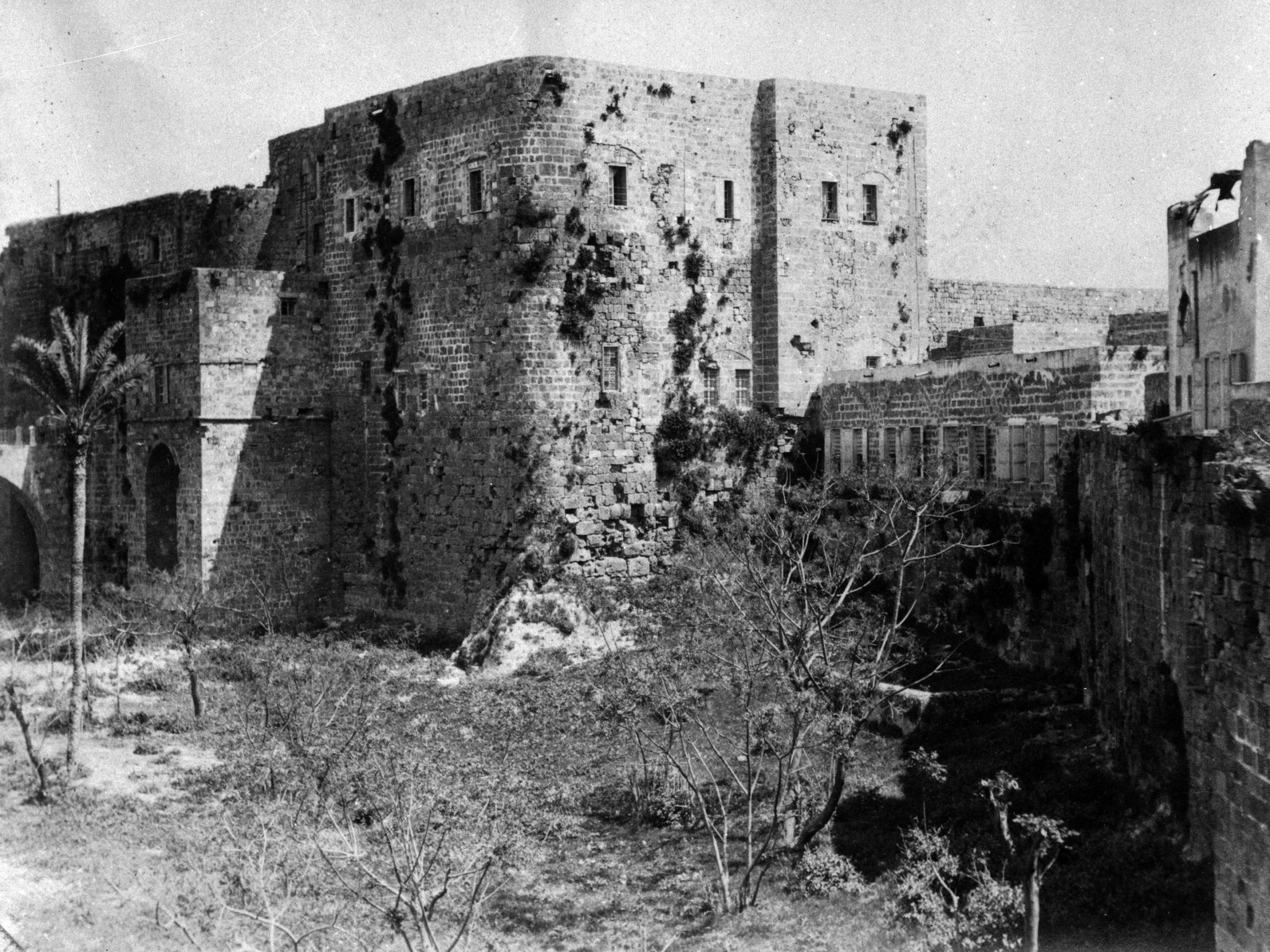
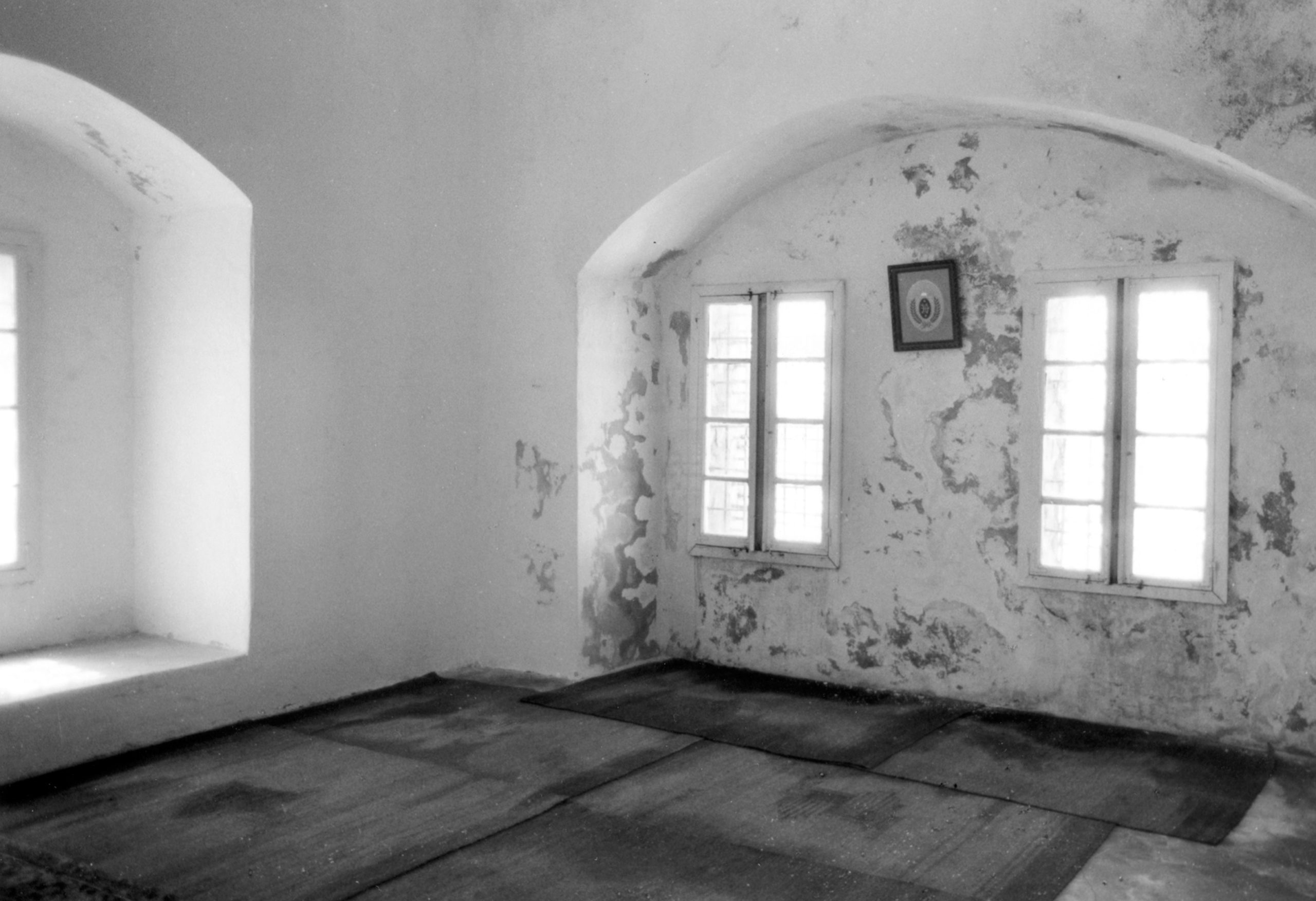
The cell was barren and desolate in Bahá’u’lláh’s day. Now there is a Persian carpet in the corner where He used to sit. There are five straight-backed chairs upon which the pilgrims sit. One window looks out upon the old ‘Akká. The other two windows look out upon the sea. These are the windows shown in most of the photographs.
From here Bahá’u’lláh would look out toward that spot beyond the moat where His followers would stand hoping for a glimpse of His hand waving from the window. We all stood and peered out at that same spot and to the white-capped sea beyond it. Later we walked out to that place of bliss and sorrow and looked up at these two forlorn windows. The face of the prison is bruised and scarred from shell-fire.

Inside the prison-cell itself, the heart is touched and saddened by the sight of that bleak, unfragrant room. True, it has been cleaned and restored, but here and there upon the floor were small fragments of paint and plaster which had fallen from the ceiling and walls. These are a grim reminder of the chilling dampness of this dismal place.
Here in this cell, where but a few paces carry you from end to end, Bahá’u’lláh spent over two years of His precious life. Here it was that Baha’u’llah, Himself, said that His sufferings had reached their culmination.
Our eyes bestowed loving prayers upon each of these places of anguish. After all these years, and even with the reformations, it is still unsanitary and foul in these barracks. The mind refuses to try to picture the misery and abomination that must have surrounded Bahá’u’lláh upon His arrival here. We know that they were herded together, deprived of food and drink, that malaria, dysentery, and the sickening heat added to their sorrows. All were ill but two.
It was here that the two brothers died the same night locked in each other’s arms. Bahá’u’lláh sold His carpet to provide for their winding sheets and burial, but the guards had kept the money and cast them into a pit unwashed and unshrouded.
This is where Bahá’u’lláh’s young son, Mírzá Mihdí, the Purest Branch, was killed. He was pacing the roof at twilight reciting his prayers. He fell through an unguarded skylight on a wooden crate below which pierced his ribs and took his life in less than a day. It was here that this sweet son pleaded with his Father, Bahá’u’lláh, that his life be not saved, but that it be offered as a ransom so that the pilgrims, who so longed for His healing Presence, might be permitted to attain their hearts’ desire. At his tomb in the Monument gardens, we repeated the words of Baha’u’llah written about him:
“Thou art the trust of God and His treasure in this land. Erelong will God reveal through thee that which He hath desired.”
From here Bahá’u’lláh wrote many of His tablets to the kings of the earth, proclaiming that the only remedy for the ills of the world was the union of all its peoples in one common faith, and that only a divine, inspired Physician could bring this to pass.
Many were the wholesome truths that flowed from that Supreme Pen within this prison cell. Each of these tablets and writings took on a new force since we had come to the scene of their origin.
The doors that did not open for Bahá’u’lláh for two years, swing wide for you, then grind closed upon their hinges. We put on our shoes, everyone silent, lost in the weight of thoughts which held words down, unformed.
This was the last stop in ‘Akká. We were grateful. We wanted no conversation; no invasion of that place the mind had set aside for reflecting upon this unequaled experience.
There was no receptiveness left to truly appreciate the stories told as we descended the stairs; the room below where the rest of the pilgrims had been quartered, the place where the Master had made broth for all—made broth with little more than air for ingredients. His words spoken in London sent another sliver of pain into the body. He had made so much broth in those days, He said, that He could make a very good broth with a very little. How the Master loved His wonderful Father. He told of this loathsome prison. How Bahá’u’lláh would call the pilgrims together, would make them laugh at their troubles, until they forgot their stone beds, the lack of food and water. He banished the pain of their illness and the ravages of their fever. He would tell them stories and lift their hearts. He would start them to laughing so loudly that they must be cautioned for fear the sentinels would believe they were mad if they could laugh and enjoy themselves in these conditions of utter dreadfulness.
What tenderness must have been in the Master’s eyes as He placed His graceful hand upon the luxurious furniture of the Western world and said, “We had no chairs such as this in the prison of ‘Akká; no soft beds to lie upon; no delicious food to nourish us. But I would not exchange all of these days for one moment of the sweetness of those hours in the presence of the Blessed Beauty.”

Seeing these poor, unfortunate inmates of the asylum for the last time, one thinks: How like the entire world is this prison barracks. These pitiful wretches, unbalanced, living in another dead world (like all humanity) are within but a few paces of the Holy Place of Bahá’u’lláh‘ Healer of all ills.
We crossed the moat and walked out into the open air. The clouds were gone. The sun was out ruling the blue sky all by itself. The sea, a deeper blue, was still charging up to the old sea wall and plunging against its rocks. There was a queer, mingled feeling in possession of me. It was half of joy and half of sadness, gladness and heavy-heartedness, happiness and sorrow. Perhaps it was the accumulation of the day’s emotions, unsettled and unabsorbed within me. Each experience taking charge of my being at alternate intervals, just as the sea sent alternate breakers against the wall.
I did not look back. It was all locked forever in my heart.
I am happy to speak to you this evening about one of the greatest young women in the world, one of the most spiritual, one of the greatest poets of Írán, and the first woman of her time in Central Asia to lay aside the veil and work for the equal education of the girl and the boy. She was the first suffrage martyr in Central Asia. The woman suffrage movement did not begin with Mrs. Pankhurst in the West, but with Ṭáhirih, also often called Qurratu’l-‘Ayn of Írán. She was born in Qazvín, Persia, in 1817.
Picture to your mind one of the most beautiful young women of Írán, a genius, a poet, the most learned scholar of the Qur’an and the traditions, for she was born in a Muhammadan country; think of her as the daughter of a jurist family of letters, daughter of the greatest high priest of her province and very rich, enjoying high rank, living in an artistic palace, and distinguished among her young friends for her boundless, immeasurable courage. Picture what it must mean for a young woman like this, still in her twenties, to arise for the equality of men and women, in a country where, at that time, the girl was not allowed to learn to read and write!
The Journal Asiatic of 1866 presents a most graphic view of Ṭáhirih, the English translation of which is this: “How a woman, a creature so weak in Írán, and above all in a city like Qazvín where the clergy possess such a powerful influence, where the ‘Ulamás, the priests, because of their number and importance and power hold the attention of the government officials and of the people, how can it be that in such a country and district and under such unfavourable conditions a woman could have organized such a powerful party of heretics? It is unparalleled in past history.”
As I said, in her day girls were not permitted to learn to read and write, but Ṭáhirih had such a brilliant mind, and as a child was so eager for knowledge that her father, one of the most learned mullás of Írán, taught her himself and later had a teacher for her. This was most unusual, for in her day girls had no educational opportunities. She outdistanced her brothers in her progress and passed high in all examinations. Because she was a woman they would not give her a degree. Her father often said what a pity she had not been born a son, for then she could have followed in his career as a great mullá of the Empire.
Ṭáhirih was married when she was thirteen years old to her cousin, the son of the Imám-Juma, a great mullá who leads the prayers at the mosque on Fridays. She had three children, two sons and one daughter. She became a very great poet and was deeply spiritual, she was always studying religion, always seeking for truth. She became profoundly interested in the teachings of Shaykh Aḥsá’í and Siyyid Káẓím Rashti, who were liberalists and said great spiritual reforms would come. Her father was very angry with her because she read their books and her father-in-law was too. But she continued to study their books and she heard about the Báb and Bahá’u’lláh, and their teachings for universal peace and the equal education of the girl and the boy. She believed in these principles whole-heartedly and declared herself a believer.
This great young woman of Qazvín laid aside the veil which Muhammadan women wear; she didn’t put it aside altogether, but she many times let it slip from her face when she lectured. But she declared that women should not wear the veil, should not be isolated, but should have equal rights and opportunities. She quoted her great teacher, Bahá’u’lláh, that man and woman are as the two wings of the bird of humanity, and this bird of humanity cannot attain its highest, most perfect flight until the two wings are equally poised, equally balanced. She was too far ahead of her time, and like other pioneers of great progressive movements, she was imprisoned. Instead of putting her into jail, they made her a prisoner in the home of the Kalantar, that means the Mayor of Ṭihrán. Here several poets and some of the greatest women of the capital came to call, and every one was charmed by her presence. The Sháh-in-Sháh of Persia sent for her to be brought to his palace, and when he saw her he said: “I like her looks, leave her and let her be.”
Náṣiri’d-Dín-Sháh, the ruler, sent her a letter asking her to give up her very advanced ideas and telling her if she did, he would make her his bride, the greatest lady in the land. On the back of his letter she wrote her reply in verse declining his magnificently royal offer. Her words were:
“Kingdom, wealth and ruling be for thee,
Wandering, becoming a poor dervish and calamity be for me.
If that station is good, let it be for thee.
And if this station is bad, I long for it, let it be for me!”
She was a prisoner in the Mayor’s home for more than three years and during all this time the women of Írán came to love her more and more, and all people were enchanted with her poetry, and many came to believe as she did, that this is the dawn of a great new universal epoch when we must work for the oneness of mankind, for the independent investigation of truth, for the unity of religions and for the education of the girl equally with that of the boy. The orthodox clergy were afraid of these new progressive ideals and as they were the power behind the government, it was decided to put Ṭáhirih to death. They had to do it secretly because they knew how many hundreds of the most important people in Ṭihrán loved her.
They decided upon September 15, 1852, for her death. With her prophetic soul she must have divined it for she wrote in one of her poems: “At the gates of my heart I behold the feet and the tents of hosts of calamity.” That morning she took an elaborate bath, used rosewater, dressed herself in her best white dress. She said good-bye to everyone in the house, telling them that in the evening she was leaving to go on a long journey. After that she said she would like to be alone, and she spent the day, as they said, talking softly to herself, but we know she was praying. They came for her at night and she said to them, “I am ready!” The Mayor had them throw his own cloak about her so that no one would recognize her, and they put her upon his own horse. In a roundabout way through smaller streets they took her to a garden and had her wait in a servant’s room on the ground floor. The official called a servant and ordered him to go and kill the woman downstairs. He went but when Ṭáhirih spoke to him he was so touched by her sweetness and holiness, that he refused to strangle her, and carried the handkerchief again upstairs. The official dismissed him, called a very evil servant, gave him liquor to drink, then handed him a bag of gold as a present, put the handkerchief into his hands and said, “Go down and kill that woman below and do not let her speak to you.” The servant rushed in, brutally strangled her with the handkerchief, kicked her and while she was still living threw her into a dry well and filled it up with stones.
But they could not bury her there! Her influence had gone around the whole world. Ṭáhirih, Qurratu’l-‘Ayn, has become immortal in the minds of millions of men and women, and her spirit of love and heroism will be transmitted to millions yet unborn.
I should like to explain to you what her names mean. One of her teachers, Káẓím Rashti gave her the name of Qurratu’l-‘Ayn, which means “Consolation of the Eyes,” because she was so young, so beautiful, so spiritual. Bahá’u’lláh gave her the name Ṭáhirih, which means “The Pure One.” While still in the twenties she began to preach the equal rights of men and women, she was martyred at the age of thirty-six years, and yet today, eighty-seven years after her cruel martyrdom, the women of Írán and of many other countries of the Islámic world no longer are allowed to wear the veil, and girls are receiving education. She did not die in vain. Ṭáhirih’s courageous deathless personality forever will stand out against the background of eternity, for she gave her life for her sister women. The sweet perfume of her heroic selflessness is diffused in the whole five continents. People of all religions and of none, all races, all classes, all humanity, cherish the memory of Ṭáhirih and weep tears of love and longing when her great poems are chanted.
When I was in Vienna, Austria, a few years ago, I had an interview with the mother of the President of Austria, Mrs. Marinna Hainisch, the woman who has done most for woman’s education in Austria, that nation of great culture. Mrs. Hainisch established the first high schools for girls in her land. She told me that the inspiration of all her lifework had been Ṭáhirih of Írán. Mrs. Hainisch said: “I was a young girl, only seventeen years old when I heard of the martyrdom of Ṭáhirih, and I said, ‘I shall try to do for the girls of Austria what Ṭáhirih tried to do and gave her life to do, for the girls of Írán.’” She told me: “I was married, and my husband too, was only seventeen; everybody was against education for girls, but my young husband said: ‘If you wish to work for the education of girls, you can.’” I mentioned this interview over in Aligrah, India, a short time ago when I spoke to the university students at the home of Professor Ḥabíb, and at the close of my talk another guest of honor arose, a woman professor of Calcutta University, and asked if she could speak a few words. She said, “I am Viennese, I was born in Vienna and I wish to say that Mrs. Marinna Hainisch established the first college for the higher education of girls in Austria and I was graduated from the college.” This is a proof of the influence of Ṭáhirih. Mrs. Hainisch had said to me, “It is so easy for you, Miss Root, to go all around the world and be given the opportunity to speak on the equal education of the girl and the boy. It was so hard for me to interest people in this new idea in my day, but I remembered Ṭáhirih and I tried. Poor Ṭáhirih had to die for these very ideals which today the world accepts!”
When I was in Cawnpore, India, and spoke in a girls’ college on Ṭáhirih’s life the founder and the donor of that great college arose and said: “It is my hope that every girl in this school will become a Ṭáhirih of India.”
Sir Rai Bahadur Sapru of Allahabad, one of India’s greatest lawyers, said to me: “I love Ṭáhirih’s poems so much that I have named my favorite little granddaughter Ṭáhirih. I have tried for years to get her poems, and now today you give them to me.” When I was in the Pemberton Club in London one evening, a well known publisher said to me: “I shall get Ṭáhirih’s poems collected and publish them at a great price.” But he could never get them. I should like to tell you, dear listeners on the air, that the day after the martyrdom of Ṭáhirih, the authorities burned her clothing, her books, her poems, her birth certificate; they tried to wipe out every trace of her life; but other people had some of her poems, and a friend of mine worked for years to gather them together, copied them in longhand and gave them to me as a present when I was in Írán in 1930. Another friend in India, Mr. Isfandiar K. B. Bakhtiari of Karachi, has twice published one thousand copies of these poems for people in India. In my book Ṭáhirih the Pure, Írán’s Greatest Woman, published July, 1938, I included her poems and published three thousand copies. Two of these poems are translated into English, but the original poems are all in the Persian language. They would be very beautiful sung in the Persian language over your radio.
Professor Edward G. Browne of Cambridge University, in his book A Traveller’s Narrative, wrote: “The appearance of such a woman as Ṭáhirih, Qurratu’l-‘Ayn, is in any country and in any age a rare phenomenon, but in such a country as Persia it is a prodigy, nay, almost a miracle. Alike in virtue of her marvelous beauty, her rare intellectual gifts, her fervid eloquence, her fearless devotion and her glorious martyrdom, she stands forth incomparable amidst her countrywomen. Had the Bábí religion no other claim to greatness, this were sufficient, that it produced a heroine like Qurratu’l-‘Ayn.”
And now dear listeners, that we have heard of Ṭáhirih, Qurratu’l-‘Ayn, this first woman suffrage martyr, this first woman in Central Asia to work for the education of girls, what will our own endeavors show forth in this twentieth century?
Today you have equal education for girls and boys in Australia, and you have suffrage for women; but you in Australia and we in the United States and in all other parts of the globe are born into this world to work for universal peace, disarmament, a world court and a strong international police force to ensure arbitration. We are born into this world to work for universal education, a universal auxiliary language, for unity in religion and for the oneness of mankind. Our lives, our world, need strong spiritual foundations, and one of the finest traits of Ṭáhirih, and one that helped the world most, was her fidelity in searching for truth! She began as a little girl and continued until the very day of her passing from this world.
O Ṭáhirih, you have not passed out, you have only passed on! Your spiritual, courageous life will forever inspire, ennoble and refine humanity; your songs of the spirit will be treasured in innumerable hearts. You are to this day our living, thrilling teacher!
Oneness of the world of humanity ensures the glorification of men. International peace is the assurance of the welfare of all mankind. There are no greater motives and purposes in the human soul….Your efforts must be lofty. Exert yourselves with heart and soul so that perchance through your efforts the light of Universal Peace may shine and this darkness of estrangement and enmity may be dispelled among men; that all men may become as one family and consort together in love and kindness; that the East may assist the West and the West give help to the East, for all are the inhabitants of one planet, the people of one original nativity and the flocks of one shepherd. – ‘Abdu’l-Bahá
It was on a warm, springlike day, April 30, 1912, that Hull House in Chicago was all astir. For ‘Abdu’l-Bahá, a great and holy Personage from Palestine was expected. This important visit was planned by Jane Addams, “Mother of Hull House,” or “Chicago’s Most Useful Citizen,” as the people of Chicago lovingly call her.
Seldom has biographer presented two more significant and inspiring world figures, both working earnestly for the Unity of Mankind and the establishment of Universal Peace than ‘Abdu’l-Bahá, the Center of the Covenant of the Bahá’í World, and Jane Addams, the President of the Woman’s International League for Peace and Freedom: one Who had been chosen as a Divine Exemplar to humanity, and the other reflecting the spirit of service. How fitting that Hull House, an outstanding example of the application of the great principle of the Oneness of mankind, should be the place of meeting.
During a recent interview with Miss Addams, the writer learned that it was in 1844 that the Quaker father of Jane Addams moved to Illinois. A pine-crowned hill is the living memorial of the bagful of seeds planted by him in that memorable year of world history. In 1860 a little girl was born at Cedarville, Illinois, in the shadow of those pines. As a child, she was a shy, conscientious, sensitive, idealistic girl. These qualities developed into high moral courage, the unswerving devotion to duty, and the passion of self-sacrifice for others. These characteristics served to make this frail woman elect to pass her life in an unsavory quarter of this great industrial city, Chicago, and to spend there, in behalf of the poor, her inheritance; which would have maintained her in comfortable idleness amid the beautiful things that she loved. Here she has ministered to and educated those in dire need and thus worked indefatigably for the establishment of the unity and amity of mankind.
As the years unfolded, Jane Addams received her A. B. degree at Rockford College, Rockford, Illinois, in 1881. Then she spent two years in Europe, 1883-1885, because of imperfect health. In 1888 she studied in Philadelphia, and the next year opened Hull House with the assistance of Miss Ellen Gates Starr, and has ever since been its Head Resident. For three years she served as inspector of streets and alleys on the southwest side of Chicago. She received her LL.D. from the University of Wisconsin in 1904 and in 1910 was honored in the same way by Smith College. Later she became president of the National Conference of Charities and Corrections. Yale University granted her its A. M. degree in 1910. In 1912 she became vice-president of the National Woman’s Suffrage Association and chairman of the Woman’s Peace Party. In 1915 she was elected delegate to the first Peace Convention at The Hague, and the same year became the founder-president of the Women’s International League for Peace and Freedom, and still remains its active president. She was the delegate to the Peace Conventions at Zurich in 1917, at Vienna, in 1921, and at The Hague in 1922. On January 12, 1923 she started on a six months tour of the world in the interests of world peace. During all these years many books have come from her pen, and she has served on numerous state and national committees having to do with social, philanthropic, industrial and international problems.
Hull House, one of the first American settlements, stands as a dream fulfilled. It was established in 1889, to become a spacious and hospitable home, tolerant in spirit, equipped to care for the pressing physical, mental, social and spiritual needs of a poor, alien, complicated community.
About fifty men and women of various races and creeds and backgrounds form the residential staff, mostly college graduates who pledge themselves to remain two years. In addition, one hundred and fifty others come to Hull House each week as teachers, visitors or directors of clubs. About nine thousand persons come to the settlement each week during the winter months, as members of the audiences or classes. Miss Addams explained that the attractions offered include classroom instruction in English, current topics, typing, arts and crafts, music, drawing, folk dancing and nearly all phases of domestic arts. Public lectures and clubs of many kinds supply the needs of men, women and children of all classes, beliefs and shades of color. A circulating library of two thousand volumes stimulates mental interest. A well trained, working boy’s band of sixty-two pieces is a source of great joy, as are the many tournaments and contests, enjoyed especially by the little children of foreign lands. The monthly gymnasium attendance is three thousand, and the fifteen showers are kept in constant use. During the year six thousand paid showers and twelve thousand free showers help to keep up the physical, mental and moral standards. The Italian, Jewish and Greek nationalities seem to predominate in the clubs and classes.
In Miss Addams’ high-ceiled living room, the writer asked her, “What has been one of the central ideas of the activities of Hull House?” Her kindly eyes brightened as she said, “The things which make men alike are finer and better than the things that keep them apart, and these basic likenesses, if they are properly accentuated, easily transcend the less essential difference of race, language, creed and tradition.” After a time she continued with an alert enthusiasm.
‘Life at the Settlement discovers above all what has been called the extraordinary pliability of human nature; and it seems impossible to set any bounds to the moral capabilities which might unfold under ideal civic and educational conditions. In order to obtain these conditions, the Settlement recognizes the need of cooperation, both with the radical and conservative elements. Hull House casts aside none of those things which cultivated man has come to consider reasonable and goodly, but it insists that those belong as well to that great body of people who because of toilsome and underpaid labor, are unable to procure them for themselves. Added to this is the profound conviction that the common stock of intellectual enjoyment should not be difficult of access because of the economic position of him who would approach it, that ‘those best interests of civilization’ upon which depend the finer, freer and nobler aspects of living must be incorporated into our common life and have free mobility through all the elements of society, if we would have a true, enduring democracy. The educational activities of a Settlement, as well as its philanthropic, civic and social undertakings, are but differing manifestations of the attempt to socialize true democracy, which is the very existence of Hull House itself. It is thus that peace and unity are established.’
‘Do you think that the people of the world generally are more peace-minded than before the World War?’ she was asked.
‘Oh, yes. The war startled and shocked them into a realization of the need of peace as never before. It has been more discussed and written about and has become the most vital problem before man.’
‘What do you consider the greatest forces of the world today working for peace?’ ‘There are three,’ she replied: ‘First, psychological; second, political; and third, mechanical. First, the psychological includes all the books, newspapers, magazine articles and all the addresses and discussions on· the subject, but something more than all of these, the interest and overwhelming desire in the heart for peace. Second, the political, even, has become a force for peace. International instruments to take care of the affairs of all the nations of the world must be created before peace can be maintained. These are only just beginning, in the League of Nations, the World Court, an International Code of Law and an International Police Force to enforce the law. Many other international instruments of this nature will be required. Third, nothing can stay the progress of the machine age, the invention, the improved methods of intercommunication and intertransportation. This is also a great force, bringing about better understanding in the world which is the basis of peace.’
‘You ask what I consider to be the greatest need of the world today?’ she continued. ‘I would put it in one word, understanding—understanding between individuals, classes, races, nations. Literature, history and mechanics are bringing it about much more rapidly today. Are not nations simply families living together, learning to adjust themselves to each other for the best good for the greatest number?’
‘Yes, you are right,’ she said in reply to my question. ‘The problems of the world which are caused by wrong mental attitudes are returning to the heart and mind of man and the solution must come through changed mental attitudes.’
Although having spoken on the same platform with Miss Addams many times and dined as her guest, yet during this interview at Hull House, alone in the spacious living room with her, the writer was more than ever impressed with a fine quality of innate courtesy, a sympathetic sensitiveness, a queenly dignity and greatest of all the keenness of a brilliant intellect expressing a well-balanced and well-ordered mind.
When the author asked her if she had met that distinguished Personage of Palestine Whom Great Britain had knighted as one of the greatest advocates and establishers of World Peace and the Unity of Mankind that the world had known, ‘Abdu’l-Bahá, she replied with an emphatic “Yes.” In a low pitched, well modulated voice, she spoke of inviting ‘Abdu’l-Bahá to visit Hull House on April 30, 1912, to speak in Bowen Hall, and although the hall seats 750 people, it was far too small to hold the crowds that poured in. In streams the rich and poor, the educated and ignorant, the managers of business and the industrial slaves came. Hull House was all astir . So was Halstead Street, that bit of cross-section, seemingly, of all the markets, bazaars, cafes and wayside churches of all the races, nationalities and creeds of the world.
Miss Addams herself, acting as chairman, welcomed ‘Abdu’l-Bahá and graciously presented Him to the audience. Dr. Bagdadi, a physician of Chicago, served as His interpreter, having known and loved ‘Abdu’l-Bahá years before in the Holy Land.
To attempt to describe ‘Abdu’l-Bahá is like trying to paint the lily. As he stood before the sea of hungry upturned faces, His magnetic personality, His radiance, His penetrating potency, the power of His inspiration, the very purity of His life, and the great understanding compassionate love, made an impression upon His listeners that they can never forget.
Because in 1912 racial prejudice and hatred were very intense and because of the outstanding historical work that Miss Addams had achieved, ‘Abdu’l-Bahá spoke of the races being like many varieties of flowers in one garden, all adding to the fragrance and beauty of the garden. He spoke of the benefit to be derived by all humanity when universal peace and racial amity have spread over the earth. This depends upon the spirit and intelligence of man. The basis for the establishment of world peace and the amity of man cannot be based upon color, but only upon noble qualities. With an almost overwhelming power, ‘Abdu’l-Bahá declared, “The standard can be no other than the divine virtues which are revealed in him. Therefore, every man imbued with divine qualities, who reflects heavenly moralities and perfections, who is the expression of ideal and praiseworthy attributes, is verily in the image and likeness of God…a divine station which is not sacrificed by the mere accident of color.”
‘Abdu’l-Bahá at the close of the meeting in Hull House went out into the dingy crowded street, mingled with the little children and the under-privileged poor, and gave to them freely from a bagful of coins, with many kindly words of encouragement, sympathy, love and hope, which brightened the eyes, strengthened the courage and uplifted the faith and hope of all who met Him.
‘Abdu’l-Bahá expressed his pleasure at meeting Miss Jane Addams because she was serving mankind. According to His own words, He was chosen by His Father, Bahá’u’lláh (the Glory of God) to be the Servant of humanity, and because Miss Addams has devoted her life unreservedly to others she certainly reflects the beautiful light of servitude. One of the bounties of the Bahá’í Revelation is that women of heavenly capacities can never more be hindered by the ancient stupid form of male supremacy, but may rise to help in the establishment of the New World Order, and of peace and good will to all mankind.
As the writer said farewell to Miss Addams, who was leaving on an extended trip for her health, she presented her with an autographed copy of her photograph and her book, “Twenty Years at Hull House,” and spoke again of being deeply impressed with ‘Abdu’l-Bahá, and with the beauty and spirit emanating from the Bahá’í Temple. She expressed the hope that more people would feel the great need and rise today to help bring amity permanently to the world.
Gazing at the very building in which took place the historic meeting of ‘Abdu’l-Bahá and Jane Addams, and in which ‘Abdu’l-Bahá had so perfectly voiced the note of the Oneness of all Mankind, and left His spirit like a benediction hovering over all, one saw people of all races streaming in and out of Hull House, honoring the founder before her departure. With a deeper consciousness of realization, one recognized the fulfillment of those priceless words of ‘Abdu’l-Bahá: “Today the most important purpose of the Kingdom of God is the promulgation of the cause of Universal Peace and the principle of the Oneness of the World of Humanity. Whosoever rises in the accomplishment of this preeminent service, the confirmation of the Holy Spirit will descend upon him.”
Much has been written of the journeys of ‘Abdu’l-Bahá, ‘Abbás Effendi. Having been released from the prison fortress of ‘Akká, after forty years of captivity, he set himself to obey the sacred charge laid upon him by his Father, Bahá’u’lláh. Accordingly he undertook a three years’ mission into the Western World. He left the Holy Land and came to Europe in 1911.
During that and the two following years, he visited Switzerland, England, Scotland, France, America, Germany and Hungary.
When the days of ‘Abdu’l-Bahá’s first visit to London (in the autumn of 1911) were drawing to a close, his friends, Monsieur and Madame Dreyfus-Barney, prepared an apartment for his residence whilst in the French capital. It was charmingly furnished, sunny, spacious, situated in the Avenue de Camöens (No. 4) whence a flight of steps led into the Trocadero Gardens. Here the Master often took solitary, restful walks. Sheltered in this modern, comfortable Paris flat, he whom we revered, with secretary servitors and a few close friends, sojourned for an unforgettable nine weeks.
I shall try to describe some of the events which took place, but these events owe their significance to the atmosphere of otherworldliness which encompassed the Master and his friends.
We, at least some of us, had the impression that these happenings became, as it were, symbols of Sacred Truths.
Who is this, with branch of roses in his hand, coming down the steps? A picturesque group of friends – some Iránians wearing the kola, and a few Europeans following him, little children coming up to him. They hold on to his cloak, confiding and fearless. He gives the roses to them, caressingly lifting one after another into his arms, smiling the while that glorious smile which wins all hearts. Again, we saw a cabman stop his fiacre, take off his cap and hold it in his hands, gazing amazed, with an air of reverence, whilst the majestic figure, courteously acknowledging his salutation, passed by with that walk which a friend had described as “that of a king or of a shepherd.”

Another scene. A very poor quarter in Paris – Sunday morning – groups of men and women inclined to be rowdy. Foremost amongst them a big man brandishing a long loaf of bread in his hand, shouting, gesticulating, dancing.
Into this throng walked ‘Abdu’l-Bahá, on his way from a Mission Hall where he had been addressing a very poor congregation at the invitation of their Pastor. The boisterous man with the loaf, suddenly seeing him, stood still. He then proceeded to lay about him lustily with his staff of life, crying “Make way, make way! He is my Father, make way.” The Master passed through the midst of the crowd, now become silent and respectfully saluting him. “Thank you, my dear friends, thank you,” he said smiling round upon them. The poor were always his especially beloved friends. He was never happier than when surrounded by them, the lowly of heart!
Who is he?
Why do the people gather round him?
Why is he here in Paris?
Shortly before Bahá’u’lláh “returned to the shelter of Heaven,” He laid a sacred charge upon his eldest son, ‘Abdu’l-Bahá (literally Servant of God, the Most Glorious). This charge was that he should carry the renewed Gospel of Peace and Justice, Love and Truth, into all lands, with special insistence on the translating of all praiseworthy ideals into action. What profit is there in agreeing that these ideals are good? Unless they are put into practice, they are useless.
I hope to indicate, albeit too inadequately, something of that Messenger, the “Trusted One,” who came out of an Eastern prison to bring his Father’s message to the bewildered nations of earth. During the Paris visit, as it had been in London, daily happenings took on the atmosphere of spiritual events. Some of these episodes I will endeavour to describe as well as I can remember them.
Every morning, according to his custom, the Master expounded the Principles of the Teaching of Bahá’u’lláh to those who gathered round him, the learned and the unlearned, eager and respectful. They were of all nationalities and creeds, from the East and from the West, including Theosophists, Agnostics, Materialists, Spiritualists, Christian Scientists, Social Reformers, Hindus, Súfís, Muslims, Buddhists, Zoroastrians and many others. Often came workers in various Humanitarian societies, who were striving to reduce the miseries of the poor.
These received special sympathy and blessing.
‘Abdu’l-Bahá spoke in Iránian which was translated into French by Monsieur and Madame Dreyfus-Barney. My two daughters, Mary and Ellinor, our friend Miss Beatrice Platt, and I took notes of these “Talks” from day to day. At the request of the Master, these notes were arranged and published in English. It will be seen that in these pages are gathered together the precepts of those Holy Souls who, being Individual Rays of the ONE were, in divers times and countries, incarnated here on Earth to lead the spiritual evolution of human kind.
The words of ‘Abdu’l-Bahá can be put on to paper, but how describe the smile, the earnest pleading, the loving-kindness, the radiant vitality, and at times the awe-inspiring authority of his spoken words? The vibrations of his voice seemed to enfold the listeners in an atmosphere of the Spirit, and to penetrate to the very core of being. We were experiencing the transforming radiance of the Sun of Truth; henceforth, material aims and unworthy ambitions shrank away into their trivial obscure retreats.
‘Abdu’l-Bahá would often answer our questions before we asked them. Sometimes he would encourage us to put them into words.
“And now your question?” he said.
I answered, “I am wondering about the next world, whether I shall ask to be permitted to come back here to Earth to help?”
“Why should you wish to return here? In My Father’s House are many mansions—many, many worlds! Why would you desire to come back to this particular planet?”
The visit of one man made a profound impression upon us: “O ‘Abdu’l-Bahá, I have come from the French Congo, where I have been engaged in mitigating the hardships of some of the natives. For sixteen years I have worked in that country.”
“It was a great comfort to me in the darkness of my prison to know the work which you were doing.”
Explanations were not necessary when coming to ‘Abdu’l-Bahá!
One day a widow in deepest mourning came. Weeping bitterly she was unable to utter a word.
Knowing her heart’s grief, “Do not weep,” said ‘Abdu’l-Bahá, wiping away the tears from the piteous face. “Do not weep! Be happy! It will be well with the boy. Bring him to see me in a few days.”
On her way out, this mother said, “O my child! He is to go through a dangerous operation today. What can I do!”
“The Master has told you what to do. Remember his words: ‘Do not weep, it will be well with the boy. Be happy, and in a few days bring him to see me.’”
In a few days the mother brought her boy to the Master, perfectly well.
One evening at the home of Monsieur and Madame Dreyfus-Barney, an artist was presented to ‘Abdu’l-Bahá.
“Thou art very welcome. I am happy to see thee. All true art is a gift of the Holy Spirit.”
“What is the Holy Spirit?”
“It is the Sun of Truth, O Artist!”
“Where, O where, is the Sun of Truth?”
“The Sun of Truth is everywhere. It is shining on the whole world.”
“What of the dark night, when the Sun is not shining?”
“The darkness of night is past, the Sun has risen.”
“But, Master! how shall it be with the blinded eyes that cannot see the Sun’s splendor? And what of the deaf ears that cannot hear those who praise its beauty?”
“I will pray that the blind eyes may be opened, that the deaf ears may be unstopped, and that the hearts may have grace to understand.”
As ‘Abdu’l-Bahá spoke, the troubled mien of the Artist gave place to a look of relief, satisfied understanding, joyous emotion.
Thus, interview followed interview. Church dignitaries of various branches of the Christian Tree came. Some earnestly desirous of finding new aspects of the Truth—“the wisdom that buildeth up, rather than the knowledge that puffeth up.” Others there were who stopped their ears lest they should hear and understand.
One afternoon, a party of the latter type arrived. They spoke words of bigotry, of intolerance, of sheer cruelty in their bitter condemnation of all who did not accept their own particular dogma, showing themselves obsessed by “the hate of man, disguised as love of God”—a thin disguise to the penetrating eyes of the Master! Perhaps they were dreading the revealing light of Truth which he sought to shed upon the darkness of their outworn ecclesiasticism. The new revelation was too great for their narrowed souls and fettered minds.
The heart of ‘Abdu’l-Bahá was saddened by this interview, which had tired him exceedingly. When he referred to this visit there was a look in his eyes as if loving pity were blended with profound disapproval, as though he would cleanse the defiled temple of Humanity from the suffocating diseases of the soul! Then he uttered these words in a voice of awe-inspiring authority,
“Jesus Christ is the Lord of Compassion, and these men call themselves by His Name!
Jesus is ashamed of them!”
He shivered as with cold, drawing his ‘abá closely about him, with a gesture as if sternly repudiating their misguided outlook.
The Japanese Ambassador to a European capital (Viscount Arawaka—Madrid) was staying at the Hôtel d’Jéna. This gentleman and his wife had been told of ‘Abdu’l-Bahá’s presence in Paris, and she was anxious to have the privilege of meeting him.
“I am very sad,” said her Excellency. “I must not go out this evening as my cold is severe and I leave early in the morning for Spain. If only there were a possibility of seeing him!”
This was told to the Master, who had just returned after a long, tiring day.
“Tell the lady and her husband that, as she is unable to come to me, I will call upon her.”
Accordingly, though the hour was late, through the cold and the rain he came, with his smiling courtesy, bringing joy to us all as we awaited him in the Tapestry Room.
‘Abdu’l-Bahá talked with the Ambassador and his wife of conditions in Japan, of the great international importance of that country, of the vast service to mankind, of the work for the abolition of war, of the need for improving conditions of life for the worker, of the necessity of educating girls and boys equally.
The religious ideal is the soul of all plans for the good of mankind. Religion must never be used as a tool by party politicians. God’s politics are mighty, man’s politics are feeble.
Speaking of religion and science, the two great wings with which the bird of humankind is able to soar, he said, “Scientific discoveries have greatly increased material civilization. There is in existence a stupendous force, as yet, happily, undiscovered by man. Let us supplicate God, the Beloved, that this force be not discovered by science until Spiritual Civilization shall dominate the human mind! In the hands of men of lower material nature, this power would be able to destroy the whole earth.”
‘Abdu’l-Bahá talked of these and of many other supremely important matters for more than an hour. The friends, wondering, said, “How is it possible that having spent all his life imprisoned in an eastern fortress, he should so well understand world problems and possess the wisdom to solve them so simply?”
Truly we were beginning to understand that the majesty of greatness, whether mental or spiritual, is always simple.
One day, I received a disquieting letter, “It would be well to warn ‘Abdu’l-Bahá that it might be dangerous for him to visit a certain country, for which I understand he proposes to set forth in the near future.”
Having regard to the sincere friendship of the writer, and knowing that sources of reliable information were available to him, this warning obviously could not be ignored.
Therefore, as requested, I laid the matter before the Master.
To my amazement, he smiled and said impressively, “My daughter, have you not yet realized that never in my life have I been for one day out of danger, and that I should rejoice to leave this world and go to my Father?”
“Oh, Master! We do not wish that you should go from us in that manner.” I was overcome with sorrow and terror.
“Be not troubled,” said ‘Abdu’l-Bahá. “These enemies have no power over my life, but that which is given them from on High. If my Beloved God so willed that my lifeblood should be sacrificed in His path, it would be a glorious day, devoutly wished for by me.”
Therefore, the friends surrounding the much-loved Master were comforted and their faith so strengthened, that when a sinister-looking man came to a group who were walking in the gardens and threateningly said, “Are you not yet sufficiently warned? Not only is there danger for ‘Abdu’l-Bahá, but also for you who are with him,” the friends were unperturbed, one of them replying calmly, “The Power that protects the Master protects also His other servants. Therefore we have no fear.”
The man departed, abashed, saying nothing more.
Two days before the close of ‘Abdu’l-Bahá’s visit, a woman came hurriedly into the gathering at the Avenue de Camoëns:
“Oh, how glad I am to be in time! I must tell you the amazing reason of my hurried journey from America. One day, my little girl astonished me by saying: ‘Mummy, if dear Lord Jesus was in the world now, what would you do?’ ‘Darling baby, I would feel like getting on to the first train and going to Him as fast as I could.’ ‘Well, Mummy, He is in the world.’ I felt a great awe come over me as my tiny one spoke. ‘What do you mean, my precious? How do you know?’ I said. ‘He told me Himself, so of course He is in the world.’ Full of wonder, I thought: Is this a sacred message which is being given to me out of the mouth of my babe? And I prayed that it might be made clear to me.
“The next day she said, insistently and as though she could not understand, ‘Mummy, darlin’, why isn’t you gone to see Lord Jesus? He’s told me two times that He is really here, in the world.’ ‘Tiny love, mummy doesn’t know where He is, how could she find Him?’ ‘We see, Mummy, we see.’
“I was naturally perturbed. The same afternoon, being out for a walk with my child, she suddenly stood still and cried out, ‘There He is! There He is!’ She was trembling with excitement and pointing at the windows of a magazine store where was a picture of ‘Abdu’l-Bahá. I bought the paper, found this address, caught a boat that same night, and here I am.”
The above was written down as it was related to me. It is again the second instance of the pictured face of’ ‘Abdu’l-Bahá arresting the beholder with a compelling force. The first incident was that of a man in deadly despair, about to take his own life; and now this innocent child!
It was of great interest to notice the effect the presence of ‘Abdu’l-Bahá had upon some children. One little girl whispered, “Look, that is Jesus when He was old.” Perhaps their unstained nature sensed the breath of holiness which was always with Him and caused them to liken Him to the Most Holy One of whom they were conscious.
One day a certain man of high degree came to ‘Abdu’l-Bahá. “I have been exiled from my country. I pray you intercede for me that I may be permitted to return.”
“You will be allowed to return.”
“Some of my land has been bought by one of the Bahá’í friends. I desire to possess that property once more.”
“It shall be given back to you and without payment.”
“Who is the young man standing behind you? May he be presented to me?”
“He is ‘Aga Mírzá Jalál, son of one of the martyred brothers of Isfáhán.”
“I had no part in that crime.”
“The part you took in that event, I know. Moreover, your motive I know.”
This man, with his fellow conspirator, the “Wolf” (so named because of his ruthless cruelty and greed) had borrowed large sums of money from the two noble and generous brothers of Isfáhán. To accuse them of being followers of Bahá’u’lláh, to bring them before a tribunal which condemned them to be executed, and to have the brothers put to death, was their plot to avoid being required to repay the loans.
After the death of the “Wolf” some documents were discovered, relating to the borrowed money. This, with the addition of the interest which had accumulated, now amounted to a considerable sum. The lawyer who was in charge of the affair wrote to the son of the martyr, asking into what bank the moneys should be paid. The reply sent, with the approval of ‘Abdu’l-Bahá, was that he declined to accept repayment of money which had been one reason for the shedding of his father’s blood.
‘Aga Mírzá Jalál was now married to a daughter of ‘Abdu’l-Bahá.
Whilst these episodes were taking place, we who witnessed them seemed to be in a higher dimension where there were natural indications of the presence of the Light which in all men is latent and in ‘Abdu’l-Bahá transcendent.
The constant awareness of an exhilaration, which carried us out of our everyday selves, and gave us the sense of being One with the Life-Pulse which beats through the Universe, is an experience to be treasured rather than an emotion to be described. The reader will understand that it is impossible to find fitting words for the thoughts and feelings which were with us in those Paris days.