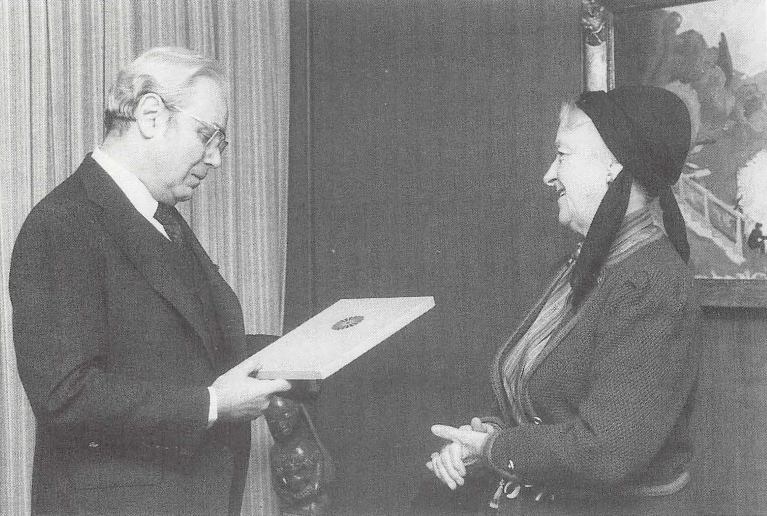
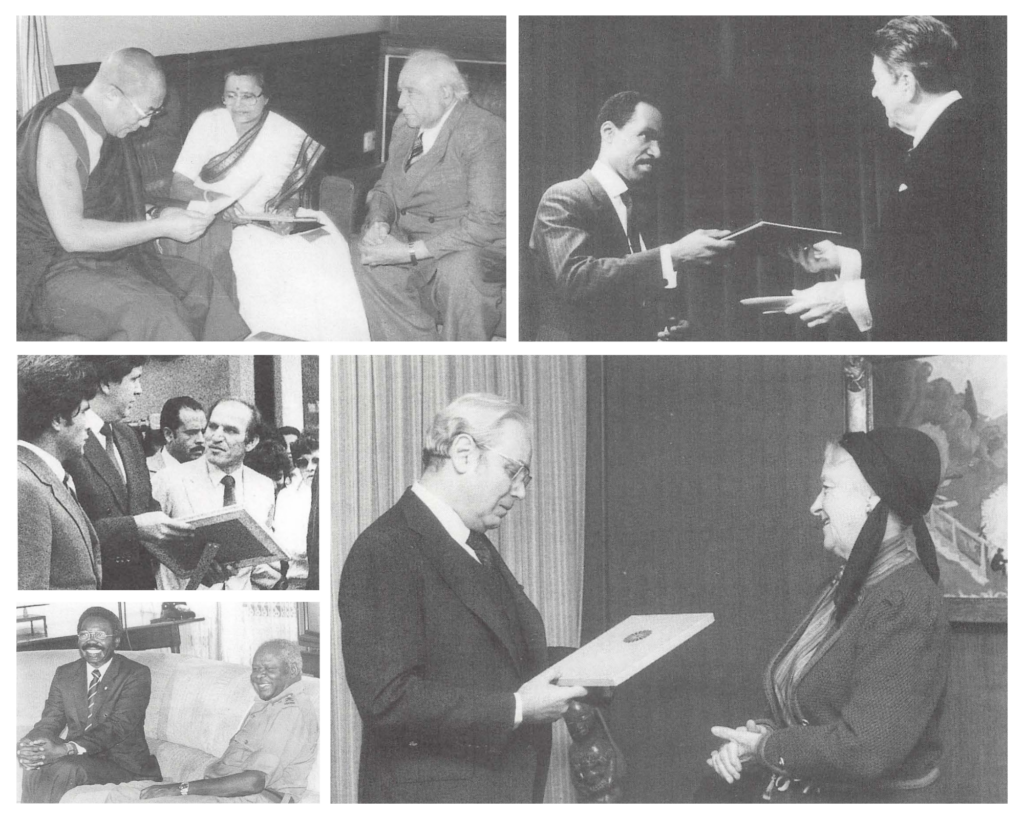
Forty years ago, the Universal House of Justice addressed the peoples of the world in a statement of notable moral clarity entitled The Promise of World Peace. Released in October 1985, it was transmitted to heads of state and governments across the globe and translated into dozens of languages. It was not a diplomatic communiqué or a policy brief, but rather a document that the Universal House of Justice itself described as a message directed to all of humanity at a moment when the question of peace had become a vital issue confronting humanity.1The Promise of World Peace, bahai.org/r/883867984.
The historical moment in which the message was produced was one of division, but also of a certain degree of hope. The Cold War continued to divide the world between two nuclear-armed superpowers, while proxy conflicts raged across Central America, Southern Africa, and Southeast Asia. In the span of just a few decades, the international community had witnessed both the founding of the United Nations and the repeated frustration of its promise to build a less violent global order. The prevailing mood was thus one of heightened danger combined with an emerging global consciousness in a growing sense that humanity could not continue along its present path without catastrophic consequences, and that it therefore needed to reflect on fundamental moral choices.
Four decades later, the world has changed in ways both expected and surprising. The Cold War ended, bringing with it a brief wave of euphoric hope for a new global order in the 1990s. That hope gradually receded with the rise of terrorism, transnational organized crime, and, more recently, the intense return of interstate conflicts affecting societies in Europe, the Middle East, and Central Asia. Running alongside these ills has been the steady growth of inequality in its most extreme forms, even as absolute poverty has declined in some populated regions like China and Brazil. What has followed is, in many respects, a recurrence of familiar pathologies in new forms: nationalism is again gaining momentum, multilateral institutions are under increasing stress, and the normalization of violence in public discourse—political, digital, and armed—has reached levels that would have alarmed even the most pessimistic observers of 1985.
This is precisely why returning to The Promise of World Peace is not an exercise in nostalgia or institutional self-celebration. Rather, it reflects an effort to engage seriously with a message that anticipated, with notable clarity, the structural conditions that continue to obstruct the progress of peace. More than that, it articulated a conceptual framework that remains relevant to challenges that secular social science has yet to fully address, grounded in the oneness of humanity, the transformation of character, and the moral prerequisites for collective security.
The main argument of this article is that the preconditions for peace identified in 1985 still have not been met. These conditions are based on the recognition of human oneness and a transformation of collective assumptions about human nature, and they are increasingly relevant in a world of rising nationalism, structural violence, and fragmented global governance. To develop this argument, this article starts by comparing the world of 1985 and now and follows examining the foundational principle of human oneness. Then, it discusses the challenges posed by the culture of violence and reflects on institutional limitations. The analysis concludes by considering the implications of the 2019 message of the Universal House of Justice,2Universal House of Justice to the Bahá’ís of the world, 18 January 2019, bahai.org/r/276724432. which expanded and deepened the 1985 framework presented in The Promise of World Peace.
A WORLD ON THE BRINK, THEN AND NOW
The Promise of World Peace was issued into a world living under the shadow of nuclear annihilation. The arms race between the United States and the Soviet Union had reached levels of destructive capacity that made mutual annihilation not merely possible but, under certain plausible scenarios, virtually automatic. Shoghi Effendi had earlier described the forces of the age as both disintegrative and integrative, pulling humanity simultaneously toward fragmentation and toward an emergent global consciousness.3The World Order of Bahá’u’lláh, bahai.org/r/536052373. The 1985 message addressed precisely that dual dynamic, insisting that the integrative forces were not incidental but constitutive of a genuine historical trajectory toward peace.
The structural parallels with our present moment are impossible to ignore. The twenty-first century has produced a reconfiguration of geopolitical risk that mirrors, in many respects, the multipolar instabilities of the pre-1945 order. The erosion of the liberal international order, expressed in the weakening of multilateral institutions, the rise of nationalist populism across both hemispheres, and the breakdown of shared epistemic frameworks that once made diplomacy possible, now recalls the fractured world the 1985 statement sought to address. The Universal House of Justice observed in 2019 that “many of the dominant currents in societies everywhere are pushing people apart, not drawing them together” and that “the forces of disintegration regroup and gain ground.”418 January 2019, bahai.org/r/963030050. The intervening decades have not resolved the tensions of 1985; they have, in many ways, intensified them.
Inequality, another structural precondition of violence that the document identified, remains persistent. The global economy has delivered unprecedented aggregate wealth while simultaneously concentrating it in ways clearly recognized as incompatible with peace. Political and economic systems have enabled the enrichment of small circles with conspicuously excessive wealth, a condition the 2019 message described as one that “fuels fundamental instability in world affairs.”518 January 2019, bahai.org/r/963030050. This is not merely a matter of economic injustice, critical as that is; it is also a generator of the structural violence that peace researchers have long identified as an obstacle to positive peace.6Johan Galtung, “Violence, Peace, and Peace Research,” Journal of Peace Research 6, no. 3 (1969): 167–191, jstor.org/stable/422690. In other words, it is under conditions of inequality that certain populations become more exposed to a form of violence that does not necessarily kill outright but nevertheless produces hunger, precarious living conditions, and a systematic denial of human dignity.
The ecological dimension of peace, the recognition that no lasting social order can be built on the destruction of the planetary commons, was not yet clearly visible in 1985. Subsequently, the Bahá’í International Community has helped to reflect on this very question, as illustrated by its contributions to the COP30 conference in Belém, Brazil. There, representatives emphasized that the climate crisis is not merely a technical or economic challenge but a profoundly ethical and spiritual one, calling for a sense of shared responsibility across generations.
Yet amid this constellation of challenges, the core insight of The Promise of World Peace remains as clarifying as ever. Peace is not primarily a set of policies or treaties. It is a social and moral process grounded in the recognition of shared humanity. The Universal House of Justice understood that the instruments of peace, including international institutions, arms agreements, and diplomatic frameworks, are necessary but not sufficient. They require a corresponding transformation in human consciousness and in the structures that shape it. This is the dimension that has remained most underdeveloped, and it is also where the document’s contribution has been most consistently underestimated.
PRECONDITIONS FOR PEACE: THE ONENESS OF HUMANITY AS FOUNDATION
The conceptual heart of The Promise of World Peace is a claim both simple and radical: that a just world order “can be founded only on an unshakable consciousness of the oneness of mankind.”7Promise of World Peace, bahai.org/r/674456093. This is not a rhetorical flourish, but rather a concept presented as the organizing principle from which all other prerequisites for peace derive. The recognition of human oneness is presented not as a sentiment but as an ontological reality, one whose acknowledgment or denial has material consequences for the structures of society.
The principle is demanding in its implications. The document does not present it as an invitation to vague cosmopolitan benevolence; rather, it is a call to reorganize political, economic, and social structures in accordance with the recognition that every human being belongs, in the deepest sense, to a single community. Ultimately, our primary identity resides in the recognition that we are human beings, fruit of a single tree, and that elements of identity such as race, class, and gender, are secondary.
This means confronting the social ills that affect the recognition of the other as part of a single whole. One example is the need to overcome racism, which can be seen not as a regrettable social attitude but as a structural ordering of privilege and deprivation incompatible with peace, given it impairs one’s ability to recognize the other as part of the same humanity. It equally means pursuing the full emancipation of women not as a concession to equity but as a precondition for the maturation of civilization. It means rethinking national sovereignty in ways that make genuine collective security possible, setting aside the self that belongs to a single country and making room for a self connected to the world. And it means transcending the causes of religious strife by recognizing the underlying unity of the world’s great religious traditions.
It is striking to note that since the 1950s, the academic field of peace studies has arrived, through a different route, at overlapping conclusions. The field recognizes that the overcoming of violence in all its forms is a central factor for peace, for it allows us to affirm that no human being should have their dignity violated, whether by direct or indirect violence. Johan Galtung’s foundational work on structural violence established that peace cannot be reduced to the absence of armed conflict, since inequality, discrimination, and the systematic denial of human potential are themselves forms of violence.8“Violence, Peace, and Peace Research,” jstor.org/stable/422690. The field developed a conceptually rich vocabulary: negative peace, understood as the absence of direct violence, and positive peace, understood as the presence of conditions that enable human flourishing. Since then, peace studies has increasingly recognized that positive peace requires structural transformation, not merely conflict management.9David P. Barash and Charles P. Webel, Peace and Conflict Studies (SAGE, 2002).
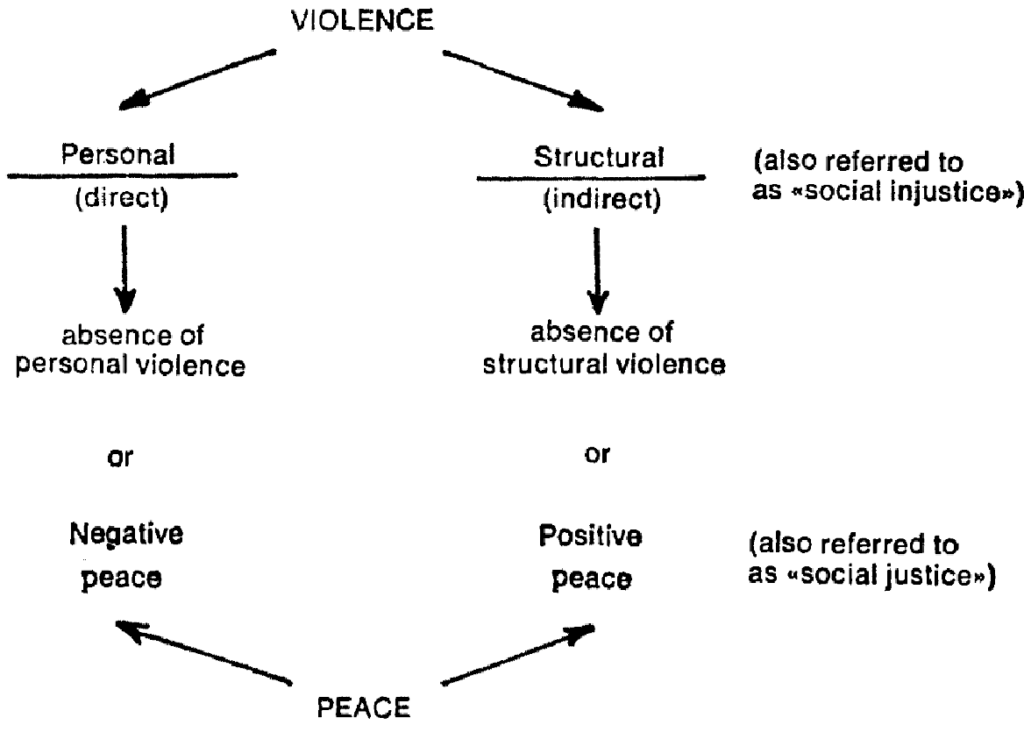
The Promise of World Peace arrives at a remarkably consonant position from a different epistemological starting point: one grounded in the spiritual reality of human oneness rather than in the empirical measurement of social inequality. What the 1985 message adds, which complements the development of peace studies, is a more explicit emphasis on the motivational foundations of structural transformation. Academic peace research is able to describe cultural and structural violence with precision, and it shares with the Bahá’í statement the same essential foundation: the recognition of the inherent dignity of every human being. Both frameworks ultimately call for the construction of lasting peace on the basis of unconditional respect for the humanity we share.10 Marcos Alana Ferreira, “Peace in Perspective: The Historical Development of Peace Studies and the Bahá’í Concept,” Journal of the Sociology and Theory of Religion 13 (2022): 297–321, doi.org/10.24197/jstr.1.2022.297-321.
Yet the statement devotes particular attention to a question that peace studies has explored more gradually: why would human beings choose to undertake the sacrifices that genuine structural transformation requires? Why would the recognition of shared humanity become not merely an intellectual position but a lived commitment? To answer these questions, one can reflect that this motivational problem cannot be resolved without engaging the spiritual dimension of human life. The reality that human beings have capacities for altruism, justice, and solidarity that are as authentically constitutive of human nature as the competitive and acquisitive instincts that dominant social theories have tended to emphasize.11Marcos Alan Ferreira and Michael Karlberg,“Bahá’í Faith,” in The SAGE Encyclopedia of War: Social Science Perspectives, ed. by Paul Joseph (SAGE, 2017), 131–133.
This argument resonates with a growing body of work in social psychology and behavioral economics that has challenged the assumption of universal self-interest as the basis of human motivation.12Kristen Renwick Monroe, The Heart of Altruism: Perceptions of a Common Humanity (Princeton University Press, 1996). But the document’s claim goes further when it places the development of altruistic capacities in an educational process grounded in spiritual values such as love, justice, generosity, and truthfulness, values that are not reducible to social incentives. In the statement’s own words, “the courage, the resolution, the pure motive, the selfless love of one people for another — all the spiritual and moral qualities required for effecting this momentous step towards peace are focused on the will to act.”13Promise of World Peace, bahai.org/r/347891062. In this respect, The Promise of World Peace anticipates a turn in peace studies scholarship that has recently begun to take seriously the role of moral and spiritual formation in the construction of peace.14 John Paul Lederach, The Moral Imagination: The Art and Soul of Building Peace (Oxford University Press, 2005).
Contemporary manifestations of the identity politics the document warned against have made this analysis more, not less, relevant. The 2019 letter described how countless permutations of “us” and “them” define group identities in ever-narrowing opposition. The fragmentation of public discourse along lines of ethnicity, nation, religion, class, and ideology reflects precisely the structural breakdown of shared identity that the 1985 statement diagnosed. The prescription remains the same. The document is explicit that diversity is a source of richness rather than a problem, so the goal is not the erasure of difference. What is required instead is the recognition of a shared humanity that is prior to and more fundamental than any of the partial identities that divide us.
DECONSTRUCTING A CULTURE OF VIOLENCE
As briefly presented above, one of the most intellectually distinctive contributions of The Promise of World Peace is its challenge to the conception of human nature that underlies most modern social institutions. The document explicitly rejects the view that human beings are “incorrigibly selfish and aggressive,” locating the persistence of violence not in an immutable human nature but in distorted social conditions and entrenched assumptions that have shaped institutional life.15Promise of World Peace, bahai.org/r/844922602. This claim converges with the Bahá’í conception of human nature as characterized by dual capacities for egoism and altruism, competition and cooperation—and the extent to which either develops is a function of education, cultural environment, and will.16Ferreira and Karlberg,“Bahá’í Faith.”
The significance of this claim extends beyond its contribution to peace theory. It has direct implications for how we understand and address what has come to be called the culture of violence—the normalization of violent behavior, violent discourse, and violent social arrangements as features of ordinary life rather than exceptional pathologies. A culture of violence is not sustained by individual moral failure alone, but it is reproduced through institutional structures, educational systems, media environments, and the implicit values encoded in economic and political life.17Johan Galtung, “Cultural Violence,” Journal of Peace Research 27, no. 3 (1990): 291–305. The 1985 document grasped this dynamic clearly, understanding courage, resolution, and selfless love as mighty forces in the establishment of peace that must be cultivated through sustained social processes, not assumed as natural givens.
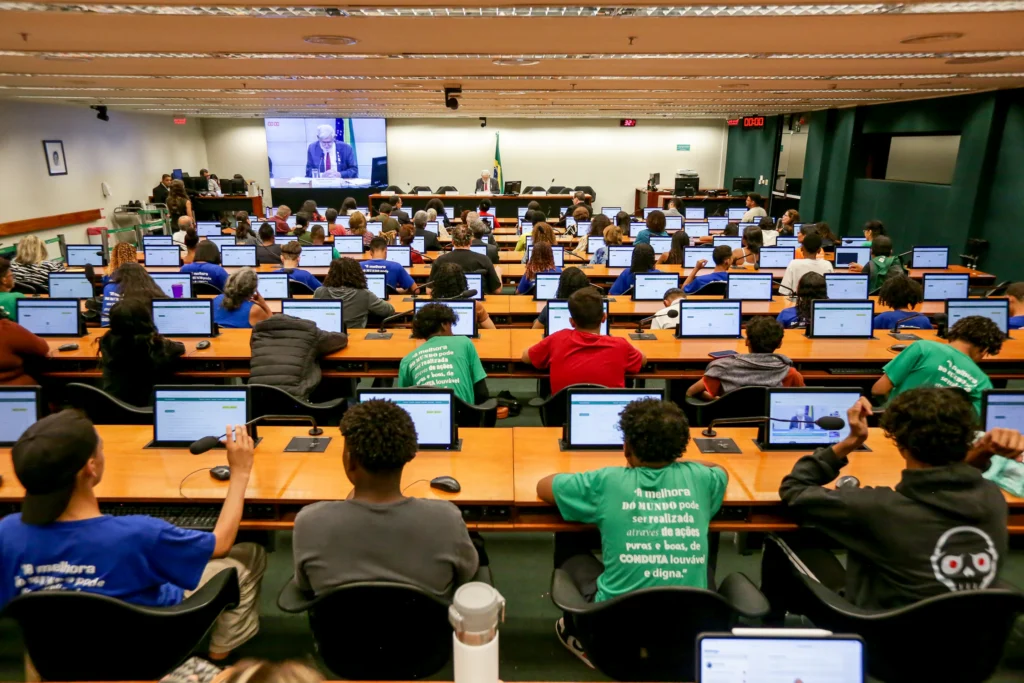
Brazilian social reality offers a pointed illustration of how deeply embedded the culture of violence can be. The colonial foundations of Brazilian society established a hierarchy of violence—especially against indigenous peoples, enslaved Africans, and women—that has been reconstituted in different institutional forms across the centuries. Current data on femicide, on police lethality directed disproportionately at black Brazilians, and on the political mobilization of authoritarian discourse reveal the continuing force of structural and cultural violence in a society that has also, paradoxically, produced some of the world’s most creative experiments in community peacebuilding.18 Fórum Brasileiro de Segurança Pública, Anuário Brasileiro de Segurança Pública 2024 (FBSP, 2024). This paradox is not unique to Brazil; it is a condition of the transitional age the document described and can be seen in other societies in different continents.
The connection between the framework delineated in the statement of the Universal House of Justice and contemporary scholarship on deconstructing cultures of violence is instructive. Galtung’s concept of cultural violence provides a useful vocabulary for what the document diagnoses. By cultural violence, Galtung means those aspects of the symbolic sphere of our existence, including religion, ideology, language, and art, that serve to justify or legitimize direct or structural violence.19Galtung, “Cultural Violence.” The Promise of World Peace identifies specific barriers that operate in this cultural sphere: racism, unbridled nationalism, religious strife, and the denial of women’s full equality. These are not merely regrettable attitudes but deep-seated cultural legitimizations of conflict. Yet the document’s response to this diagnosis is not primarily legislative or punitive. Instead, it is educational and spiritual. The transformation of consciousness, grounded in the recognition of the oneness of mankind and mediated through consultative action, constitutes the primary instrument of change. Thus, world order can be founded “only on an unshakable consciousness of the oneness of mankind,”20Promise of World Peace, bahai.org/r/674456093. a spiritual truth which all the human sciences confirm.
This is a point where the Bahá’í framework enriches rather than simply replicates the peace studies tradition. Peace research has developed sophisticated analyses of the causes of violence and proposed a range of institutional remedies. What it has engaged more tentatively is the question of how values change and how the moral imagination of communities can be transformed in ways that make alternative social arrangements not only theoretically conceivable but practically realizable.21Lederach, The Moral Imagination. The mode of operation of the Bahá’í community since the 1996 message—focused on the spiritual education of children and youth, on devotional and reflective community life, and on the constructive engagement of all institutions of society in the cultivation of peaceful values—suggests a program for moral and cultural transformation irreducible to policy reform alone, as is often suggested by institutionalist approaches to peace.22 Barash and Webel, Peace and Conflict Studies.
INSTITUTIONS, STRUCTURES, AND THE MORAL PRECONDITIONS OF PEACE
The Promise of World Peace is notable for the care with which it distinguishes between the practical instruments of peace—arms agreements, international institutions, legal frameworks—and the deeper structural and moral prerequisites without which those instruments cannot function. The document acknowledges the importance of a world authority adequate to ensure peace, and it endorses the principle of collective security that Bahá’u’lláh first articulated in the nineteenth century. But it insists with clarity that treaties and institutions are not self-executing. Actually, they depend for their effectiveness on the degree to which they are grounded in genuine, shared commitments and on the moral quality of the human beings and communities that sustain them.
This insight has been vindicated repeatedly by the history of international institutions since 1985. The United Nations, the most ambitious experiment in collective security yet attempted, has made real contributions to international stability. These contributions have been consistently supported and encouraged by the Bahá’í community, while also calling for the deep structural reforms that would allow the UN system to advance peace in a more just and functional manner.23Ferreira and Karlberg,“Bahá’í Faith.” But the UN’s limitations have been equally visible. It has been unable to prevent the resurgence of great power competition, the erosion of multilateral norms, or the instrumentalization of humanitarian language for purposes of national interest. The repeated paralysis of the Security Council has shown with painful clarity that institutional architecture alone is insufficient when it lacks corresponding political will. And that political will is itself a function of deeper moral and social conditions.
The document’s observation that statesmen of the world were faced with a crisis unprecedented in human history remains accurate in 2025, though the crisis has multiplied and intensified. The proliferation of non-state armed actors, the weaponization of information technology, the global ecological crisis, and democratic backsliding visible across multiple regions have added dimensions that the 1985 statement could not have fully anticipated. But the document’s core diagnosis retains its explanatory force. The international order is structurally inadequate because it has not been built on the recognition of the oneness of humanity as a prerequisite for a peaceful international order.
The Universal House of Justice’s 2019 message elaborated this institutional analysis in ways faithful to the 1985 framework while responsive to intervening developments. It observed that the forces of disintegration, including the resurgence of racism, nationalism, and partisanship, had undermined the willingness “to engage in international collective action” that had once “represented a powerful strain of thinking among world leaders.”24 18 January 2019, bahai.org/r/963030050. This regression, the message argued, was not permanent; but, it acknowledged with characteristic realism, the path to unity might be tortuous and the world might face further suffering before the necessity of a genuine new order became inescapable.
The implication for those committed to peace is not passivity but a clear-eyed understanding of where the leverage points for change actually lie. Institutions fail when they are not grounded in shared moral commitments. Therefore, the cultivation of those commitments through education, community life, public discourse, and constructive action is not a secondary activity that can await institutional reform. It is the precondition for institutional reform. In this sense, the promotion of peace is fundamentally a work of culture. It means changing what communities value, what they celebrate, what they teach their children, and what they regard as the non-negotiable commitments of shared life. This is a work that must take place at multiple levels, from the local to the international, and it must resonate with values that can overcome the different forms of violence that impact peace.
LESSONS FROM 2019 AND BEYOND: TOWARD A PRACTICE OF PEACE
The Universal House of Justice’s letter of January 2019, addressed to Bahá’ís around the world on the occasion of the centenary of the Paris Peace Conference, offered a sustained reflection on the state of the peace project and on the continuing responsibilities of those committed to it. It did not supersede The Promise of World Peace; it deepened it, taking into account the current affairs of the world. And in doing so, it shifted the emphasis in ways instructive for understanding what a practice of peace might look like in the present moment.
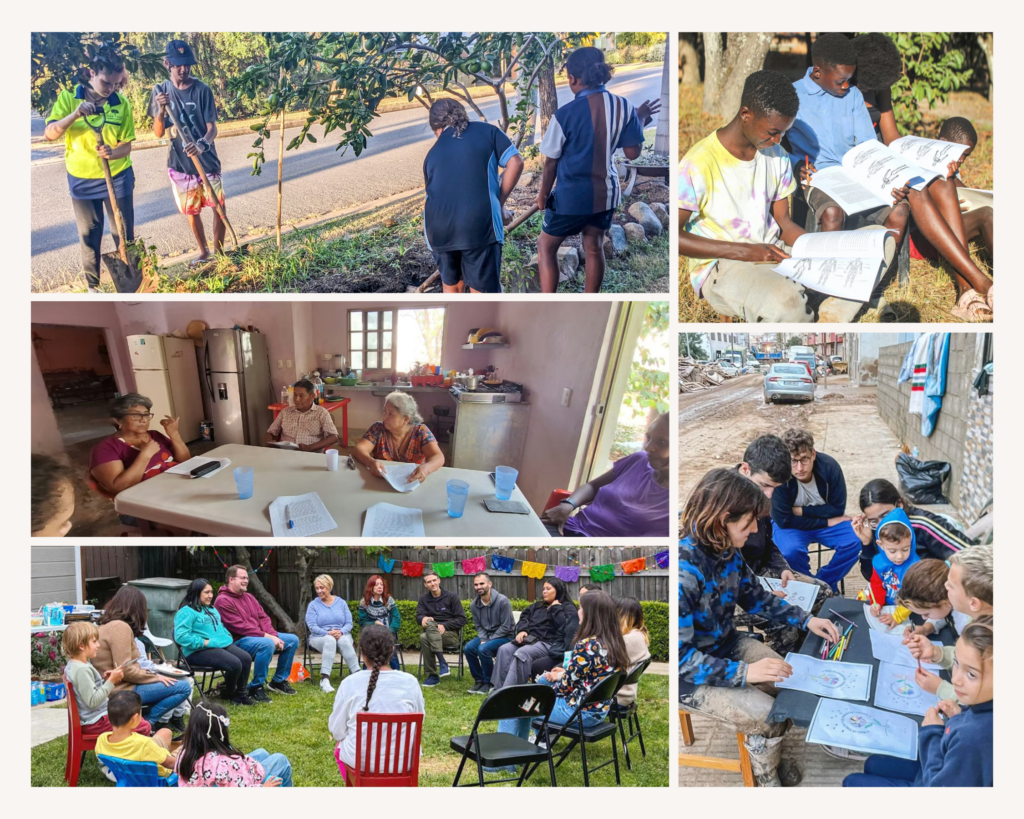
The 2019 message drew attention to the Bahá’í community’s four-decade project of patiently refining the social model implied by the 1985 statement, building and expanding a system of social organization based on Bahá’u’lláh’s teachings. Unlike the 1985 statement, which was primarily diagnostic and prescriptive, the 2019 letter showed that those conditions were not merely being advocated for but were being enacted through a learning process in communities that raise children without the contamination of racial or national prejudice, that pursue the full equality of women and men, that welcome the followers of every faith and of none to their devotional gatherings, and that develop the capacity to engage those around them, regardless of creed, culture, class, or ethnicity, in conversations about how to realize both the spiritual and material well-being of their communities.
This emphasis on community building as a contribution to peace is not merely a Bahá’í institutional claim; it reflects a growing recognition in peace scholarship that the construction of positive peace is a grassroots process that cannot be imposed from above or achieved through elite negotiation alone. John Paul Lederach’s work on peace practice has argued, with considerable empirical support, that sustainable peace requires the cultivation of moral imagination—the capacity of communities to envision and enact relationships that transcend the cycles of violence in which they are embedded.25Lederach, The Moral Imagination. Elise M. Boulding’s vision of a culture of peace similarly emphasized the primacy of everyday social relationships, family life, community bonds, and the practices of mutual care and respect in building the foundations of a peaceful world.26Cultures of Peace: The Hidden Side of History (Syracuse University Press, 2000). The Bahá’í understanding of peace as, in the first instance, an accomplishment of individuals and communities with institutions playing a supporting rather than a determining role, aligns with and enriches this tradition developed by scholars like Boulding and Lederach.
The 2019 message also underscored the importance of contributing to the discourses of society. This means Bahá’í individuals and communities engaging in the intellectual, cultural, and civic conversations that shape how societies understand themselves and their possibilities. Peace is not only built in communities. It is also advocated, narrated, and imagined. This engagement with narratives is itself a form of peace work. It determines what counts as normal, what counts as possible, and whose experiences are rendered visible. Organizations engaged in the deconstruction of violence in contexts like Brazil have recognized this dynamic. For example, they have learned that the battle for the narrative of public security is as important as any programmatic intervention. Hegemonic discourses of fear and force must be contested through the construction of alternative narratives grounded in hope, justice, and the dignity of local communities.27 Office of External Affairs of the Bahá’ís of Brazil, “Síntese da Coalizão Desconstrução da Violência” (2026); unpublished document circulated among civil society engaged in peace discourse.
The 2019 letter’s emphasis on youth is similarly worth dwelling on. Young people distinguished by their commitment to a society built on peace and justice and their engagement in the work of building communities on that foundation are not merely a rhetorical constituency; they are the primary vehicle through which the transformation of culture across generations is achieved. The systematic cultivation of moral and spiritual capacities in children and adolescents is among the most consequential forms of peace work available to communities. This cultivation happens through educational processes that develop not only cognitive skills but also the virtues of truthfulness, empathy, justice, and solidarity.28 Ferreira, “Peace in Perspective,” doi.org/10.24197/jstr.1.2022.297-321.
THE PROMISE, STILL A PROJECT
The Promise of World Peace is now forty years old. Yet it continues to speak to concrete needs in today’s world. It speaks to the need to deconstruct violence and to build peace. The document understood that peace is a social and moral achievement, not merely a diplomatic arrangement. It understood that the structures of violence are reproduced through the values embedded in institutions, education systems, and cultural life. Transforming those structures requires attending to the moral and spiritual formation of persons and communities. And it understood that the recognition of the oneness of humanity is not a sentiment but an organizing principle with practical implications for every domain of social life.
What has changed in forty years is not the validity of these insights but the urgency with which they apply. The resurgence of nationalism, the intensification of structural inequality, the weaponization of digital information environments, the ecological crisis, and the persistent normalization of violence in politics and public life have made the document’s diagnosis more, not less, accurate. The questions posed in 1985 remain unanswered. Humanity must decide whether it will build a world order that reflects its deep interdependence and the spiritual reality of its oneness.
For peace researchers, the document offers resources that bring into focus an element still underexplored in much of the field: the importance of moral and spiritual values that cultivate peace, not merely institutional designs. It presents an account of human nature as genuinely dual, capable of both egoism and altruism—and the latter’s need to be developed for a peaceful society. It offers a conception of the motivational foundations of peace that takes seriously the spiritual dimension of human experience. And it provides a model of community life as a site of moral and cultural transformation rather than merely a setting for institutional interventions. For communities committed to peace work, the document offers something more immediate: the conviction that every act of building genuine human solidarity in families, neighborhoods, schools, and civic associations is a contribution to a historical process whose trajectory is, for all its tortuousness, ultimately assured.
Four decades after it was written, The Promise of World Peace remains what it was in 1985: not a prediction of how peace will come, but a map of what it will require. The work of realizing that promise is the work of our generation.